
Plastic CNC Machining Cost: 9 Factors That Affect Your Quote
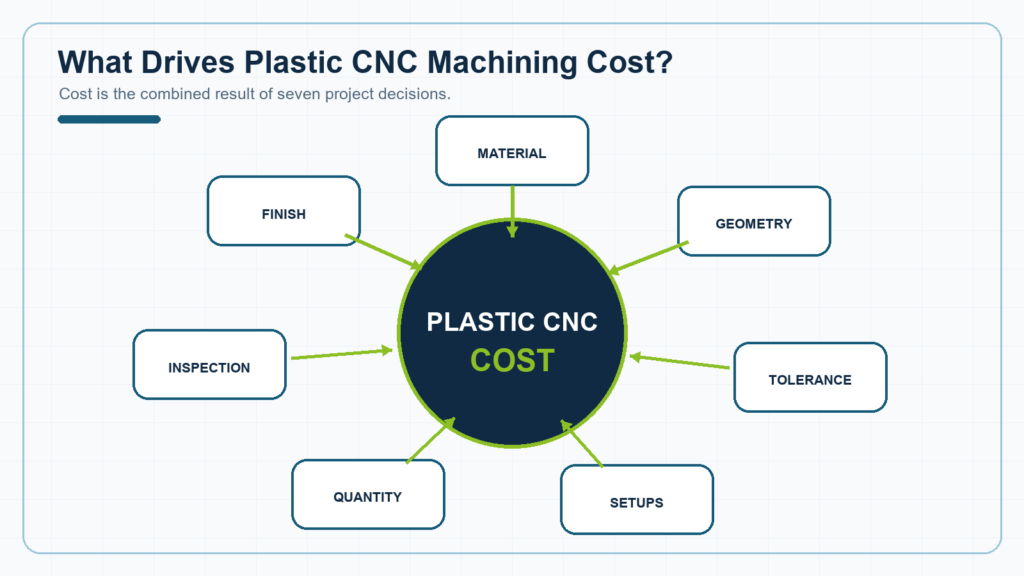
There is no dependable universal price per plastic CNC machined part. A quote normally combines stock material, programming and setup, machine time, tooling, inspection, finishing, scrap risk, and logistics. The most effective cost reduction is rarely a lower hourly rate; it is usually less wasted stock, fewer setups, shorter toolpaths, and tolerances that match the […]
3D Printing vs Injection Molding: Which Process Fits Your Part?
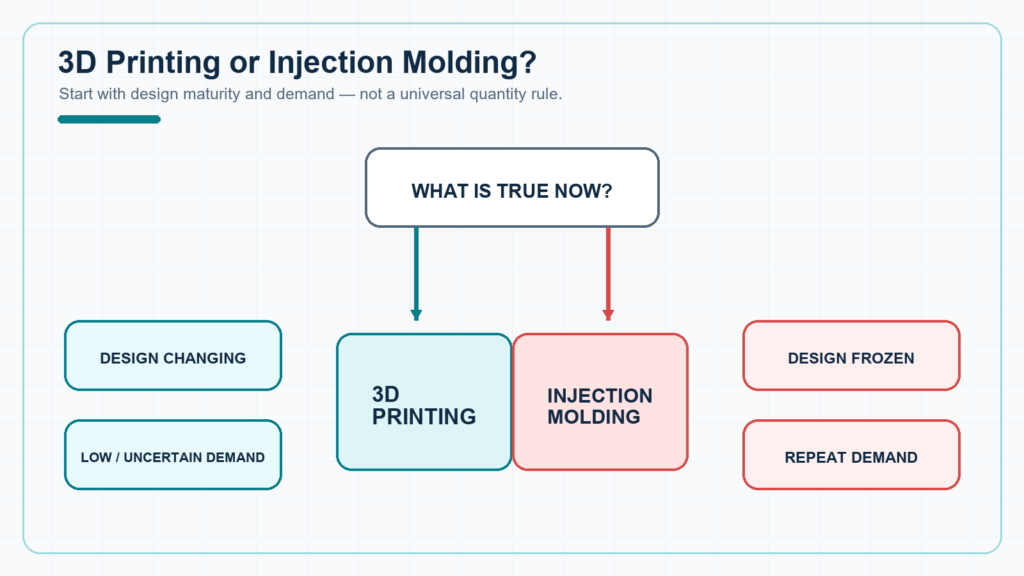
3D printing usually fits better when the design is still changing, quantities are low, or individual parts must vary. Injection molding usually becomes more economical when the design is stable, demand is repeatable, and enough parts can absorb the tooling investment. There is no universal quantity at which one process automatically wins. The decision depends […]
10 Plastic Injection Molding Companies to Compare in 2026
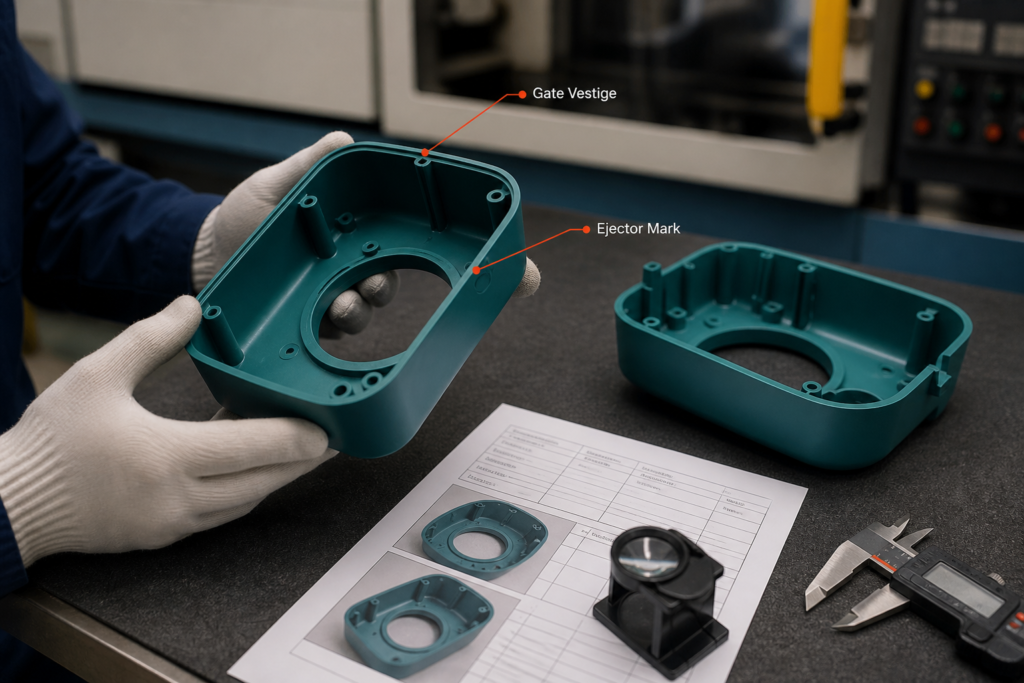
Choosing an injection molding supplier is not simply a matter of finding a company that can make plastic parts. The better question is whether a supplier fits your tooling stage, annual volume, resin, cosmetic requirements, inspection needs, and delivery region. The ten companies below are not ranked from best to worst. They are a sourcing […]
Plastic Surface Finish Types: SPI, VDI, Mold-Tech, and Post-Process Options
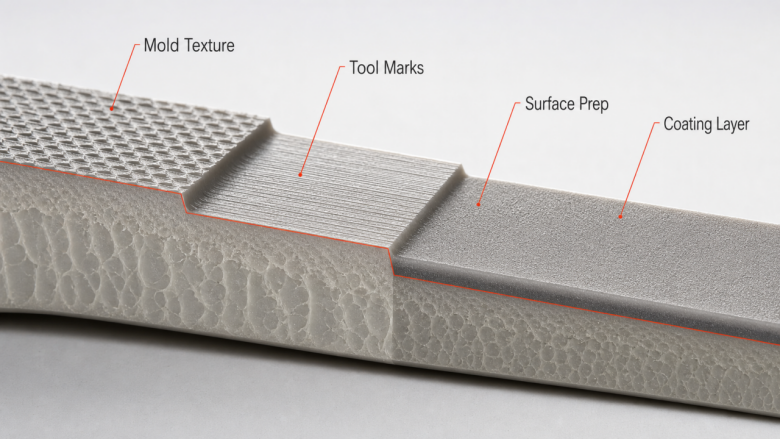
Plastic surface finish can come from the tool that creates the part, the manufacturing process itself, or a later operation such as polishing, blasting, painting, coating, or printing. Those routes are not interchangeable. For injection-molded parts, SPI, VDI, and Mold-Tech usually describe the mold surface that is transferred to each part. For CNC-machined or 3D-printed […]
Small-Batch Plastic Manufacturing: How to Choose the Right Process
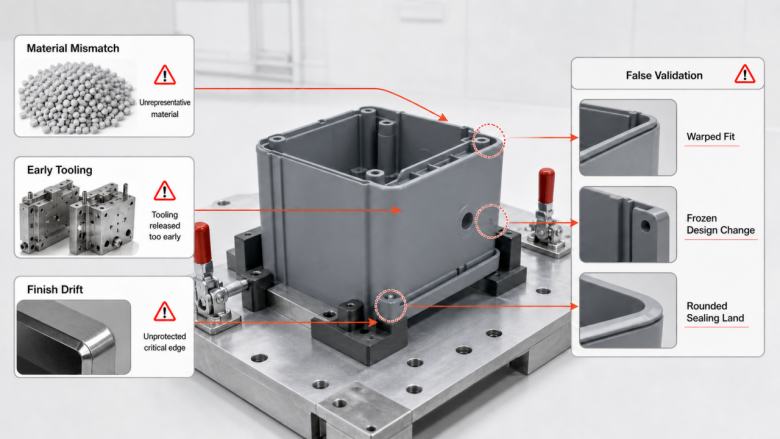
Small-batch plastic manufacturing can use CNC machining, 3D printing, vacuum casting, or injection molding. There is no universal quantity cutoff that selects the process for you. The right route depends on the geometry, material, finish, dimensional needs, purpose of the batch, and how stable the design is. Compare the part requirements with our plastic 3D […]
Acrylic CNC Machining: Materials, Process, Design, and Finish Options
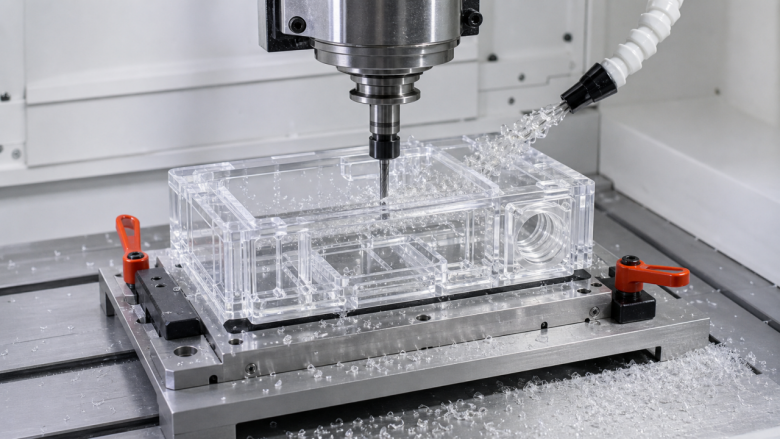
Acrylic CNC machining turns PMMA sheet, plate, rod, or block into accurate plastic parts with pockets, holes, curved surfaces, sealing lands, and other features that cannot be made by simple profile cutting alone. It is a practical route for prototypes and production quantities of transparent covers, display parts, light guides, instrument windows, manifolds, and custom […]
Vacuum Casting vs Injection Molding for Low-Volume Plastic Parts
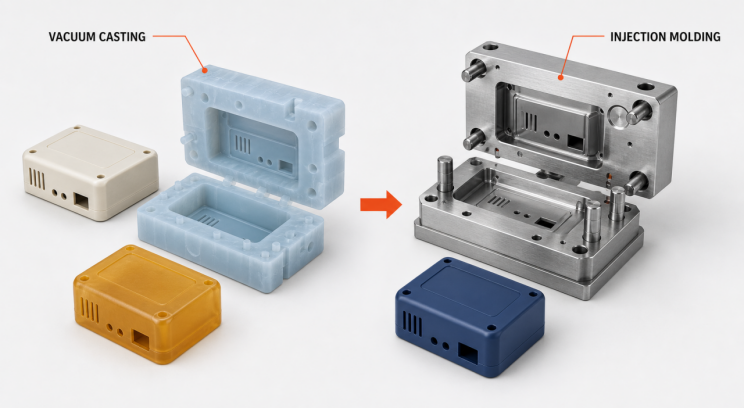
A part that looks production-ready may not reproduce the material behavior, shrinkage, fatigue response, or dimensional stability of the final molded product. Vacuum casting can supply a small batch of polyurethane replicas with relatively low soft-tool commitment, while injection molding can test the target thermoplastic and some molding behavior. The engineering decision is therefore not […]
Overmolding vs Insert Molding: How to Choose for Your Plastic Part
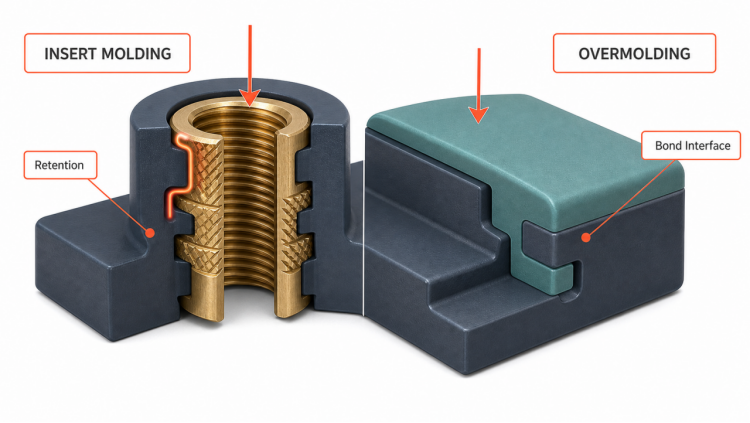
A process that looks right in CAD can still fail at the interface: an insert may shift under injection pressure, or an overmold may peel from its substrate after use. The choice depends on what the molded part must integrate and how that interface will carry load, seal, insulate, or feel in the user’s hand. […]
POM vs Nylon for CNC Machined Parts
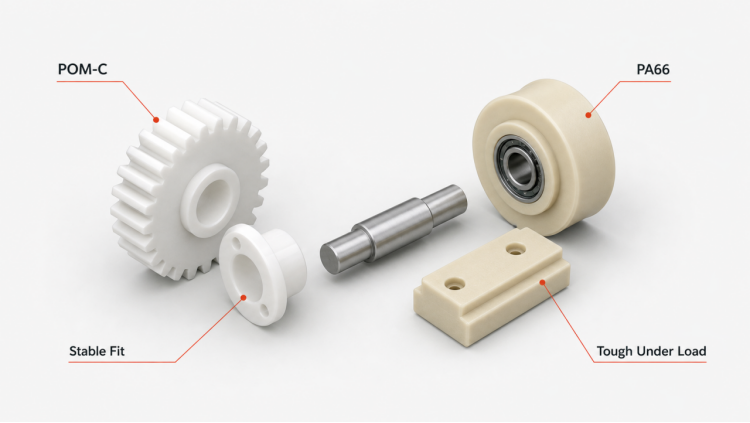
POM vs Nylon for CNC Machined Parts: How to Choose A material choice can pass quotation review and still fail at assembly. A nylon part may meet dimensions when dry and shift after moisture exposure, while a POM part may hold its fit but lack the toughness needed for repeated shock. The useful question is […]
Plastic CNC Turning Guide: Materials, Tolerances, DFM, and RFQ Tips
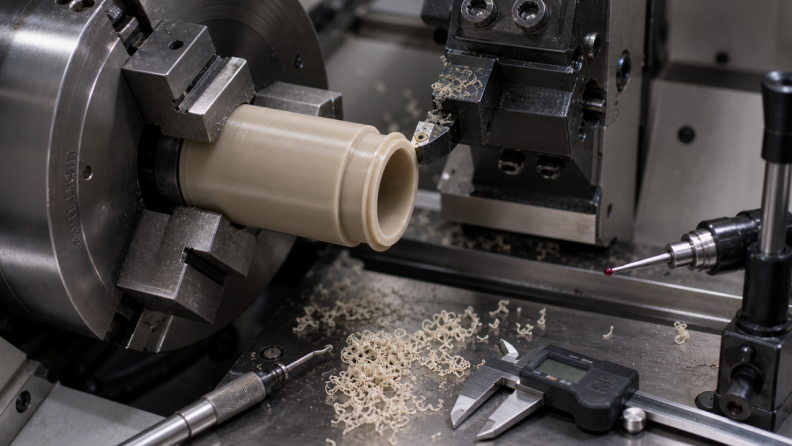
Plastic CNC turning is the right process to consider when a plastic part is built around a round axis. Bushings, sleeves, spacers, rollers, washers, caps, knobs, plugs, threaded housings, and insulating rings often need features that are easier to control on a lathe than on a mill. The sourcing risk is not only whether the […]