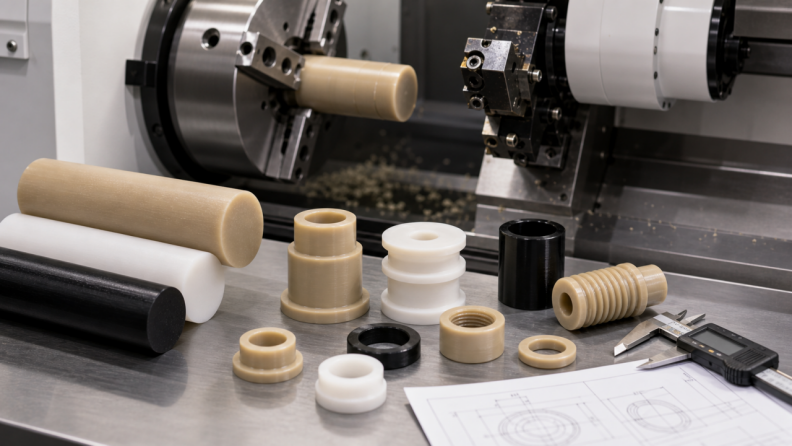
Plastic CNC turning is the right process to consider when a plastic part is built around a round axis. Bushings, sleeves, spacers, rollers, washers, caps, knobs, plugs, threaded housings, and insulating rings often need features that are easier to control on a lathe than on a mill.
The sourcing risk is not only whether the part can be cut. The bigger risk is whether the turned plastic part will keep the required OD, ID, concentricity, runout, end-face quality, thread fit, and edge condition after machining, unclamping, deburring, and inspection.
Use this guide to decide when plastic CNC turning fits, when milling or molding may be better, which plastic materials need extra review, and what to prepare before sending an RFQ to PlasticHubs.
| Decision point | Plastic CNC turning is a strong fit when… | Recheck the process when… |
| Part shape | The part is mostly cylindrical, ring-shaped, sleeve-like, or rotational | The part is mostly a housing, bracket, deep pocket, or multi-face shape |
| Functional dimensions | OD, ID, concentricity, runout, end faces, grooves, chamfers, or threads control function | Hole patterns, pockets, and flat datums across several faces control function |
| Material behavior | The plastic can be supported and cut without excess distortion, heat, or burrs | The material is very soft, brittle, transparent, stress-sensitive, or not yet specified |
| Design stage | The design needs functional prototypes, bridge parts, or small-batch turned parts | The shape is still changing and no critical dimensions are known |
| RFQ readiness | The drawing defines critical dimensions, inspection datums, and edge requirements | The buyer only has an unmarked 3D model |
When Plastic CNC Turning Makes Sense
Plastic CNC turning is a machining process for parts that can be formed while round stock rotates in a lathe or turning center. A cutting tool removes material from the outside diameter, inside diameter, end face, groove, or thread area while the workpiece spins.
This makes turning a strong fit for plastic parts with rotational features. Common examples include bushings, sleeves, rollers, spacers, washers, nozzles, caps, plugs, round insulators, and prototype components that must fit around a shaft, tube, fastener, or bearing surface.
Turning is not limited to simple cylinders. A turned plastic part may include shoulders, steps, grooves, chamfers, tapers, internal bores, external threads, internal threads, face features, and secondary drilled holes.
The process becomes most useful when the part’s function depends on round geometry. If a sleeve needs a controlled ID for a shaft, an OD for a housing, and an end face that seats squarely, turning usually gives a more direct process path than milling the shape from a plate.
Plastic CNC turning also fits low-volume production and engineering validation. It avoids injection mold tooling and lets the buyer test geometry, material behavior, and fit before committing to larger production routes.
Plastic CNC Turning vs CNC Milling
CNC turning and CNC milling can both produce plastic parts, but they solve different geometry problems. Turning rotates the workpiece and is naturally suited to round, axial, and concentric features. Milling holds the workpiece while a rotating cutter creates flat surfaces, pockets, slots, and multi-face geometry.
Choose turning first when the part is mostly round. Choose milling first when the part is mostly prismatic, box-like, flat, or built around multiple non-rotational faces.
Many production-ready plastic parts need both processes. A plastic sleeve may be turned for OD and ID control, then milled for wrench flats, side holes, slots, or anti-rotation features. A plastic housing may be milled first, then turned or bored if it has a critical circular seat.
The process choice should follow the function of the critical features. If concentricity, roundness, bore fit, shaft fit, or threaded rotation matters, turning deserves early review. If flat datum relationships and pocket geometry matter more, milling may lead the process plan.
The RFQ should not force the buyer to decide the process alone. A complete CAD model and drawing let PlasticHubs review whether turning, milling, or a combined machining route is the lowest-risk path for the part.
Plastic Materials Commonly Used for CNC Turning
Material choice affects turning quality as much as geometry does. Plastic materials vary in stiffness, heat response, toughness, friction, chip behavior, moisture sensitivity, and burr behavior.
POM, also called acetal or Delrin in many buyer conversations, is often selected for bushings, rollers, spacers, gears, and low-friction precision parts. It is a common candidate when dimensional stability, machinability, and wear behavior matter.
Nylon is often used for wear parts, rollers, bushings, and load-bearing plastic components. It can offer toughness, but moisture absorption and dimensional change should be reviewed when the part has tight fits or works in changing environments.
PTFE is useful when low friction, chemical resistance, or non-stick behavior matters. It is softer than many engineering plastics, so support, clamping, burr control, and tolerance expectations need careful review.
PEEK is selected for demanding thermal, chemical, wear, or mechanical conditions. It can be machined into high-value turned parts, but stock cost, grade selection, heat control, and inspection planning should be reviewed before production.
PC, ABS, PMMA, PVC, and other plastics may also be turned for the right geometry. The choice depends on strength, impact resistance, transparency, chemical exposure, appearance, regulatory requirements, and the acceptance criteria of the project.
Do not treat a material name as a complete specification. For RFQ, state the grade, color, stock form, acceptable substitute, documentation requirement, and working environment when those details matter.
Design Rules for Turned Plastic Parts
Good plastic CNC turning design starts with the function of the round features. Identify which diameter controls fit, which face controls seating, which thread must assemble, and which surface contacts another part.
Wall thickness needs early review. Thin-wall sleeves and long hollow parts can deform under clamping or move after material is removed. If the ID, OD, and wall thickness are all critical, the drawing should make that clear.
Length-to-diameter ratio also matters. Long slender rods, pins, and sleeves can deflect during machining. They may need support, staged cutting, modified tool access, or a different stock strategy.
Avoid sharp internal corners unless they are functionally required. Internal radii, grooves, reliefs, and thread runouts should be designed with tool access in mind. A corner that looks simple in CAD may require a toolpath that adds burr risk or inspection difficulty.
Threads should be reviewed by material and use case. Plastic threads can work well in many applications, but repeated assembly, high tightening load, fine pitch, thin walls, and mating metal hardware can change the risk. Inserts or design changes may be better for some assemblies.
Grooves, undercuts, and O-ring seats need clear dimensions and acceptance criteria. The drawing should define width, depth, radius, surface condition, and the inspection method if the feature controls sealing or retention.
Tolerances, Concentricity, and Inspection
Plastic CNC turning can produce precise parts, but tolerance must be tied to material, geometry, wall thickness, stock condition, workholding, and inspection method. A universal tolerance promise is not a reliable way to specify a plastic turned part.
The strongest drawings separate critical dimensions from general dimensions. OD, ID, concentricity, runout, end-face flatness, shoulder location, groove width, and thread fit should be controlled only where they affect assembly or function.
Concentricity and runout deserve special attention. These requirements can drive setup strategy, inspection method, and cost. If a turned part must spin, seal, slide, or align with a shaft, the drawing should define the relevant datum structure.
Inspection conditions can also affect plastic parts. Temperature, support method, measurement force, and part relaxation after unclamping can influence results, especially for softer or thin-wall plastics.
Tell PlasticHubs if you need first article inspection, dimensional reports, material documents, surface roughness checks, or batch records. These requirements are valid, but they should be known before the quote is finalized.
Machining Risks: Heat, Clamping, Burrs, and Chip Control
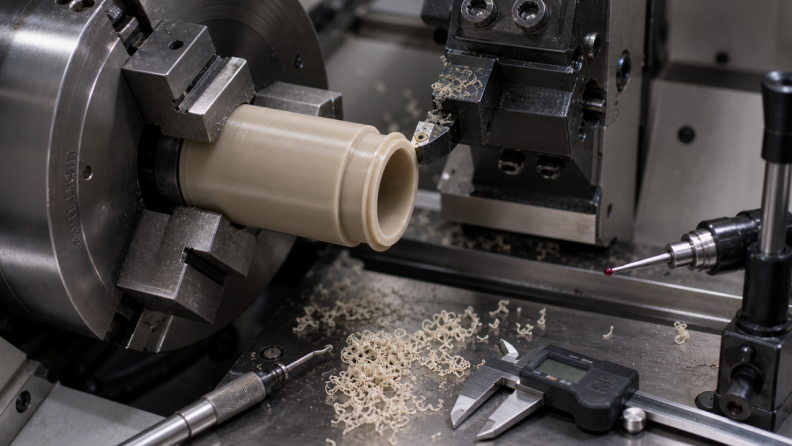
Plastic turning problems often come from heat, clamping, burrs, or chip control rather than from the basic ability to cut the material. Each risk should be reviewed before production when the part is high value or fit-critical.
Heat buildup can change edge quality and dimensional stability. Tool sharpness, speed, feed, chip evacuation, and cutting sequence all influence how much heat stays in the part.
Clamping pressure can distort plastic round stock. A soft bushing or thin sleeve may measure correctly while held, then change after release. Workholding should support the part without crushing it.
Burrs can appear around grooves, holes, thread starts, thin edges, and soft materials. A burr that is harmless on an outside edge can cause failure inside a bore, seal groove, thread, or insulation gap.
Chip control is also important. Stringy chips can scratch surfaces, trap heat, affect finish, or interfere with tool movement. Some plastics break chips more cleanly than others, so material behavior matters.
| Risk | Common result | What to clarify before RFQ |
| Local heat buildup | Dimensional drift, rough edge quality, or smeared surface | Material, geometry, tool access, and heat-control strategy |
| Excess clamping force | Distortion, ovality, or springback after release | Chuck, collet, soft jaws, mandrel, or support method |
| Burrs at grooves or bores | Fit, sealing, thread, or insulation problems | Deburring standard and critical-edge definitions |
| Long slender geometry | Deflection, taper, chatter, or inconsistent OD | Support method, length-to-diameter risk, and inspection plan |
| Soft or flexible material | Measurement variation and shape recovery | Inspection method and functional acceptance criteria |
Surface Finish and Edge Requirements
Surface finish should be specified by function. A sliding OD, sealing groove, bearing surface, or visible cosmetic face may need a different finish expectation from a non-critical outside profile.
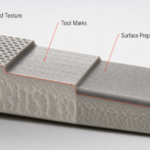
As-machined finish may be acceptable for many internal and functional components. Other parts may need smoother surfaces, controlled tool marks, deburred edges, or specific handling to avoid scratches.
Plastic edge quality should not be left to assumption. Define chamfers, radii, deburring, and sharp-edge limits where they affect assembly, sealing, safety, or electrical spacing.
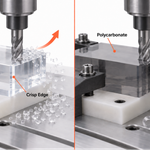
Transparent or appearance-sensitive plastics need special care. PMMA and PC can be turned, but tool marks, stress, cracking, and cosmetic expectations should be reviewed before committing to the process.
If a part contacts a seal, shaft, bearing, tube, or sliding surface, surface and edge requirements should be included in the drawing. This keeps quality expectations visible during process planning and inspection.
Cost Drivers in Plastic CNC Turning
Plastic CNC turning cost is affected by stock, material, geometry, tolerance, setup, inspection, and quantity. A small round part is not always low-cost if it requires difficult material, tight concentricity, thin walls, or extensive documentation.
Material can be a major cost factor. PEEK, filled PTFE, specialty grades, and traceable stock can change the quote more than simple cycle time. Oversized stock also increases material waste.
Geometry drives machining time and risk. Deep bores, thin walls, internal grooves, fine threads, long slender bodies, and multiple setup requirements can increase cost even when the part looks simple.
Tolerance strategy also matters. If every diameter and length is held tight, the supplier must treat the whole part as inspection-critical. Define tight requirements only where fit or function demands them.
Quantity changes the best process plan. A one-off prototype may be made with a flexible setup, while a repeat batch may justify improved fixturing, staged inspection, or a more controlled production plan.
Documentation adds work as well. Material certificates, first article reports, dimensional reports, packaging notes, and lot traceability should be requested before quote rather than after machining.
When Injection Molding May Be Better
Plastic CNC turning is strong for prototypes, functional validation, small batches, and parts that need precise round features without tooling. It is not always the final production route.
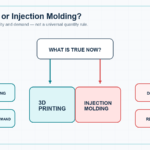
Injection molding may be better when the part design is stable, volume is high, unit-cost pressure is strong, and molded geometry can meet the functional requirements. Mold tooling adds upfront cost, but it can be justified when repeated production volume is high enough.
Turning may still remain useful before molding. It can create test parts for fit, shaft interaction, sealing, load behavior, and material comparison before the mold is built.
The right choice depends on design maturity, quantity, geometry, tolerance, material, and how much risk the buyer wants to remove before tooling. A turned prototype can reduce the chance of committing to a mold before the round features are proven.
How to Prepare a Plastic CNC Turning RFQ
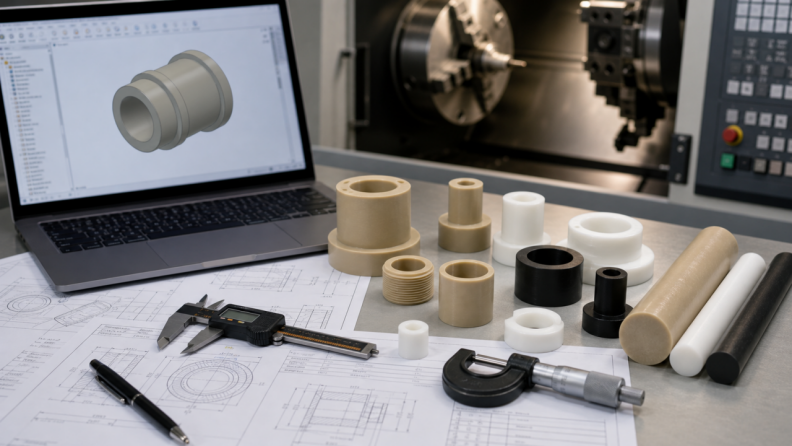
Before sending a plastic CNC turning RFQ to PlasticHubs, prepare the information that lets an engineer assess material, geometry, process path, and inspection risk.
- 3D CAD file and 2D drawing
- Material grade, color, stock form, and acceptable substitute
- Quantity, batch plan, and repeat-order expectations
- Critical OD, ID, length, shoulder, groove, thread, and face dimensions
- Concentricity, runout, roundness, or datum requirements where needed
- Surface finish, chamfer, radius, and deburring requirements
- Thread standard, mating hardware, and assembly load when threads matter
- Inspection report, material document, or traceability requirement
- Part function, mating parts, working environment, and failure risk
These inputs help PlasticHubs review whether the part should be turned, milled, or machined through a combined route. They also reduce the chance that a supplier quotes a low-risk job when the actual requirement is fit-critical.
If the buyer does not yet know every tolerance, that is acceptable. The important step is to identify which features are critical and what failure would matter most: poor shaft fit, leakage, wobble, thread failure, assembly interference, surface damage, or part distortion.
What PlasticHubs Should Review Before Production
A strong review connects the material, stock, geometry, drawing, and inspection plan. For turned plastic parts, PlasticHubs should first confirm whether the part is truly turning-led or whether milling, drilling, or secondary operations are central to function.
The material review should check grade, stock form, working environment, and documentation needs. Softer, filled, transparent, or high-performance plastics may need different expectations for edge quality, holding, and inspection.
The geometry review should focus on OD/ID relationships, wall thickness, long slender sections, grooves, thread relief, and datum structure. These features decide whether the part can be held and measured reliably.
The process review should consider workholding, cutting sequence, burr control, chip evacuation, and when inspection should happen. Some parts need interim checks before the final operation or before unclamping.
The quality review should confirm what the buyer expects to receive with the finished parts. That may include parts only, or it may include dimensional reports, material documents, packaging instructions, labeled bags, or revision-controlled batch records.
FAQ
What is plastic CNC turning?
Plastic CNC turning is the lathe machining of plastic round stock into parts such as bushings, sleeves, spacers, rollers, caps, and threaded components. The workpiece rotates while cutting tools form outside diameters, inside diameters, grooves, faces, chamfers, and threads.
What parts are best suited for plastic CNC turning?
The best candidates are parts with round or axial features, such as bushings, sleeves, rollers, washers, spacers, plugs, nozzles, round insulators, and shaft-related components. Parts dominated by flat pockets or multi-face geometry may be better suited to CNC milling.
Which plastics are good for CNC turning?
Common candidates include POM, Nylon, PTFE, PEEK, PC, ABS, PMMA, and PVC, depending on the application. Material selection should consider stiffness, friction, wear, heat, chemical exposure, moisture, appearance, and documentation requirements.
Can plastic CNC turning hold tight tolerances?
Plastic CNC turning can support precision applications, but tolerance depends on material, geometry, wall thickness, workholding, temperature, and inspection method. Critical dimensions should be defined on a drawing rather than assumed from a general tolerance statement.
Is CNC turning better than CNC milling for plastic parts?
Turning is usually better for cylindrical, sleeve-like, ring-shaped, and concentric features. Milling is usually better for flat surfaces, pockets, brackets, housings, and multi-face geometry. Some plastic parts need both.
What should I send for a plastic CNC turning quote?
Send CAD files, a 2D drawing, material grade, quantity, critical OD/ID dimensions, concentricity or runout requirements, surface and deburring needs, thread details, inspection requirements, and part function. This lets PlasticHubs review the true machining and quality risk before quoting.