Plastic CNC machining
Stock engineering plastic, critical fits, prototypes, low volume, and repeat parts without production tooling.
Review capabilities →
CNC plastic machining for prototypes, low-volume parts, and repeat production—reviewed from your CAD, drawing, material grade, critical dimensions, finish, and inspection needs.
Send a 3D model, drawing, material or performance target, quantity, and critical requirements.
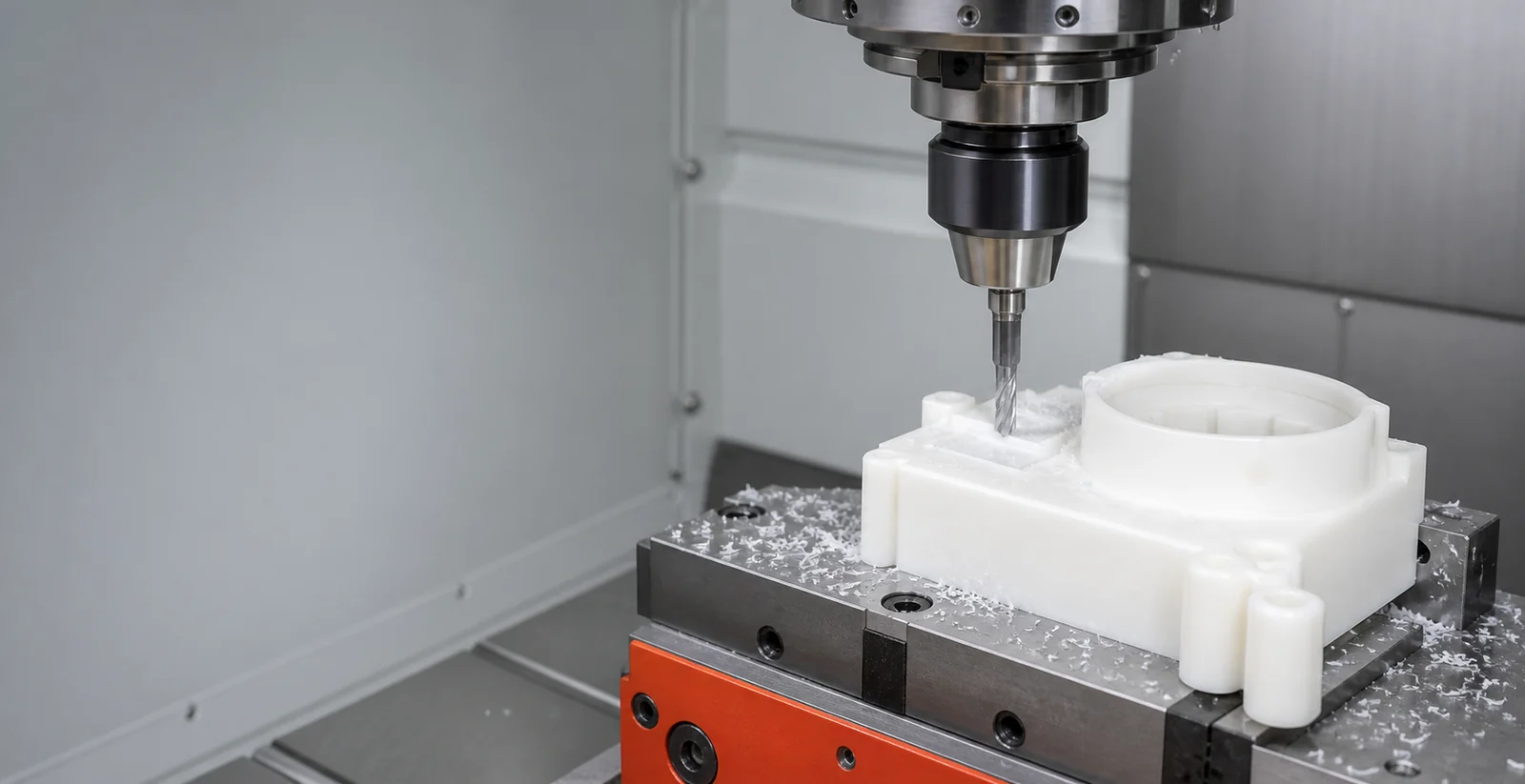
CNC is strongest when stock engineering-plastic properties, defined critical features, tool-free production, or continued design changes matter. Compare alternatives before committing to the route.
Stock engineering plastic, critical fits, prototypes, low volume, and repeat parts without production tooling.
Review capabilities →Consider when complex internal channels, lightweight structures, or rapid geometry iteration matter most.
Compare 3D printing →Consider for cosmetic models, replicated appearances, and bridge quantities from a master pattern.
Compare vacuum casting →Consider when the design is stable, quantity repeats, and production tooling is justified.
Read the molding comparison →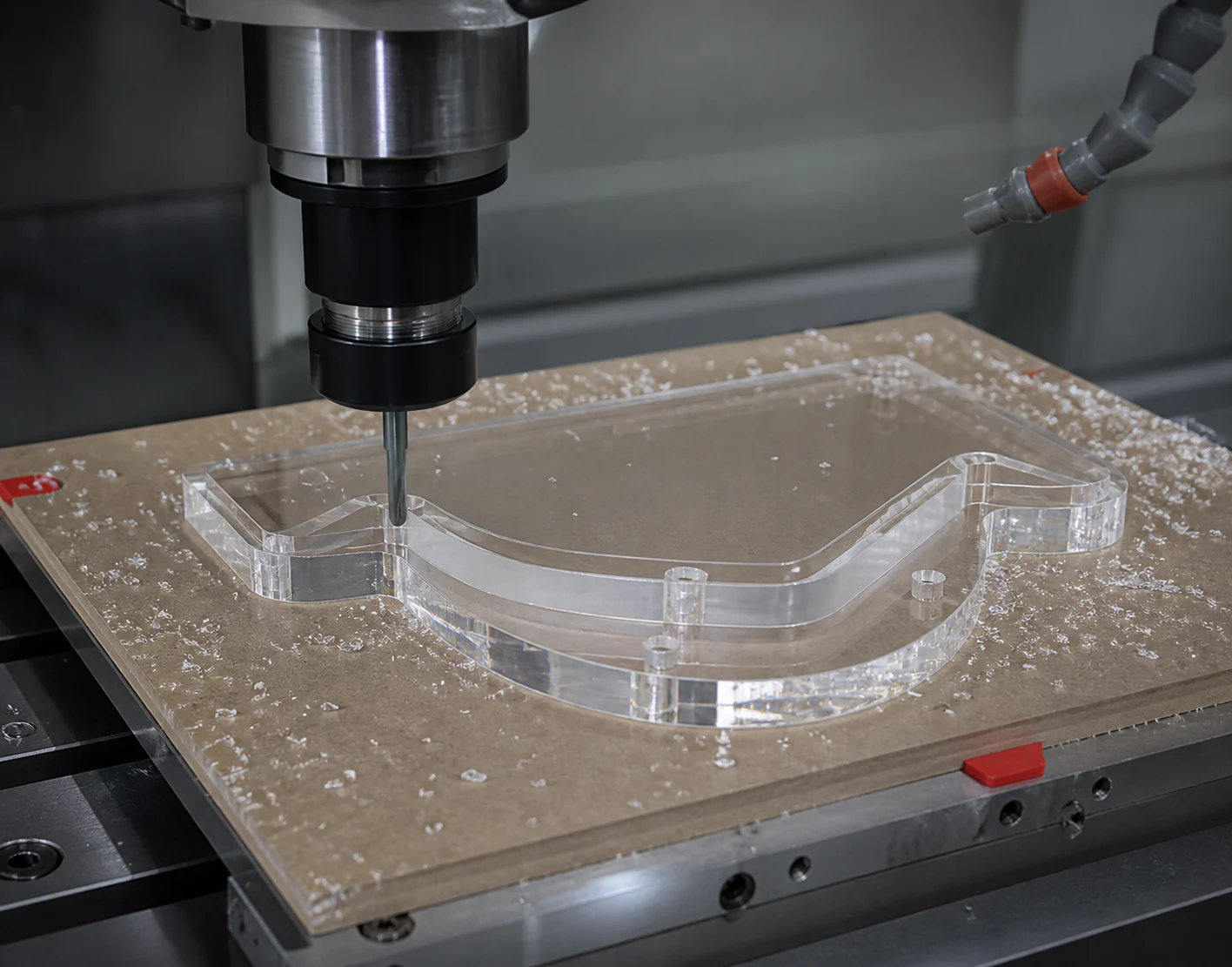
PlasticHubs combines dedicated CNC capacity with plastic-specific process review for prototypes, low-volume parts, and repeat production.
Capability limits are confirmed against material grade, geometry, wall thickness, feature size, workholding, finish, and measurement conditions during quotation.
Each route is selected from part geometry, tool access, material behavior, setup strategy, and critical relationships—not from a one-size-fits-all capability list.
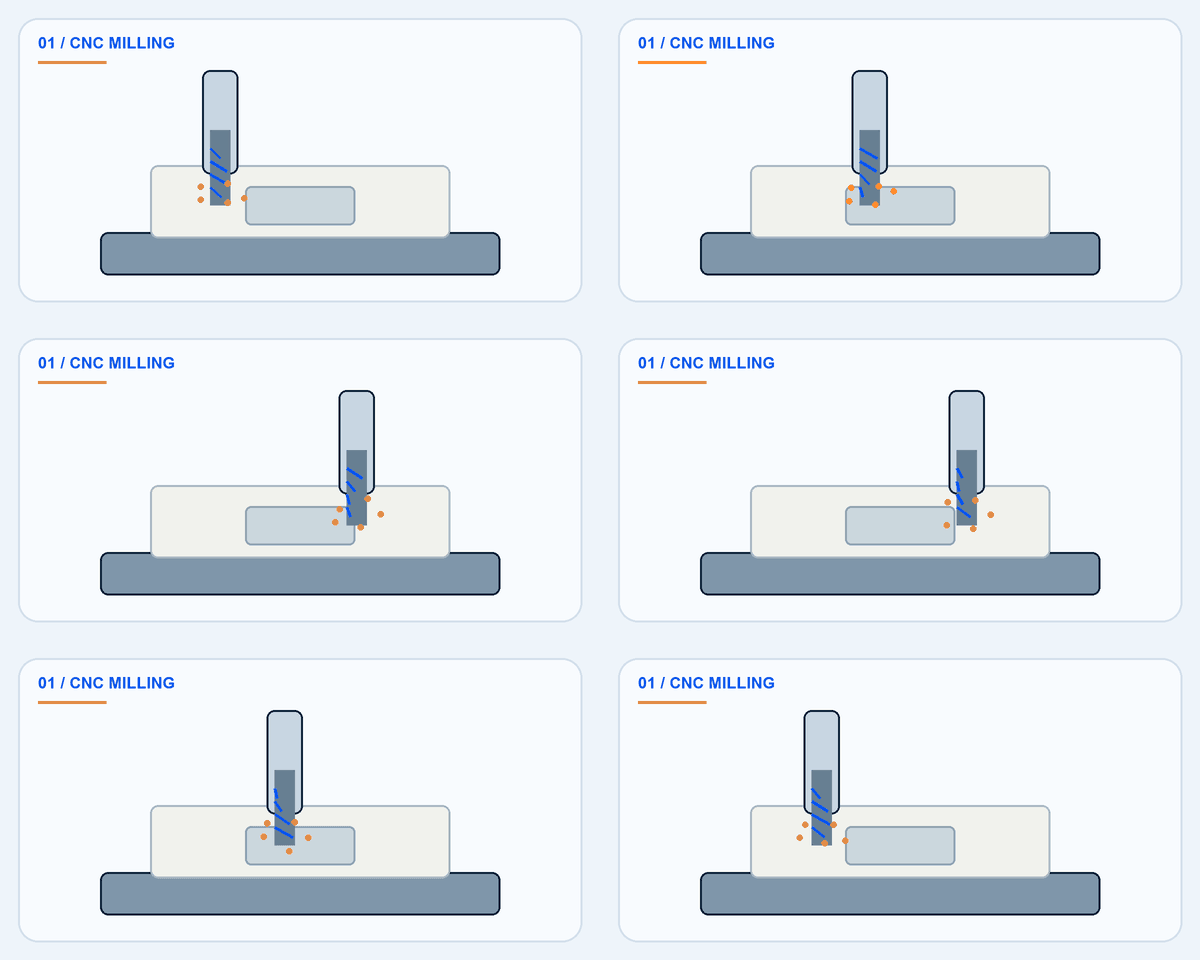
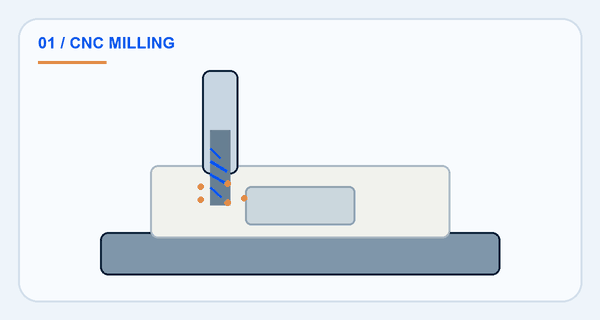
Faces, profiles, holes, pockets, steps, mounting surfaces, and multi-sided features, reviewed for access, heat, stiffness, and workholding.
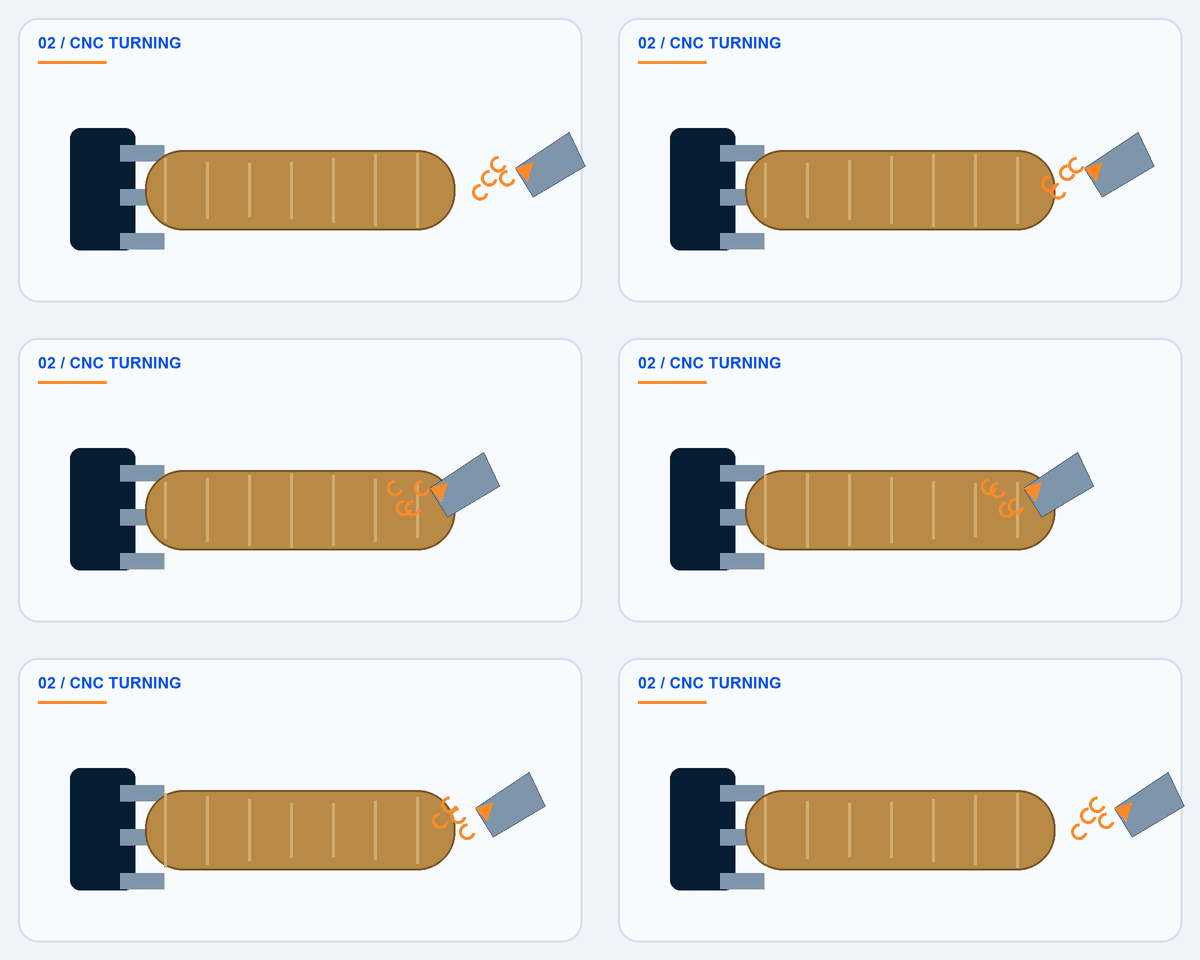
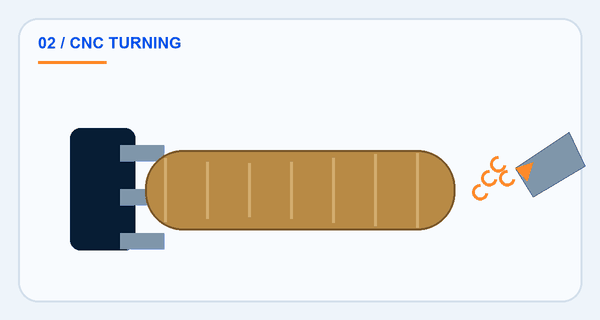
Bushings, rollers, sleeves, rings, spacers, valve seats, and rotational components with controlled clamping and wall behavior.

Fewer setups for features in several directions or positional relationships that benefit from a coordinated machining route.
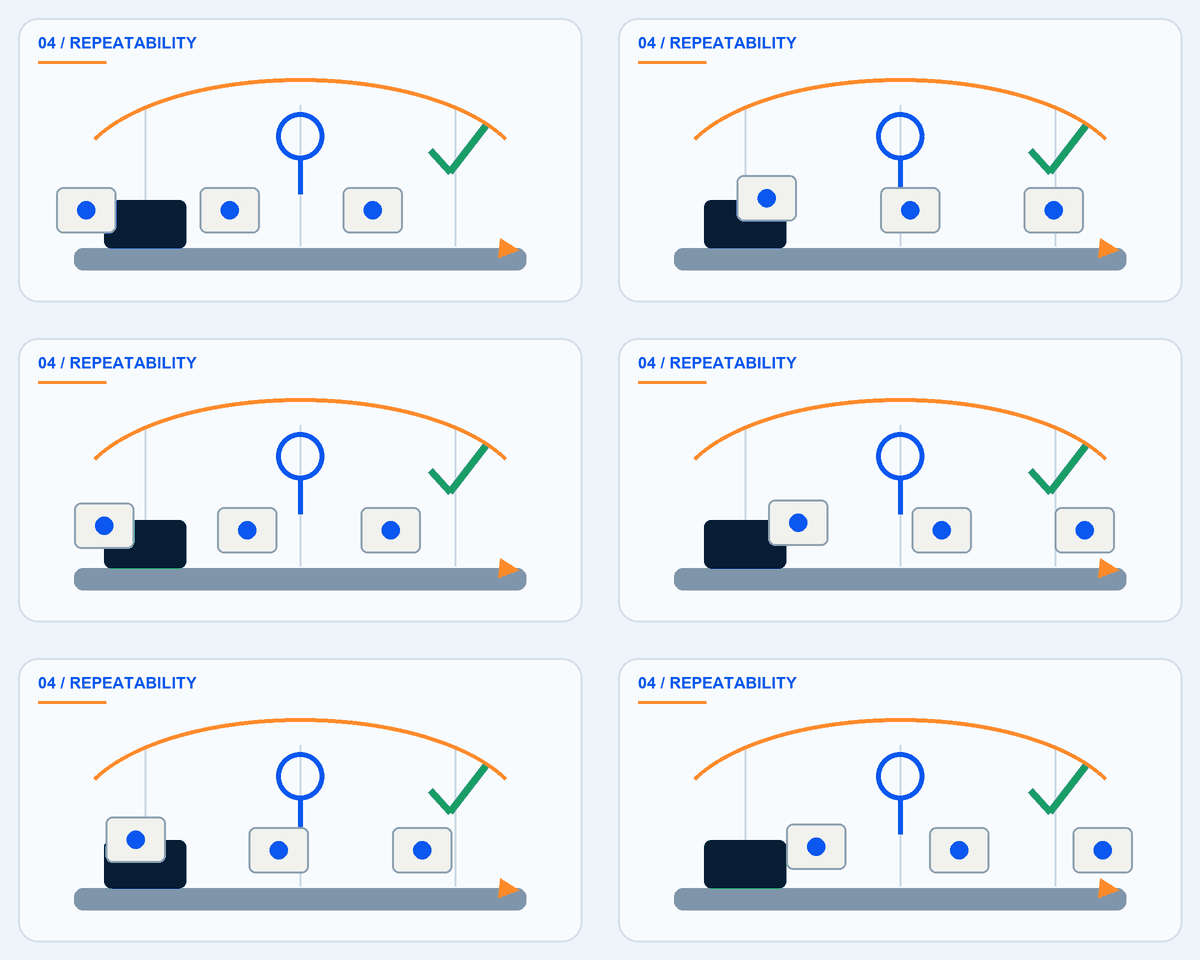
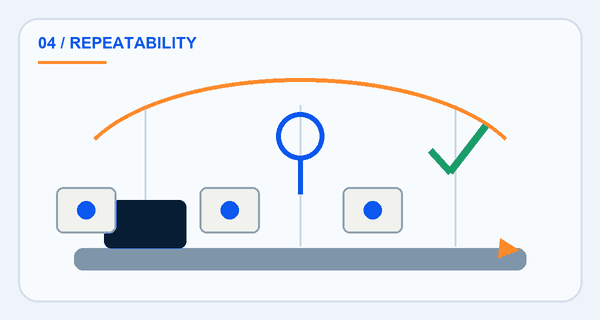
Single validation parts, low-volume trials, and later repeats with material, revision, datum, inspection, and fixture requirements defined in scope.
Compare common stock forms, material behavior, application fit, and the machining risks that should be defined before quotation.
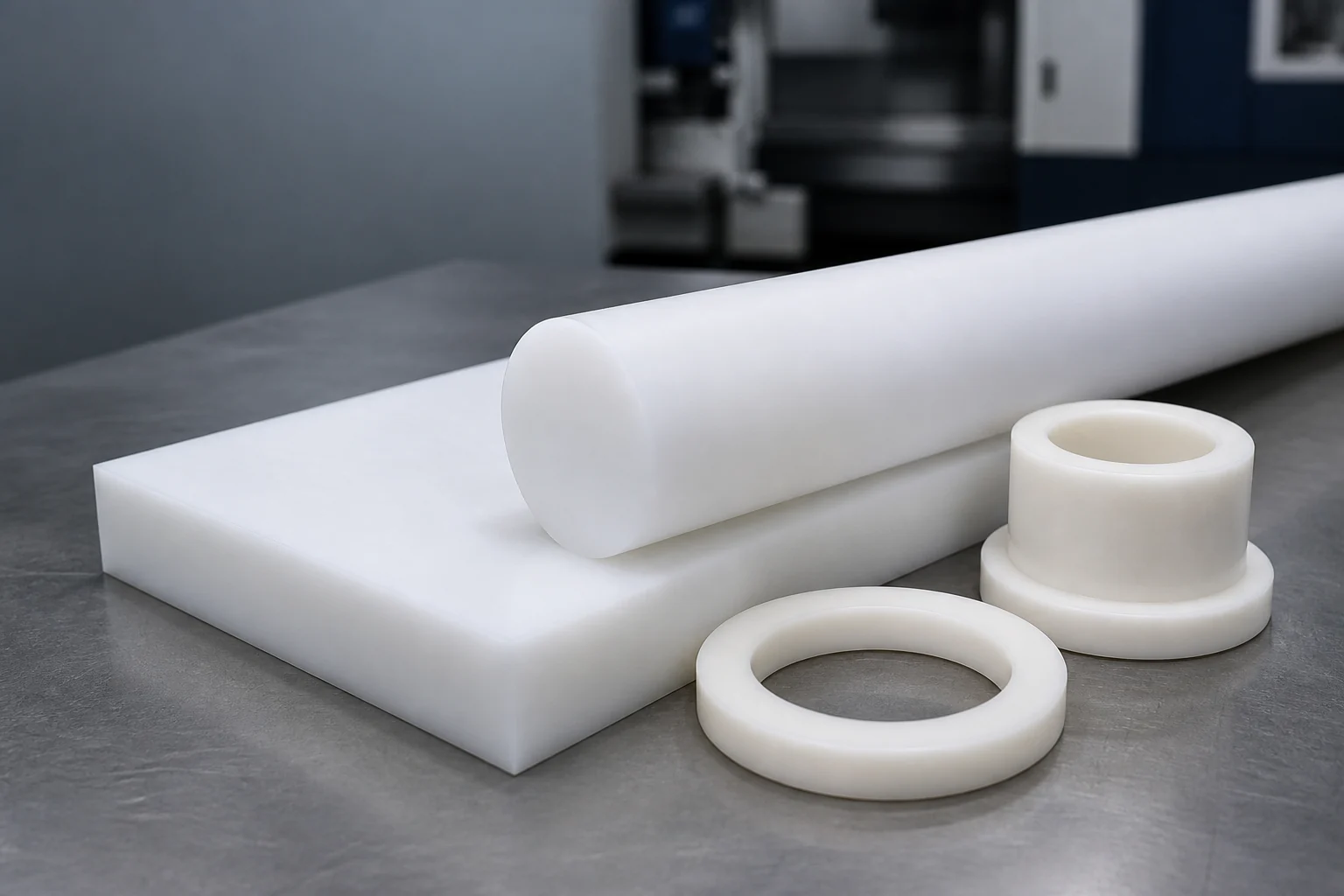

Use this route when dimensional behavior, sliding contact, insulation, sealing, or low friction governs the part.

Review these materials when temperature, chemicals, electrical behavior, or structural performance matters.
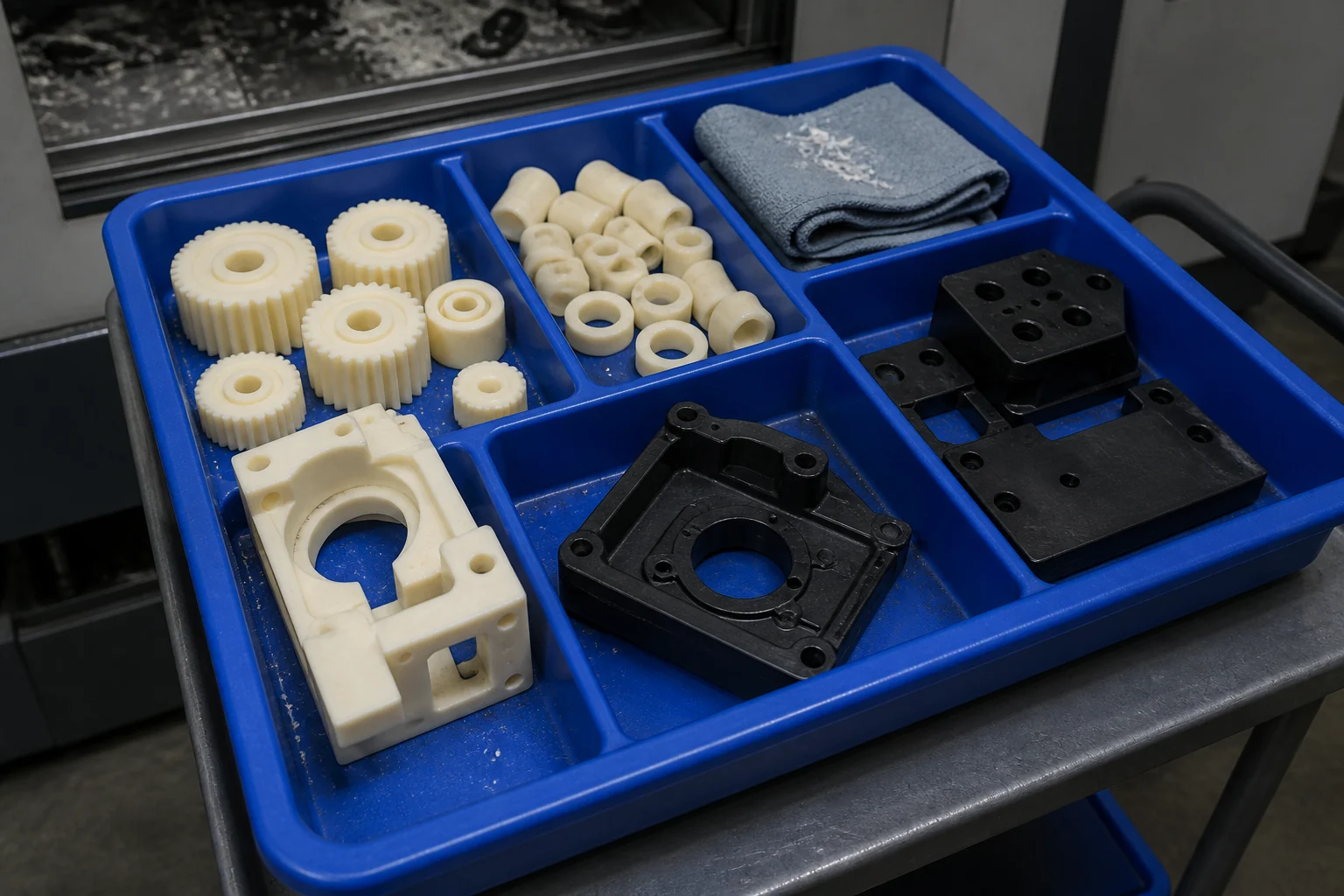
Suitable candidates for mechanical components, housings, fixtures, prototypes, and equipment parts.
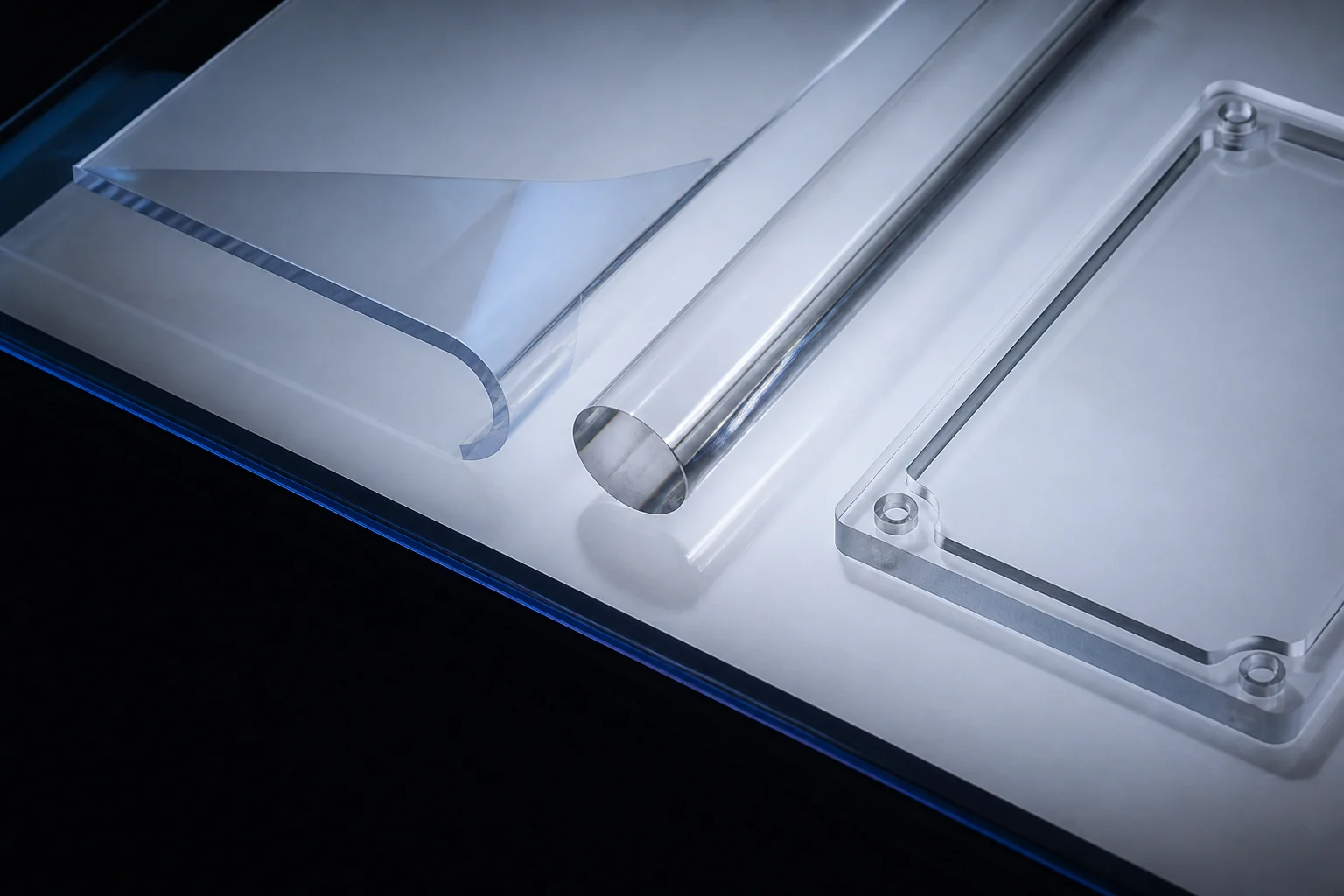
Use for impact-resistant clear parts, covers, sight windows, displays, and optical appearance requirements.
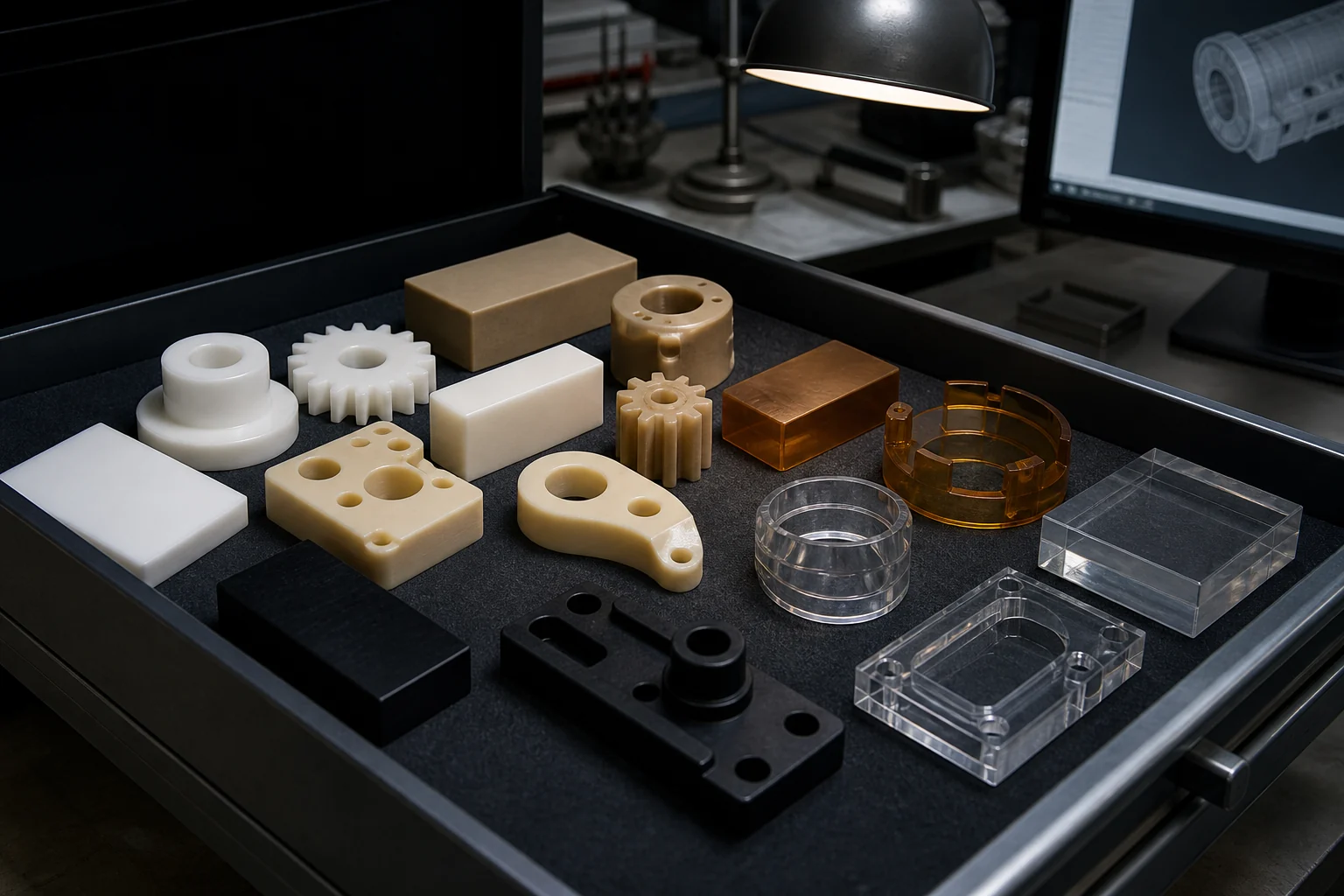
Review grades, performance, machining behavior, stock forms, and application tradeoffs in the detailed material guide.
Open the PlasticHubs material guide →There is no single guaranteed tolerance for every polymer, feature size, and geometry. The review connects functional requirements to material and process behavior.
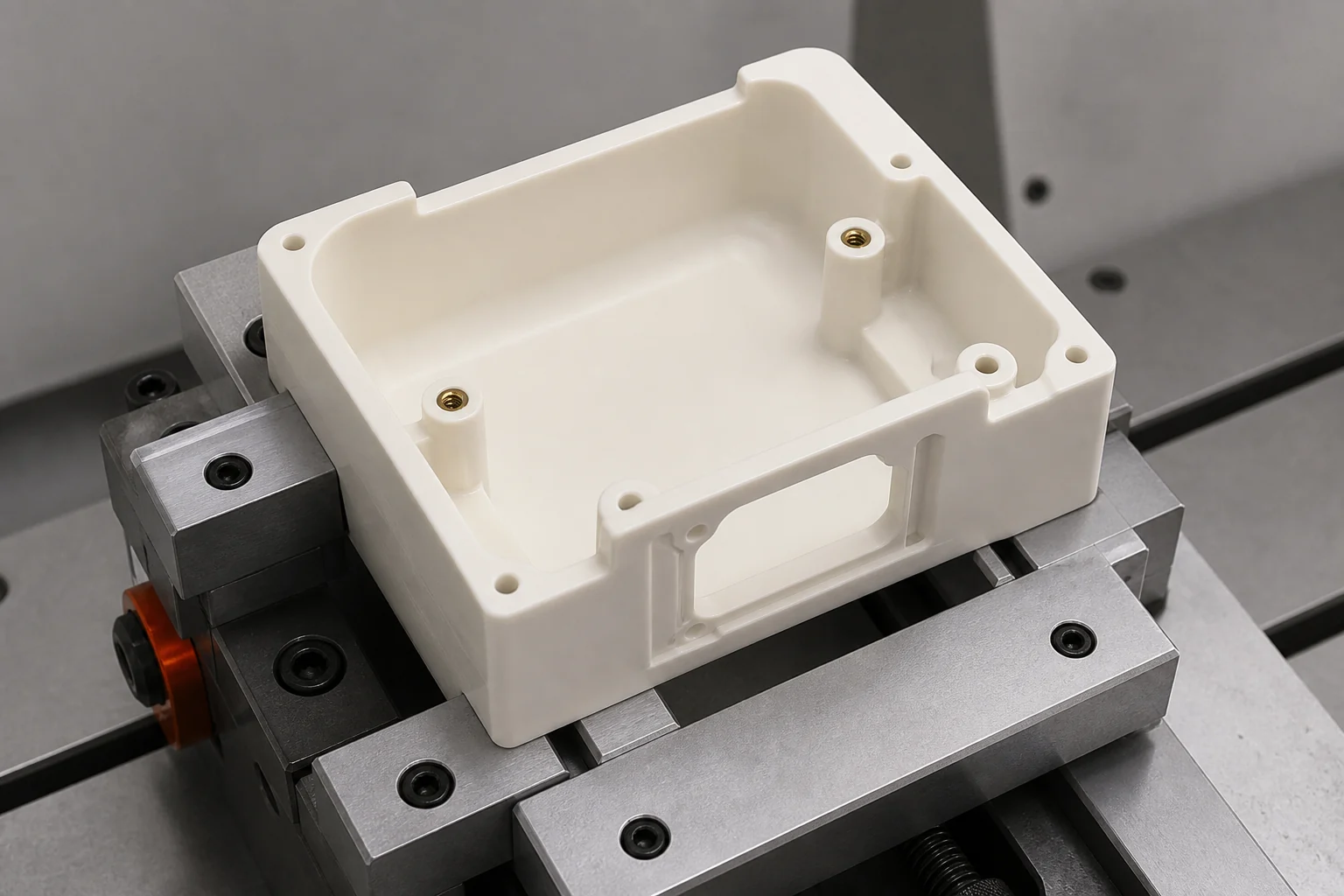 1 Thin wall2 Soft-jaw contact3 Pocket access4 Thread insert
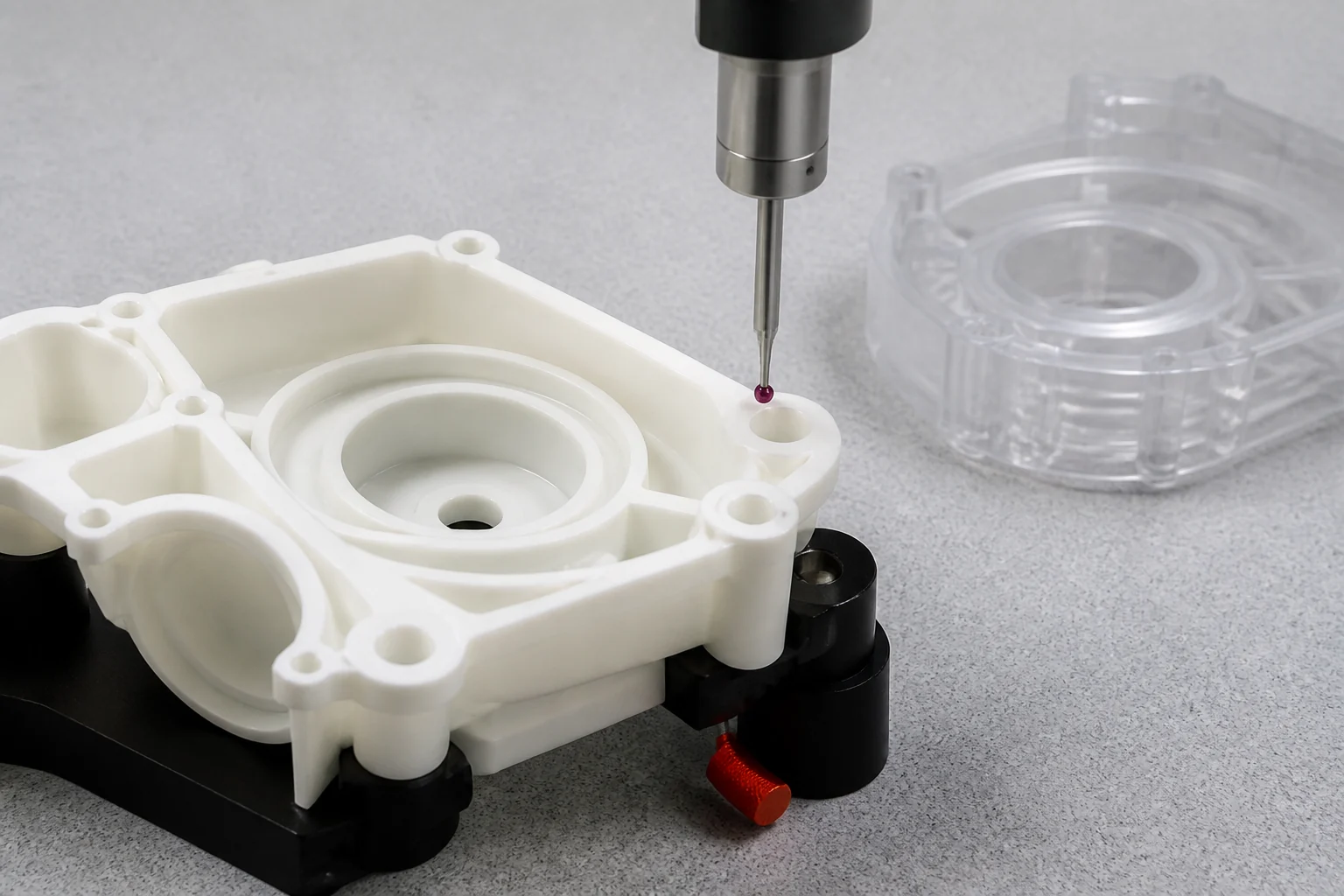
Inspection begins with part function and agreed acceptance criteria—not a generic “high precision” statement.
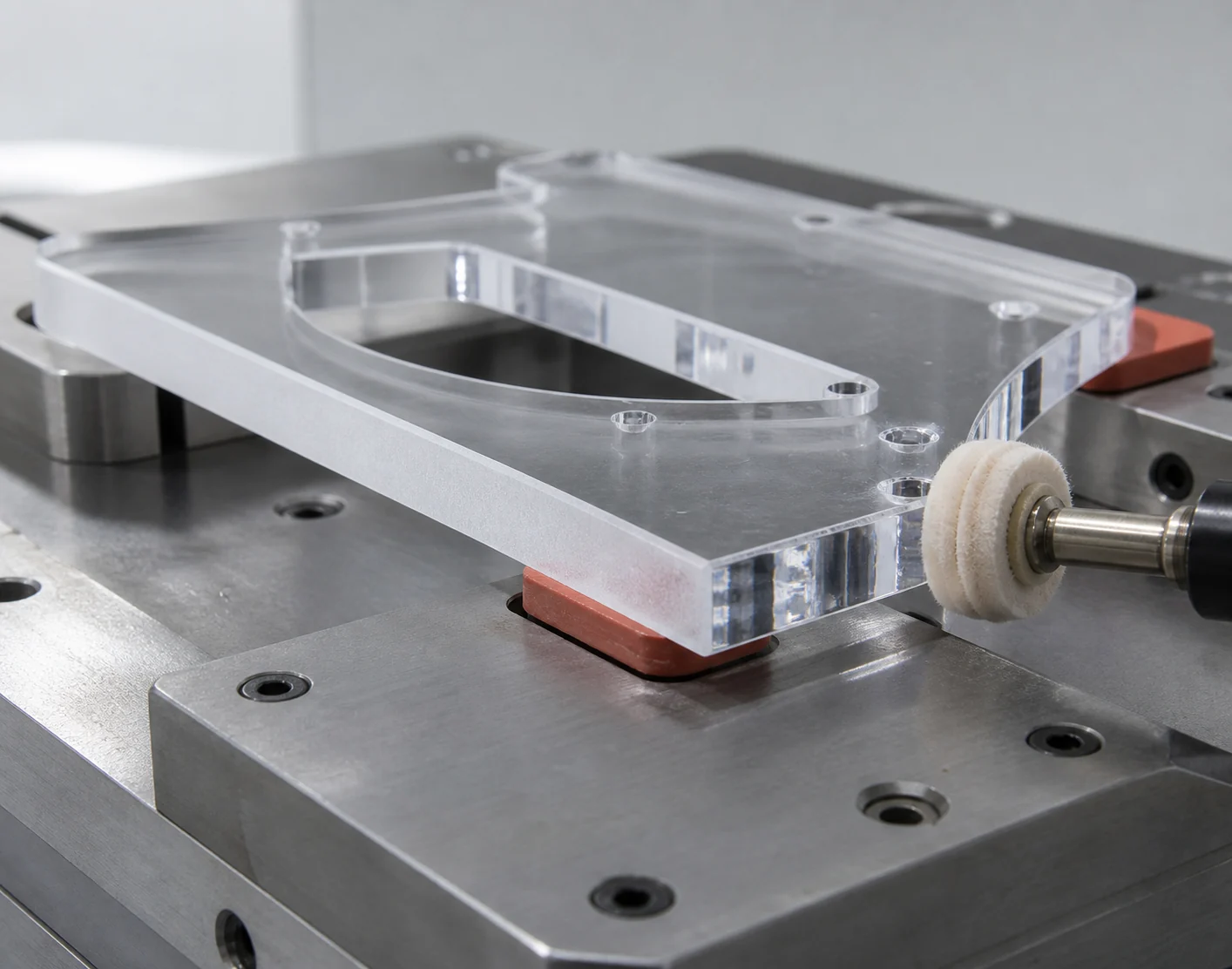
Finishing is selected from material compatibility, appearance, critical dimensions, and use conditions. Metal and plastic finishing scopes remain separate.
Natural machined surfaces and visible tool paths when function and dimensions take priority.
Remove burrs and treat sharp edges while protecting critical profiles and fits.
Review for suitable materials such as PMMA, with clarity, edge, and dimensional effects considered.
Material-limited and project-confirmed. It is not a universal finish and is not “Fumigation.”
Review media, cleaning, material response, appearance, and dimensional effect.
Confirm substrate compatibility, adhesion, masking, appearance, and functional requirements.
Evaluate only when material condition and dimensional targets support it; never treat it as an automatic step.
A clear project scope reduces avoidable quoting loops, unsupported assumptions, and late manufacturing changes.
3D CAD, 2D drawing, material or performance target, quantity, finish, inspection, and delivery region.
Grade, route, datums, access, walls, pockets, threads, cosmetic surfaces, and finishing risks.
Manufacturing, quantity, inspection, finish, packaging, and exceptions requiring approval.
Work to the accepted revision; review the impact of any design or material change.
Complete agreed checks, records, and packaging before shipment.
Explore common part families across motion, electrical, clear-component, structural, fluid-handling, and low-volume applications.
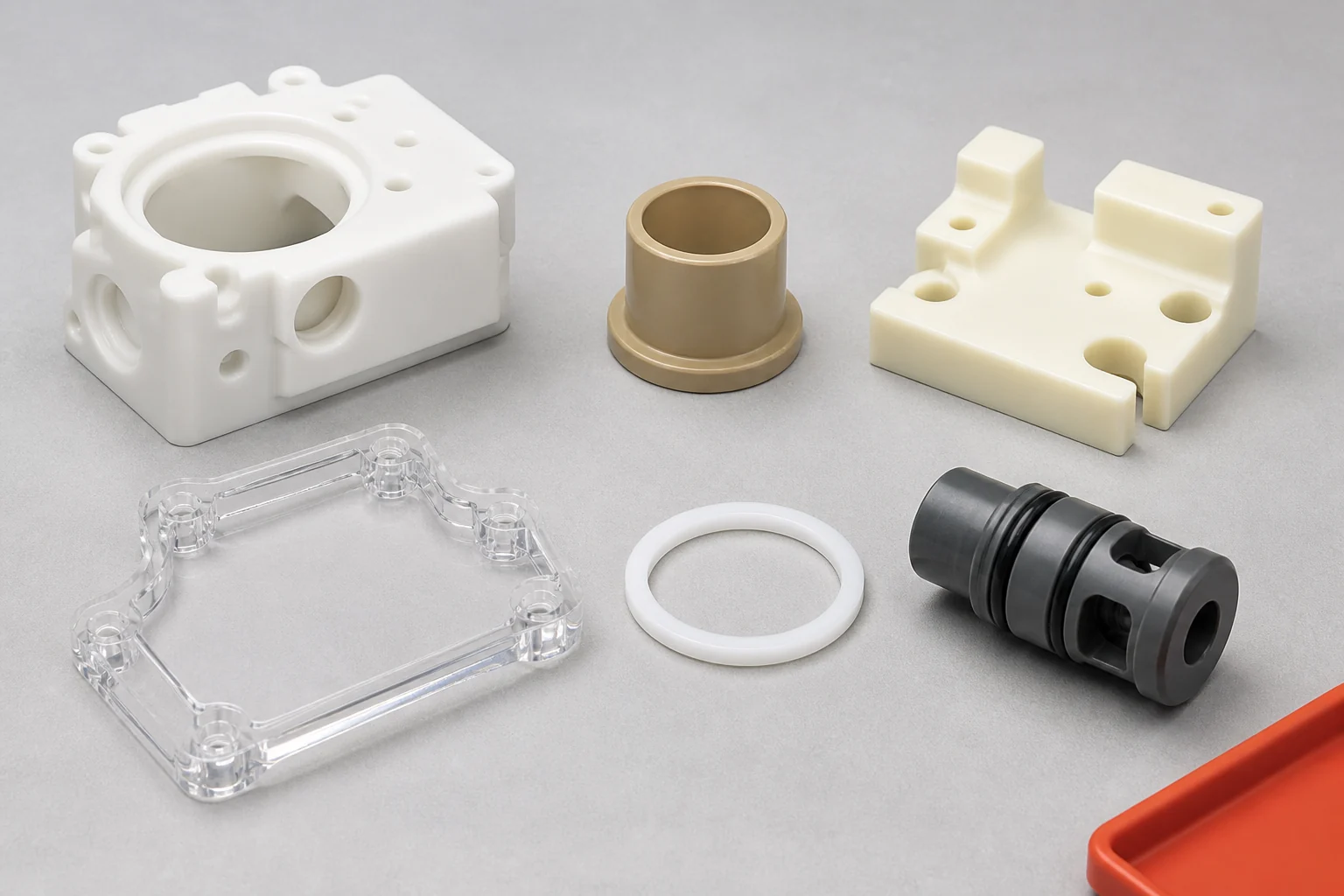
Bearing housings, bushings, rollers, guides, and low-friction components.
Insulators, spacers, fixtures, jigs, and equipment components.
Covers, sight windows, light-guiding parts, and display components.
Housings, panels, mounting plates, brackets, and connectors.
Valve seats, seal supports, manifolds, and related components.
Assembly trials, replacement parts, and low-volume end-use components.
Useful answers tied to material, tolerance, deformation, quantity, files, and quotation scope.
Projects can be reviewed for POM, PEEK, Nylon, PC, PMMA, ABS, PTFE, PEI, and other suitable stock engineering plastics. Availability depends on grade, stock form, size, geometry, performance needs, and sourcing.
No single value applies to every part. Results depend on material, feature size, wall thickness, workholding, temperature, moisture, machining stress, finishing, and measurement conditions. Separate critical and general dimensions on the 2D drawing.
Material condition, balanced wall design, symmetric material removal, low-stress workholding, sharp tools, chip evacuation, heat control, machining sequence, conditioning, and an appropriate stress-relief route can all matter.
It can support both. CNC suits tool-free prototypes, assembly trials, low-volume end-use parts, and repeat orders. Compare molding when stable quantity justifies tooling, and 3D printing when internal geometry or rapid iteration dominates.
Provide STEP, STP, or another usable 3D CAD format, plus a PDF, DWG, or DXF drawing for critical dimensions, tolerances, threads, surfaces, and inspection. Include material grade or performance target, quantity, delivery region, and intended use.
Key inputs include material and stock, part size, material removal, setup count, tool access, feature complexity, quantity, finishing, inspection, and packaging. PlasticHubs quotes after file review rather than publishing a universal range without scope conditions.
PlasticHubs will review the plastic CNC machining route, identify risks that need clarification, and define the quotation scope.