

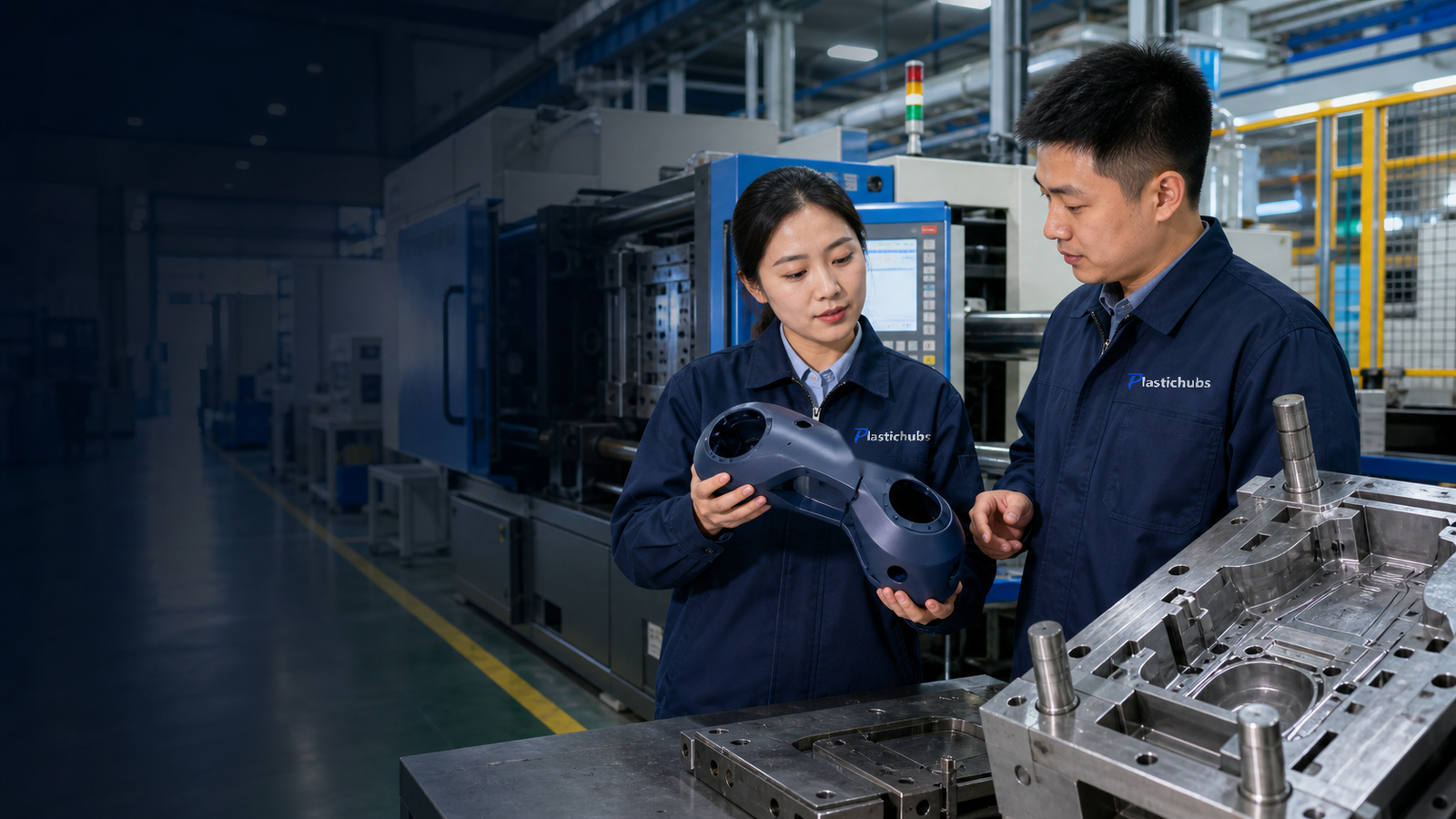
PLASTICHUBS INJECTION MOLDING SERVICES
Custom Plastic Injection Molding for Repeatable Production Parts
Move from mold strategy and DFM to approved samples, repeat production, secondary operations, assembly, and inspection with one plastic-focused manufacturing team.
- Plastic injection molding, overmolding, insert molding, and two-color molding
- 253 injection molding machines across two self-operated facilities
- Tooling and process plans matched to part geometry, resin, quantity, and quality requirements
Final tolerance, tooling class, cavity count, material, inspection, and delivery plan are confirmed after engineering review.
START WITH THE PRODUCTION REQUIREMENT
Injection molding is the right route when repeatability and unit economics justify tooling
PlasticHubs reviews the CAD model, annual and lifetime quantities, resin requirements, cosmetic surfaces, assembly conditions, critical dimensions, and required quality records before proposing the mold and production route.
For early geometry checks or uncertain demand, plastic CNC machining, 3D printing, or vacuum casting may reduce upfront commitment. When the design is stable and repeat production matters, injection molding provides the strongest path to controlled part consistency and lower unit cost at volume.
INJECTION MOLDING SERVICES
Choose the molding route around the part—not a generic production line
Each service below is scoped around material pairing, geometry, tooling, and end-use requirements.
Plastic Injection Molding
Single-material thermoplastic parts for prototypes, bridge production, and repeat production.
- Single or multi-cavity tooling
- Engineering and commodity resins
- Cosmetic and functional parts
Insert Molding
Metal inserts, bushings, contacts, or threaded features molded into one finished component.
- Insert retention and load path review
- Manual or automated loading strategy
- Pull-out and torque requirements
Overmolding
Rigid substrates combined with a second polymer for grip, sealing, impact control, or ergonomics.
- Material adhesion review
- Shutoff and flash-risk control
- Hard-soft interface design
Two-Color Molding
Two compatible materials or colors formed in a controlled multi-stage molding process.
- Interface and sequencing review
- Color and cosmetic boundary control
- Tooling strategy by volume
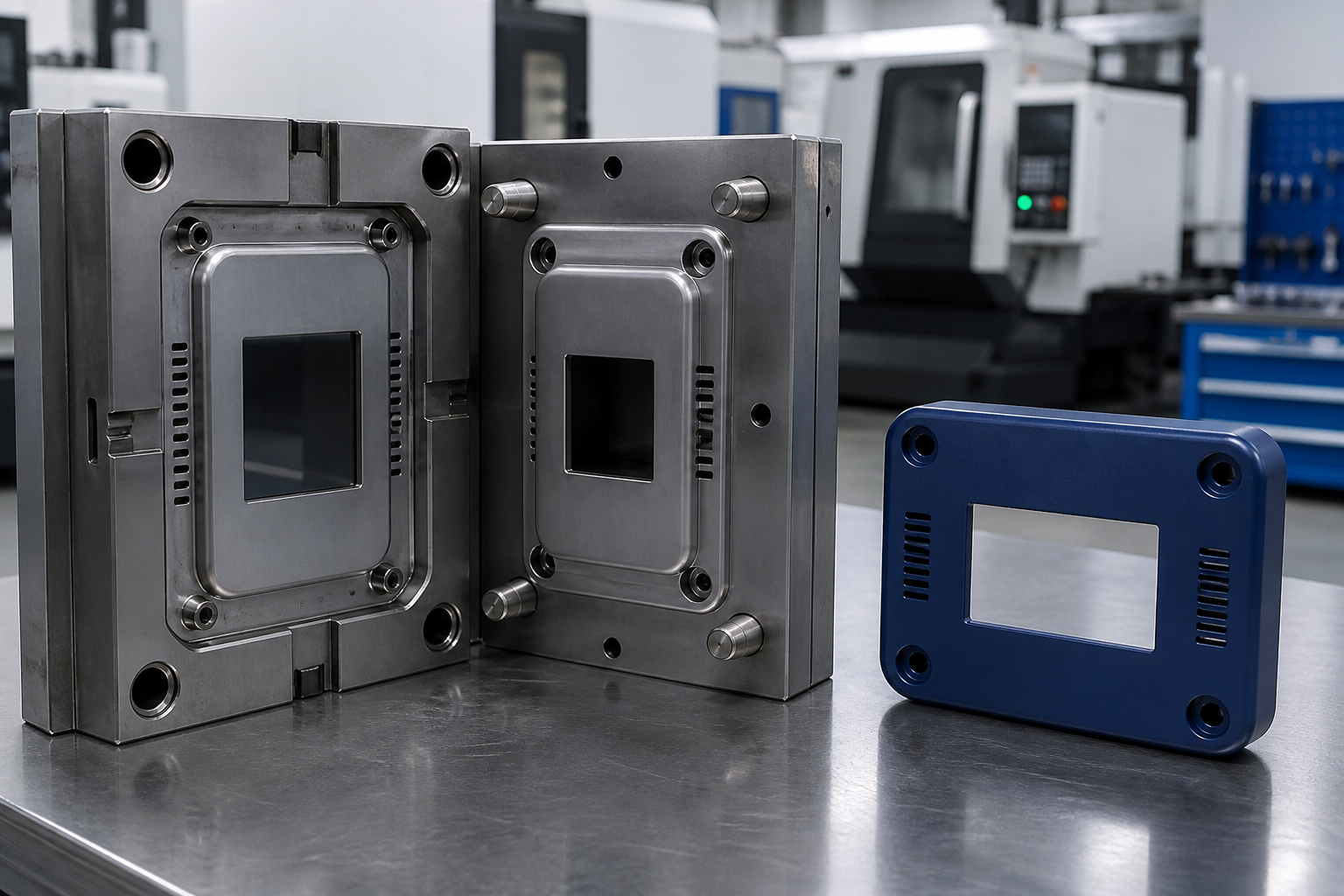 ONE MOLD · ONE MATCHED PART
TOOLING AND PRODUCTION CAPABILITY
The mold, molded part, and production target must agree
The pictured mold and finished cover are intentionally shown as one matched pair: the outer profile, display opening, corner features, and vent locations correspond. PlasticHubs applies the same discipline to the project definition before tooling is released.
| Capability | PlasticHubs scope | What must be confirmed |
|---|---|---|
| Tooling | Prototype, bridge, and production tooling; single, multi-cavity, and family-tool strategies where appropriate | Lifetime volume, resin, geometry, cycle target, mold ownership, maintenance |
| Precision | Selected precision components can be evaluated to tolerances as tight as ±0.02 mm | Resin shrinkage, feature size, mold condition, measurement method, process capability |
| Part size | Press selection up to 1,000 tons of clamping force | Projected area, shot size, flow length, gate plan, equipment availability |
| Quality records | FAI, dimensional inspection, process records, and project-specific reporting | Critical dimensions, sampling, gauges, report format, acceptance criteria |
INJECTION MOLDING MATERIALS
Resins selected for mechanical, thermal, cosmetic, electrical, and regulatory needs
Start with the operating environment and required part behavior. PlasticHubs then checks moldability, shrinkage, moisture control, appearance, additives, and supply continuity.
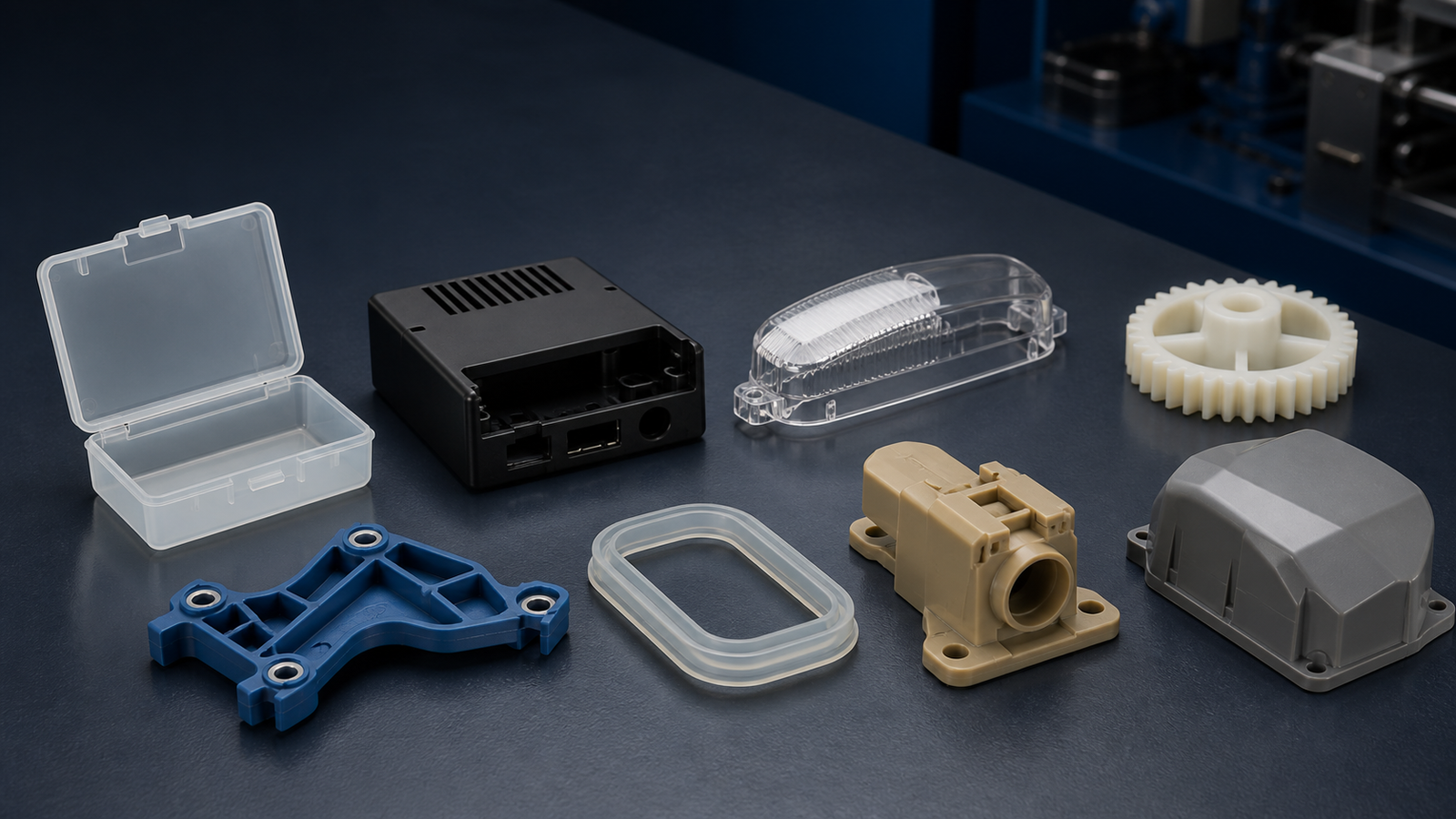 MATERIAL FAMILIES · FUNCTIONAL GEOMETRIES
REQUEST A PROJECT-SPECIFIC QUOTE
Upload the part and define the production decision
Tool cost and part cost depend on geometry, cavity strategy, resin, annual demand, lifetime demand, finish, and inspection. A useful quote starts with the inputs below—not a generic price range.
- STEP, STP, IGES, X_T, or native CAD
- Annual and lifetime quantities
- Preferred resin or performance target
- Critical dimensions and assembly fits
- Cosmetic surfaces and finish standard
- Inspection and documentation needs
Interactive RFQ builder
What drives your quote?
Share annual demand, lifetime demand, batch size, and launch timing so cavity count, mold material, and production capacity can be planned together.
Useful input: 1,000 / 10,000 / 100,000+ parts per year
FROM RFQ TO REPEAT PRODUCTION
A visible order path with approval points before production
Upload CAD and requirements
Part file, material target, volume, finish, CTQs, and delivery needs.
DFM and mold strategy
Review parting line, gate, draft, wall thickness, ribs, bosses, and undercuts.
Tool build and trial
Manufacture the approved tool and prepare the first sample run.
Sample approval
Evaluate dimensions, assembly, appearance, and agreed reports before release.
Production and delivery
Run, inspect, finish, assemble, pack, and ship against the accepted order.
SECONDARY OPERATIONS AND FINISHING
Services available after molding—not a generic cleanup sequence
Select only the operations that the part, resin, appearance standard, and assembly require.
SPI polishing and texture
Gloss, matte, bead-blasted, EDM, VDI, and approved Mold-Tech-style textures where compatible.
Pad printing and laser marking
Part identification, symbols, legends, and branding reviewed for adhesion, contrast, and wear.
Painting and coating
Color, coverage, gloss, masking, and coating compatibility defined before production release.
Inserts, bonding, and assembly
Threaded inserts, hardware, bonding, and subassembly planned around access, load, and tolerance stack.
The buttons preserve future service-page routes without publishing broken internal links before those pages exist.
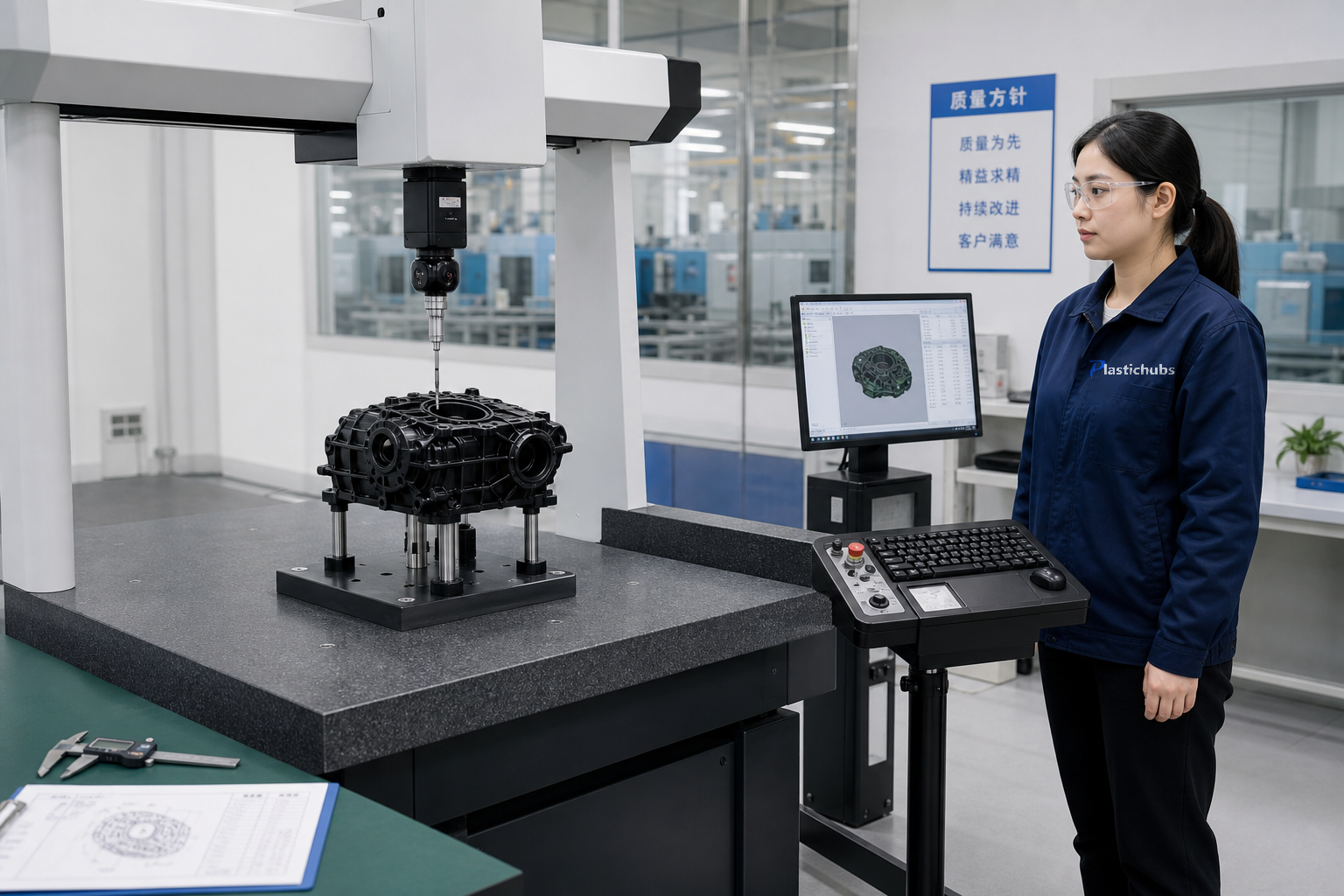 PART FIXTURED · HANDS CLEAR · MEASUREMENT ACTIVE
QUALITY AND INSPECTION
Inspection is defined from critical features and acceptance criteria
The part is fixtured and measured without being touched during the active CMM cycle. This is the standard applied to all inspection imagery and to the real inspection plan: the setup must agree with the feature being verified.
INDUSTRIES AND END-USE APPLICATIONS
Robotics first—plus molded parts for demanding product teams
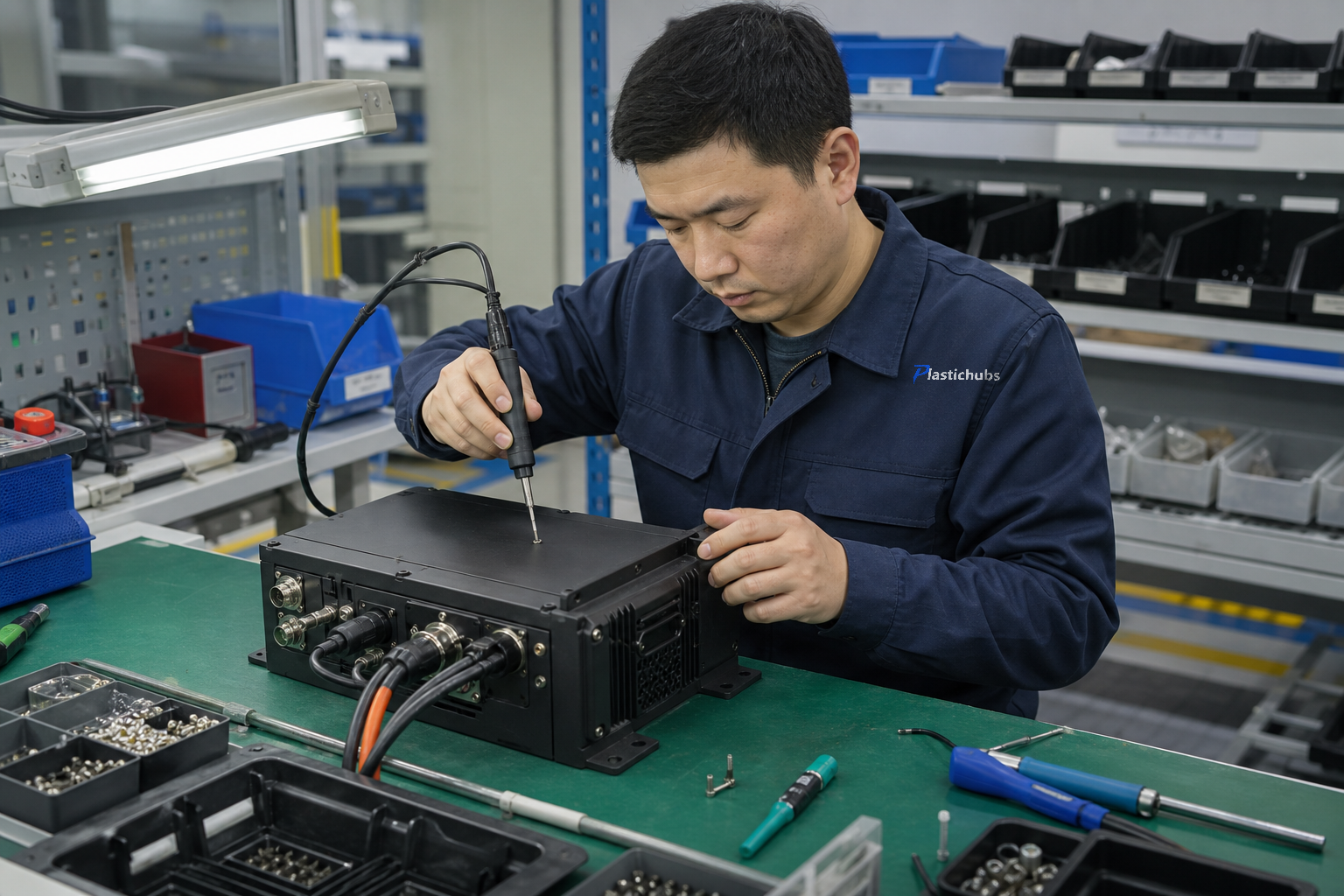
CORE APPLICATION ADVANTAGE
Robotics and automation components
End-of-arm housings, protective covers, cable guides, sensor mounts, gripper components, and control enclosures designed for assembly access, repeated movement, impact, and serviceability.
PART AND PROJECT EXAMPLES
From a molded component to a qualified assembly
Representative project types below show the decision scope. Final public case studies will use approved project records and non-confidential images.
Gearbox housing
Structural ribs, bearing interfaces, heat and impact requirements, and CMM verification.
Controller enclosure
Cosmetic surfaces, vent geometry, internal bosses, display opening, and assembly fit.
Device shell
Material documentation, controlled appearance, critical interfaces, and inspection records.
Overmolded handle
Hard-soft material compatibility, shutoff control, grip texture, and adhesion validation.
WHY CHOOSE PLASTICHUBS
Plastic-focused engineering from the first review through repeat orders
We compare molding with CNC machining, 3D printing, and vacuum casting before committing to tooling.
Mold strategy, trial samples, production controls, finishing, and assembly are scoped as one program.
Two self-operated injection molding facilities and 253 machines support qualified production programs.
CTQs, first article approval, in-process inspection, final checks, and certification scope are made visible.
RELATED PLASTIC MANUFACTURING RESOURCES
Continue from process selection to materials, finishes, and RFQ preparation
INJECTION MOLDING FAQ
Questions to settle before tooling
These answers focus on unresolved sourcing decisions rather than repeating the main page.
What should I send for an injection molding quote?
Send the 3D CAD file, drawing when available, resin or performance target, annual and lifetime quantities, critical dimensions, cosmetic requirements, inspection needs, assembly context, and delivery location.
How do you decide between prototype and production tooling?
The decision uses expected tool life, lifetime volume, resin, geometry, cavity count, cycle target, qualification requirements, future revisions, and budget—not volume alone.
Can PlasticHubs support overmolding and insert molding?
Yes. The engineering review covers material compatibility, insert retention, shutoffs, flash risk, substrate handling, interface geometry, and the required validation method.
What tolerance can injection molded parts hold?
Selected precision components can be evaluated to tolerances as tight as ±0.02 mm, but final tolerances depend on feature size, resin shrinkage, mold construction, process capability, environment, and measurement method. The accepted drawing and quotation govern the project.
Who owns and maintains the mold?
Ownership, storage, maintenance, expected life, transfer conditions, and repeat-order responsibilities should be stated in the accepted tooling agreement before mold release.
Ready to review your injection molding project?
Upload the CAD file and include resin requirements, quantities, critical dimensions, finish, inspection, assembly, and delivery needs. PlasticHubs will return a project-specific manufacturing route.