Small-batch plastic manufacturing can use CNC machining, 3D printing, vacuum casting, or injection molding. There is no universal quantity cutoff that selects the process for you. The right route depends on the geometry, material, finish, dimensional needs, purpose of the batch, and how stable the design is. Compare the part requirements with our plastic 3D printing service before requesting a quote.
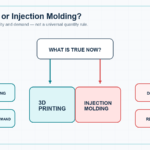
If you need specified engineering plastic and controlled features without tooling, start by investigating CNC machining. If speed and geometric freedom matter most, consider 3D printing. If a matched cosmetic set is the priority, vacuum casting may fit. If the batch must reproduce molded material and behavior, injection molding can justify its tooling earlier than the quantity alone suggests.
Start with the decision your batch must support
A batch of 50 parts might be used for assembly testing, a customer demonstration, early sales, regulatory work, or a bridge while production tooling is built. Those are different manufacturing jobs even when the CAD model is identical.
Before comparing quotations, write down what the batch must prove. If it needs to confirm a sealing surface in a named polymer, a visually convincing casting in a substitute material may not answer the question. If the goal is to review ergonomics, paying for a machined production-grade polymer may add cost without adding useful evidence.
The table below is an initial filter, not a volume chart:
| Primary need | Process to investigate first | Main question to verify |
| Fast design iteration or complex geometry | 3D printing | Does the printed material and orientation represent the test? |
| Functional parts from specified plastic stock | CNC machining | Can the geometry be machined and held without distortion? |
| A matched set with production-like appearance | Vacuum casting | Is the casting resin adequate for the intended evaluation? |
| Molding behavior and production-material evidence | Injection molding | Is the design stable enough to justify tooling? |
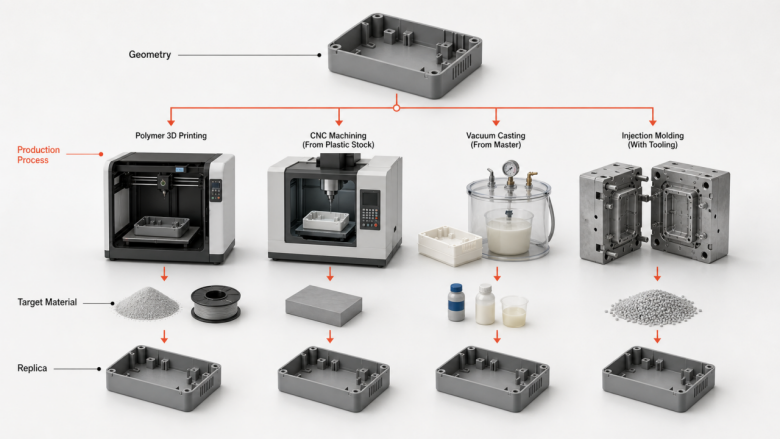
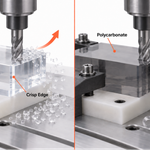
Figure 1. Similar part geometry can follow different routes because each process supplies different evidence.
Four ways to make a small plastic batch
CNC machining
CNC machining cuts the part from plastic sheet, plate, rod, or block. It is useful for accurate holes, bores, pockets, sealing lands, threads, and multi-face geometry in materials such as PMMA, POM, nylon, polycarbonate, PTFE, or PEEK, subject to grade and stock availability.
It avoids a mold and can support design changes between batches. The trade-off is that machining leaves cutter radii, consumes stock, and does not reproduce molded flow, gates, shrinkage, weld lines, or ejection.
Investigate plastic CNC machining when material identity and functional dimensions matter more than proving the future molding process.
3D printing
Plastic 3D printing builds parts directly from CAD and can create internal channels, organic shapes, and consolidated geometry that would be difficult to machine. It is a strong route for form studies, assembly checks, fixtures, ducts, and parts that may change again next week.
FDM, SLA, SLS, MJF, and other technologies should not be treated as one result. They differ in material, surface, support strategy, orientation effects, and dimensional behavior. The fastest printed part is useful only if those differences do not invalidate the planned test.
Vacuum casting
Vacuum casting uses a master pattern and a flexible mold to reproduce polyurethane parts. It is often selected for housings, covers, handles, and presentation samples that need a consistent cosmetic result without hard tooling.
Color, clear effects, and flexible or rigid behavior may be available depending on the casting system. Cast polyurethane is not automatically equivalent to the final thermoplastic. Heat, chemical, aging, and long-term mechanical behavior must be judged against the actual resin.
Review vacuum casting for low-volume parts when appearance and matched sets matter more than exact production-material behavior.
Injection molding
Injection molding introduces tooling but can provide the material, surface, gate, shrinkage, and repeatability expected from a molded product. It becomes important when the batch must evaluate snap fits, molded texture, ejection, assembly at production rate, or repeat demand.
Tooling does not become sensible at one universal quantity. A simple stable part may justify it sooner than a complex housing that is still changing. Sampling, tool changes, inspection, and inventory exposure belong in the cost decision along with the part price.
Match the process to the part, not only the quantity
Volume is useful because setup or tooling cost is spread across the batch, but it cannot override technical fit.
A deep pocket with tight access may be expensive to machine even at low quantity. A large thin printed panel may distort or require extensive support. A casting with very fragile features may reduce mold life. A molded texture may require draft changes that the current design does not include.
Material can be equally decisive. A substitute prototype polymer may be adequate for an appearance review but misleading for wear, chemical exposure, heat, or a loaded snap fit. If the test depends on a named production resin, record that as a non-negotiable requirement.
Finish also changes the route. An untreated printed surface, a machined tool pattern, a cast texture, and a molded cavity finish may all look professional, but they do not prove the same production condition.
Cost changes when the design is still changing
Each process places cost in a different part of the job.
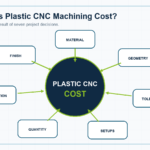
Machining cost follows stock, setup, tool access, cycle time, and finishing. Printing cost follows build volume, orientation, support or powder removal, nesting, and post-processing. Vacuum casting includes the master, flexible mold, resin, mold yield, and finishing. Injection molding moves more cost into tool design, toolmaking, sampling, and changes before repeat parts are produced.
Design stability therefore has financial value. A lower unit price from early tooling can become the expensive choice if the next test forces a tool change. Conversely, repeating a labor-intensive prototype route after the design is stable can cost more than moving deliberately into tooling.
Separate the request into:
- requirements the part must meet;
- preferences that can be negotiated;
- features or finishes that are unnecessary for this batch’s purpose.
That separation allows suppliers to propose a lower-risk process without quietly removing the characteristic the batch was meant to validate.
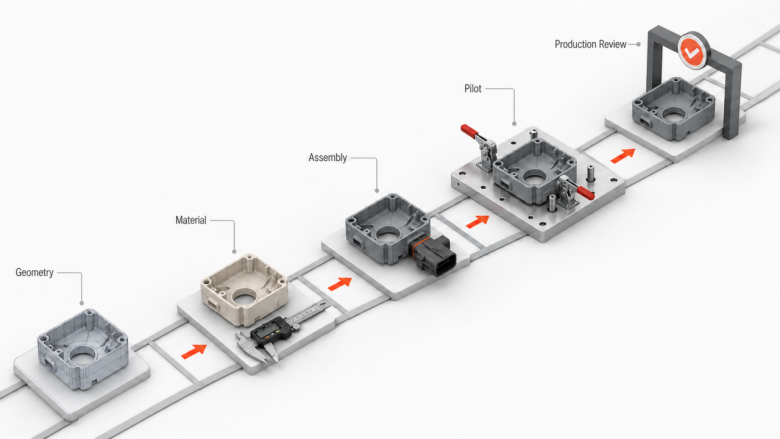
Figure 2. Different batches can add different kinds of evidence instead of pretending that every prototype is production-equivalent.
Move from first parts to repeat production
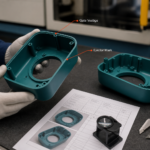
A sensible development route is not always a straight staircase. A team may print the exterior for an ergonomic review while machining only the load-bearing insert. It may cast a matched set for a field trial, then return to CNC after the trial changes one interface.
The route should change when the uncertainty changes. When geometry is the problem, buy fast geometry. When material behavior becomes the problem, buy representative material. When repeatability and molding behavior become the problem, buy production-process evidence.
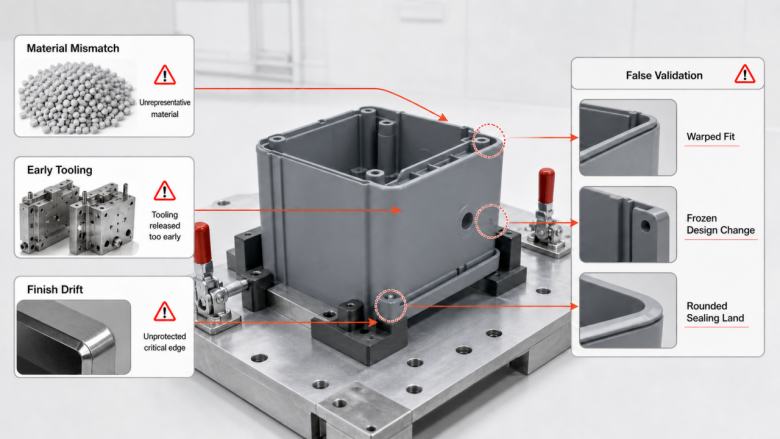
Figure 3. A convincing-looking batch can still validate the wrong material, a design locked too early, or an uncontrolled finish.
Frequently asked questions about small-batch plastic manufacturing
What quantity counts as a small batch?
There is no useful universal range. Part size, geometry, material, process, tooling, repeat demand, and finish can make the same quantity economical in one route and impractical in another. Use quantity as one input, not the definition.
Is CNC machining cheaper than injection molding for a small batch?
It can be when avoiding tooling matters, especially for changing designs or parts that suit stock machining. Injection molding can become more attractive when the design is stable and the batch must reproduce molded material and behavior. Compare total program cost, not only the quoted unit price.
Which process gives the best production-like appearance?
Vacuum casting and injection molding can both provide consistent cosmetic surfaces, while machining and printing can be finished in different ways. “Production-like” should specify color, gloss, texture, defects, and viewing conditions rather than naming one process.
Can one project use more than one process?
Yes. A program may use printed parts for geometry, machined parts for material and fit, cast parts for customer review, and molded parts for production validation. Each step should answer a different open question.
Ask PlasticHubs to compare the process routes
PlasticHubs supports low-volume plastic production across machining and casting routes and can review when another process better fits the program.
Send the CAD model, revision-controlled drawing, target material, quantity, critical dimensions, finish expectations, test purpose, likely repeat demand, and required delivery date through the PlasticHubs engineering contact. The result should be a process recommendation tied to what the batch must prove—not a quantity bracket copied from a generic chart.