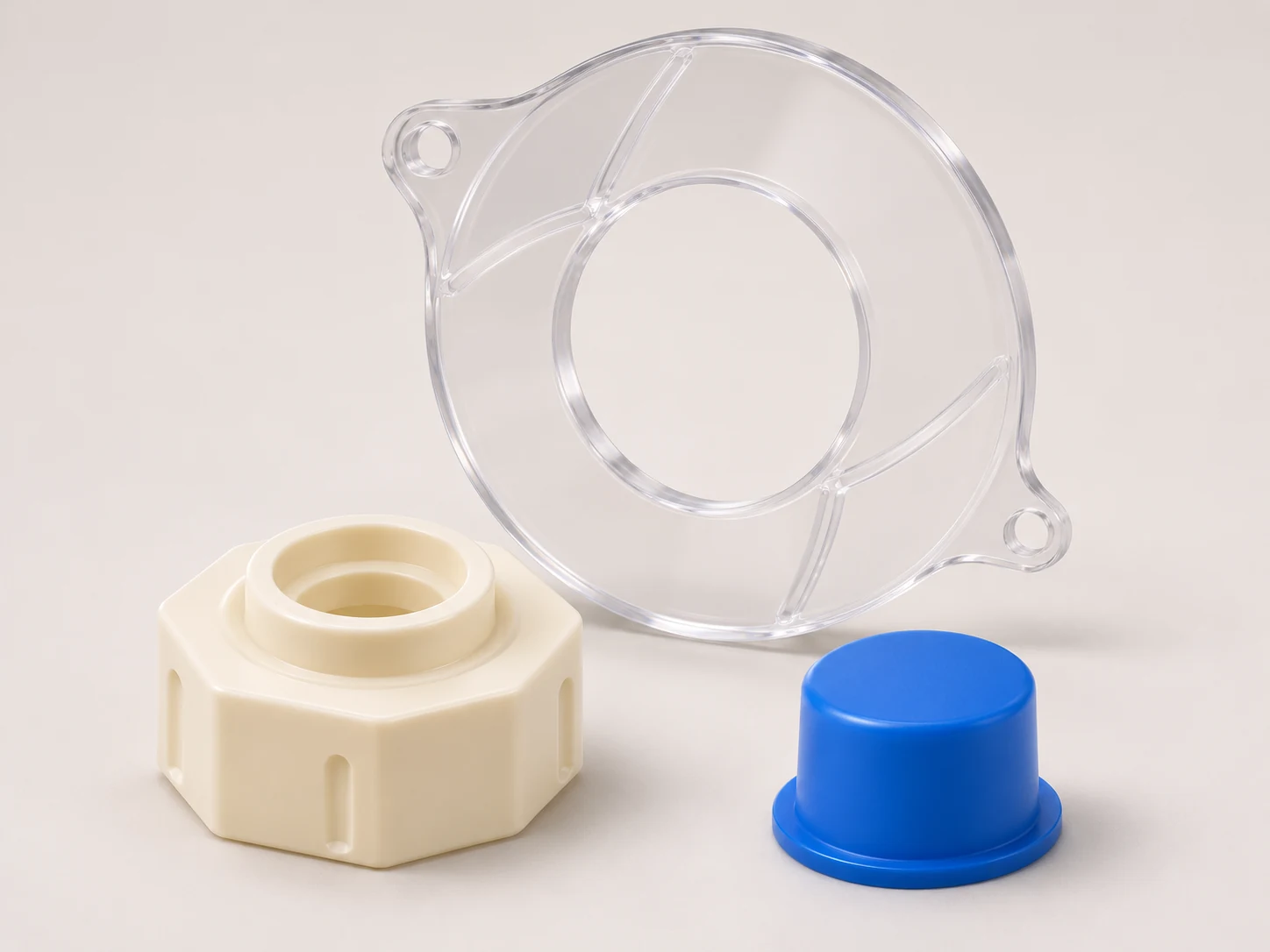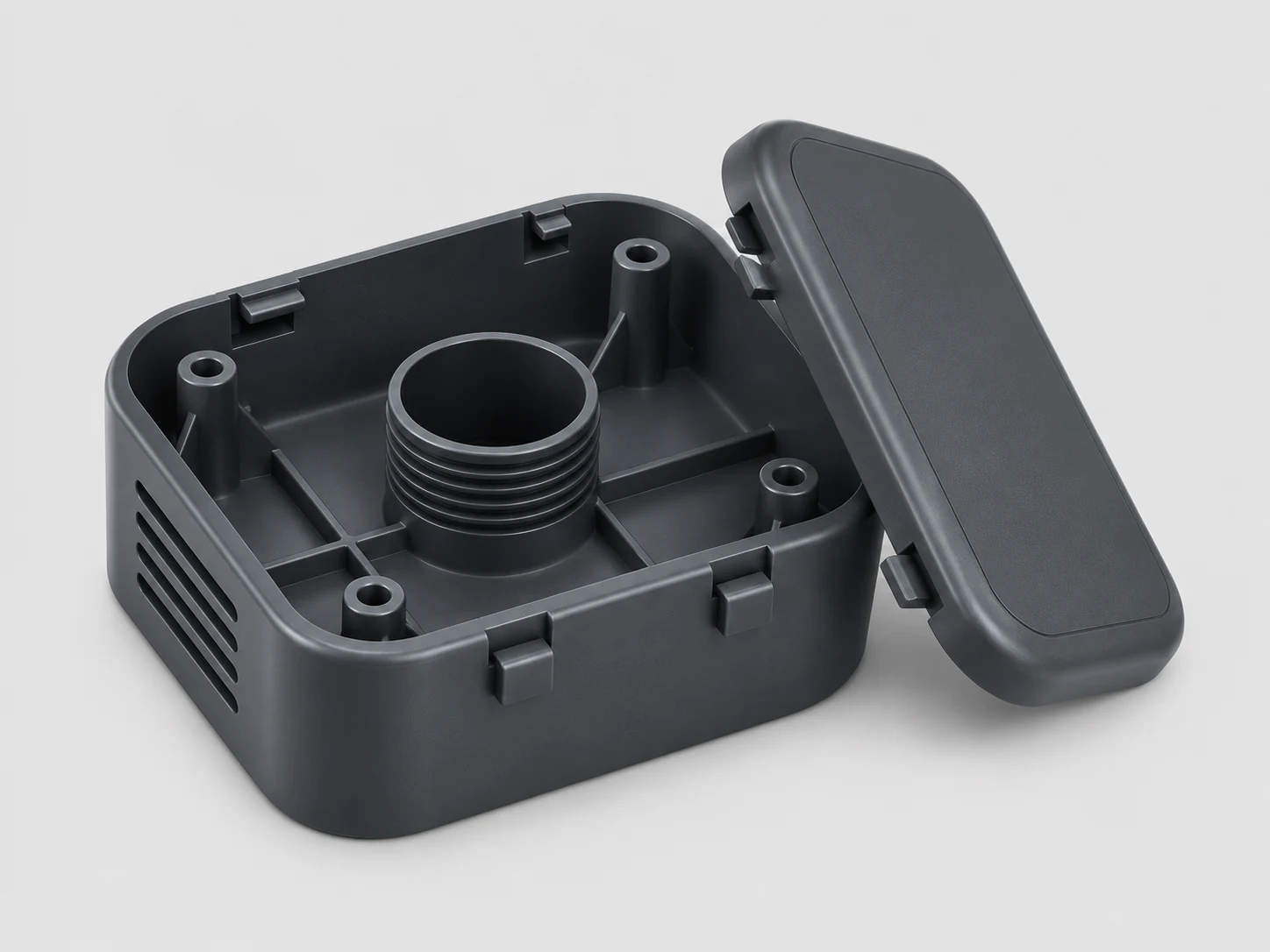
ABS
Family comparison: CNC Tough, impact-tolerant ABS molds into detailed housings, instrument panels and everyday product covers. Its balance of appearance and structural performance suits many general-purpose molded parts.
View Details↗
View Details
Typical Applications
Equipment housings, instrument panels and consumer-product covers.
Selection Notes
Provide the molding grade, loads, operating temperature, color and surface finish.
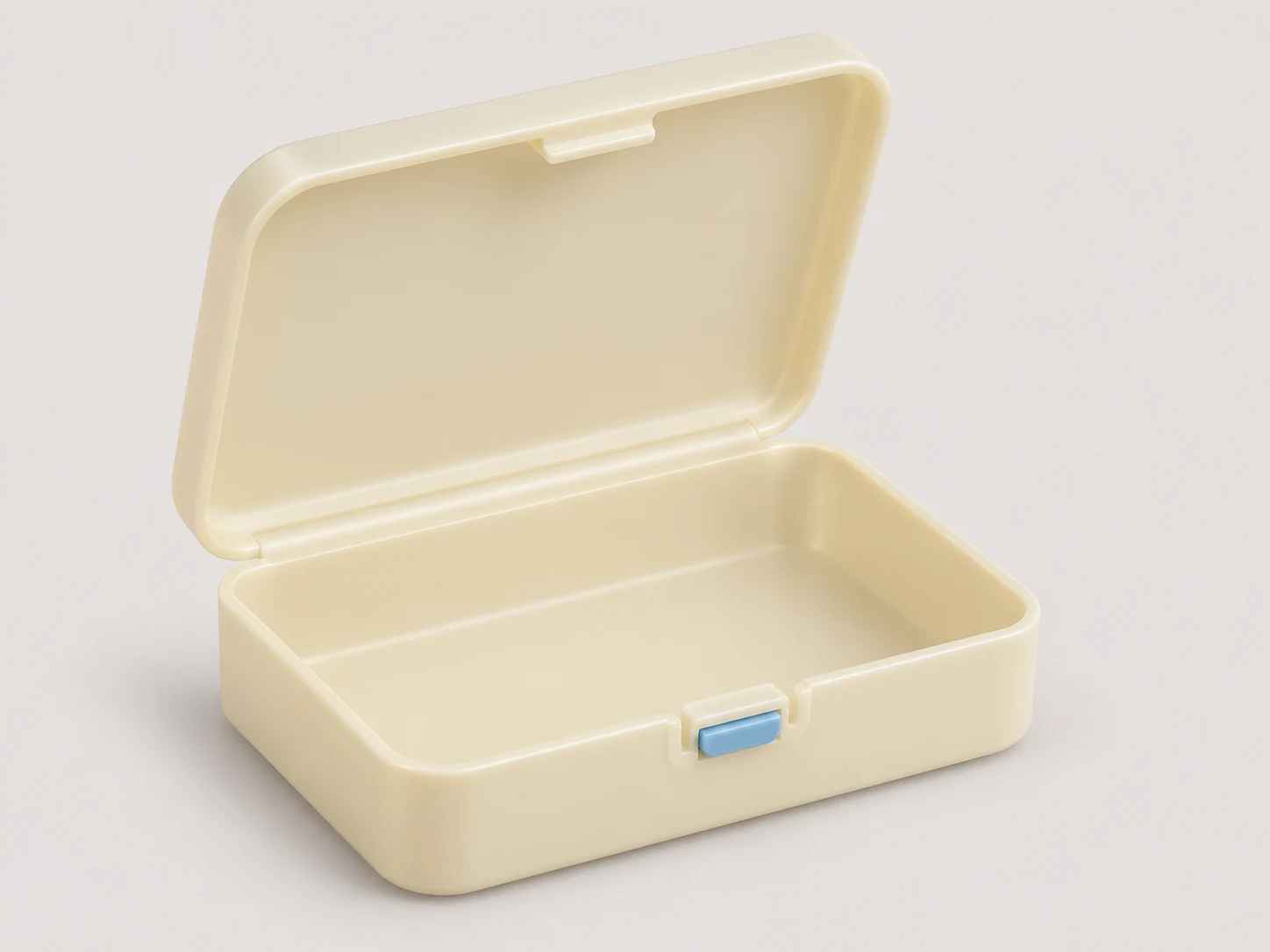
PP (Polypropylene)
Injection Molding Plastics Lightweight PP combines fatigue resistance with chemical-resistance characteristics for containers, lids and repeated-flex designs. Formulation determines the balance between stiffness and flexibility.
View Details↗
View Details
Typical Applications
Containers, flip-top covers and lightweight housings; review hinge geometry separately.
Selection Notes
Specify homopolymer, copolymer or filled grade, hinge geometry, flex cycles, wall thickness and chemical exposure.
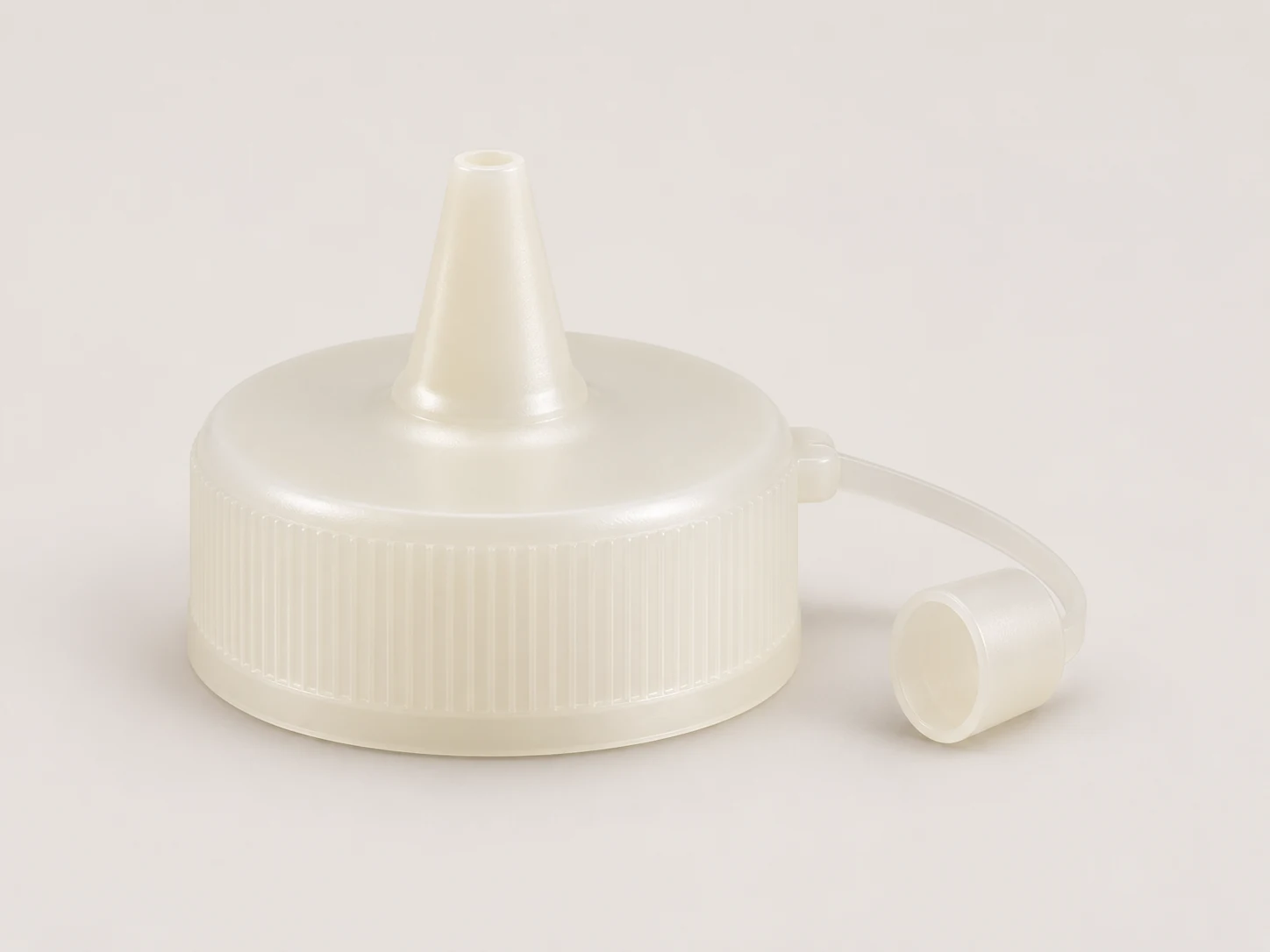
PE (Polyethylene)
Injection Molding Plastics Tough PE combines low moisture absorption with chemical resistance for caps, plugs and container components. Density and formulation determine the balance between flexibility and rigidity.
View Details↗
View Details
Typical Applications
Caps, plugs, flexible container components and parts exposed to specified chemicals.
Selection Notes
State HDPE, LDPE or another PE grade, plus stiffness, color and contact medium.
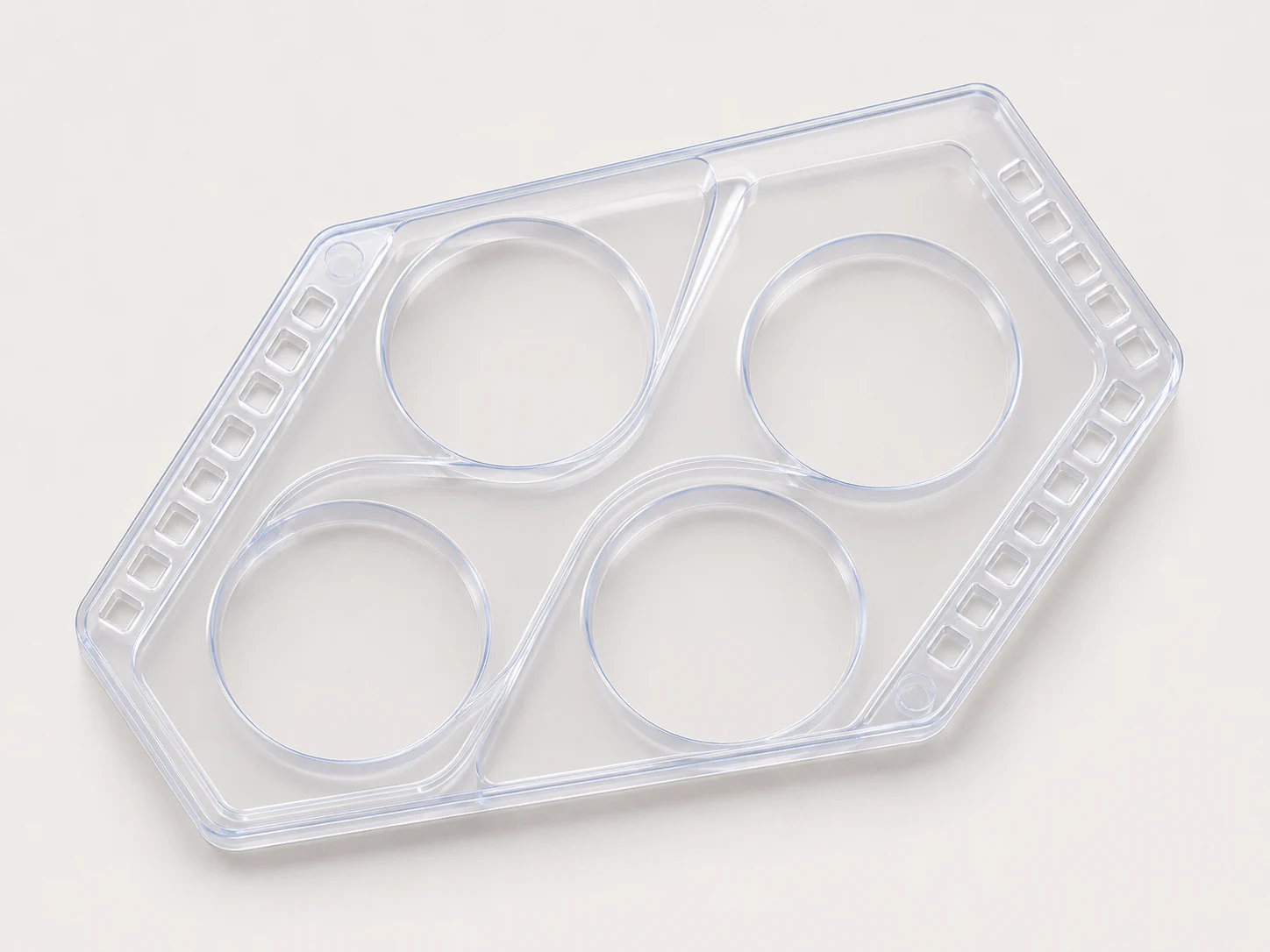
PS (Polystyrene)
Injection Molding Plastics Rigid PS supports clear covers, display inserts and lightly loaded housings. General-purpose and impact-modified grades offer different balances of transparency, toughness and appearance.
View Details↗
View Details
Typical Applications
Display inserts, clear covers and lightly loaded housings.
Selection Notes
Specify GPPS or HIPS, impact exposure, operating temperature and appearance requirements.
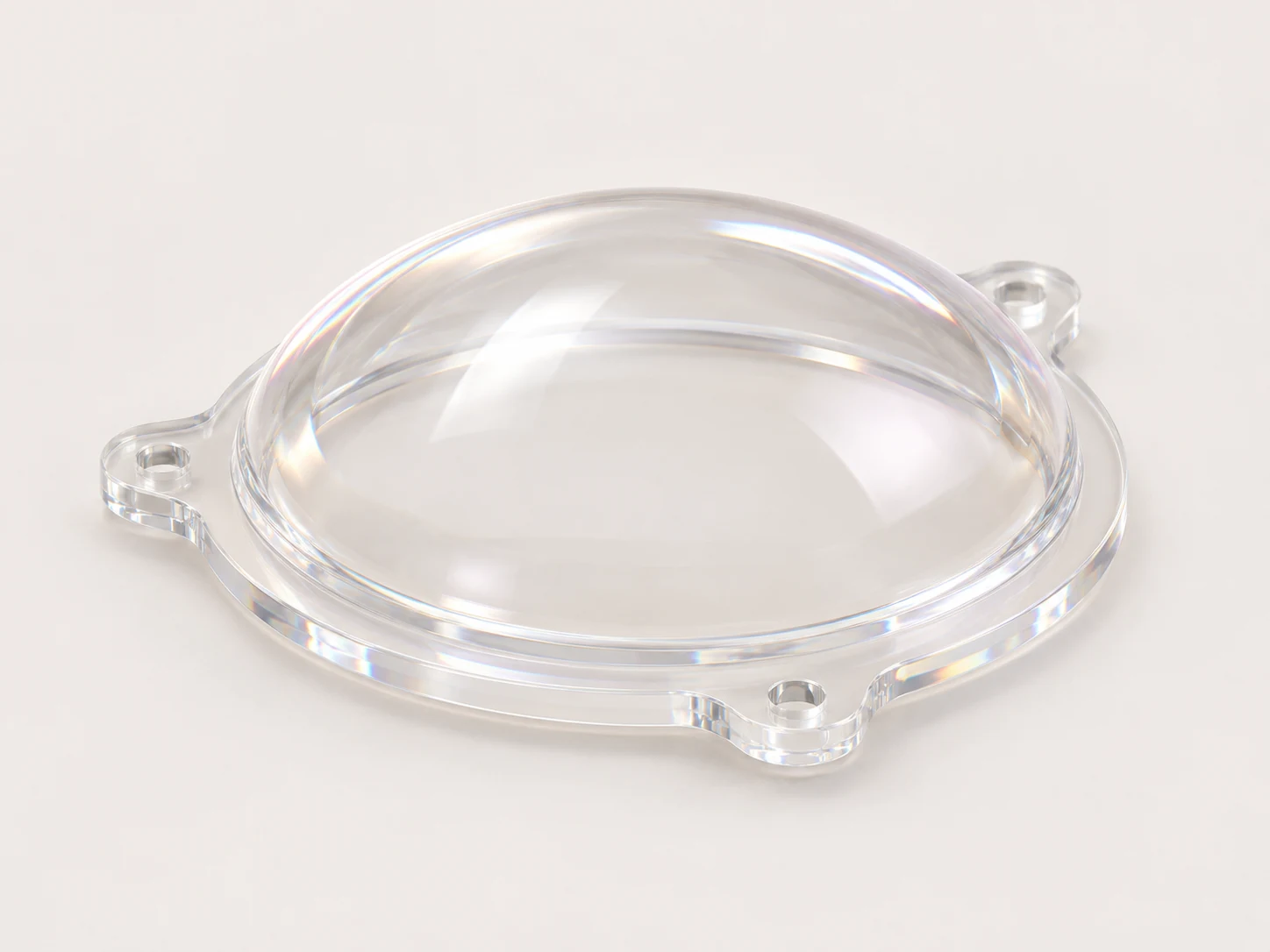
PMMA (Acrylic)
Family comparison: CNC PMMA brings optical clarity to molded viewing windows, light-transmitting covers and display components. Transparent appearance, color and surface quality drive its selection.
View Details↗
View Details
Typical Applications
Viewing windows, light-transmitting covers and display panels.
Selection Notes
Provide clarity, color, optical-surface requirements, thickness and impact conditions.
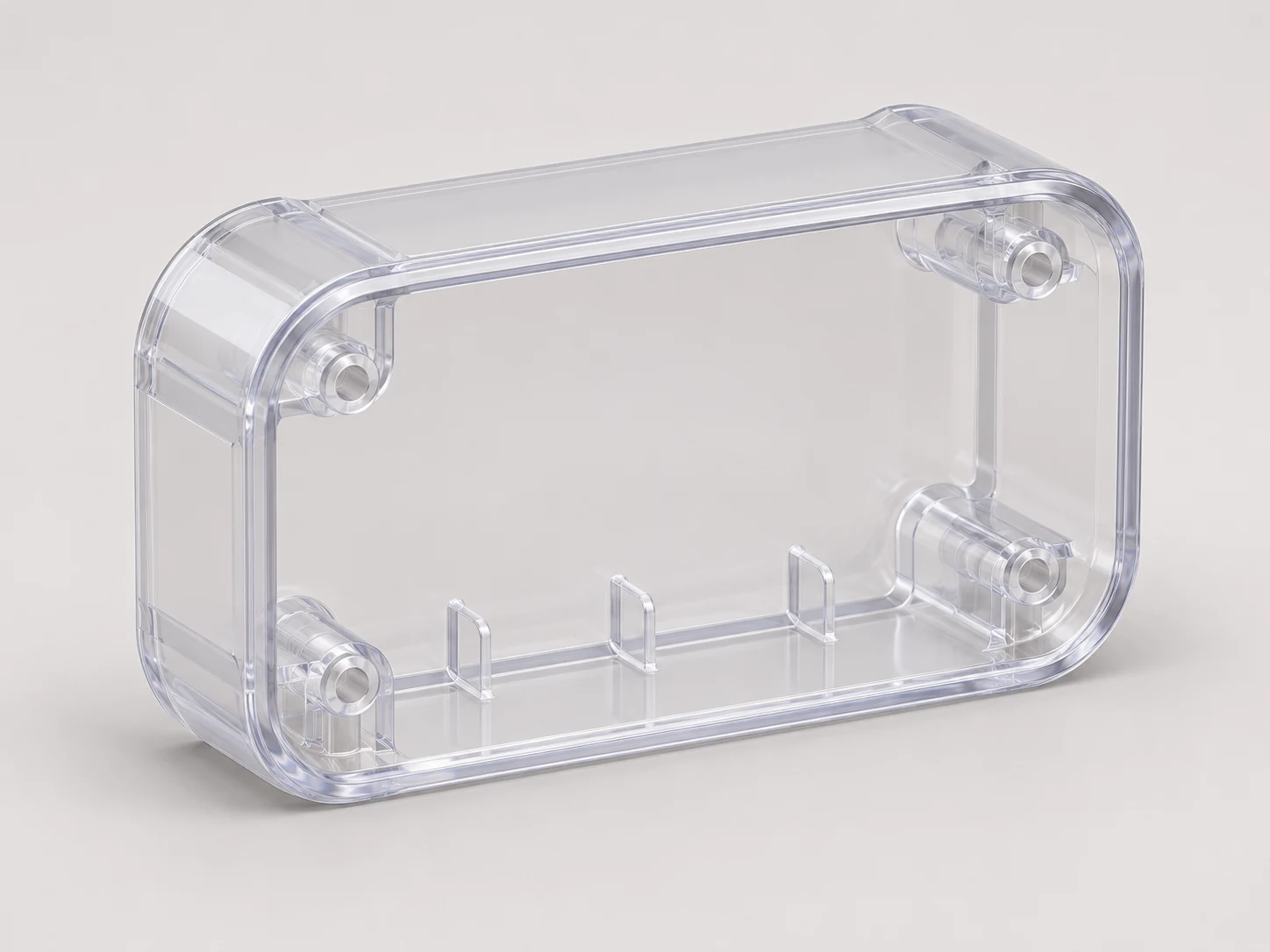
PC (Polycarbonate)
Family comparison: CNC PC combines transparency with impact tolerance and heat resistance for protective covers, equipment enclosures and viewing windows where visibility and structural function matter together.
View Details↗
View Details
Typical Applications
Transparent guards, viewing windows and equipment enclosures.
Selection Notes
Specify grade, transparency, chemical contact, operating temperature and finish.
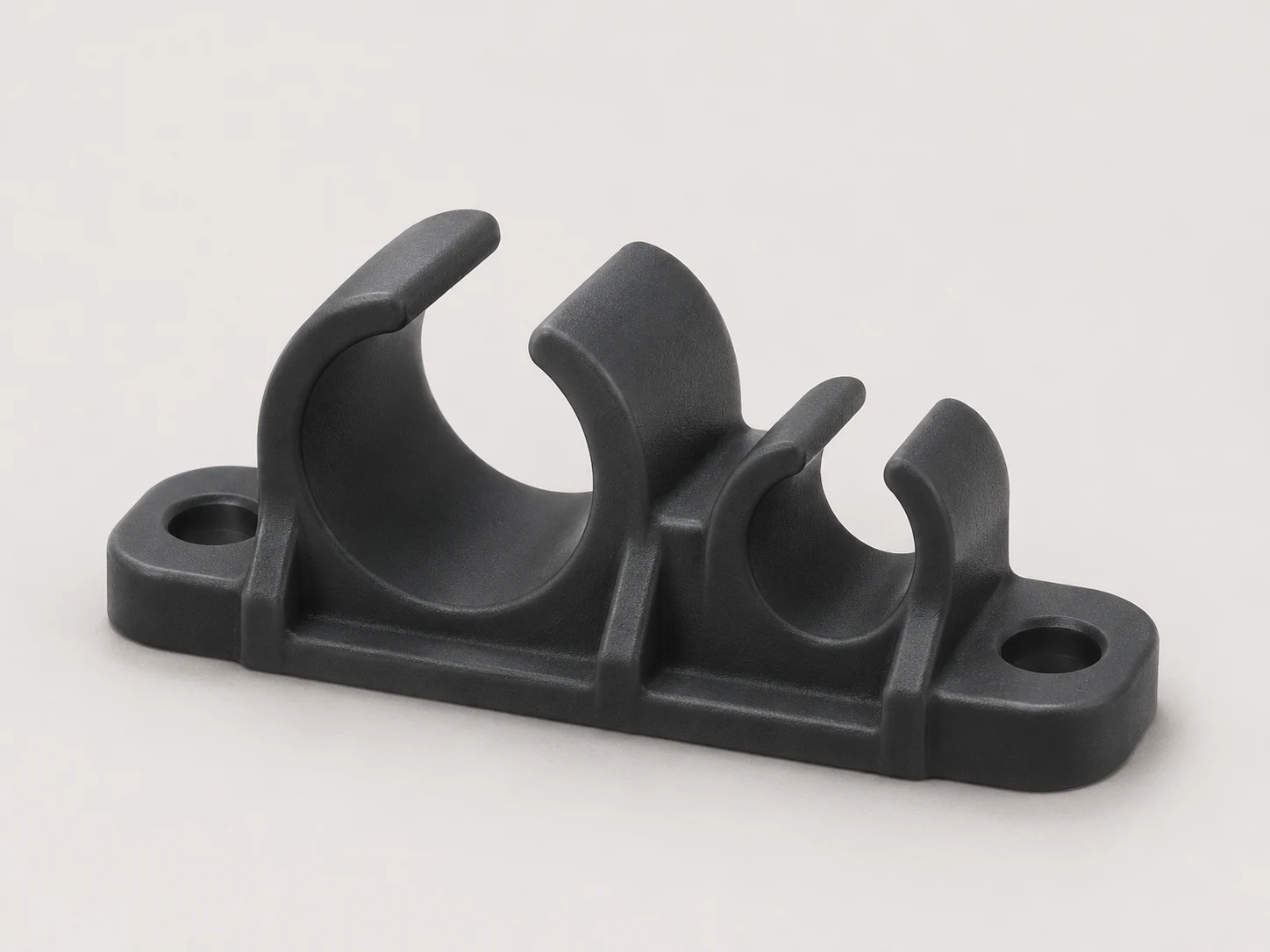
PA6 (Nylon 6)
PA family: CNC · Printing PA6 provides strength and wear-related performance for molded clips, gears and mechanical connectors. Moisture conditioning influences both dimensions and mechanical behavior in service.
View Details↗
View Details
Typical Applications
Clips, gears, cable retainers and mechanical connectors.
Selection Notes
State PA6 grade, reinforcement, humidity, conditioning state and critical fits.
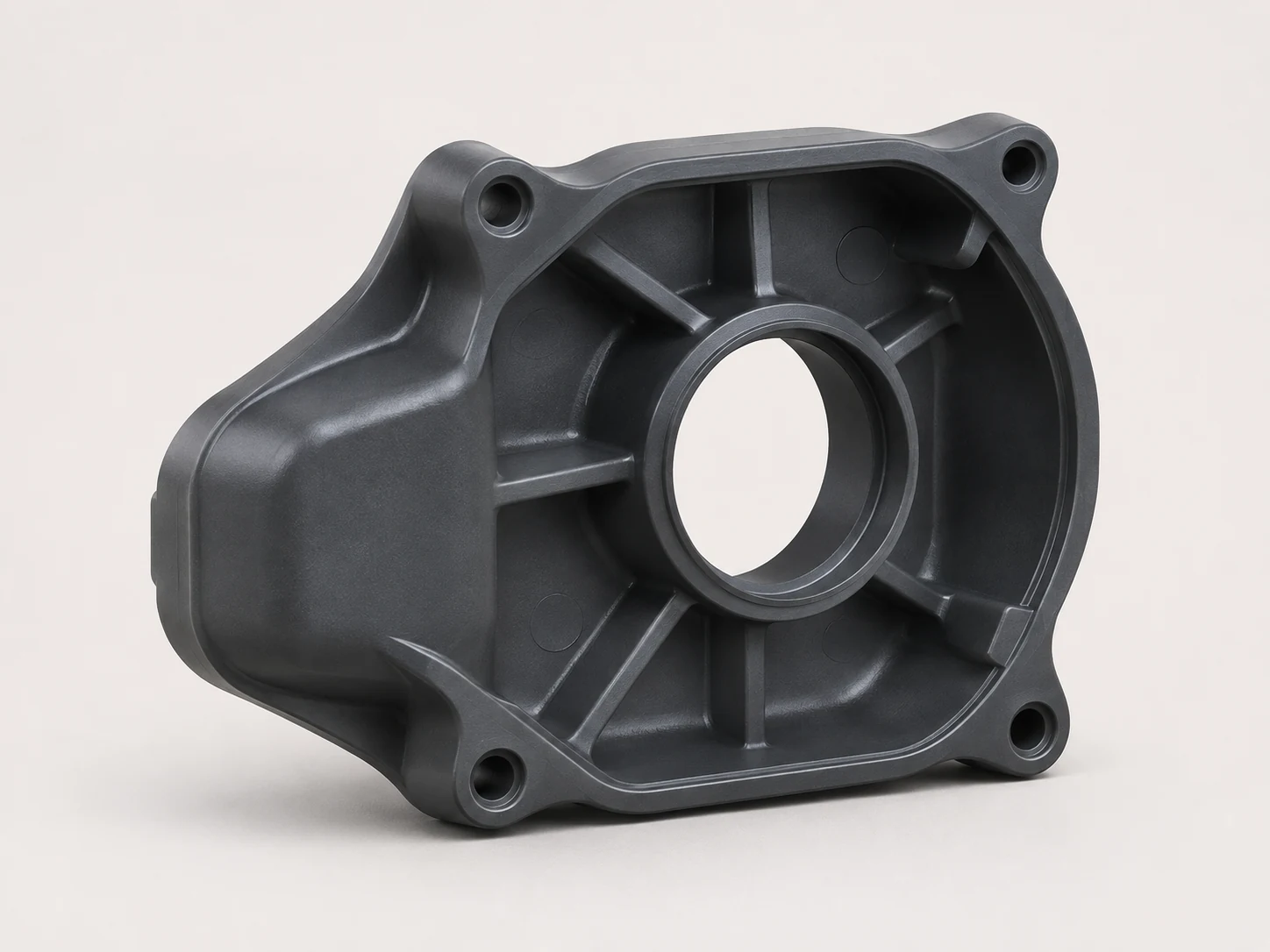
PA66 (Nylon 66)
PA family: CNC · Printing PA66 serves structural connectors, fasteners and gear housings with nylon’s strength and wear-related characteristics. Formulation, reinforcement and moisture condition shape its finished-part behavior.
View Details↗
View Details
Typical Applications
Gear housings, fasteners and structural connectors.
Selection Notes
Specify PA66 grade, filler, temperature, conditioning state and dimensional requirements.
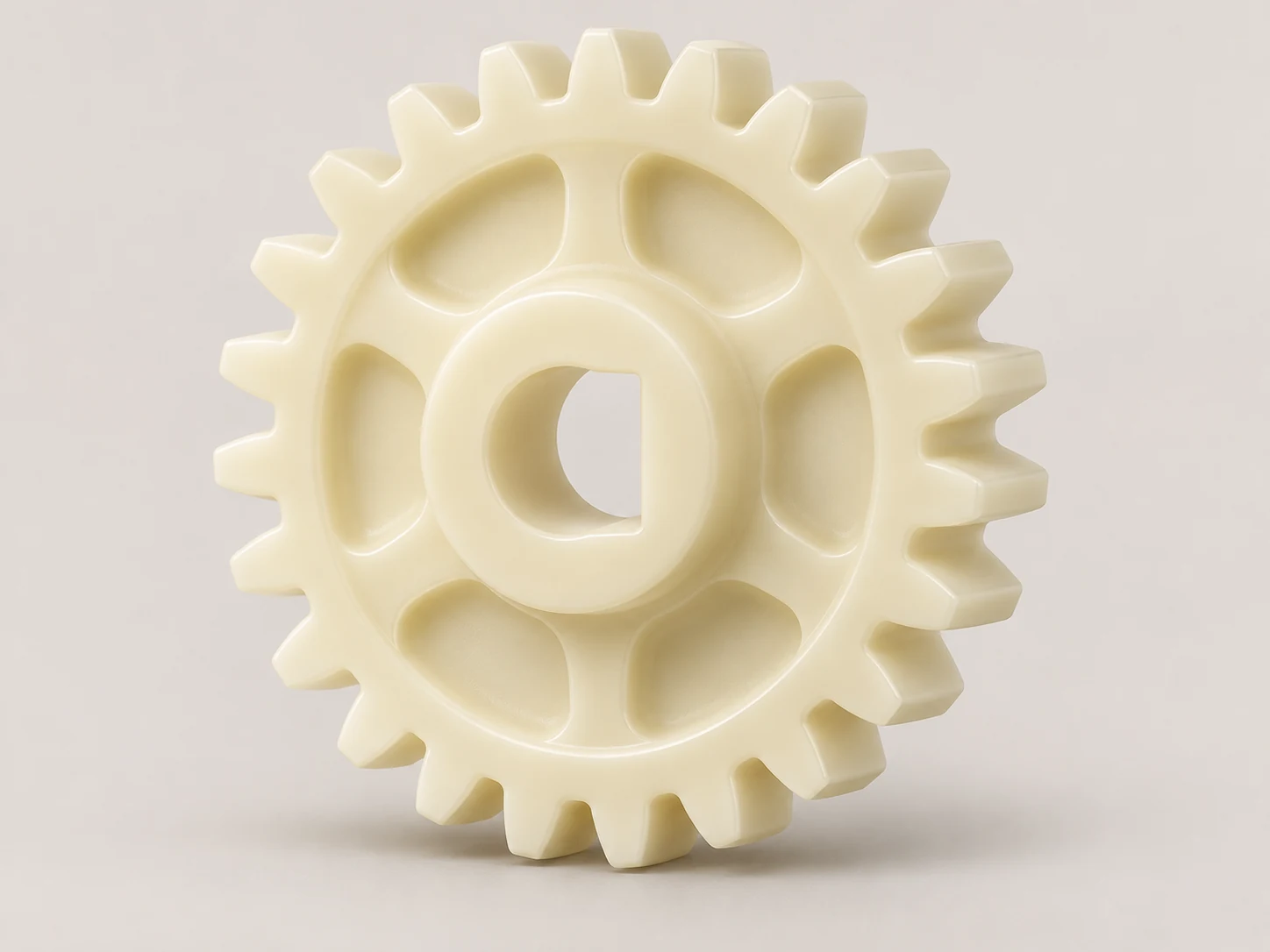
POM (Acetal)
Family comparison: CNC Stiff, low-friction POM suits molded gears, sliders, sleeves and transmission components. Its wear behavior and dimensional stability support moving parts and fitted interfaces.
View Details↗
View Details
Typical Applications
Gears, sliders, sleeves and compact transmission components.
Selection Notes
Specify copolymer or homopolymer grade, contact materials, load, temperature and fit.
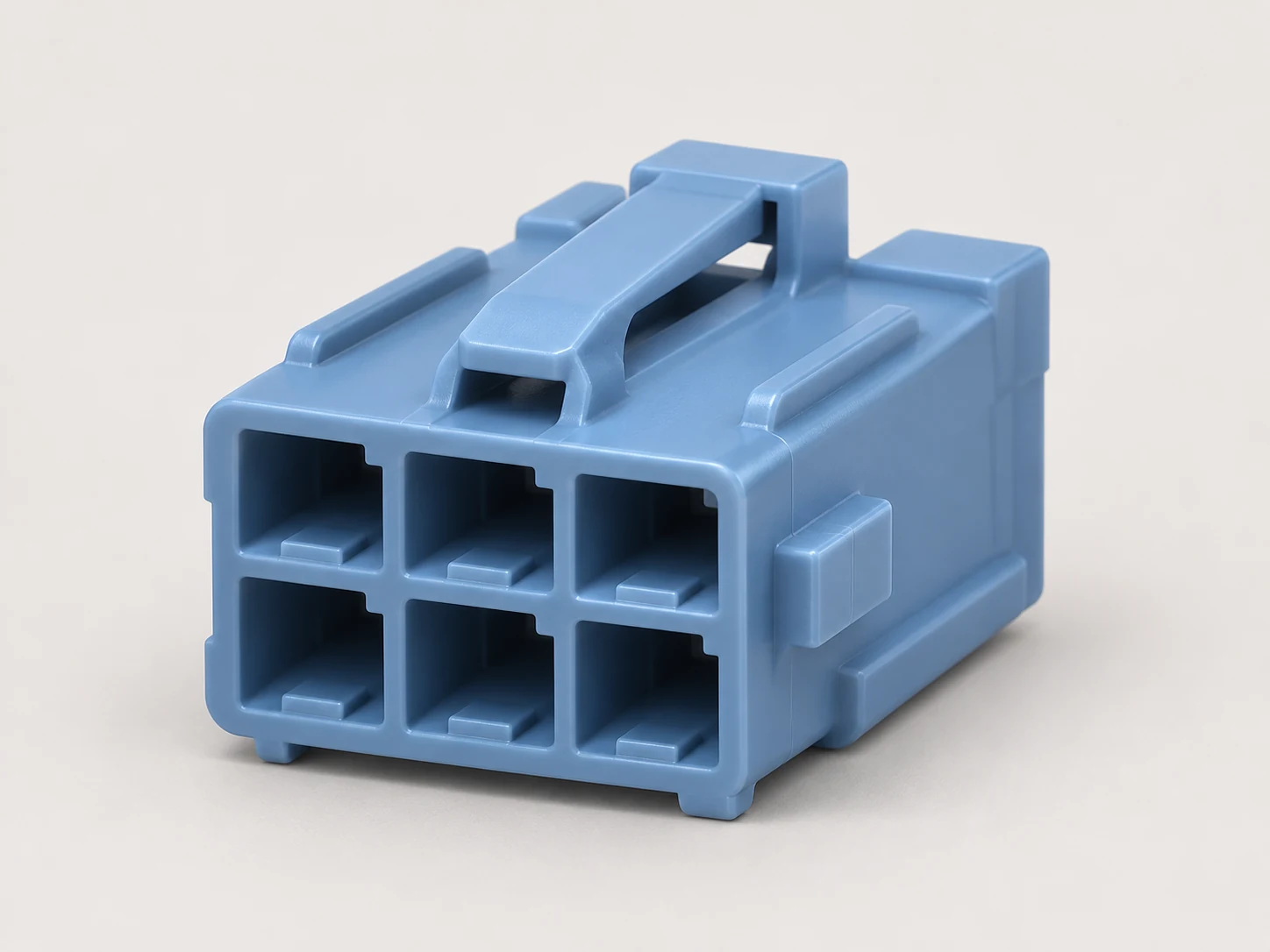
PBT
Injection Molding Plastics PBT balances mechanical, thermal and electrical characteristics for molded connectors, sockets and functional housings. Reinforcement and grade selection tailor the material to the component.
View Details↗
View Details
Typical Applications
Electrical connectors, sockets and functional housings.
Selection Notes
Provide filler, electrical requirements, temperature, shrinkage targets and finish.
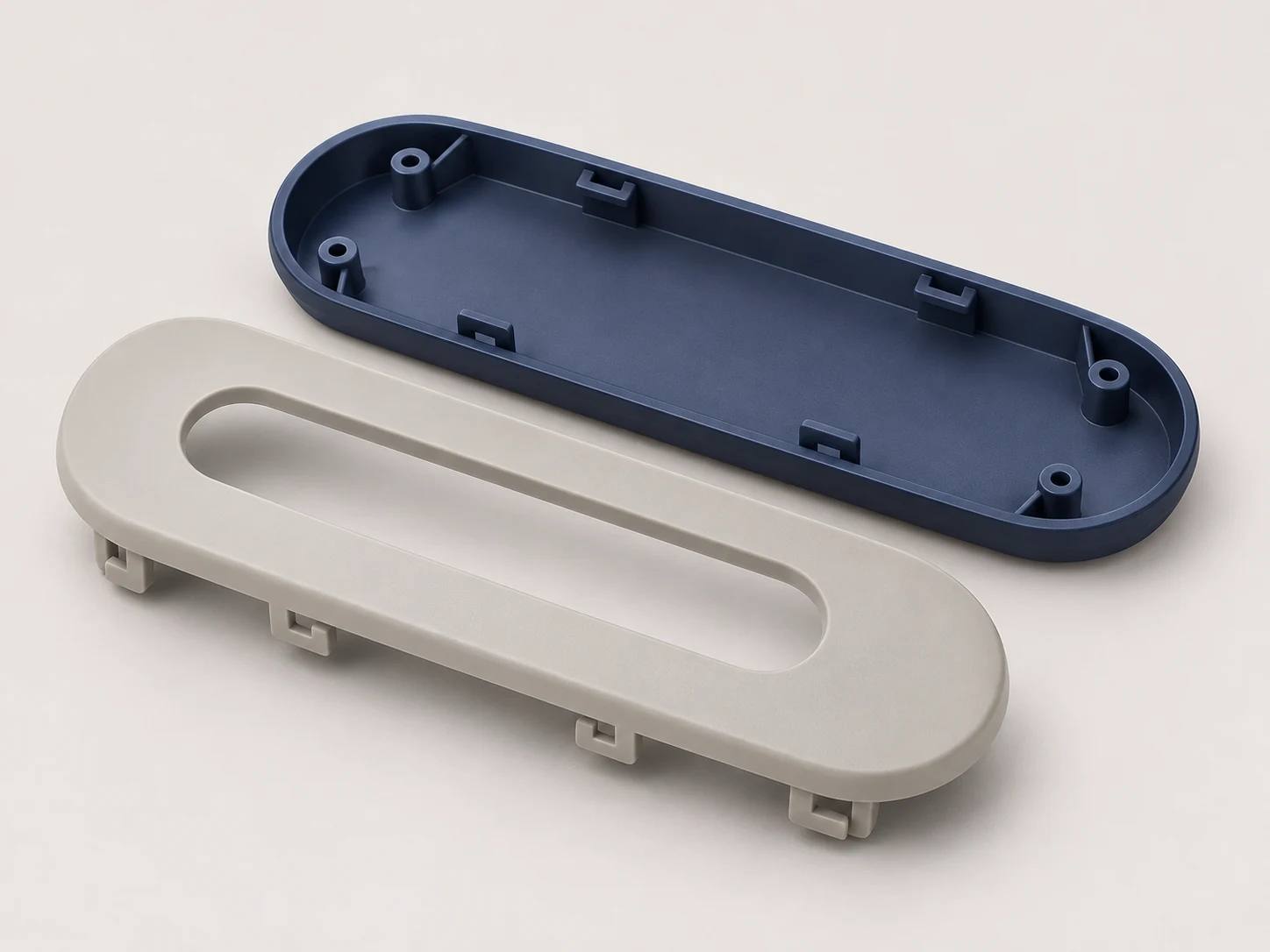
PC/ABS Blend
Injection Molding Plastics PC/ABS blends serve electronics enclosures, control panels and structural covers. Each blend offers its own balance of housing performance and molding behavior.
View Details↗
View Details
Typical Applications
Electronics enclosures, control panels and structural covers.
Selection Notes
Provide the blend grade, load and impact requirements, operating temperature, color and finish.
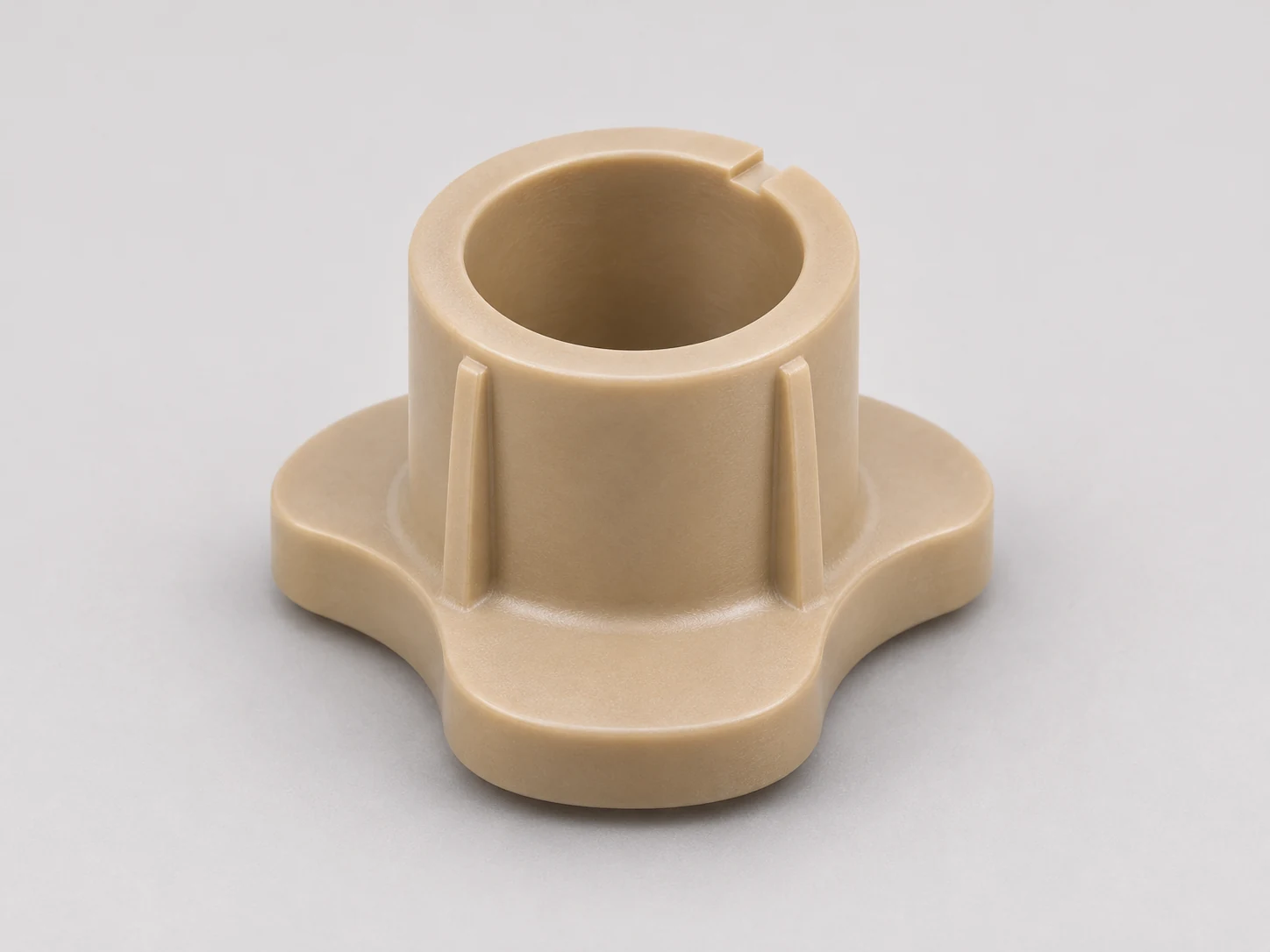
PEEK
Family comparison: CNC PEEK combines mechanical strength, heat resistance and chemical resistance for demanding molded sleeves, supports and functional components. Unfilled and reinforced grades address different design priorities.
View Details↗
View Details
Typical Applications
Heat-exposed sleeves, structural parts and reviewed chemical-contact components.
Selection Notes
Specify grade, reinforcement, operating environment, geometry and material-record requirements.
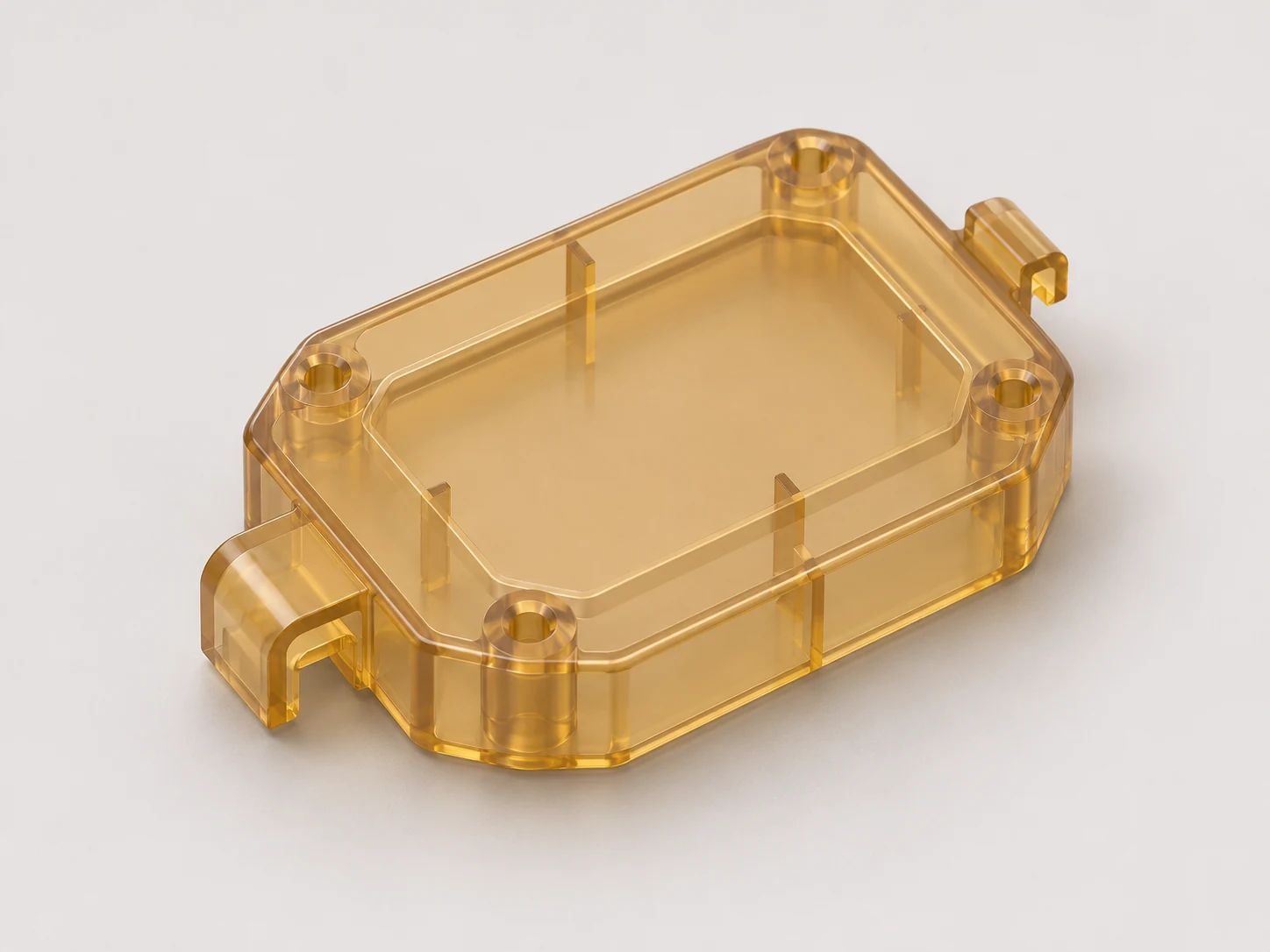
PEI (Polyetherimide)
Injection Molding Plastics PEI belongs in the high-performance molding group for projects with thermal, electrical or dimensional requirements. Selection begins with the specified formulation and component requirements.
View Details↗
View Details
Typical Applications
Engineering components driven by thermal, electrical and dimensional requirements.
Selection Notes
Provide PEI grade, electrical requirements, service conditions and dimensional targets.
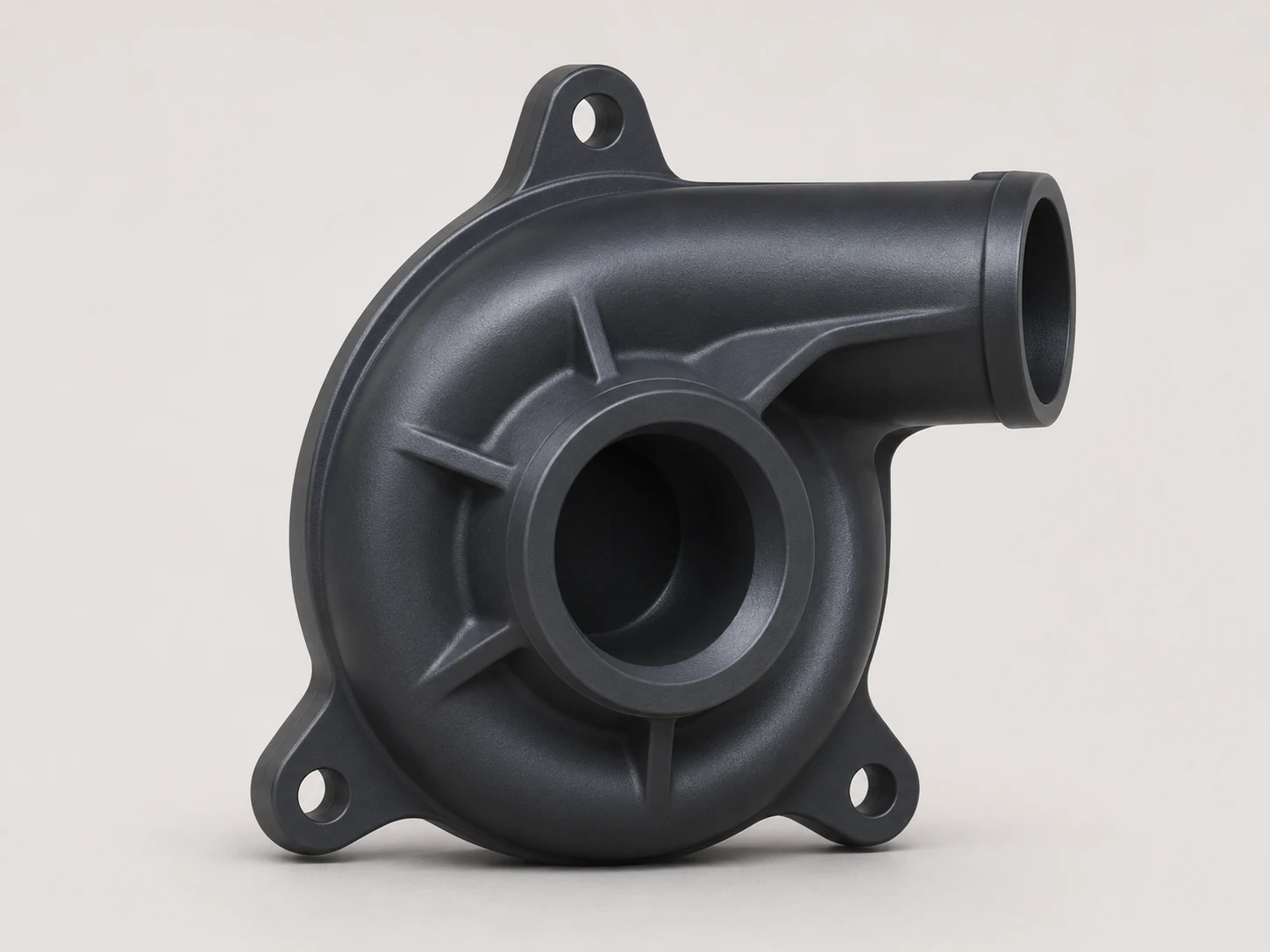
PPS
Injection Molding Plastics PPS brings heat resistance, chemical resistance and dimensional stability to rigid molded components such as pump bodies and connectors. Reinforcement and formulation define the application balance.
View Details↗
View Details
Typical Applications
Pump bodies, connectors and heat-exposed functional components.
Selection Notes
Specify filler, chemical contact, operating temperature, electrical requirements and critical dimensions.
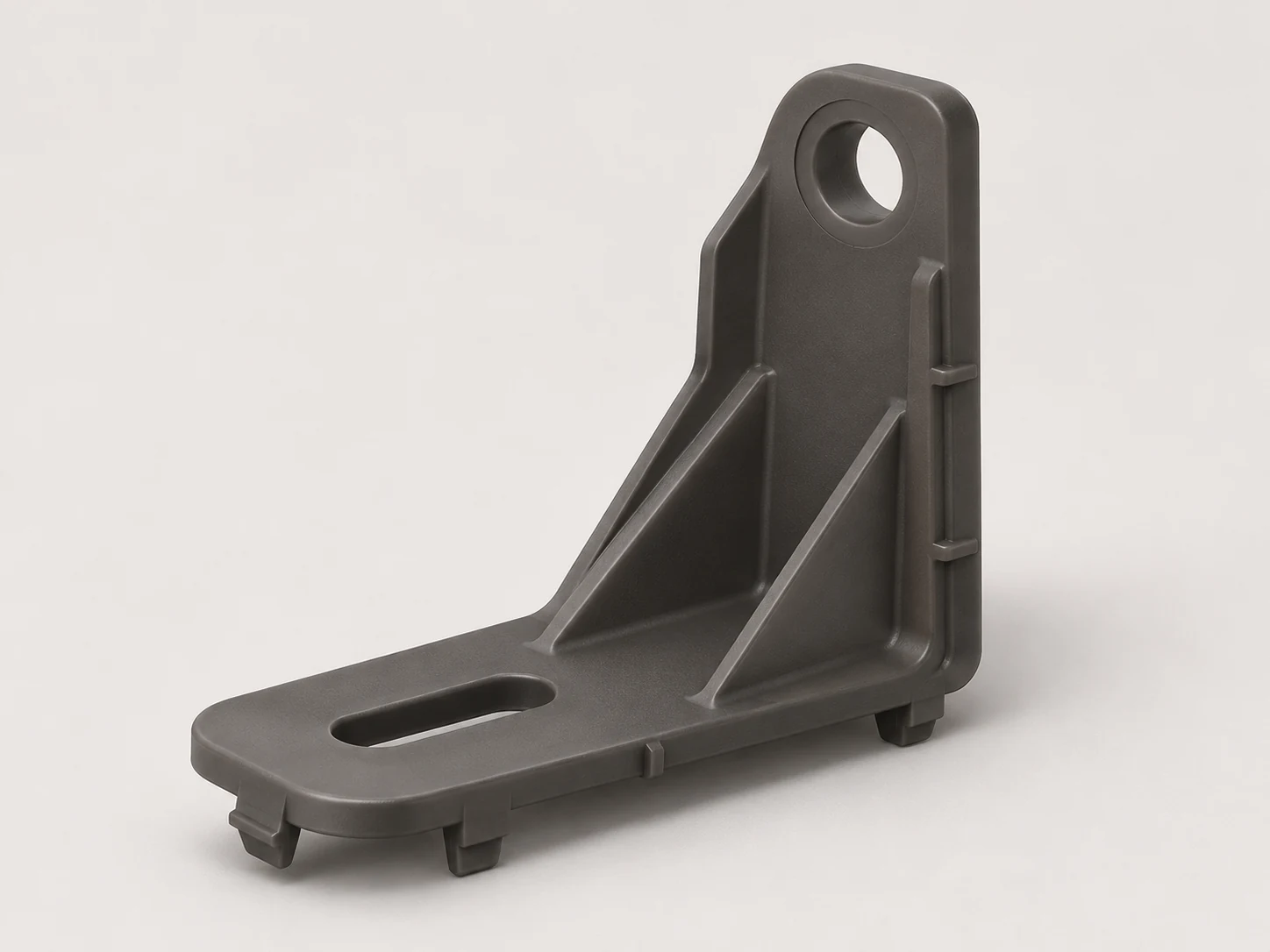
PPA (Polyphthalamide)
Injection Molding Plastics PPA is a distinct high-performance polyamide family for engineering-part selection, with thermal, load and dimensional requirements defined for the intended component and formulation.
View Details↗
View Details
Typical Applications
Engineering components with thermal, load and dimensional requirements.
Selection Notes
Provide PPA grade, reinforcement, conditioning state, service temperature and load requirements.
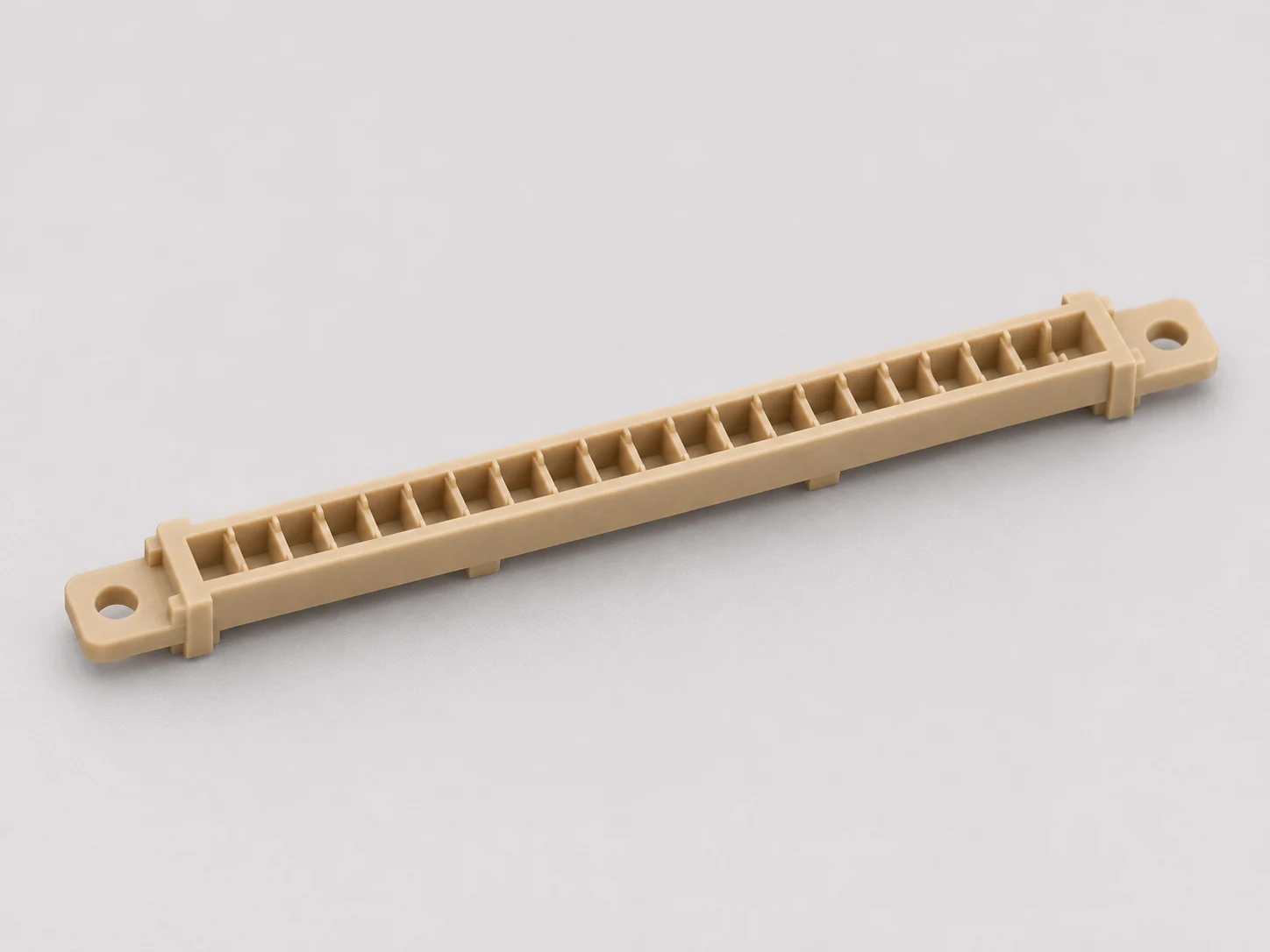
LCP (Liquid Crystal Polymer)
Injection Molding Plastics LCP sits within the high-performance molding group for detailed connector and electrical-component projects. Geometry, formulation and processing direction guide the material specification for each component.
View Details↗
View Details
Typical Applications
Detailed connector and electrical-component projects.
Selection Notes
Provide grade, reinforcement, wall thickness, flow direction and electrical requirements.
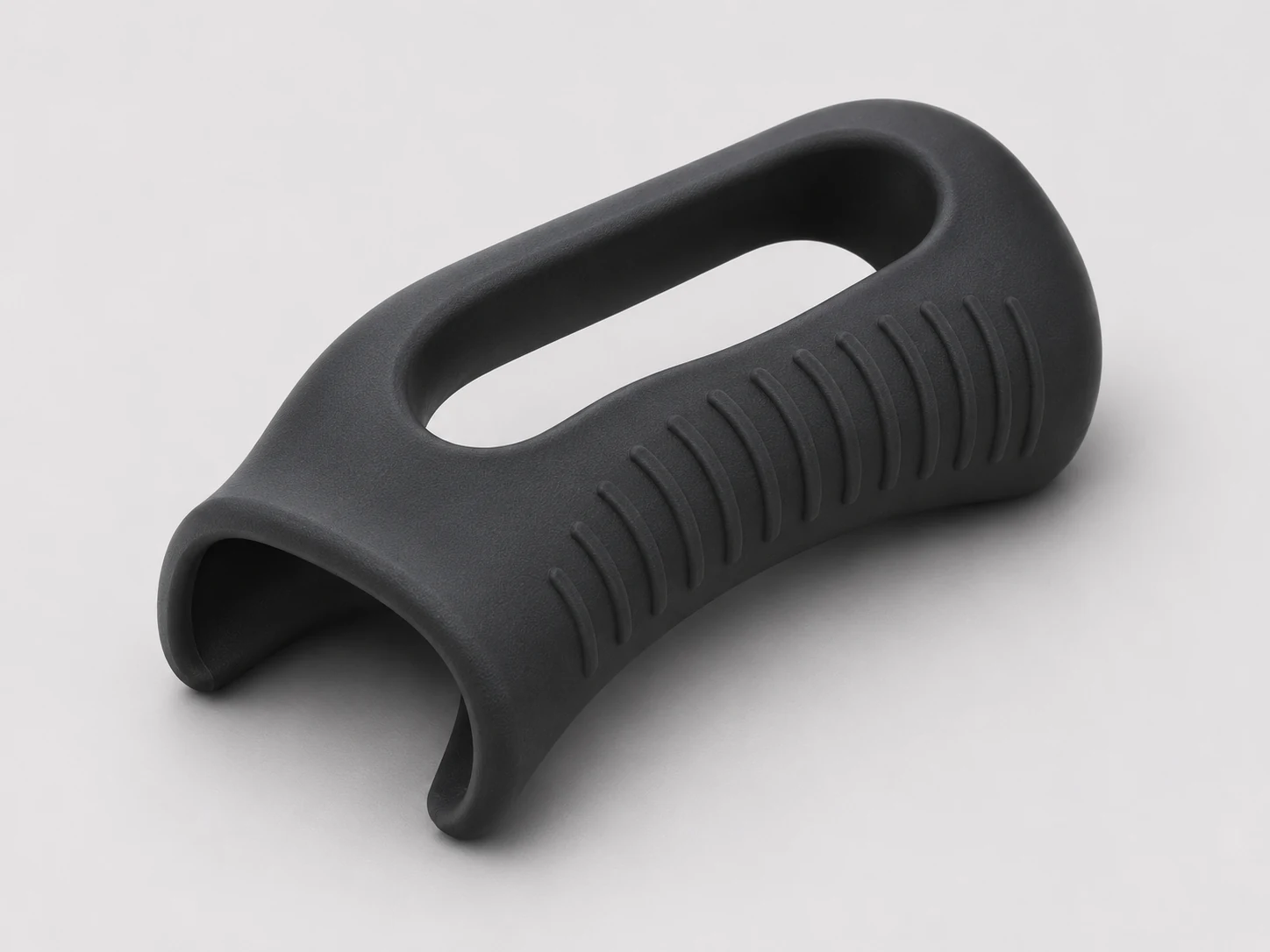
TPE (Thermoplastic Elastomer)
Injection Molding Plastics TPE combines a rubber-like feel with elastic behavior for grips, cushioning pads and flexible interfaces. This thermoplastic-elastomer family includes TPU among its different material types.
View Details↗
View Details
Typical Applications
Grips, cushioning pads, flexible interfaces and reviewed overmolded features.
Selection Notes
Specify elastomer chemistry, hardness, rebound, contact environment and overmolding substrate.
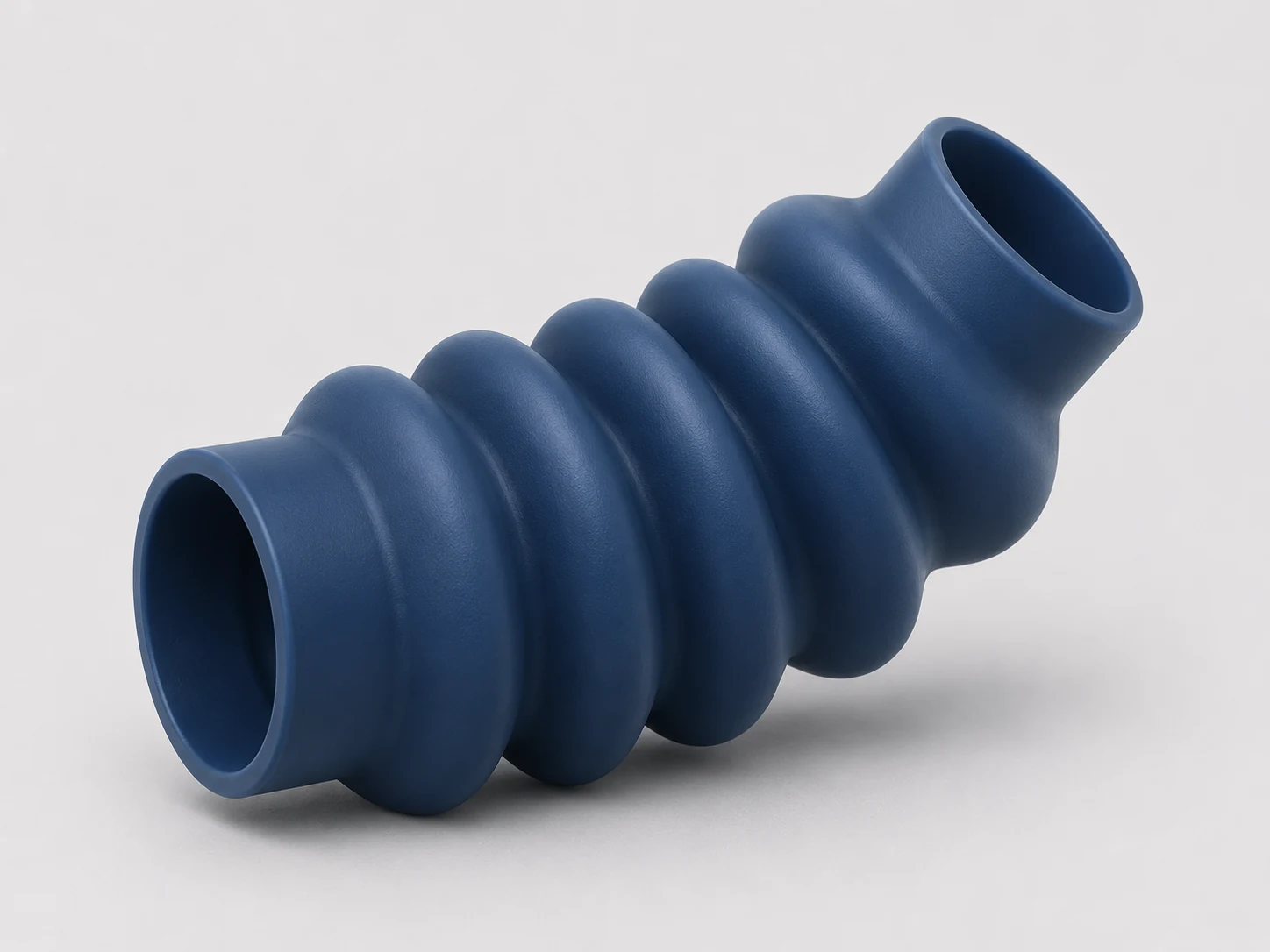
TPU (Thermoplastic Polyurethane)
Injection Molding Plastics TPU is a thermoplastic polyurethane within the TPE family, used for flexible boots, protective frames and grip surfaces. It differs from cured polyurethane casting resins.
View Details↗
View Details
Typical Applications
Flexible boots, protective frames, grip surfaces and cushioning components.
Selection Notes
Provide TPU grade, hardness, elastic-response targets, chemical contact and substrate.
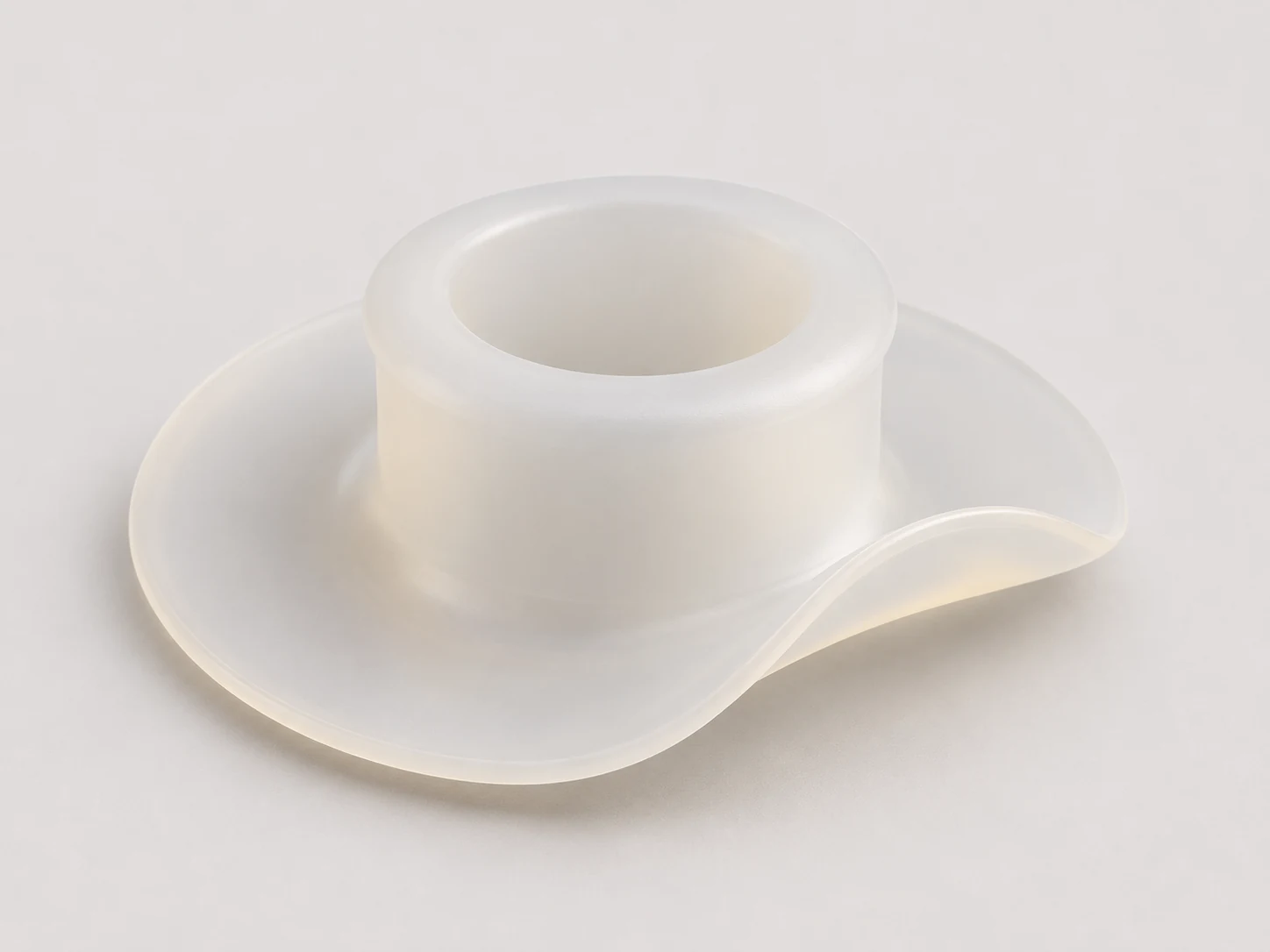
Silicone (Dedicated Injection Process)
Injection Molding Plastics Silicone provides elastic behavior for seals, flexible interfaces and cushioning. Dedicated injection-and-curing systems shape the components, using a different process from thermoplastic melt molding.
View Details↗
View Details
Typical Applications
Seals, flexible interfaces and cushioning components.
Selection Notes
Specify silicone system, hardness, curing route, geometry and contact conditions.
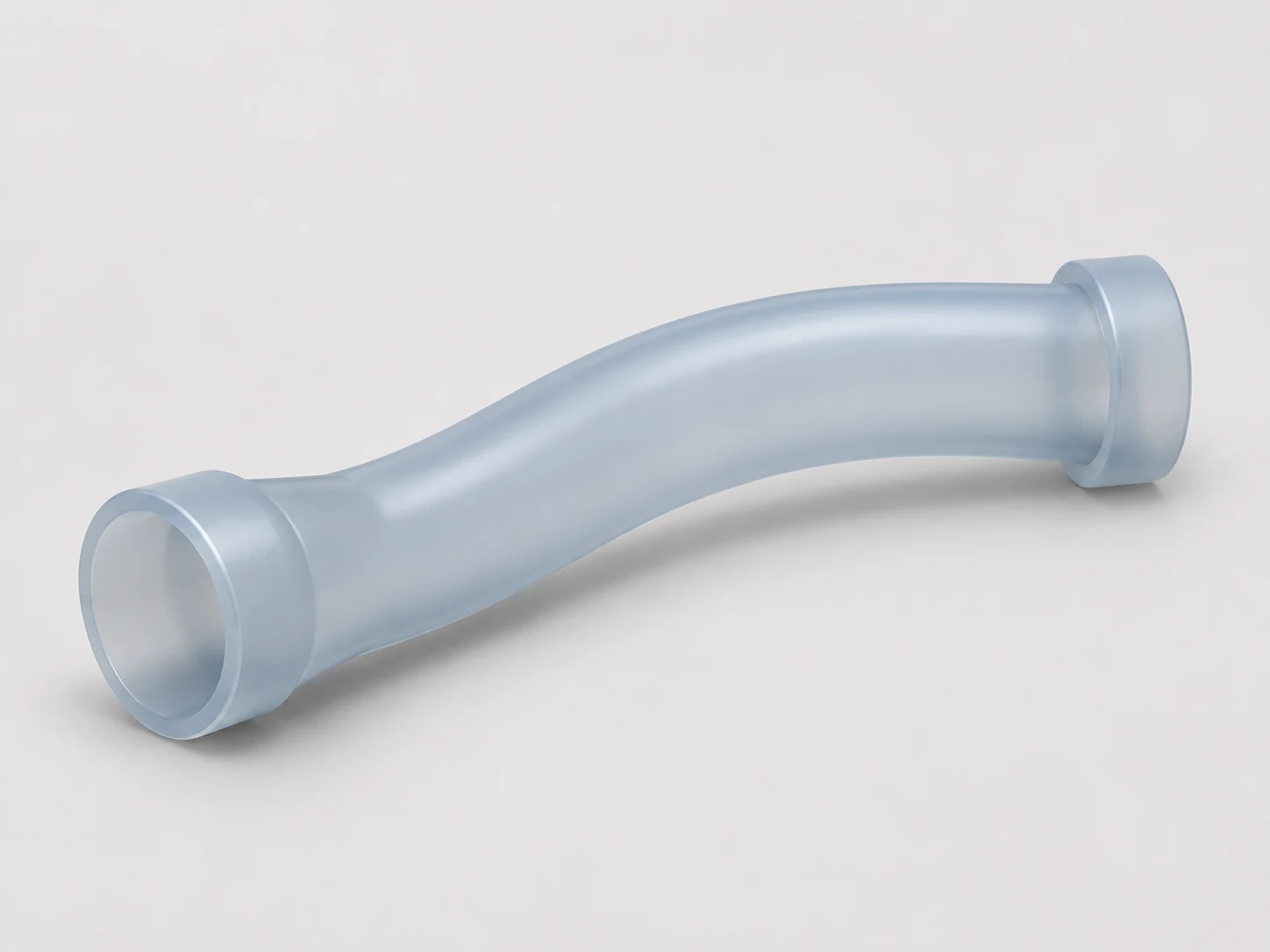
Flexible PVC
PVC family: CNC; confirm formulation Flexible PVC uses a plasticized formulation for soft molded boots, covers and protective interfaces. Its flexibility and handling characteristics differ from rigid PVC stock.
View Details↗
View Details
Typical Applications
Flexible boots, protective covers and soft covering components.
Selection Notes
Provide flexible-PVC grade, hardness, plasticizer requirements, contact media and color.
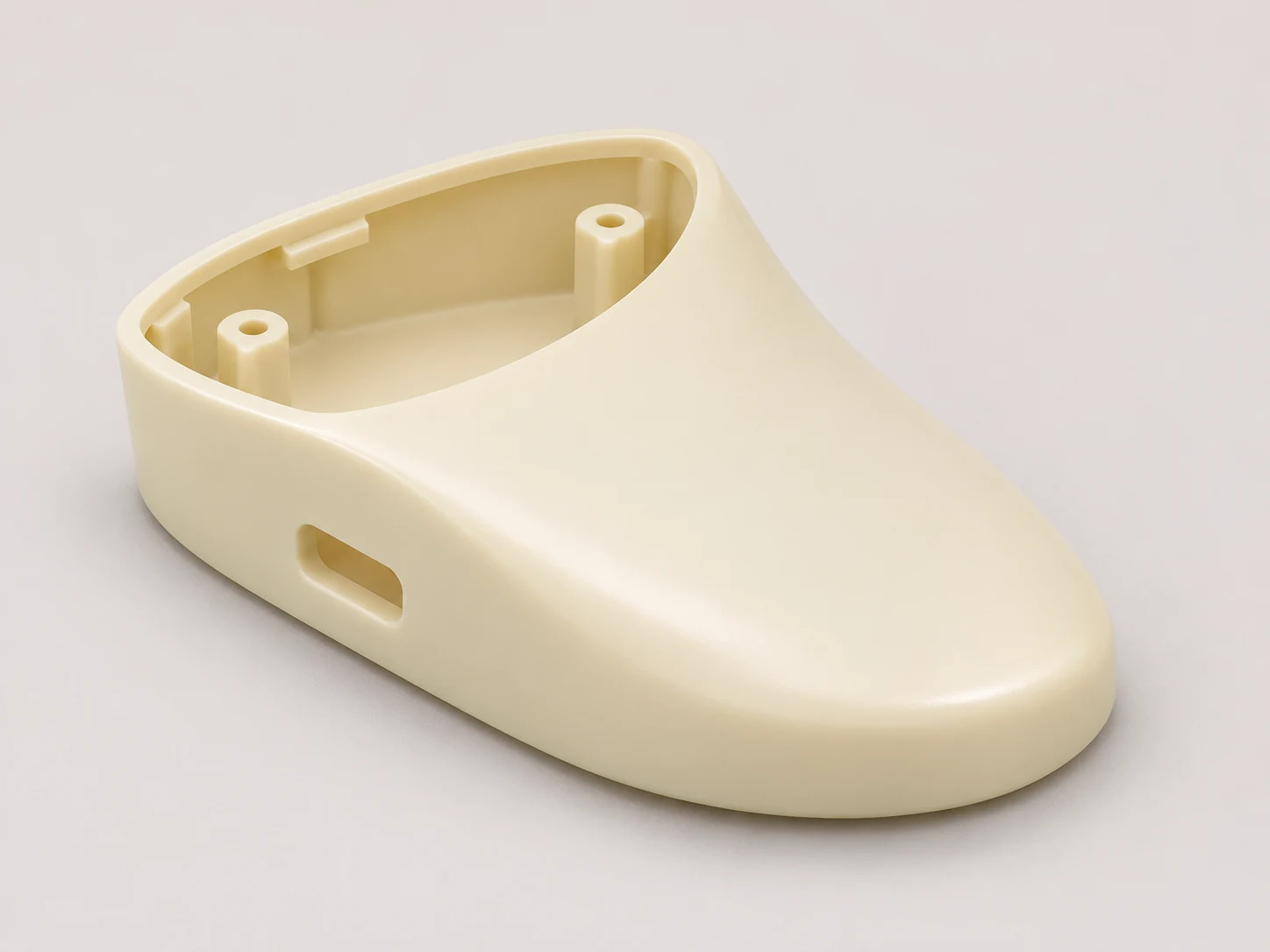
ABS-Like Casting Resin
Performance-like / flexible casting ABS-like polyurethane resin produces housing prototypes and small-batch presentation parts for fit and handling checks. It targets ABS-style behavior while retaining a different chemistry from ABS.
View Details↗
View Details
Typical Applications
Housing prototypes, assembly checks and small-batch presentation parts.
Selection Notes
Specify casting grade, load, temperature, color, surface finish and expected service duration.
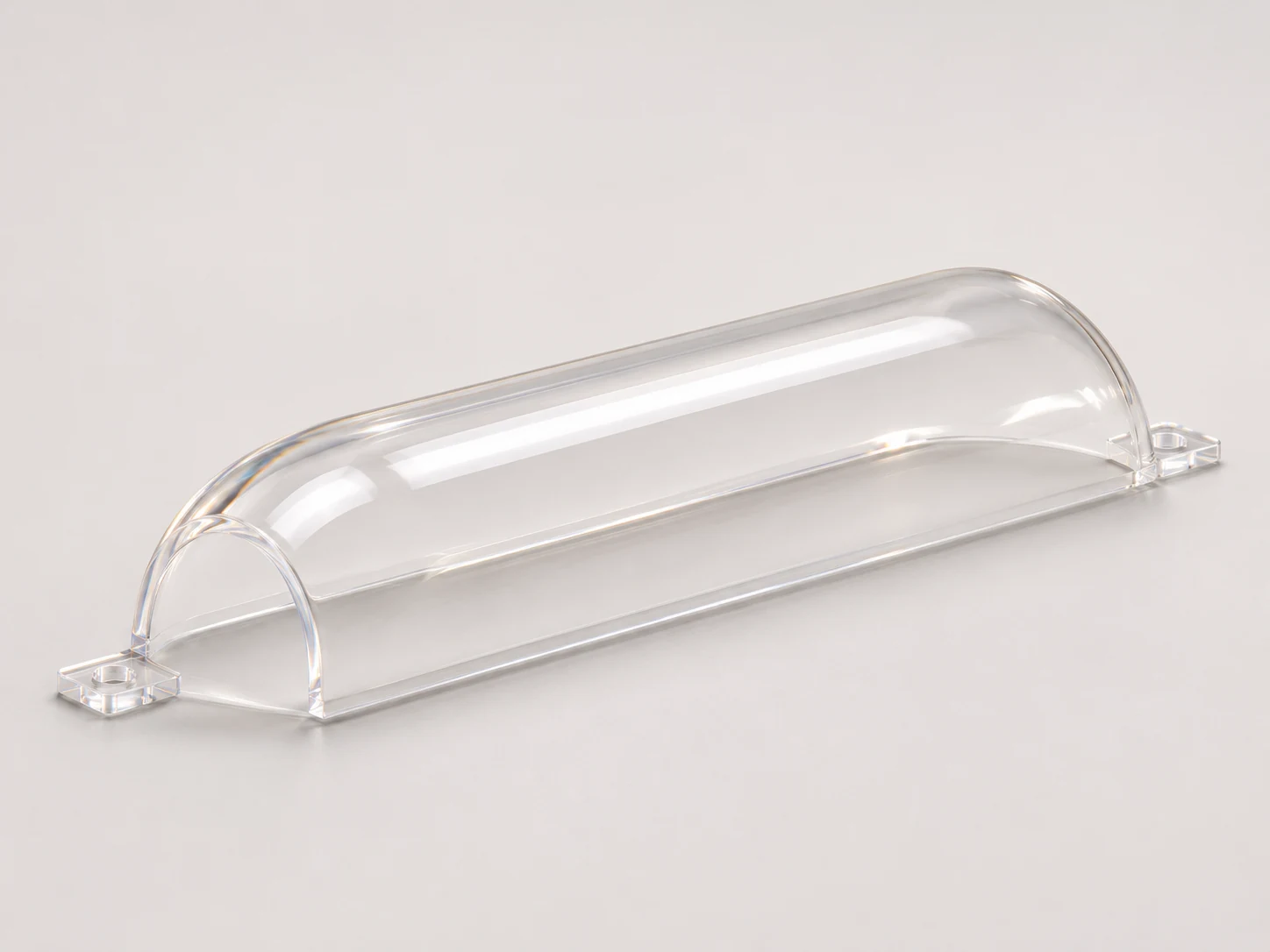
PMMA-Like Casting Resin
Performance-like / flexible casting PMMA-like polyurethane resin supports transparent prototype windows, display covers and appearance models. Clarity depends on the resin, section thickness and finishing, rather than PMMA identity.
View Details↗
View Details
Typical Applications
Transparent viewing windows, display covers and appearance prototypes.
Selection Notes
Provide resin grade, clarity, thickness, yellowing expectations and surface treatment.
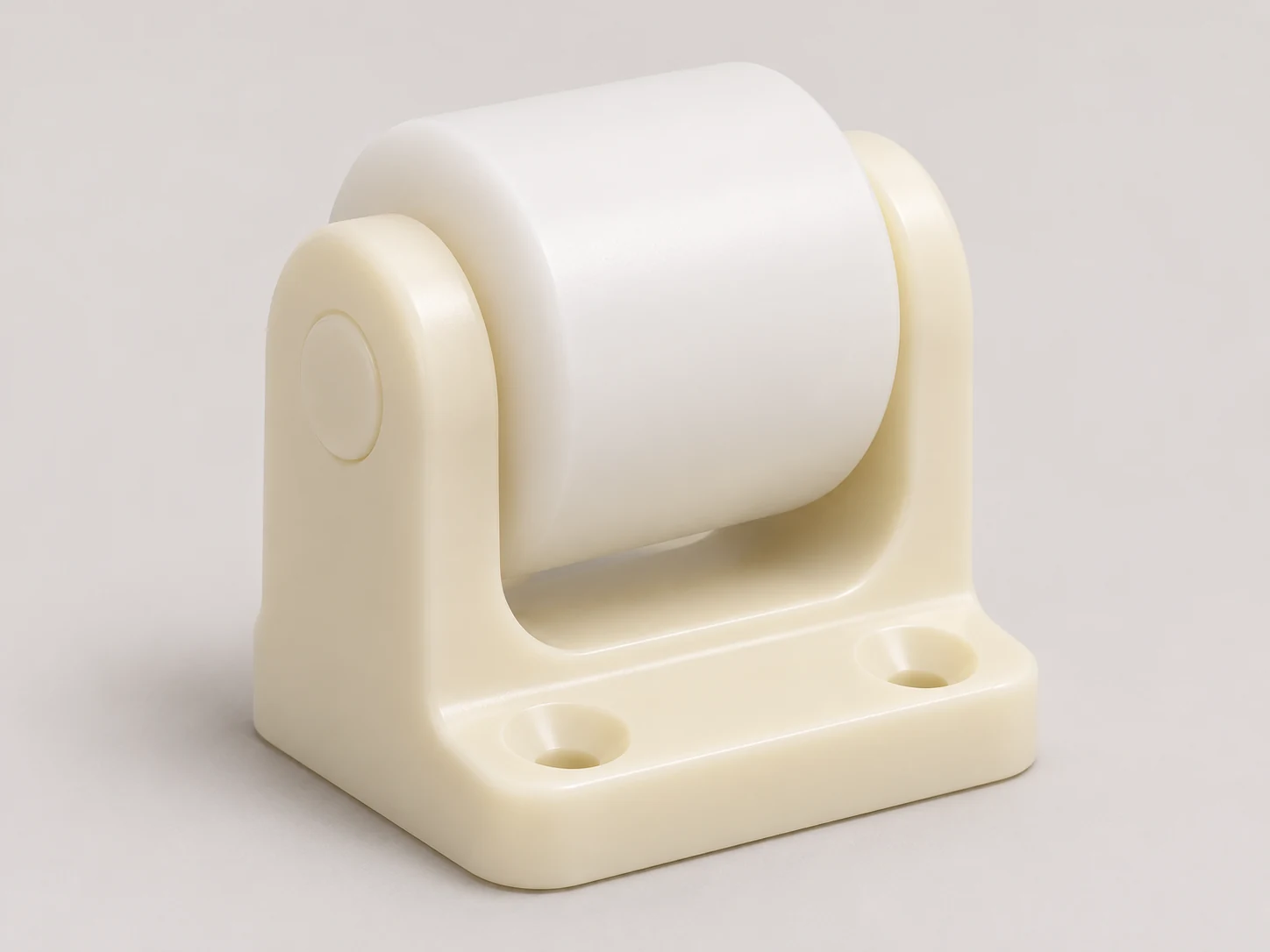
POM-Like Casting Resin
Performance-like / flexible casting POM-like polyurethane resin captures the form and fit of POM-style mating components and transmission prototypes. Sliding and wear applications require performance data for the casting resin.
View Details↗
View Details
Typical Applications
Mating-part prototypes, transmission-form studies and assembly models.
Selection Notes
Define fit, mating material, sliding load, duty cycle and required service life.
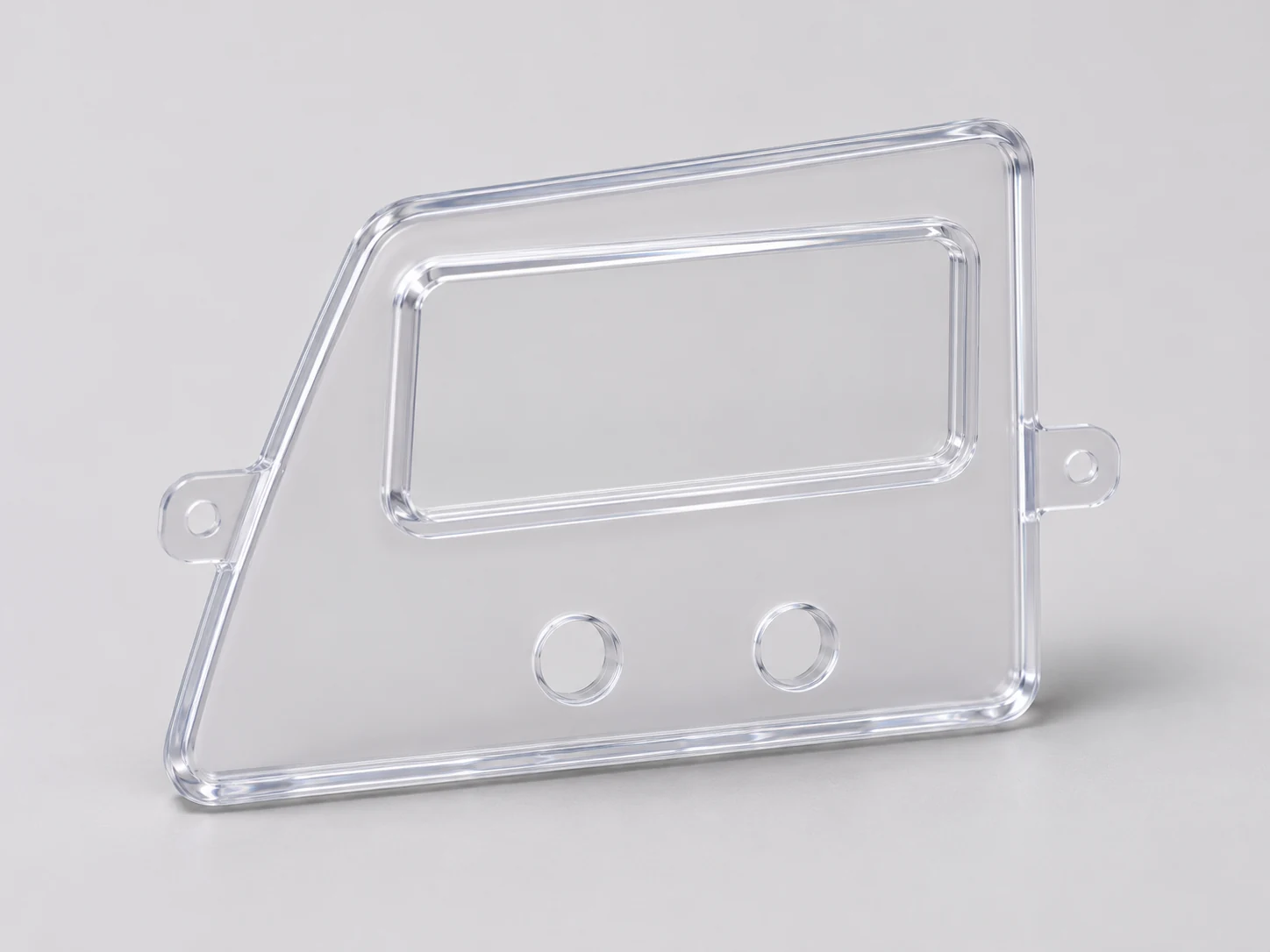
PC-Like Casting Resin
Performance-like / flexible casting PC-like polyurethane resin supports PC-style housings, covers and functional prototypes. Transparency, impact behavior and heat exposure are specified for the casting formulation, separately from actual PC.
View Details↗
View Details
Typical Applications
Equipment enclosures, clear covers and functional evaluation prototypes.
Selection Notes
State resin grade, transparency, loads, temperature, color and finish.
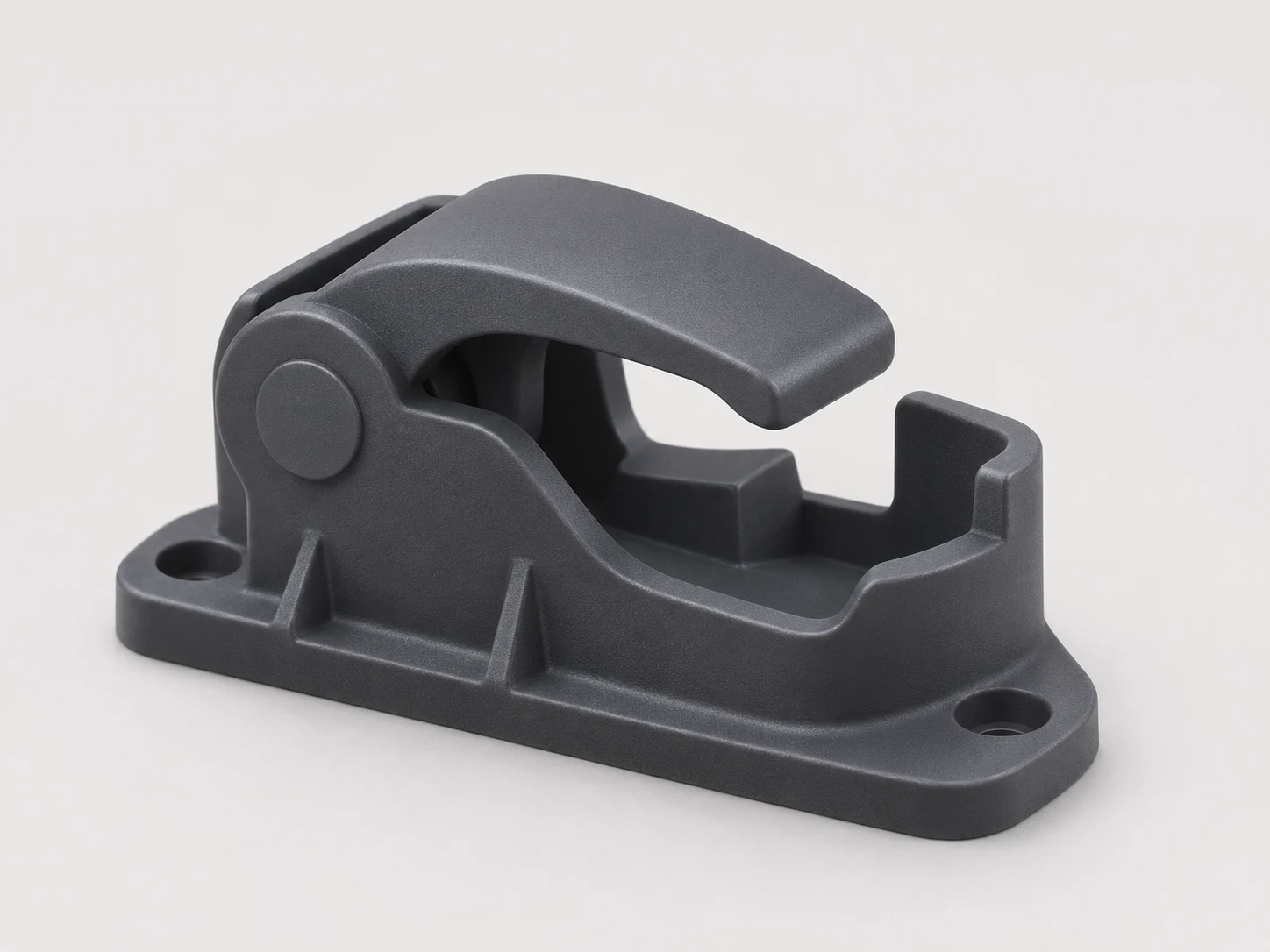
PA-Like (Nylon-Like) Casting Resin
Performance-like / flexible casting PA-like polyurethane resin reproduces nylon-style part forms for assembly and functional-target checks. Its chemistry differs from PA6, PA66 and PA12 used in other manufacturing routes.
View Details↗
View Details
Typical Applications
Connector prototypes, assembly models and functional-target comparisons.
Selection Notes
Provide resin grade, hardness, loads, mating geometry and test conditions.
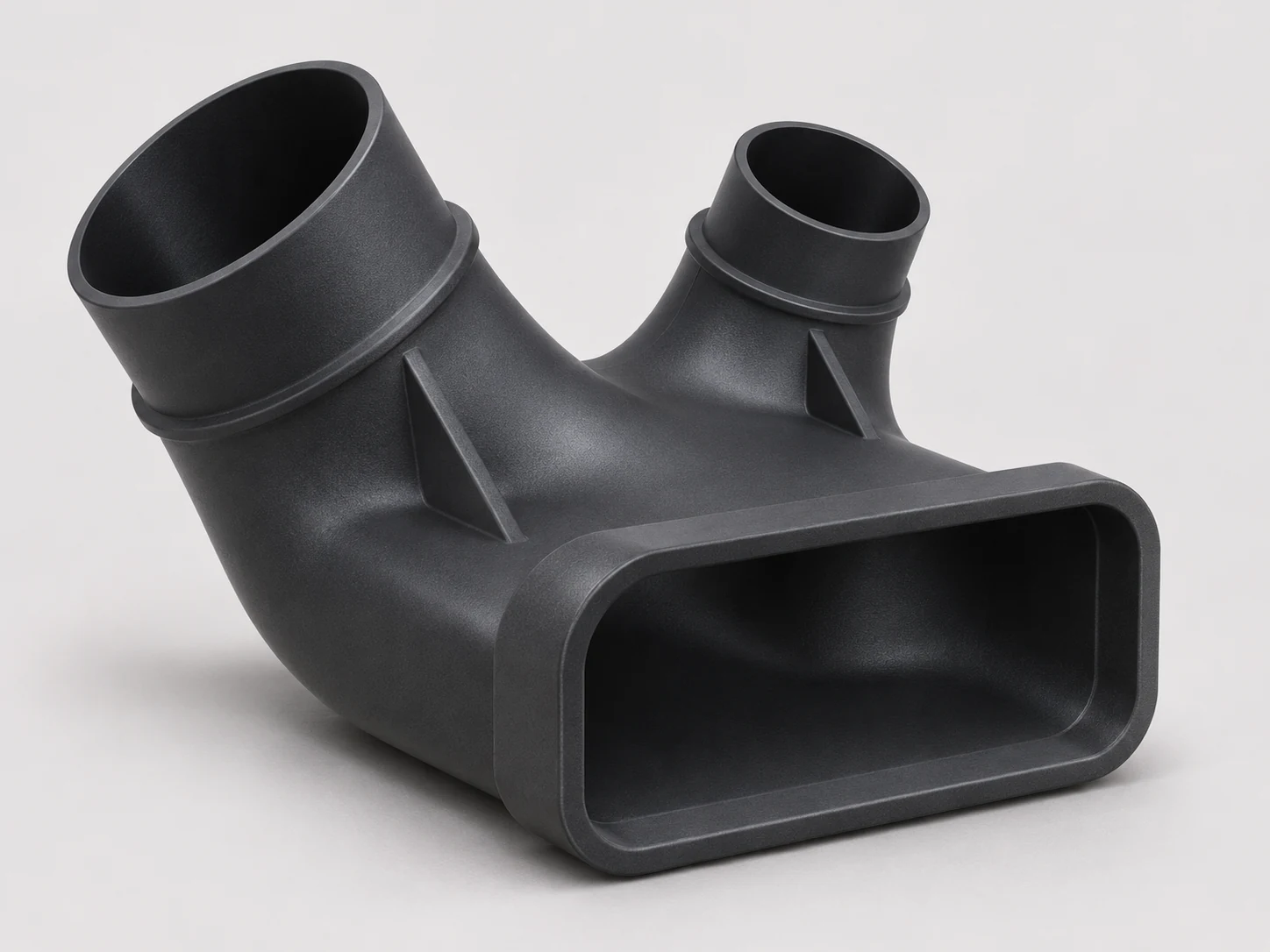
Heat-Resistant ABS-Like Casting Resin
Performance-like / flexible casting Heat-resistant ABS-like polyurethane resin targets enclosure and duct prototypes near heat sources. Temperature, exposure duration and load define the requirements for this ABS-style resin system.
View Details↗
View Details
Typical Applications
Enclosure, duct and equipment prototypes near heat sources.
Selection Notes
Provide resin grade, peak and continuous temperature, exposure duration, load and finish.
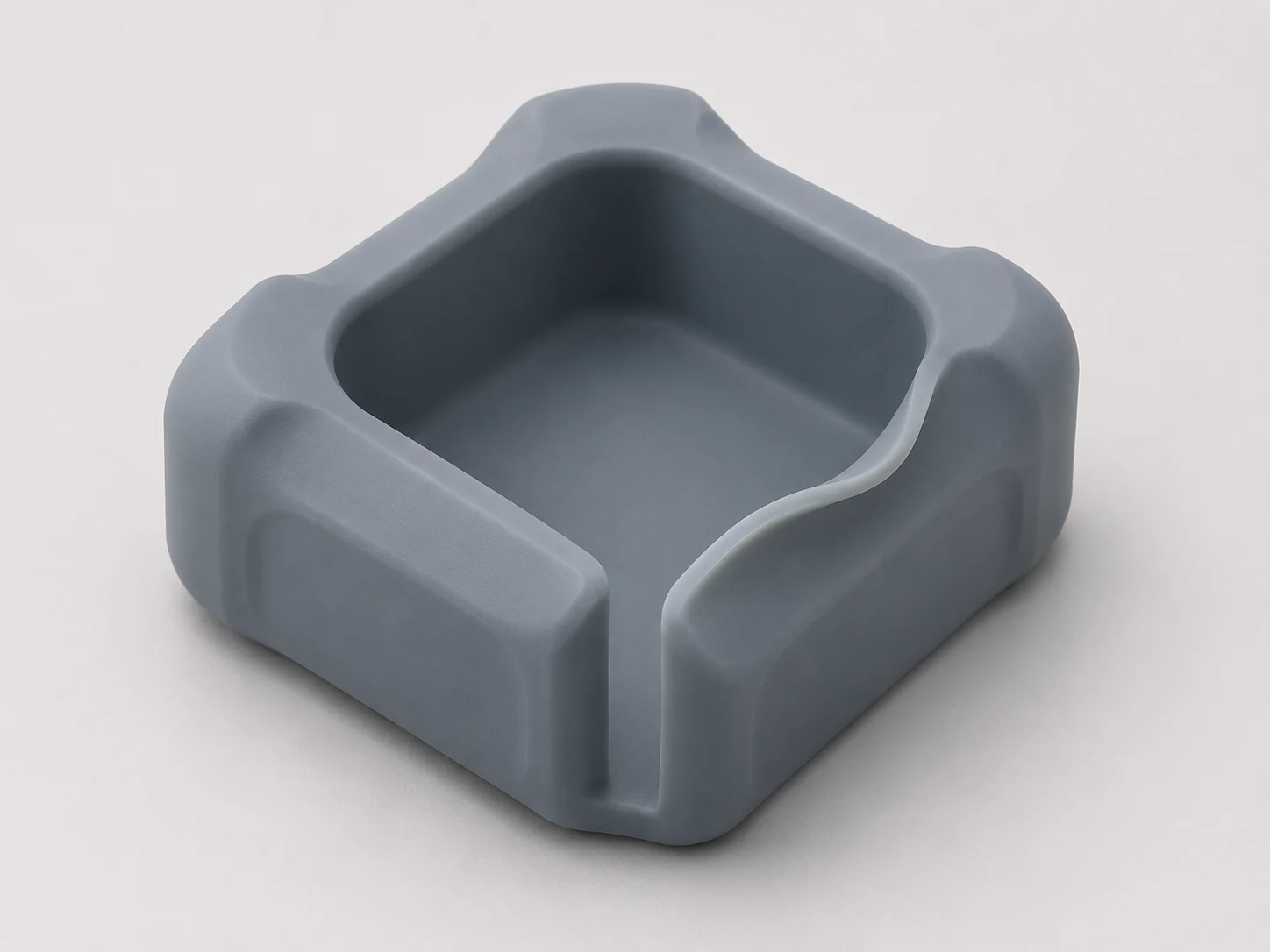
Flexible PU / Rubber-Like Casting Resin
Performance-like / flexible casting Flexible polyurethane casting resin gives rubber-like handling to soft covers, cushioning pads and grip prototypes. The cured resin remains distinct from thermoplastic TPU used in molding.
View Details↗
View Details
Typical Applications
Flexible protective covers, cushioning pads, grips and tactile prototypes.
Selection Notes
Specify hardness, rebound, tear requirements, deformation, contact conditions and color.
PP-Like Casting Resin
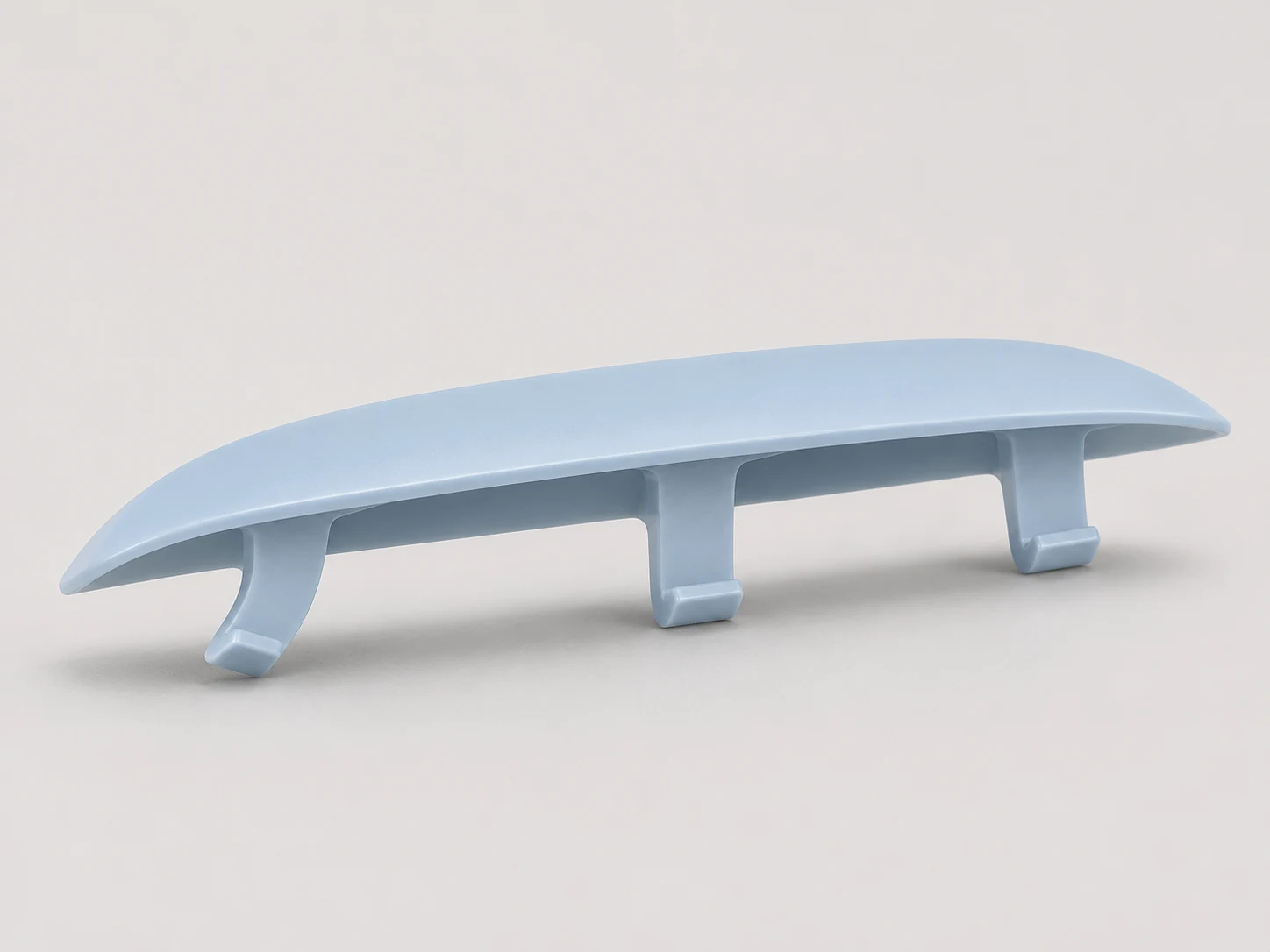
Performance-like / flexible casting PP-like polyurethane resin supports flexible covers, lids and handling prototypes with PP-style design goals. Its flexing and chemical-contact behavior depend on the casting formulation, rather than polypropylene.
View Details↗
View Details
Typical Applications
Flexible covers, lids and handling-evaluation prototypes.
Selection Notes
Provide resin grade, bend geometry, flex cycles, contact chemicals and finish.
PEEK
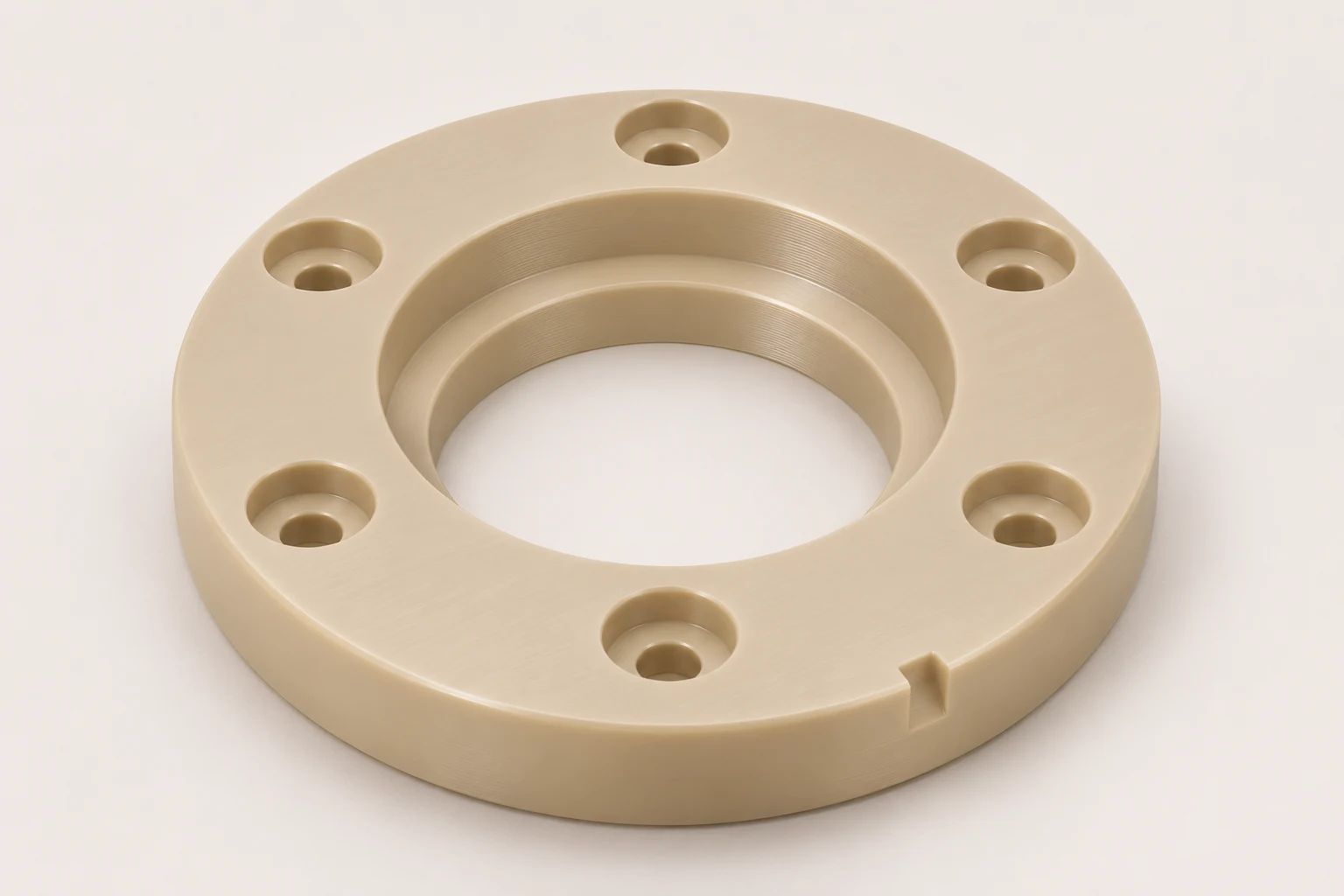
Family comparison: Molding PEEK stock combines strength with heat and chemical resistance for machined bushings, structural supports and demanding functional parts. Unfilled and reinforced forms suit different design priorities.
View Details↗
View Details
Typical Applications
Bushings, structural supports and functional components exposed to heat.
Selection Notes
Specify rod or sheet grade, reinforcement, stock dimensions, loads and material records.
POM (Acetal)
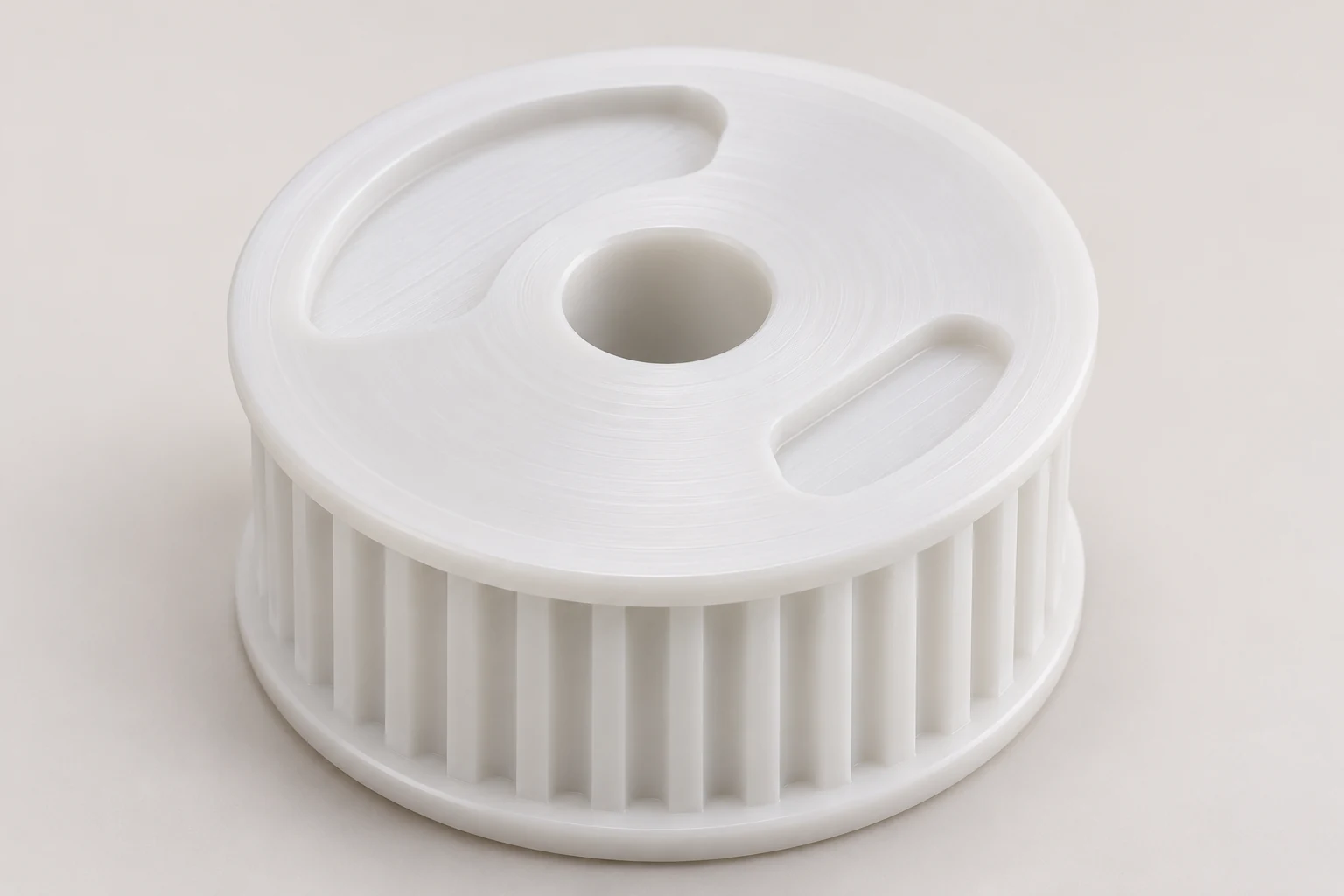
Family comparison: Molding Stiff, low-friction POM machines into gears, sliders, sleeves and fitted components. Wear behavior and dimensional stability make it useful for moving and mating interfaces.
View Details↗
View Details
Typical Applications
Gears, sliders, fitted sleeves and mating components.
Selection Notes
Provide copolymer or homopolymer stock grade, mating material, load, temperature and fits.
Nylon (PA)
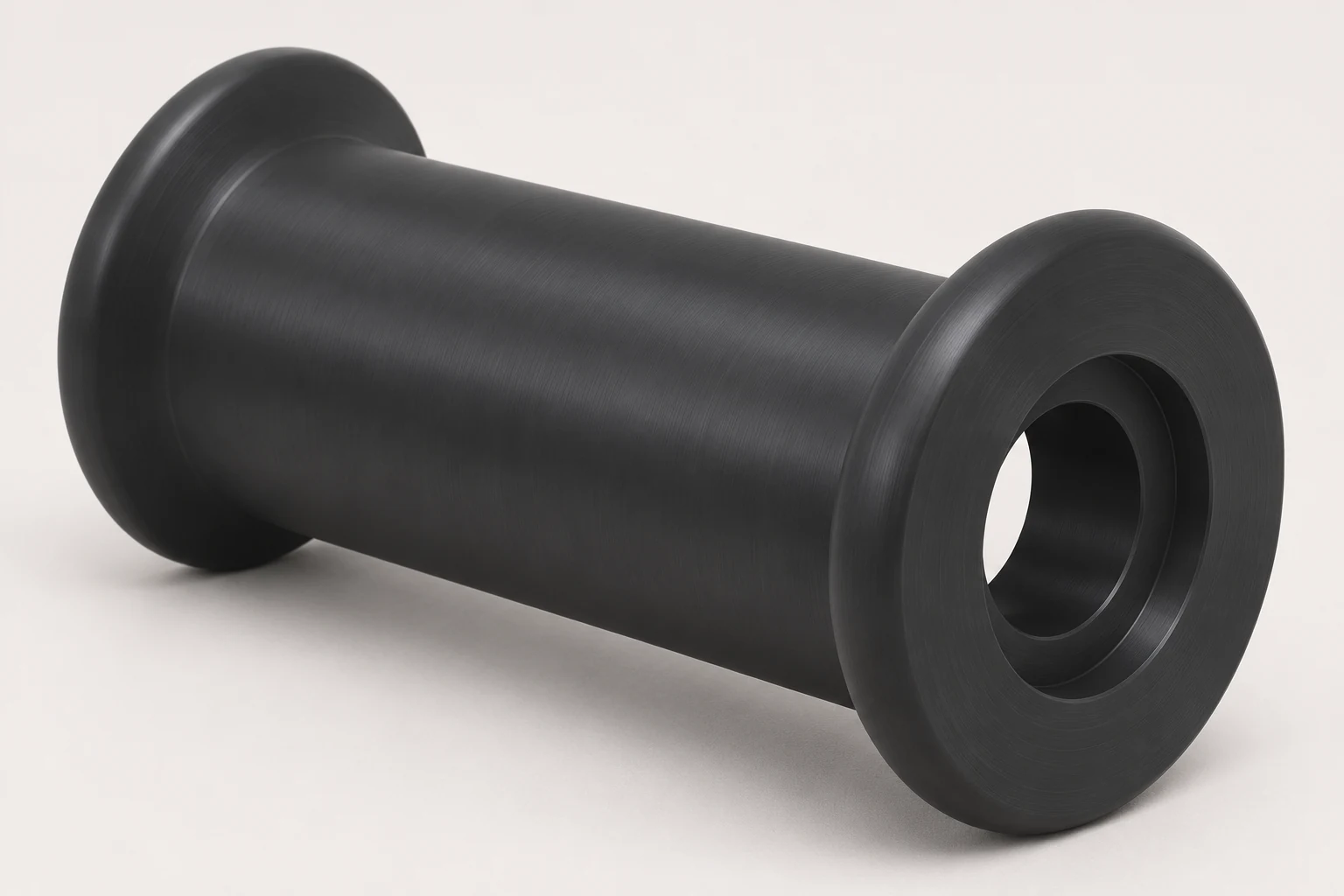
PA family: Molding · Printing Nylon stock provides toughness and wear-related performance for rollers, bushings and mechanical brackets. The chosen PA species and moisture condition influence dimensions and behavior.
View Details↗
View Details
Typical Applications
Rollers, bushings, mechanical brackets and transmission components.
Selection Notes
State PA species, stock form, reinforcement, conditioning state and inspection fits.
PC (Polycarbonate)
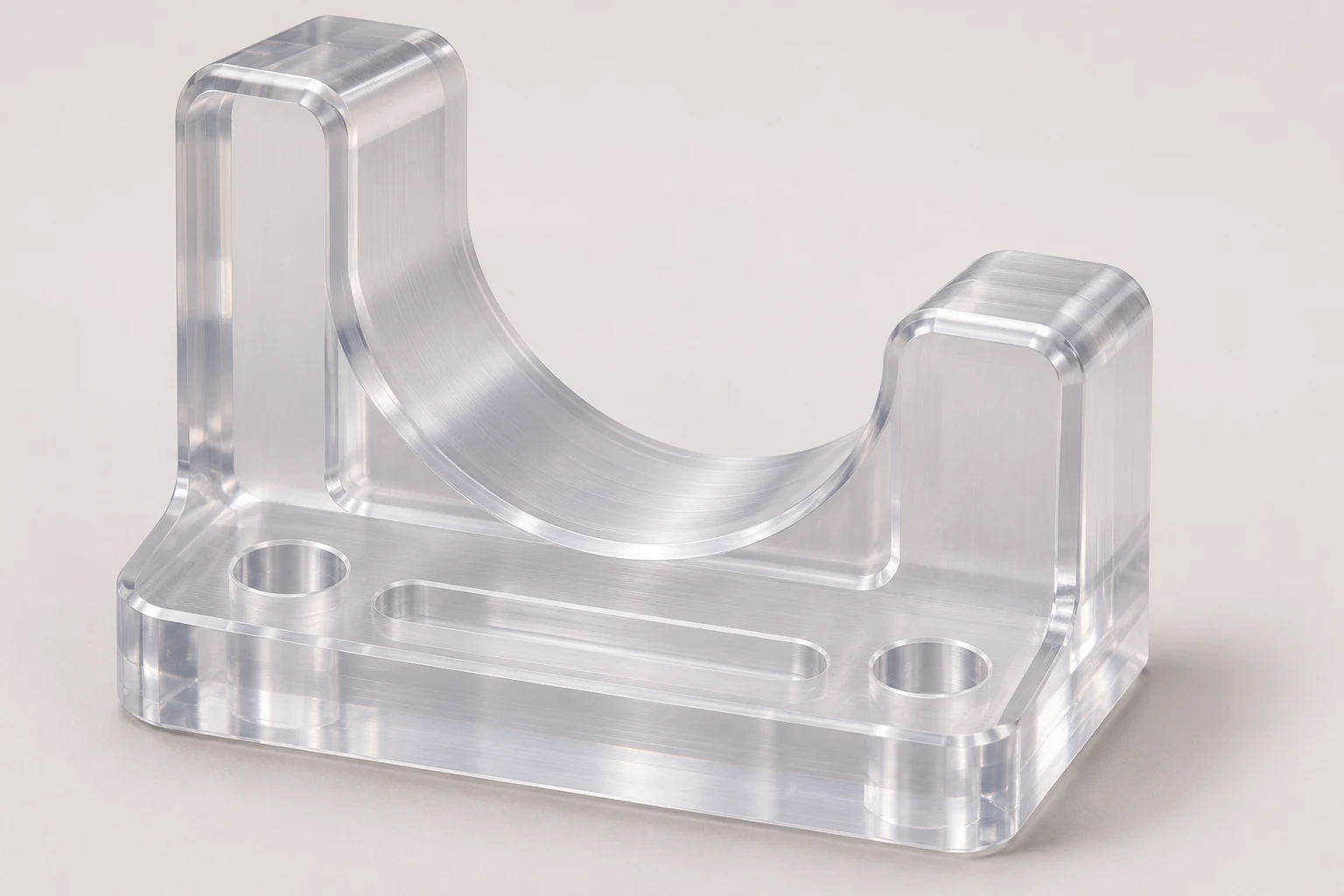
Family comparison: Molding PC stock combines clarity with impact tolerance for machined guards, viewing windows and equipment covers. Surface preparation and finishing shape the final transparent appearance.
View Details↗
View Details
Typical Applications
Guards, transparent equipment covers and viewing windows.
Selection Notes
Provide grade, clarity, color, chemical exposure, stress-sensitive features and finish.
ABS
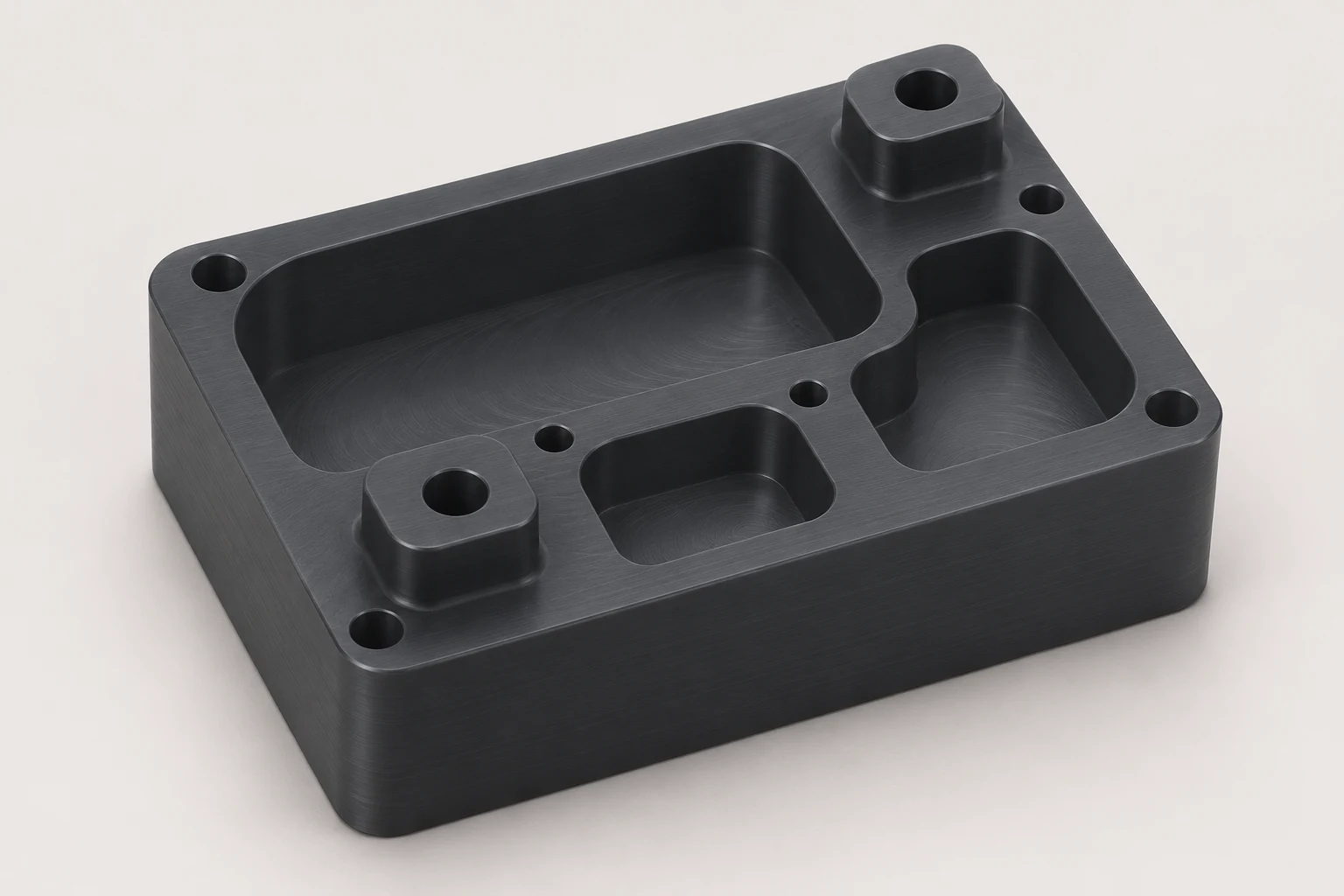
Family comparison: Molding Tough, machinable ABS supports detailed housing prototypes, structural covers and assembly fixtures. It provides a practical route for checking form, fit and functional design targets.
View Details↗
View Details
Typical Applications
Housing prototypes, assembly fixtures and structural covers.
Selection Notes
Specify stock grade, geometry, operating temperature, loads, color and finishing.
PMMA (Acrylic)
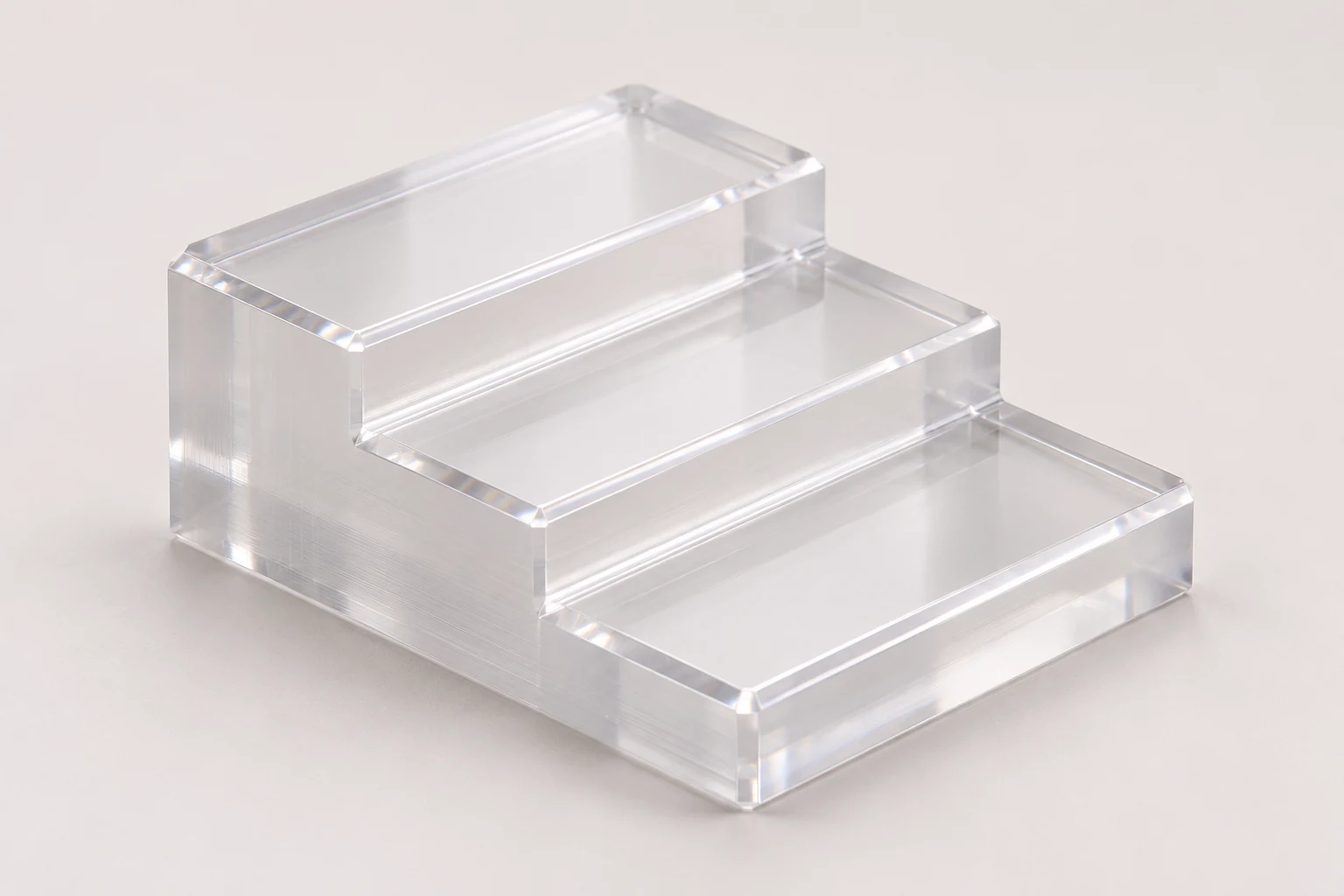
Family comparison: Molding Clear PMMA stock serves machined viewing windows, display panels and light-transmitting components. Polishing, edge treatment and machining conditions influence the finished part’s visual quality.
View Details↗
View Details
Typical Applications
Viewing windows, display panels and light-transmitting structures.
Selection Notes
Specify stock grade, color, clarity, thickness, edge treatment and polished surfaces.
PTFE
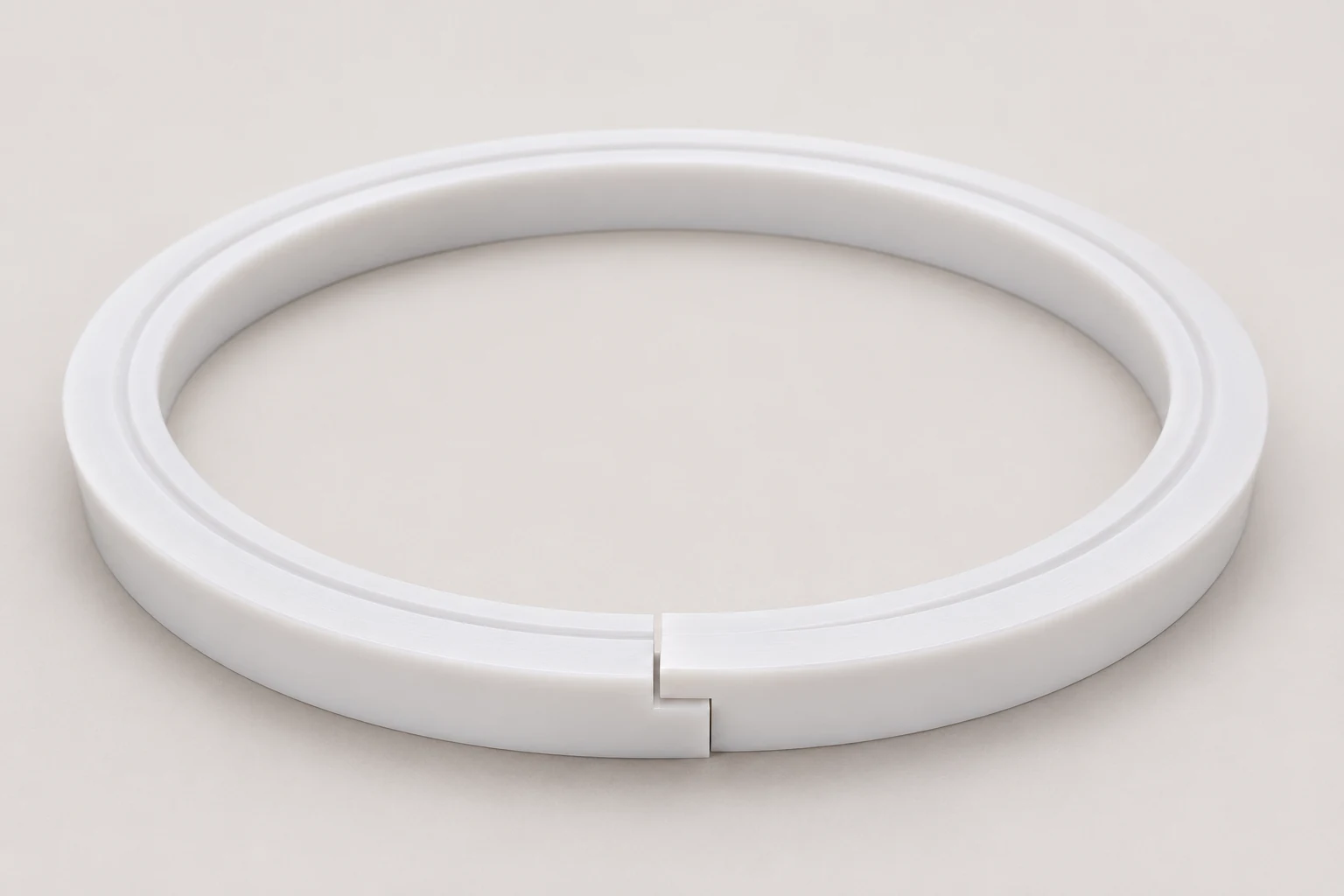
CNC Machining Plastics PTFE offers low friction with heat and chemical resistance for machined seal rings, liners and isolation components. Load and deformation requirements guide stock selection.
View Details↗
View Details
Typical Applications
Seal rings, isolation components and low-friction liners.
Selection Notes
Specify unfilled or filled grade, contact chemicals, load, temperature and dimensional fits.
PVC
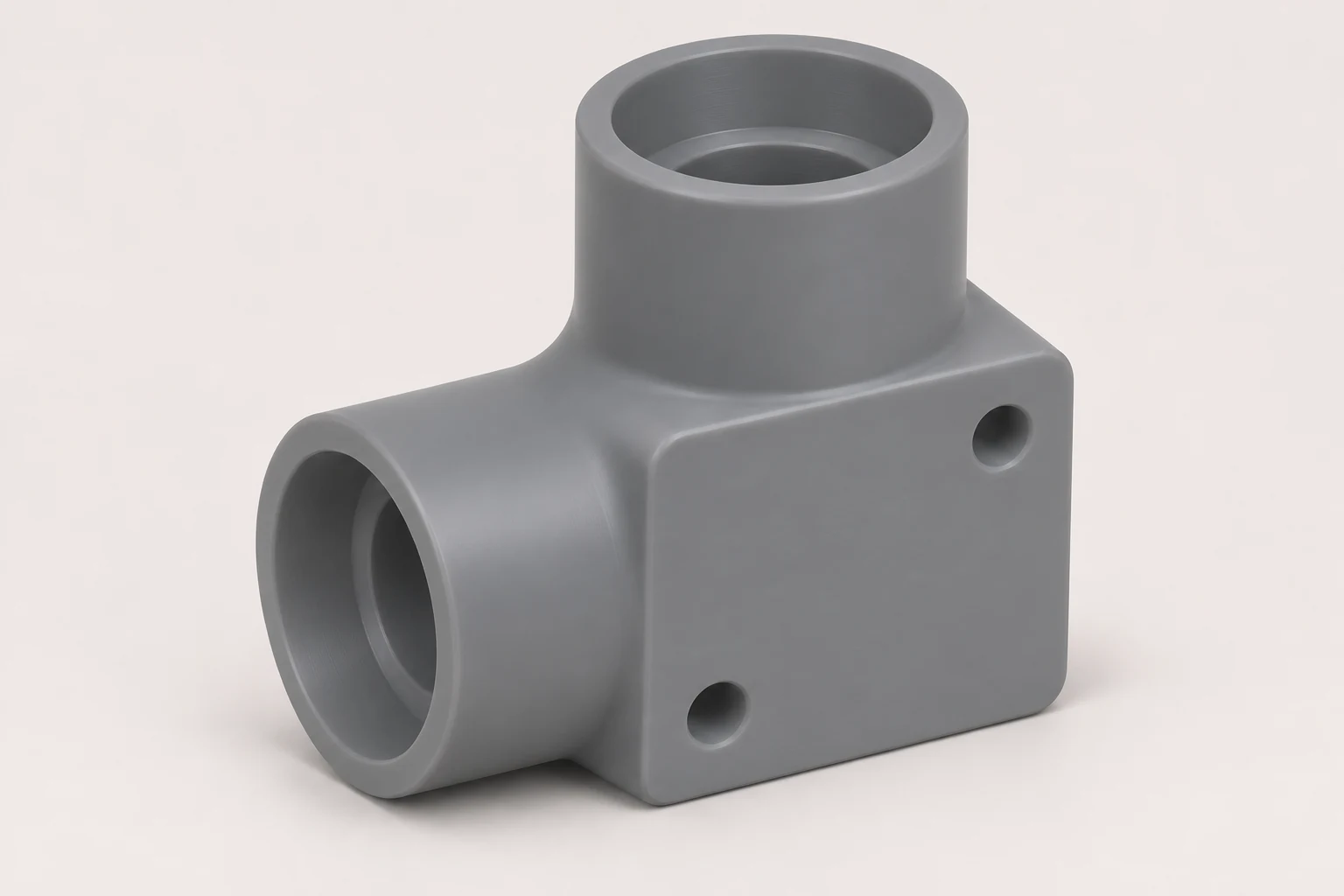
PVC family: Molding; confirm formulation PVC supports chemical-contact and electrical-insulation applications such as blocks and covers. CNC stock formulation must be specified separately from the flexible PVC used in molding.
View Details↗
View Details
Typical Applications
Insulating blocks, covers and chemical-contact components.
Selection Notes
State rigid or flexible formulation, stock grade, contact media, electrical requirements and geometry.
Photopolymer Resin
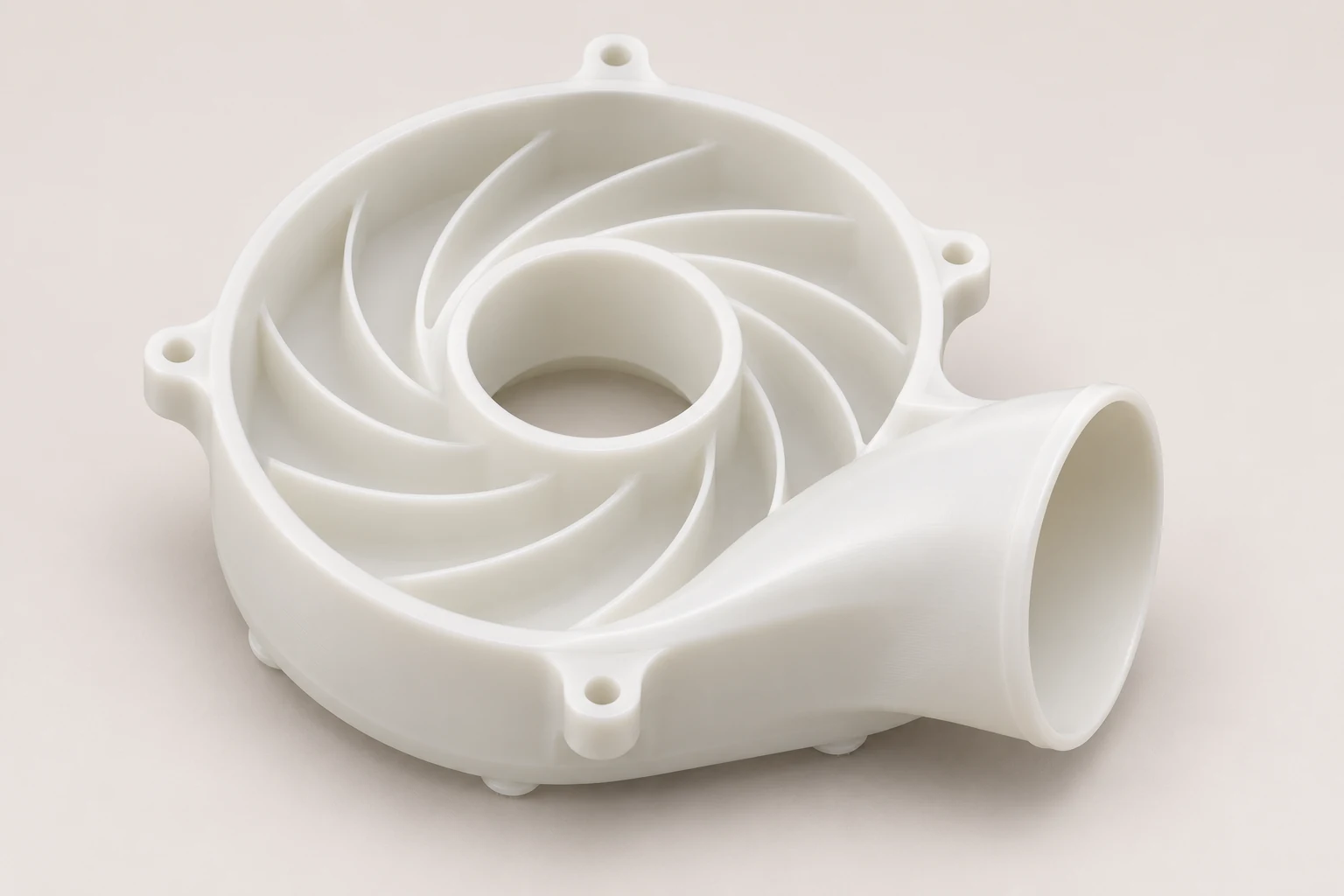
3D Printing Materials Light-cured photopolymers produce detailed prototypes and smooth visual models through SLA or DLP. Standard, tough, transparent and heat-oriented formulations serve different appearance and functional targets.
View Details↗
View Details
Typical Applications
Visual models, detailed prototypes, transparent displays and reviewed functional-evaluation parts.
Selection Notes
Specify resin grade, SLA or DLP, post-curing, clarity, loads and finish.
Available Options
- Standard Resin — White
White photopolymer for visual models and fine-feature prototypes.
- Standard Resin — Black
Black photopolymer for presentation parts and models with a dark cosmetic finish.
- Tough Resin — Tea Green
Toughened photopolymer for handling and mechanical-behavior prototypes; an ABS-style performance alternative with its own resin chemistry.
- Transparent Resin
Clear photopolymer for viewing models and transparent covers; polishing or clear coating determines the intended clarity.
- Translucent Resin
Light-diffusing photopolymer for lampshade models and components with a deliberately hazy appearance.
- High-Temperature Resin — Gray
Heat-oriented photopolymer for prototypes and tooling concepts with specified thermal exposure.
- High-Temperature Resin — Beige
Beige photopolymer for short-duration thermal applications and prototype tooling concepts.
Nylon (PA12 / Nylon Composites)
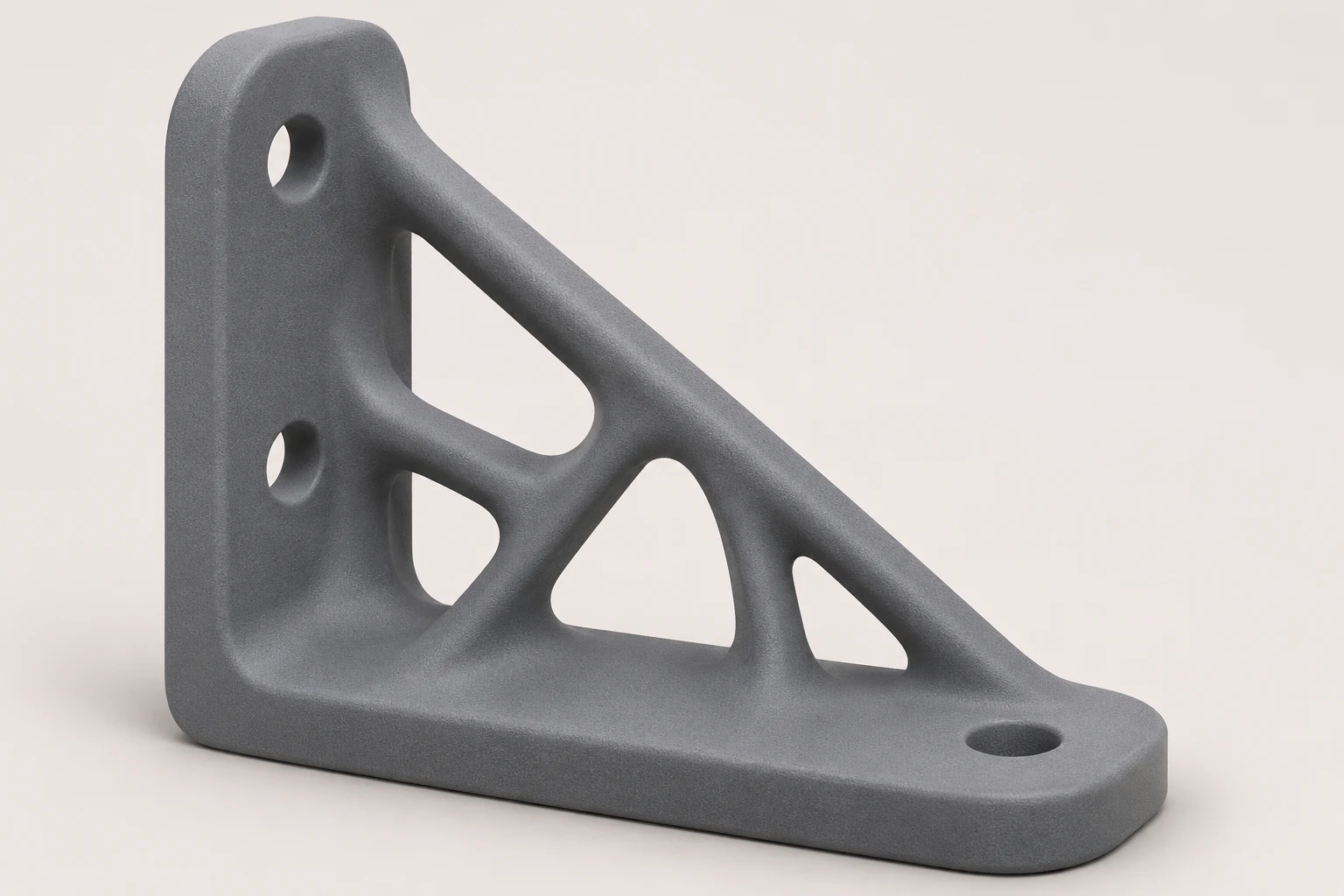
PA family: CNC · Molding Powder-bed nylon forms complex functional housings, clips and ducts. The range includes PA12 and glass-reinforced nylon, with SLS and MJF routes and distinct material formulations.
View Details↗
View Details
Typical Applications
Functional housings, clips, ducts and complex assembly components.
Selection Notes
Specify PA species, SLS or MJF, filler form, conditioning, color and surface finish.
Available Options
- SLS PA12 — White
White PA12 for functional prototypes, complex housings and assembly components with a matte surface.
- SLS PA12 — Dyed Black
Dyed-black SLS PA12 for functional parts and prototypes with a dark matte appearance.
- MJF Glass-Reinforced Nylon — Dyed Black
Glass-reinforced MJF nylon for components with stiffness requirements and a dyed-black finish.
- MJF Glass-Reinforced Nylon — Gray
Glass-reinforced MJF nylon for structural forms and functional parts with a gray matte appearance.
- MJF PA12 — Gray
MJF PA12 for complex functional parts, finished in gray.
- MJF PA12 — Dyed Black
MJF PA12 for functional components and assembled products with a dyed-black finish.
PLA
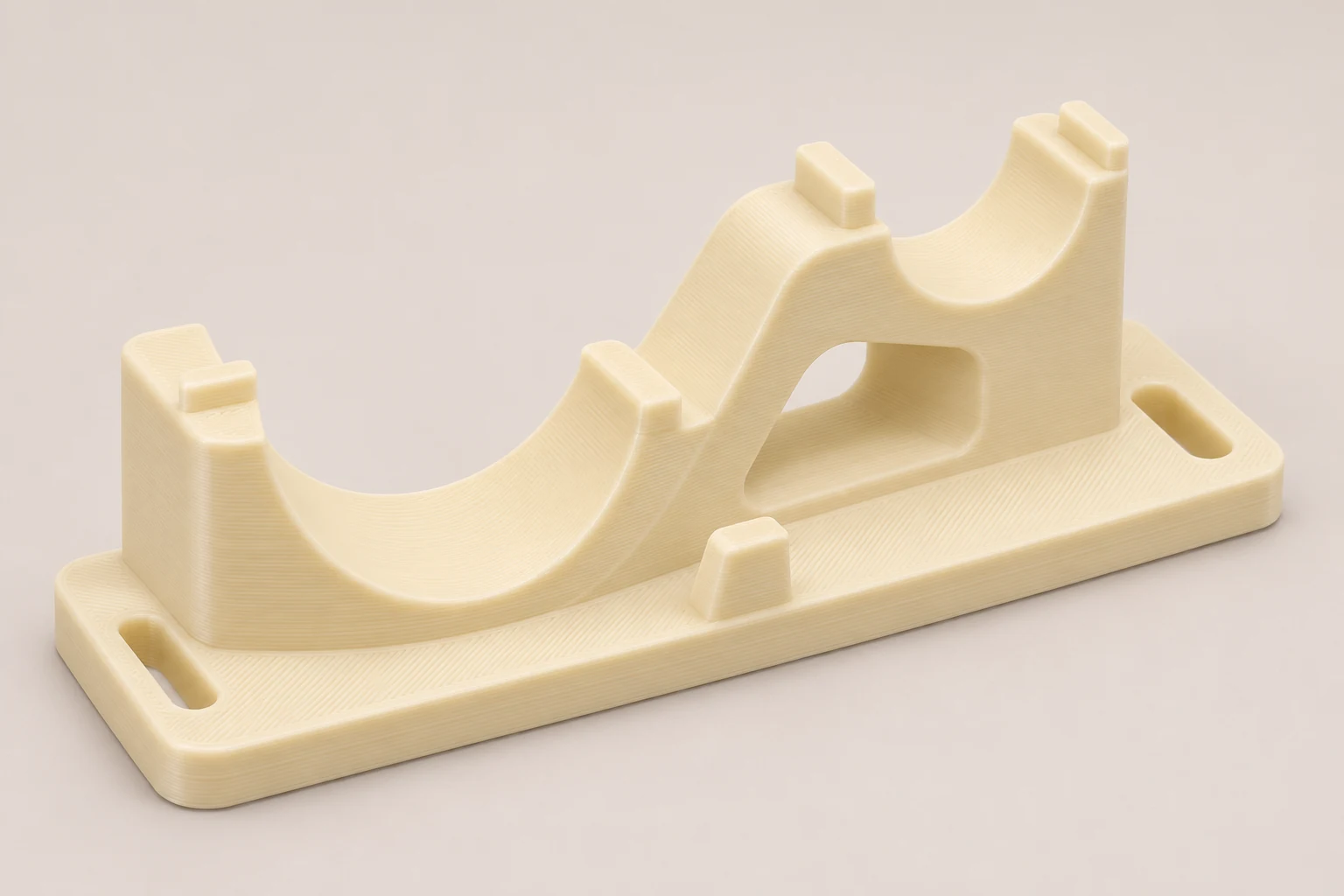
3D Printing Materials PLA serves concept models, display pieces and lightly loaded fit-check prototypes where high heat resistance or high strength is not central to the application.
View Details↗
View Details
Typical Applications
Concept models, display pieces and lightly loaded fit-review prototypes.
Selection Notes
Provide geometry, loads, service temperature, print orientation, color and finish.

Wax (Casting Patterns)
3D Printing Materials Printed wax patterns capture intricate jewelry and metal-casting forms for subsequent casting. They are manufacturing intermediates rather than engineering-plastic components intended to remain in service.
View Details↗
View Details
Typical Applications
Jewelry patterns, metal-casting patterns and complex pattern evaluation.
Selection Notes
Specify pattern grade, casting workflow, geometry, surface detail and finishing requirements.
Silicone molds do not make every cast part silicone. ABS-like and PC-like names describe performance targets, not identical thermoplastic chemistry.