
01
Function & Grade Review
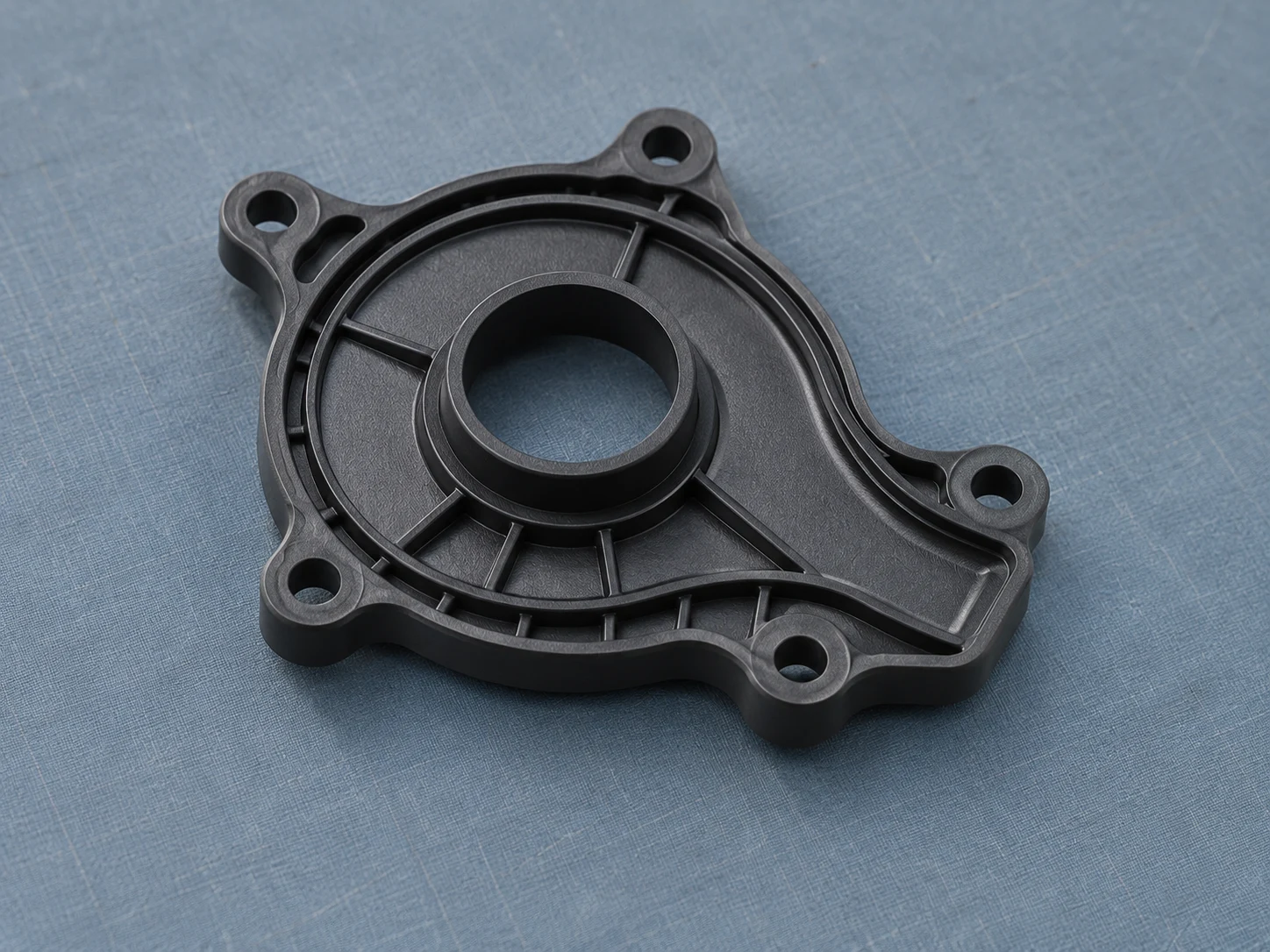
Select PPS formulations against thermal, chemical, loading and electrical demands together. Glass, mineral, wear-modified and conductive systems have different directional, processing and validation requirements.
Built for production.
Take your design from tooling to repeat production of custom plastic parts.
Manufacturing Capabilities
Plastic Injection MoldingCustom plastic parts for production Tooling & Design SupportPrepare your part design for tooling High-Volume ProductionPlan repeat runs around your delivery needsMaterials & Finishes
Made for smaller runs.
Produce resin parts with silicone molds for design validation and small batches.
Small-Batch Capabilities
Vacuum CastingResin parts made with silicone moldsLow-Volume ProductionFrom trial parts to small-batch deliveryAppearance & Fit ChecksPrepare multiple parts for product checksMaterials & Finishes
Other Services
Machining, printing, and supporting services for specific part needs.
Materials & Finishes
Explore material performance and appearance options separately.
Explore Materials & Finishes
Injection Molding Materials
Choose molding materials for strength, heat resistance and appearance.
Manufacturing Knowledge
Find articles, answers, and case studies to help prepare your project.
Start with your part requirements.
Contact PlasticHubs for help with quotes, files, delivery, and orders.
Files, Orders & Delivery
Industries
Explore manufacturing options for your product application.
Start with your manufacturing needs
From tooling to production of plastic parts.
Small batches of resin parts made with silicone molds.
Start with your design, material, and quantity.
Plan PPS injection molding for equipment components with combined thermal, chemical and dimensional demands. Connect reinforcement, flow and crystallization control with tooling decisions, manufacturing routes and critical-interface validation.
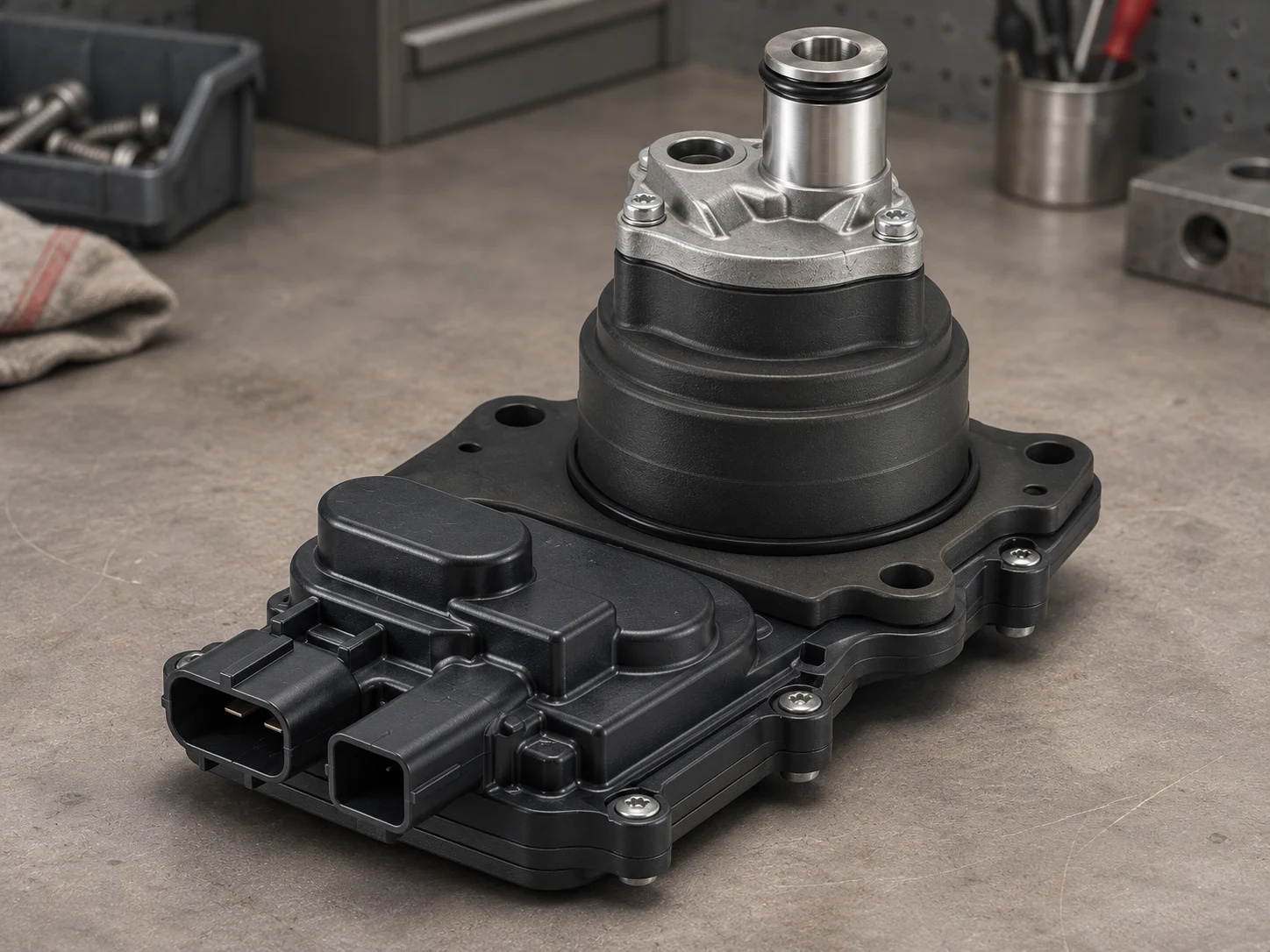
Describe media, temperature, loading and cycling, identifying dimensions that control fit, sealing or electrical function. Confirm the PPS grade, reinforcement direction and manufacturing route against these requirements.
Discuss your project ↗Select PPS formulations against thermal, chemical, loading and electrical demands together. Glass, mineral, wear-modified and conductive systems have different directional, processing and validation requirements.

Connect predrying, mold temperature, flow, venting and cooling in the trial plan. Establish the acceptable condition through samples, critical dimensions and relevant tests before defining the production baseline.

Define locating and mating dimensions against media, thermal cycling and mounting needs. Review interfaces and assembly against drawings and actual samples, assessing any critical-face machining separately for the project.
Share drawings, quantity, temperature, media and critical-fit requirements.
| Project focus | Review scope |
|---|---|
| Formulation and exposure | Select glass/mineral/wear-modified or conductive formulations against temperature, media, loading and documentation requirements. |
| Material and thermal processing | Prepare material to grade guidance, reviewing predrying, melt heat history, mold-wall temperature and material-path cleanliness. |
| Tooling, flow and venting | Connect gates, reinforcement direction, balanced filling and venting, focusing on weld lines, flash and local loading. |
| Critical dimensions and secondary operations | Define sealing, locating and assembly dimensions; where needed, assess local machining with datums, allowance and measurement planning. |
| Samples and functional validation | Plan dimensional, loaded chemical-exposure, thermal-cycle, electrical and wear checks separately according to project requirements. |

Reduce sharp corners and heavy intersections with smooth section transitions. Review local stress and toughness around clips, slender fingers and loaded interfaces alongside tensile strength.
Directionality in glass-reinforced PPS affects shrinkage, warpage and loading. Coordinate gates and flow paths around critical dimensions, checking weak weld lines and uneven cooling.
Provide effective cavity venting alongside appropriate fits and support. Review deep ribs, slender cores and ejection locations to limit gas trapping and release distortion.
PPS is semi-crystalline; heat distribution and cooling influence crystallization, shrinkage and dimensions. Use the selected grade’s mold-wall guidance and confirm results on actual samples.
Define contact, fit and appearance requirements before selecting tool surfaces and secondary operations. Reinforcement, flow and molded condition influence surfaces; confirm the result on actual samples.

Define visible faces, contact regions and acceptance locations in the PPS component’s assembly environment. Review adjacent materials, fit and actual samples; confirm roughness, gate condition and exact resin locations separately.

Select tool polish for appearance, geometry and release. Use a finish sample to communicate the target and check replication on molded PPS of the selected formulation.
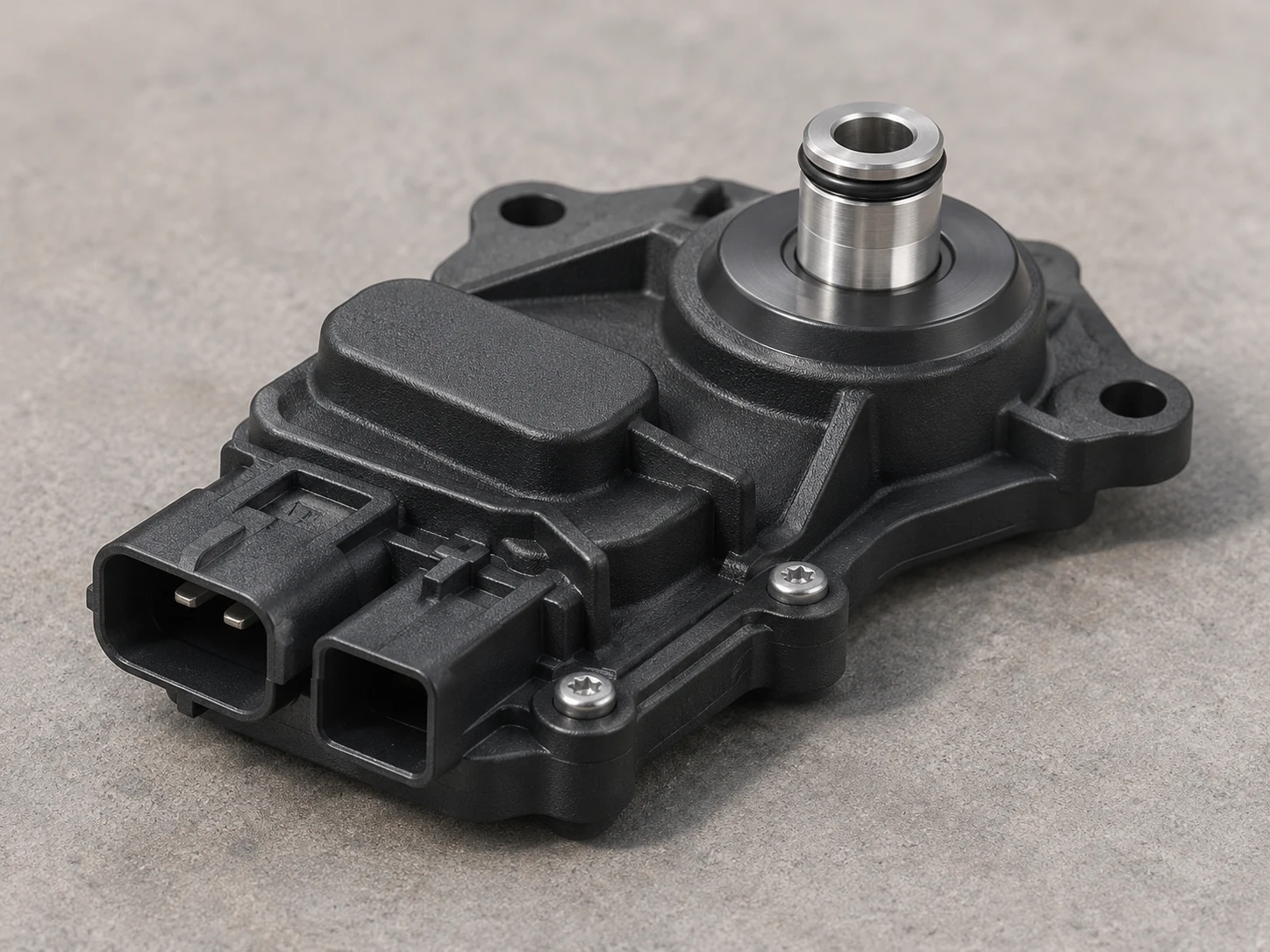
Review texture placement with draft, sealing and contact requirements. Reinforcement can affect surface replication, requiring sample and acceptance-area confirmation.

Identify critical faces for post-mold machining. Set datums, fixturing, material allowance and inspection steps for those faces, and measure them after the planned operations.
Record the grade, reinforcement, critical dimensions and secondary operations with the samples. Specify tests for sealing, chemical exposure, loads or electrical function where the part requires them.
The table uses Celanese’s CAMPUS data for FORTRON 1140L4, PPS reinforced with 40% glass. Compare unfilled, wear-modified or conductive PPS using grade-specific data.
| Property | Reference value | Method / conditions |
|---|---|---|
| Density | 1650 kg/m³ | ISO 1183 |
| Tensile modulus | 14700 MPa | ISO 527 |
| Stress at break | 195 MPa | ISO 527 |
| Notched Charpy impact strength | 10 kJ/m² | ISO 179/1eA; +23°C |
| Melting temperature | 280°C | ISO 11357-1/-3; 10°C/min |
| Temperature of deflection under load | 270°C | ISO 75-1/-2; 1.80 MPa |
| Electric strength | 31 kV/mm | IEC 60243-1 |
| Item | Guidance / reference | Method / conditions |
|---|---|---|
| Predrying temperature and time | 130–140°C / 3–4 h | Dehumidified-air dryer; official preprocessing recommendation |
| Melt temperature | 320–340°C | Official injection-molding processing recommendation |
| Mold-wall temperature | ≥140°C | Official injection-molding recommendation; source says at least 140°C |
| Molding shrinkage: parallel | 0.3% | ISO 294-4, 2577 |
| Molding shrinkage: normal | 0.6% | ISO 294-4, 2577 |
| Cavity venting | 有效排气 / Effective venting | Official qualitative requirement: all cavities must be effectively vented; no numerical threshold is stated |
Use the predrying and injection rows to plan molding. The 135°C recommendation applies to post-processing. Review venting during tool trials and assess melting temperature, HDT and service conditions separately.
Reference: Celanese-published CAMPUS FORTRON 1140L4 datasheet, hosted by Altair; actually read October 21, 2026. The page shows Copyright 2025 without a revision date.
Connect PPS formulation, tooling and optional secondary operations with thermal, chemical, fit and electrical requirements.
Review reinforcement direction, mold temperature, shrinkage and critical dimensions together to reduce design-to-production gaps.
Use drawings and dimensional inspection support, including CMM, to focus on sealing, location and fit; confirm relevant functions through project testing.
Use ISO 9001 / ISO 13485 quality systems and material, sample and process records to support the transition from development to production.
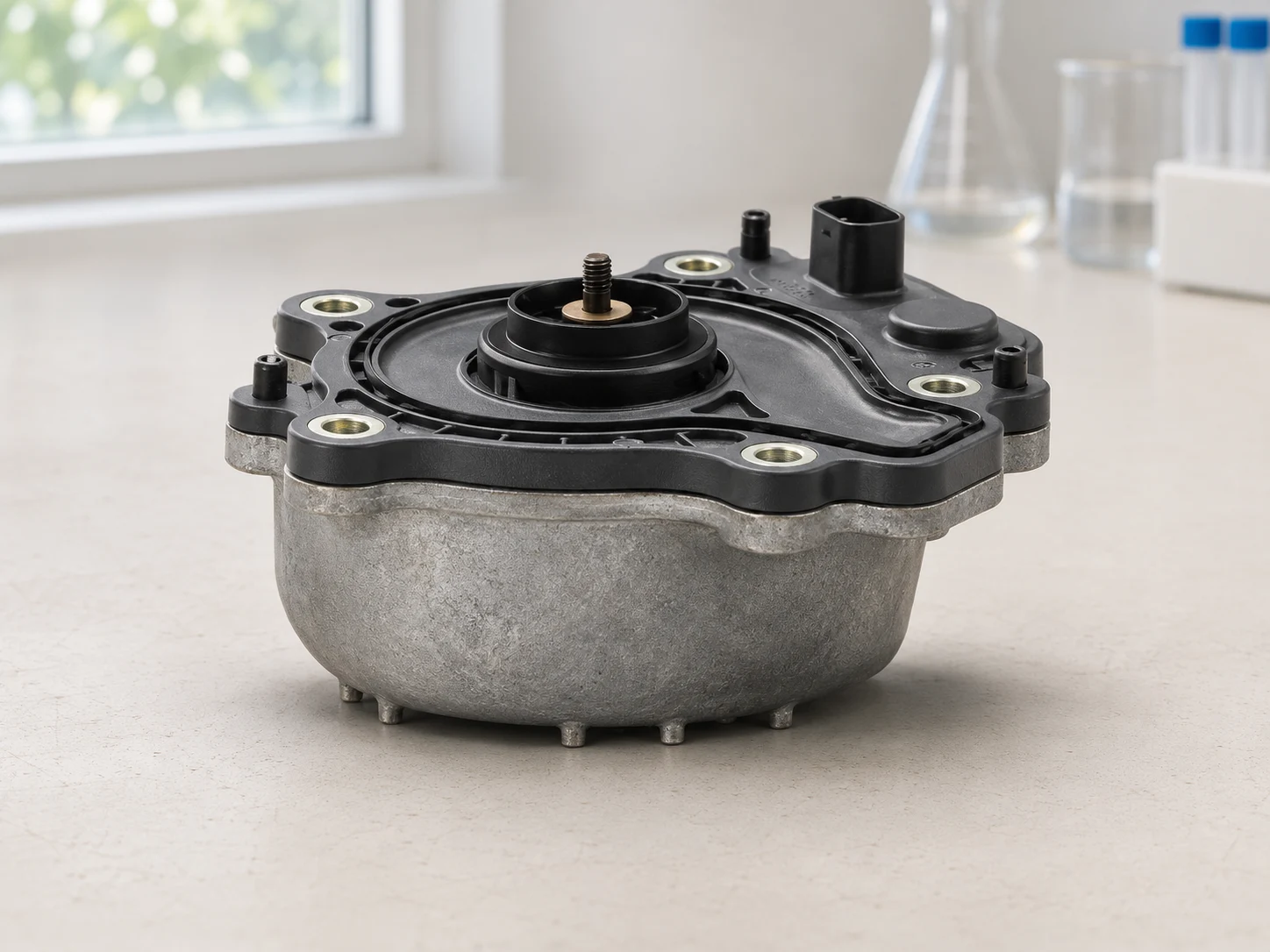
PPS stands for polyphenylene sulfide, a semi-crystalline high-performance thermoplastic. It is used for equipment parts combining heat resistance, chemical compatibility, stiffness and dimensional stability, with suitability determined by the formulation and operating conditions.
Glass, mineral, wear and conductive modifications change function, directionality and processing behavior. Low water absorption does not remove supplier predrying guidance. Validate grade, temperature, exposure and critical interfaces together instead of treating one PPS formulation as the entire family.
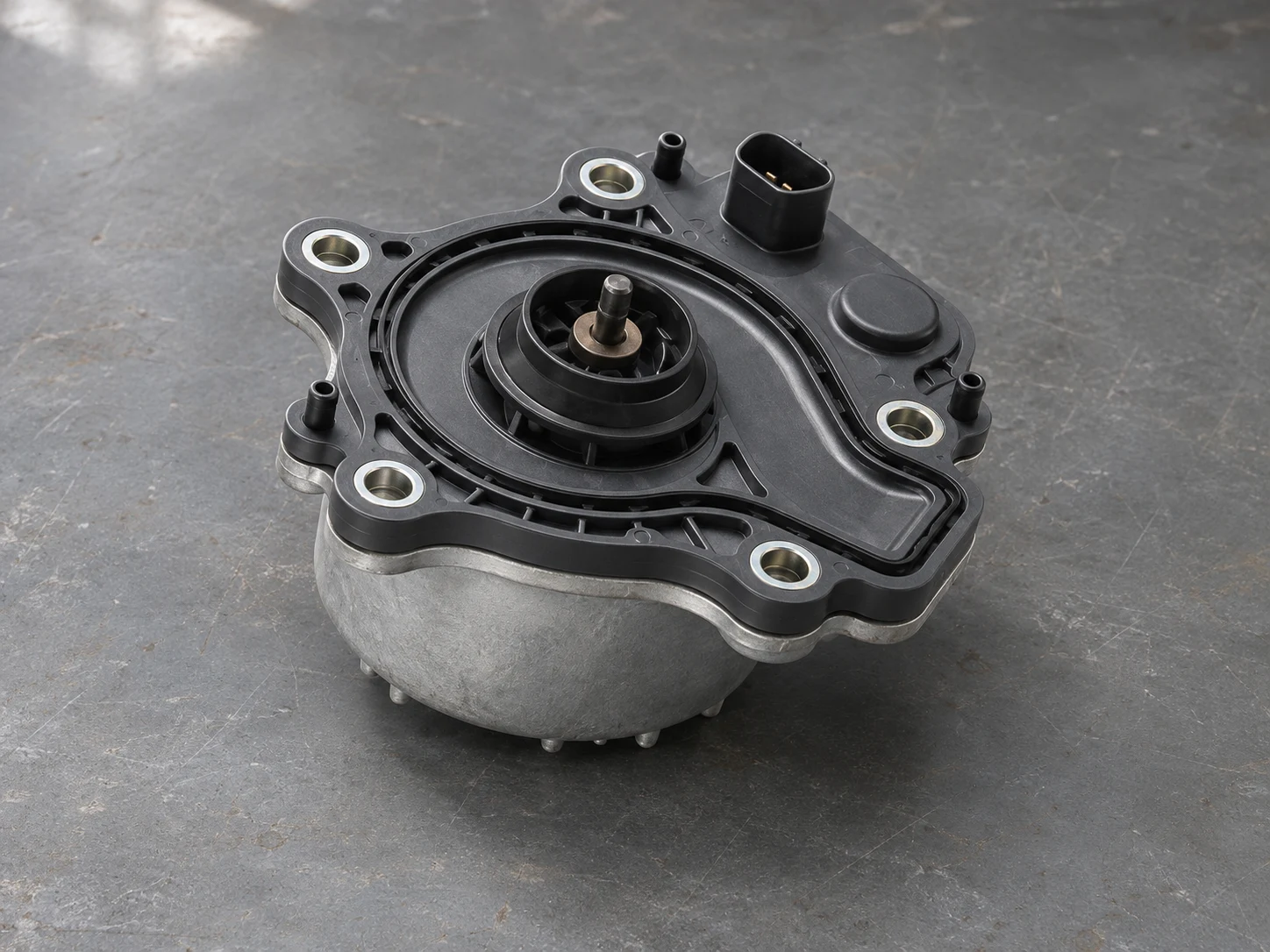
Select PPS formulations for electric-water-pump applications against coolant, temperature, pressure and connection interfaces. Define sealing, assembly and cycling checks for the resin components, reviewing metal parts under their own material requirements.

Oil-system components combine fluid exposure, thermal cycling and assembly loads. Specify the PPS grade, exposure duration and critical fits, then confirm dimensions and function on actual components.
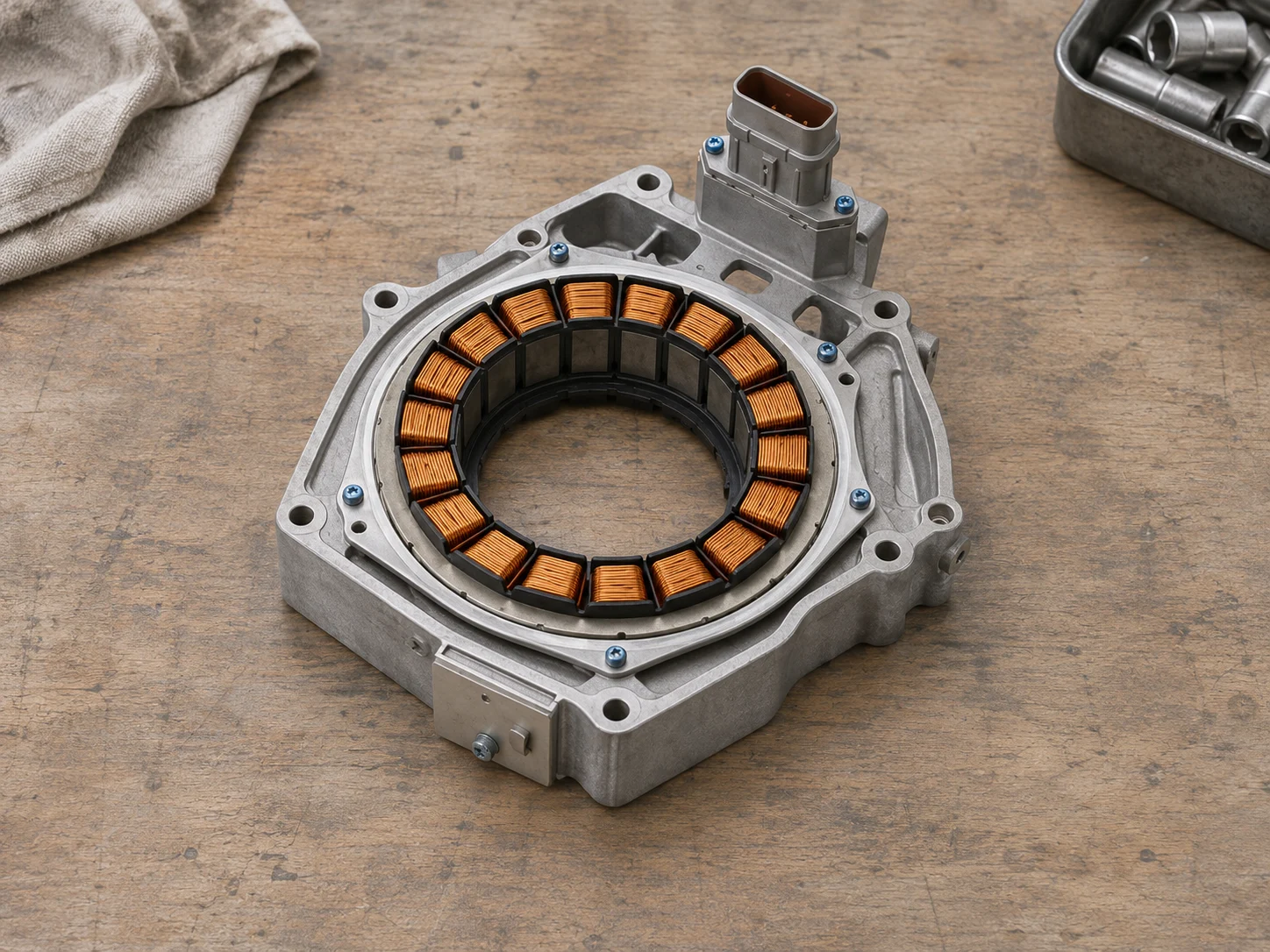
Motor insulators work alongside copper windings, metal structures and local heat sources. Review electrical separation, retention, thermal cycling and assembly space for the selected PPS formulation, validating the actual structure.
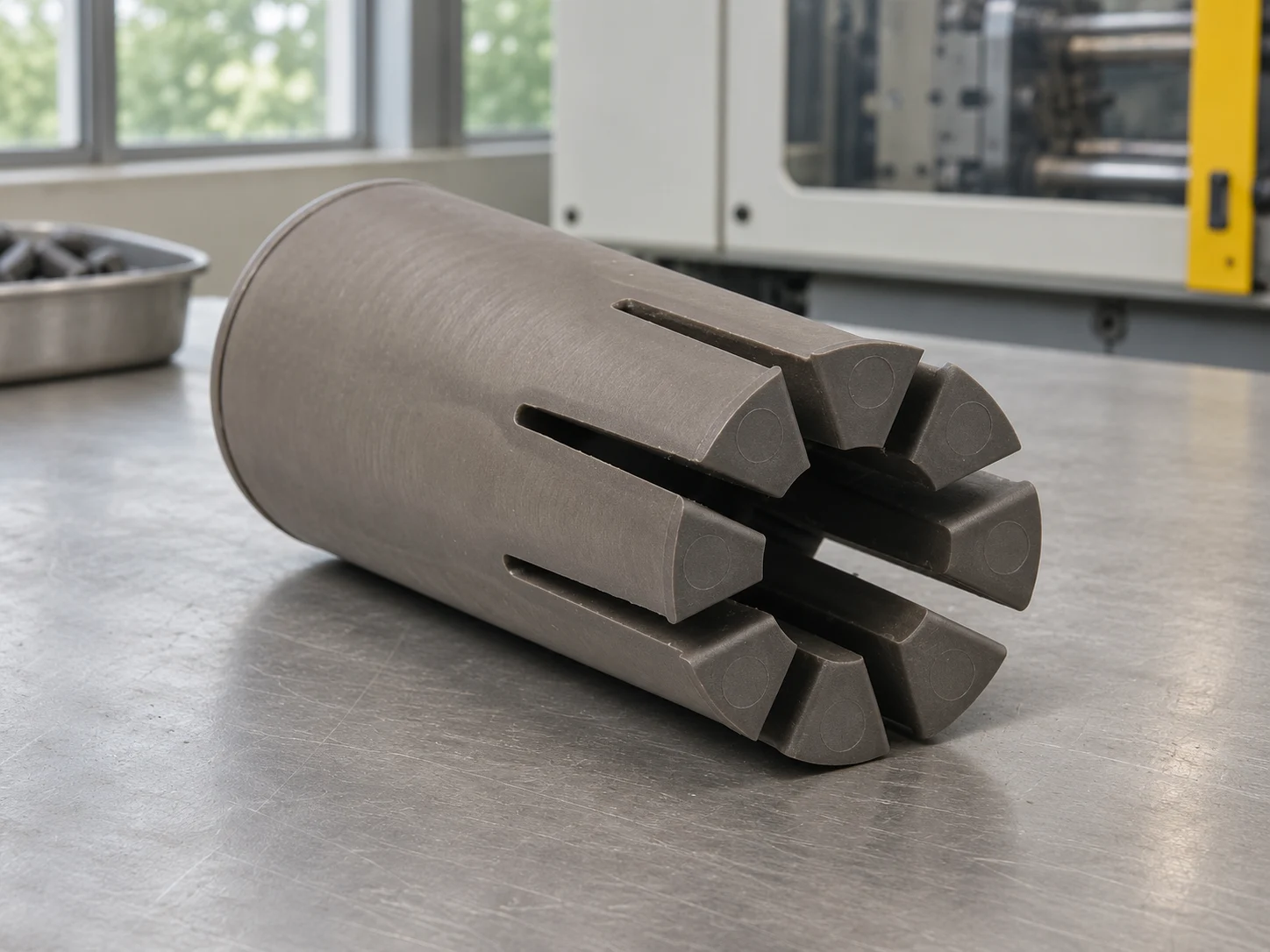
A 40% glass-filled PPS shaft case illustrates near-net molding with critical-face machining. Define datums, fixturing and measurement for slender fingers, inner/outer diameters and flanges; establish dimensions and tolerances for the project.
Consider PPS when heat, chemical exposure and dimensional requirements jointly affect equipment function. Compare grade-specific stiffness, toughness, directionality and interface needs, then validate samples.
High-temperature tooling, material preparation, trials and critical-face machining can all affect cost. Compare geometry, quantity, dimensional needs and validation work instead of selecting a route by resin name alone.
PPS INJECTION MOLDING FAQ
Common questions about grades, processing, dimensions and application validation.
PPS is polyphenylene sulfide, a semi-crystalline thermoplastic that can be injection molded. Reinforced and specialty formulations require their own material-preparation, tooling and process guidance rather than settings based only on the PPS name.
No. The producer recommendation for the referenced FORTRON 1140L4 grade is predrying in a dehumidified-air dryer at 130–140°C for 3–4 hours. Follow the selected grade and storage-condition guidance rather than replacing it with a family-level low-absorption statement.
FORTRON 1140L4 lists a 280°C melting temperature at 10°C/min, a 320–340°C injection melt range and a mold-wall temperature of at least 140°C. The 270°C HDT uses a 1.80 MPa load. Set long-term operating conditions separately using actual loads, media and exposure.
No. The table is specific to FORTRON 1140L4 PPS-GF40. Other glass levels, mineral, wear-modified or conductive formulations have different strength, shrinkage, friction and electrical behavior, requiring their own grade records and sample validation.
Define critical datums and tolerances from the drawing. Review reinforcement direction and shrinkage in trials, then measure the selected interfaces. Use the encoder-shaft case to compare a sequence of near-net molding and machining for critical faces.
No. Assess the formulation, chemical, concentration, temperature, load and exposure duration, checking actual parts. Loaded interfaces and sealing functions require more than a broad material overview to establish long-term performance.
Specialty formulations serve different tasks. Glass-reinforced structural/insulating applications and conductive PPS systems used in areas such as fuel cells are not interchangeable. Test the electrical task, loading, media and selected grade rather than applying this GF40 electrical value to every PPS formulation.
Share drawings, quantity, temperature, media and critical-interface requirements. Our team will review the material and manufacturing route and prepare a quote.
Get a PPS Molding Quote