
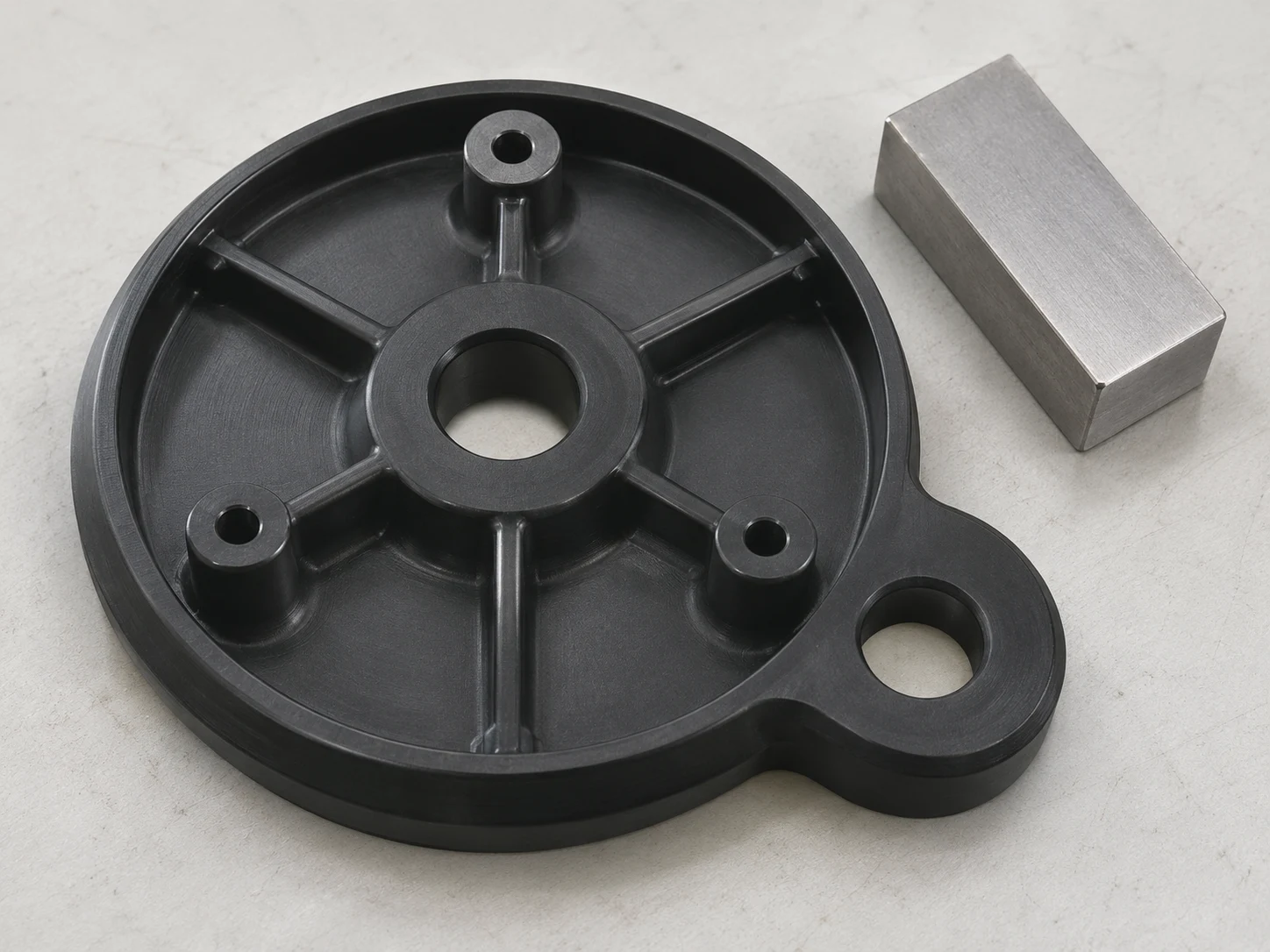
01
Sampling & Functional Review
Check gear teeth, sliding clearances, snaps and assembly with molded samples. Define wear and cycle tests around the actual mating surface and load.
Built for production.
Take your design from tooling to repeat production of custom plastic parts.
Manufacturing Capabilities
Plastic Injection MoldingCustom plastic parts for production Tooling & Design SupportPrepare your part design for tooling High-Volume ProductionPlan repeat runs around your delivery needsMaterials & Finishes
Made for smaller runs.
Produce resin parts with silicone molds for design validation and small batches.
Small-Batch Capabilities
Vacuum CastingResin parts made with silicone moldsLow-Volume ProductionFrom trial parts to small-batch deliveryAppearance & Fit ChecksPrepare multiple parts for product checksMaterials & Finishes
Other Services
Machining, printing, and supporting services for specific part needs.
Materials & Finishes
Explore material performance and appearance options separately.
Explore Materials & Finishes
Injection Molding Materials
Choose molding materials for strength, heat resistance and appearance.
Manufacturing Knowledge
Find articles, answers, and case studies to help prepare your project.
Start with your part requirements.
Contact PlasticHubs for help with quotes, files, delivery, and orders.
Files, Orders & Delivery
Industries
Explore manufacturing options for your product application.
Start with your manufacturing needs
From tooling to production of plastic parts.
Small batches of resin parts made with silicone molds.
Start with your design, material, and quantity.
Evaluate POM for the stiffness, mating surfaces and molded dimensions of gears, sliding parts and fasteners. Connect homopolymer/copolymer grades, crystallization shrinkage, thick-section voids and assembly requirements with tooling and samples.
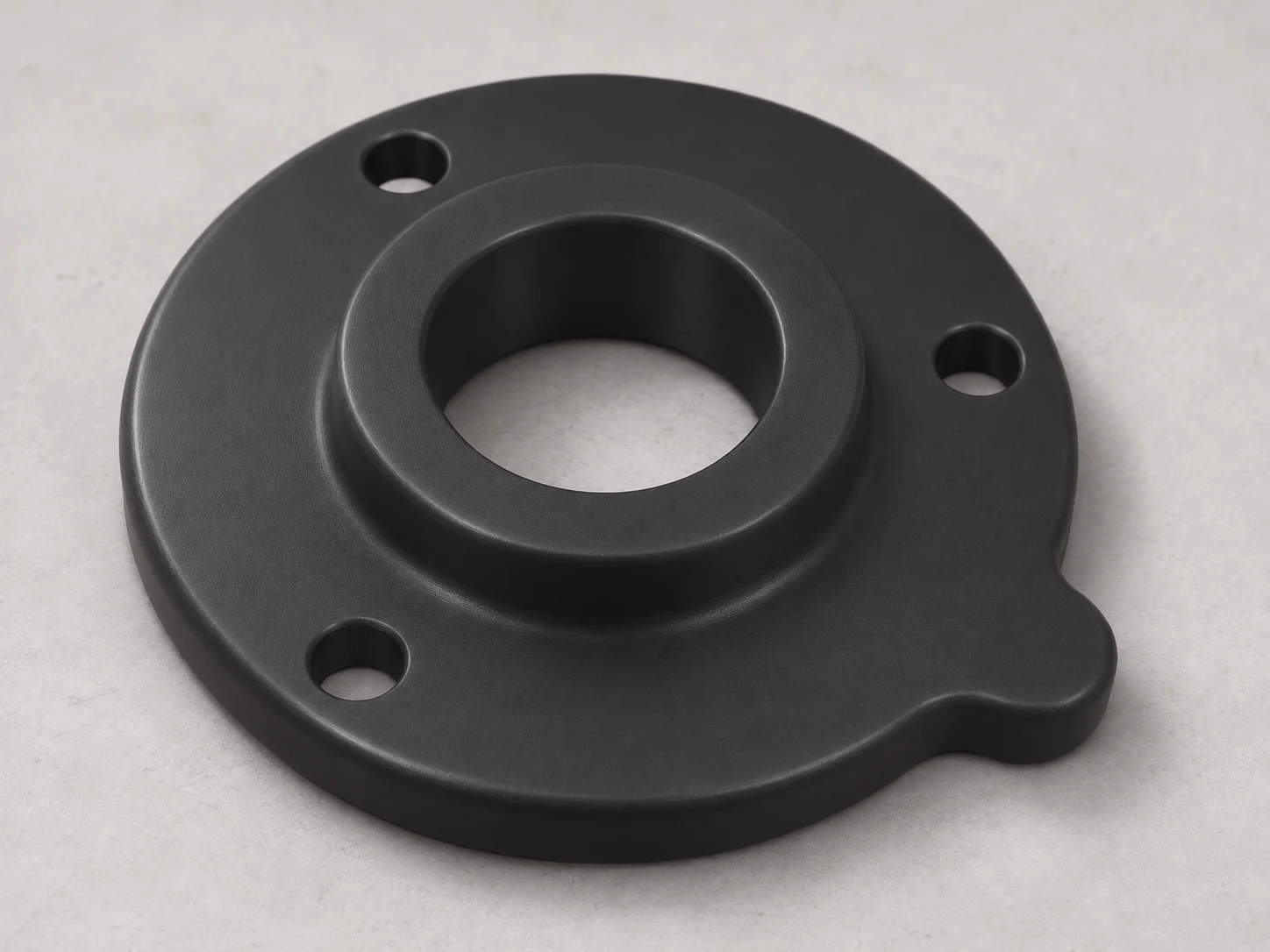
Describe the mating surface, load, speed, lubrication and temperature conditions. Share critical fits, gear features or snap requirements, and identify media exposure or documentation needs before selecting the grade.
Discuss your project ↗Check gear teeth, sliding clearances, snaps and assembly with molded samples. Define wear and cycle tests around the actual mating surface and load.

Connect grade, packing, cooling, part weight and critical dimensions. Establish sample approval and batch acceptance around cavities and thick-section risks.
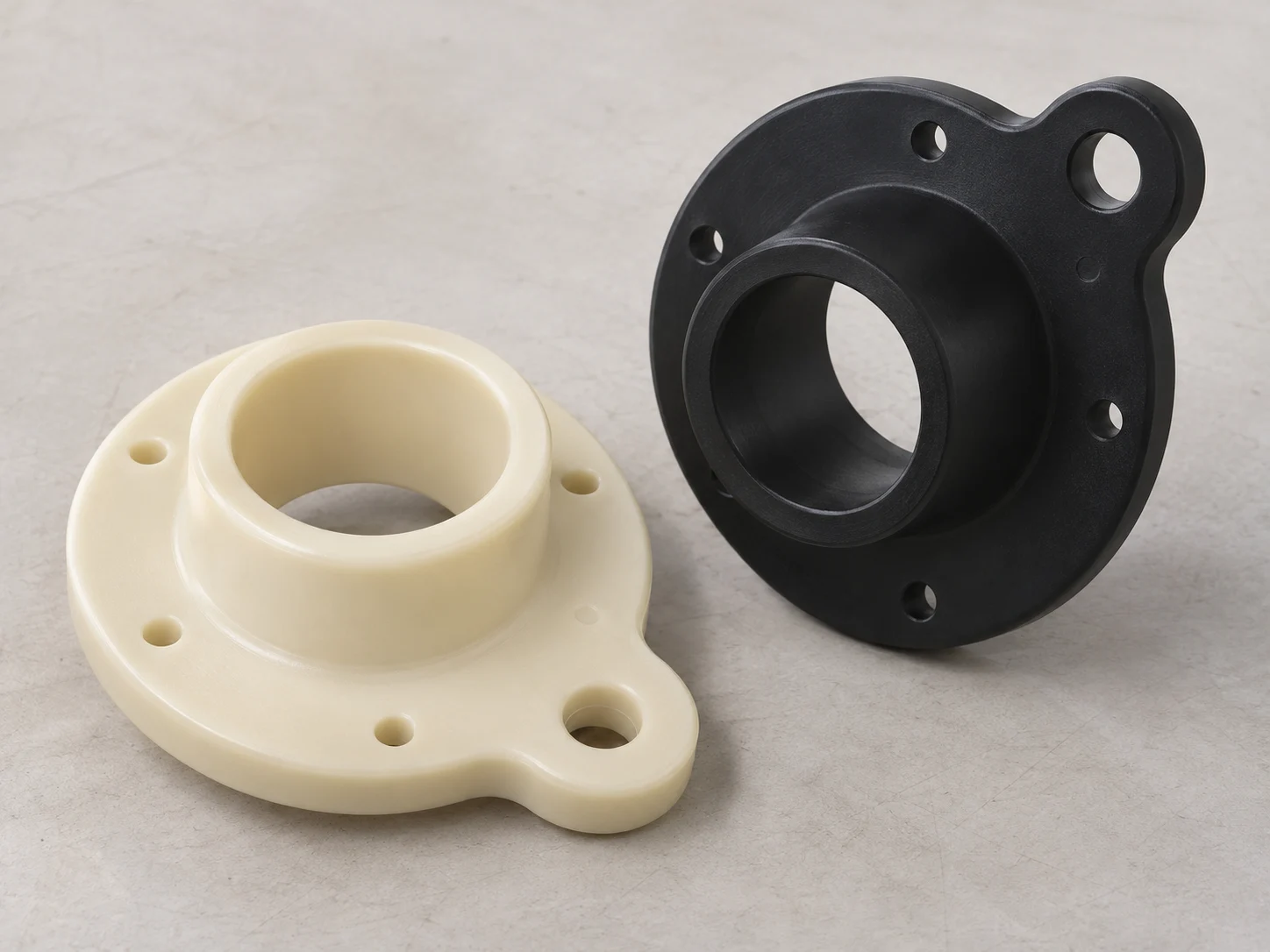
Compare homopolymer, copolymer and modified POM for mechanical behavior, media exposure and processing. If the drawing calls for Delrin, include the full brand and grade designation.
Share your drawings, quantity, fits and friction or load requirements.
| Item | Project review |
|---|---|
| Grade & function | Review homopolymer or copolymer grades for friction, loads, media and documentation |
| Tooling & filling | Plan gates, packing of heavy sections, cooling and demolding |
| Dimensions & fit | Agree on datums, shrinkage review, measurement timing and functional fit |
| Sampling & acceptance | Validate appearance, dimensions, internal defects and agreed function separately |
| Surface & assembly | Review contact surfaces, color, marking adhesion and mechanical connections |
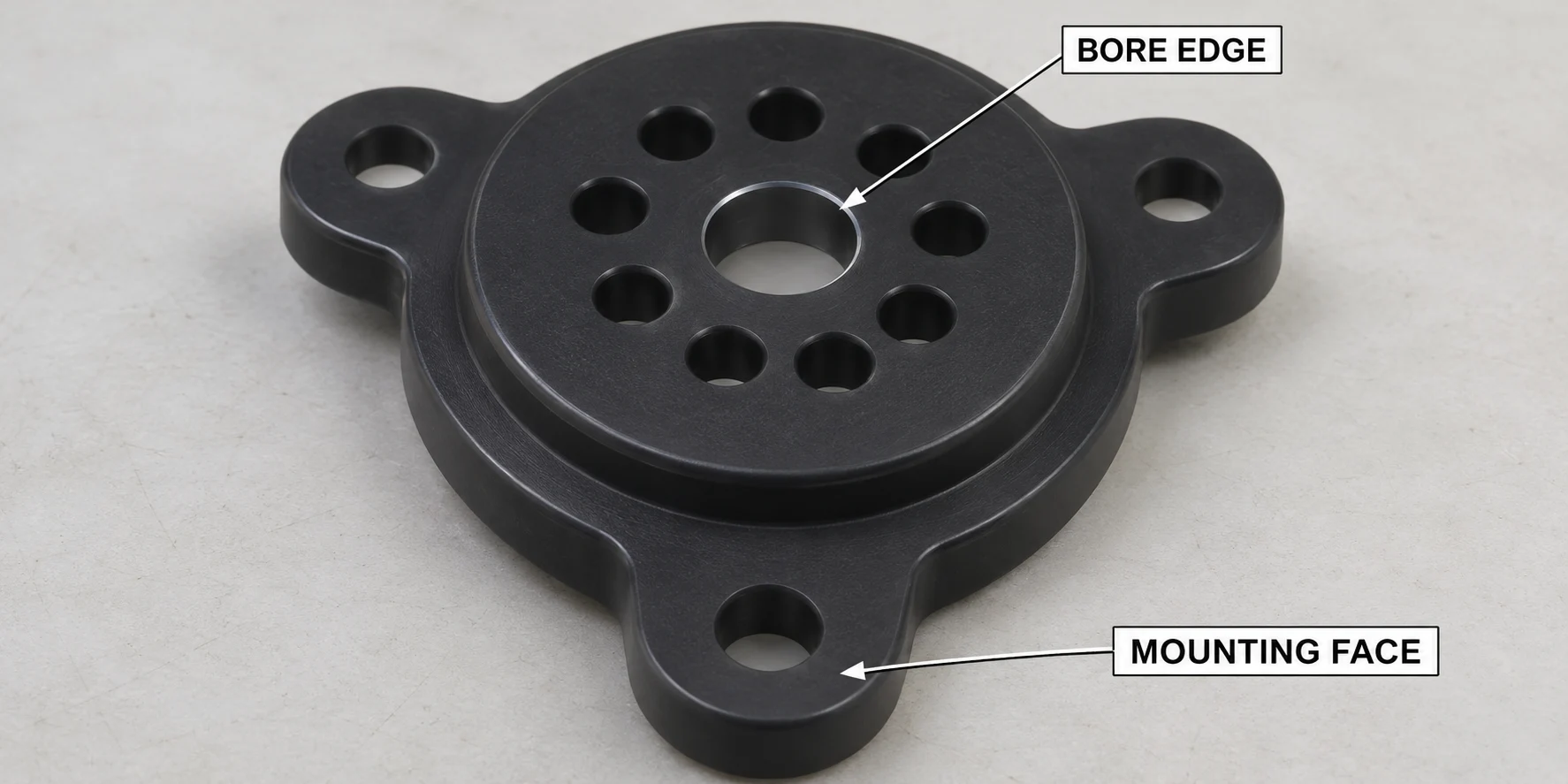
Review local heavy sections and plan packing around gate size and freeze-off. Thick walls can produce sink or internal voids; agree on inspection methods for the geometry and risk.
Review mold temperature, cooling and dimensional change after ejection. Set shrinkage compensation from the selected grade and tool trials.
Control melt temperature and residence time for the grade, including storage and drying where needed. Avoid incompatible resin contamination during material changes and purging; higher temperature is not a universal filling remedy.
Review geometry against loads, corners, tooth features and snap deflection. Coordinate draft, ejection and surface requirements. Low friction does not mean every geometry can be molded with zero draft.
Separate molded surfaces, resin color and secondary markings. Friction contacts and cosmetic areas may need different finishes. POM’s low surface energy makes printing and bonding a specific review topic.

Plan smooth contact and visible areas together with ejection. Define friction and wear targets against the mating material, load and exposure.
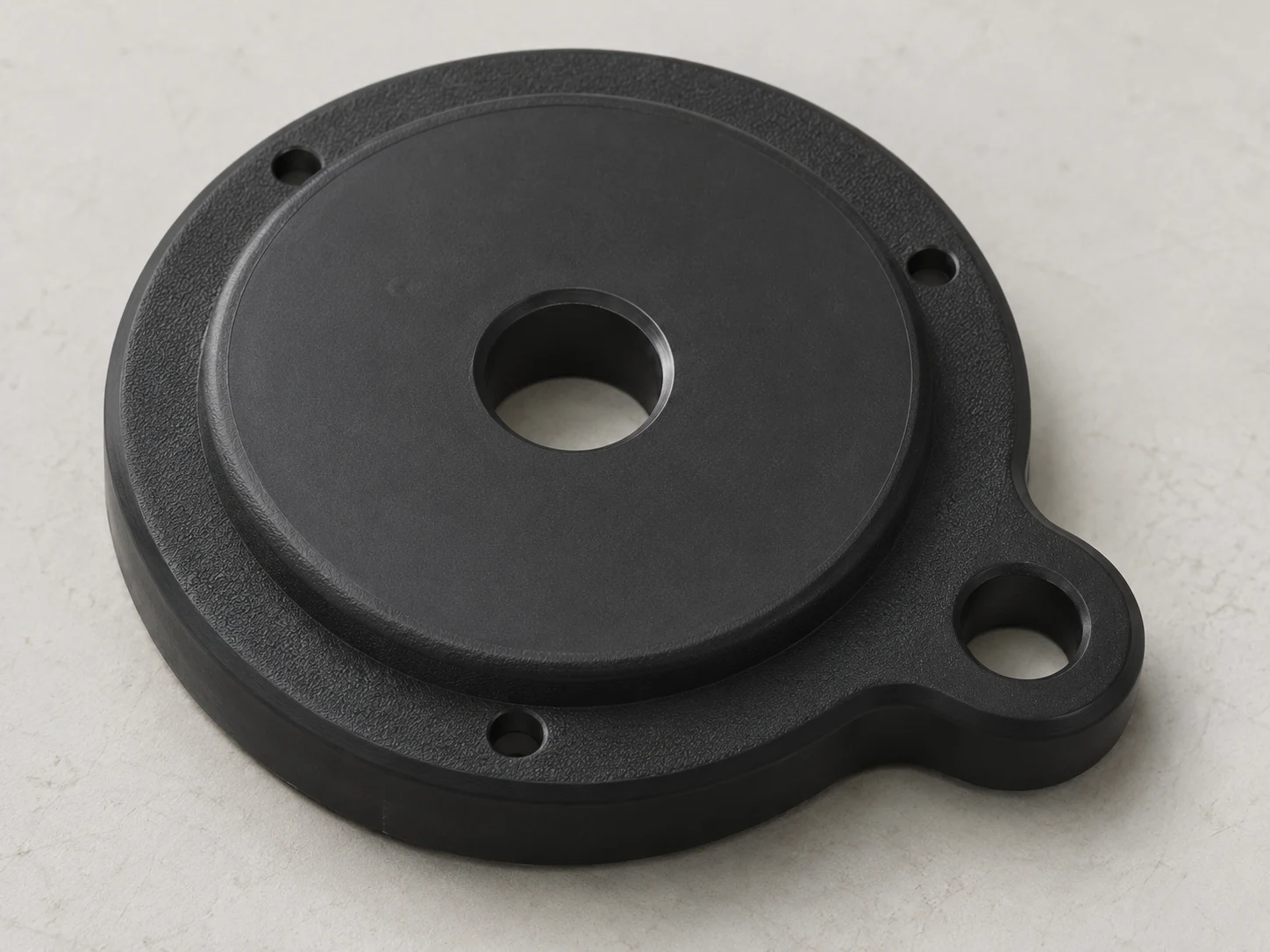
Review texture for grip or appearance together with draft. Define sliding and sealing contacts separately rather than extending a cosmetic texture over every functional surface.
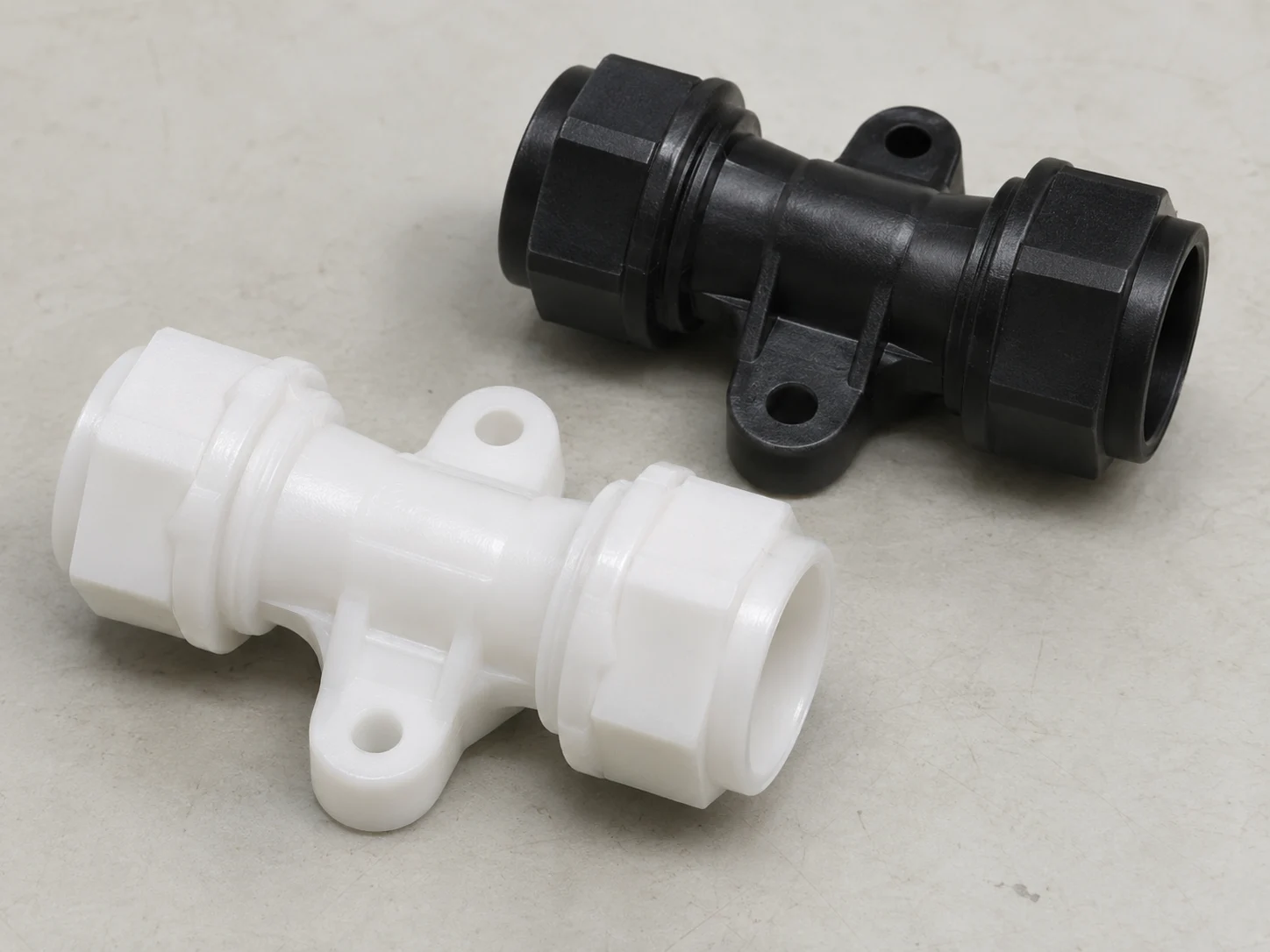
Review natural or custom color with the POM grade and additives. Color and modification may affect appearance and documentation; control them through the approved formulation and samples.
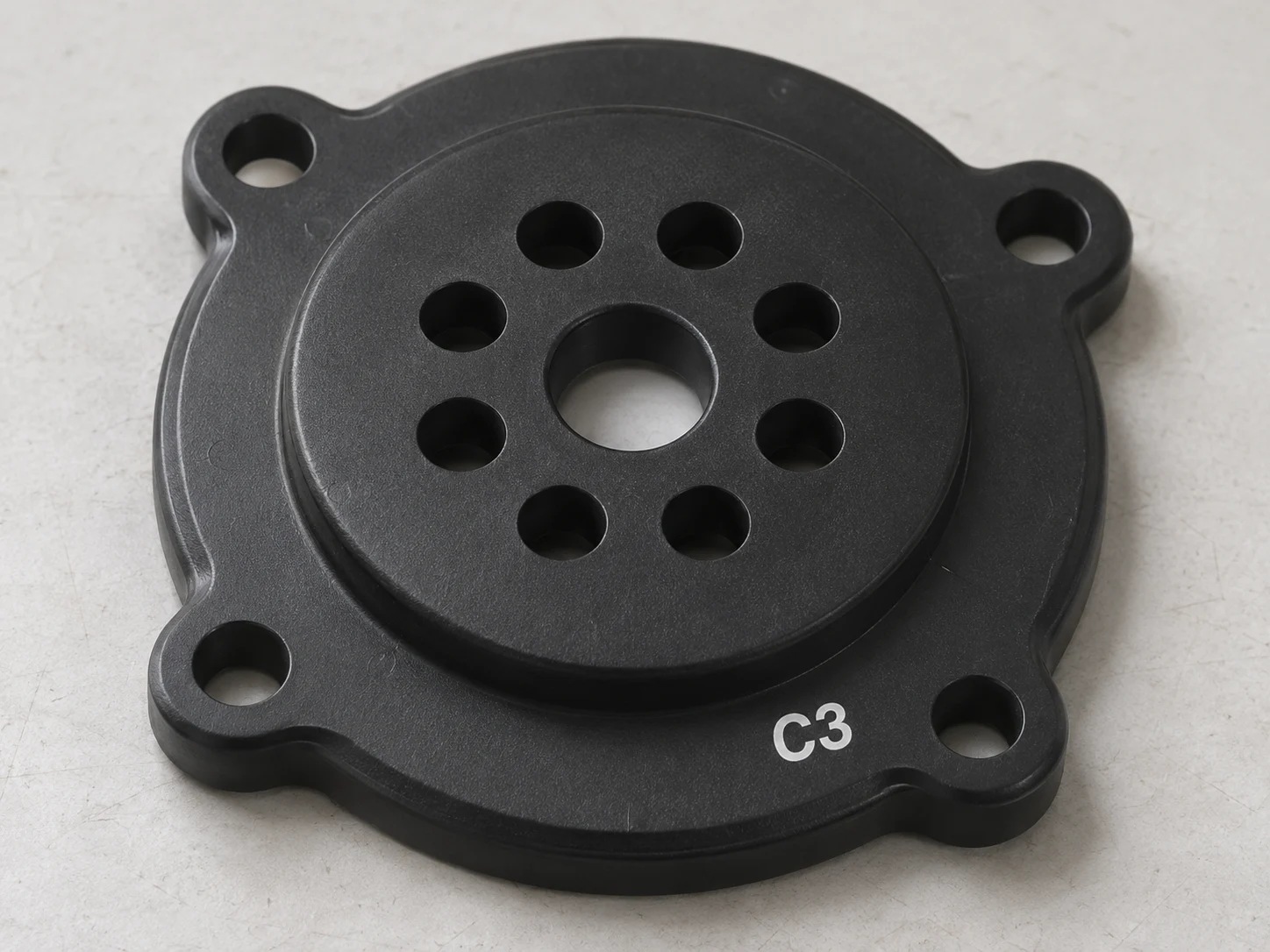
Choose surface preparation and ink compatible with the POM grade. Check adhesion, rub resistance and cleaning durability on molded samples.
Accept dimensions, surfaces and function separately, with risk-based void inspection for heavy sections. Define mating surfaces, loads and cycles for gear, sliding or snap features before assessing samples.
CAMPUS data for Celanese HOSTAFORM C 9021 XAP2 covers this POM copolymer molding grade. The XAP2 predrying guidance supports its low-emission objective. Follow the specific grade instructions for other POM formulations.
| Property | Typical value | Method / conditions |
|---|---|---|
| Density | 1,410 kg/m³ | ISO 1183 |
| Tensile modulus | 2,700 MPa | ISO 527 |
| Yield stress | 64 MPa | ISO 527 |
| Notched Charpy impact | 6.5 kJ/m² | ISO 179/1eA; +23°C |
| Molding shrinkage, parallel | 2.0% | ISO 294-4, 2577 |
| Molding shrinkage, normal | 1.9% | ISO 294-4, 2577 |
| Property | Typical value | Method / conditions |
|---|---|---|
| Melting temperature | 166°C | ISO 11357-1/-3; 10°C/min |
| Heat deflection temperature | 104°C | ISO 75-1/-2; 1.80 MPa |
| Predrying for XAP2 low-emission objective | 100–120°C; 3–6 h | Recirculating-air dryer; layer max. 40 mm; guidance for this grade only |
| Maximum water content | 0.1% | Supplier processing guidance for this grade |
| Melt-processing temperature | 180–190°C | Supplier injection-molding guidance for this grade |
| Mold temperature | 80–120°C | Supplier injection-molding guidance for this grade |
| Water absorption, published value | 0.65% | Sim. to ISO 62; exposure duration not shown on the page |
Use HDT and melting point to compare thermal behavior, then evaluate the intended service temperature and loads. Review colorants, additives and shrinkage for the selected grade. Include any emissions target, dimensional checks and cycle requirements in the sample plan.
Reference grade: Celanese HOSTAFORM C 9021 XAP2, CAMPUS datasheet (source name HOSTAFORM® C 9021 XAP®2). Read on 2026-10-20; no document revision date was displayed.
Review mating material, loads, speed and media together to define the grade and validation targets.
Connect gates and packing, cooling, tool trials and batch acceptance through our group manufacturing resources.
Check teeth, clearances, snaps and mechanical connections during sampling so functional needs inform tooling decisions.
Turn critical dimensions, heavy-section risks and surface requirements into checks throughout quotation, sampling and production discussions.
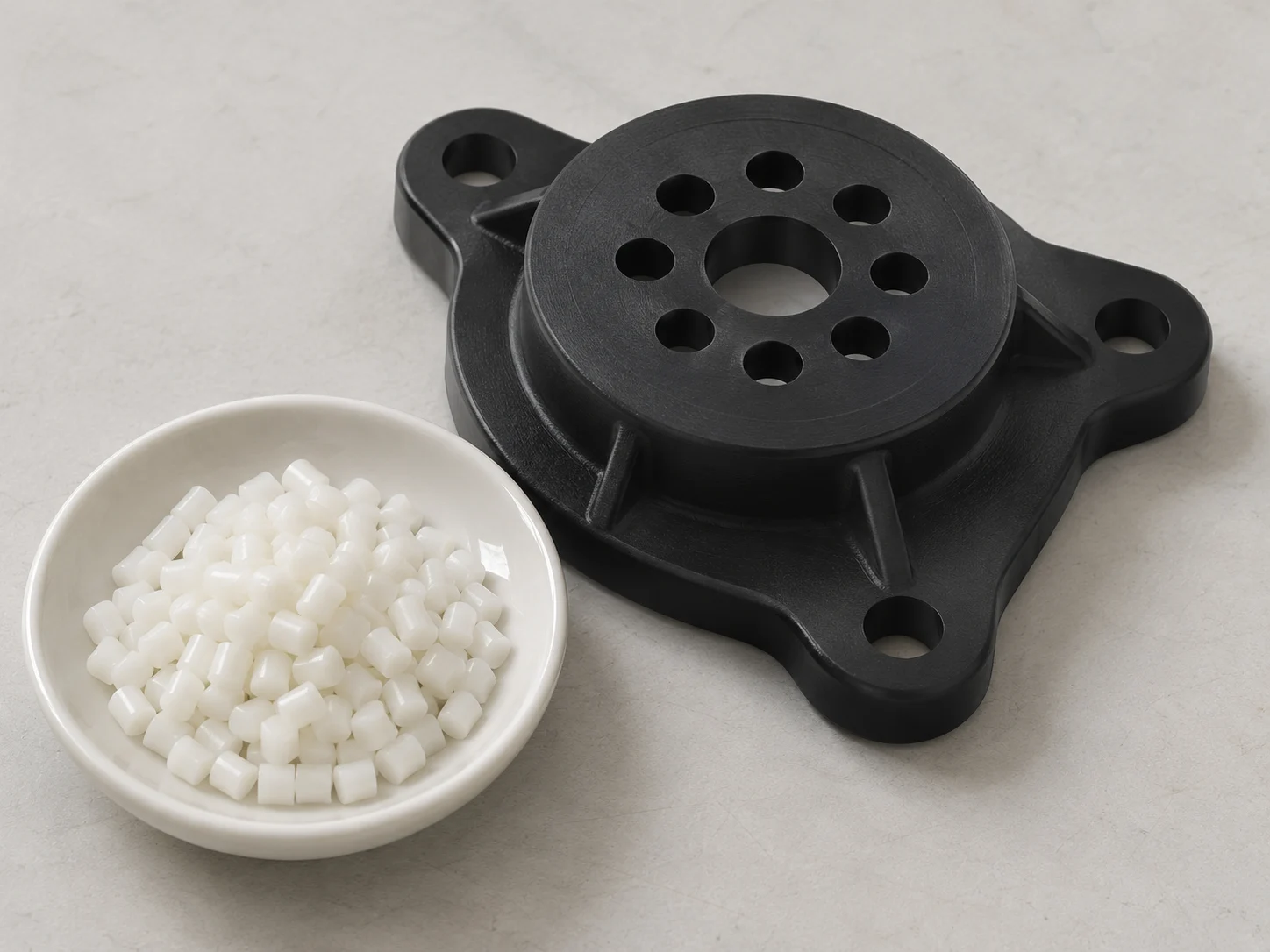
POM, or polyoxymethylene, is also called acetal and is a semi-crystalline engineering thermoplastic. It is considered for gears, sliding and snap components; actual friction, wear and dimensional behavior depend on the grade and operating conditions.
POM-H is the homopolymer and POM-C the copolymer; compare formulation, processing and media compatibility separately. Delrin is a brand name, not a generic name for every copolymer or other POM. Check the full grade when a brand is specified.
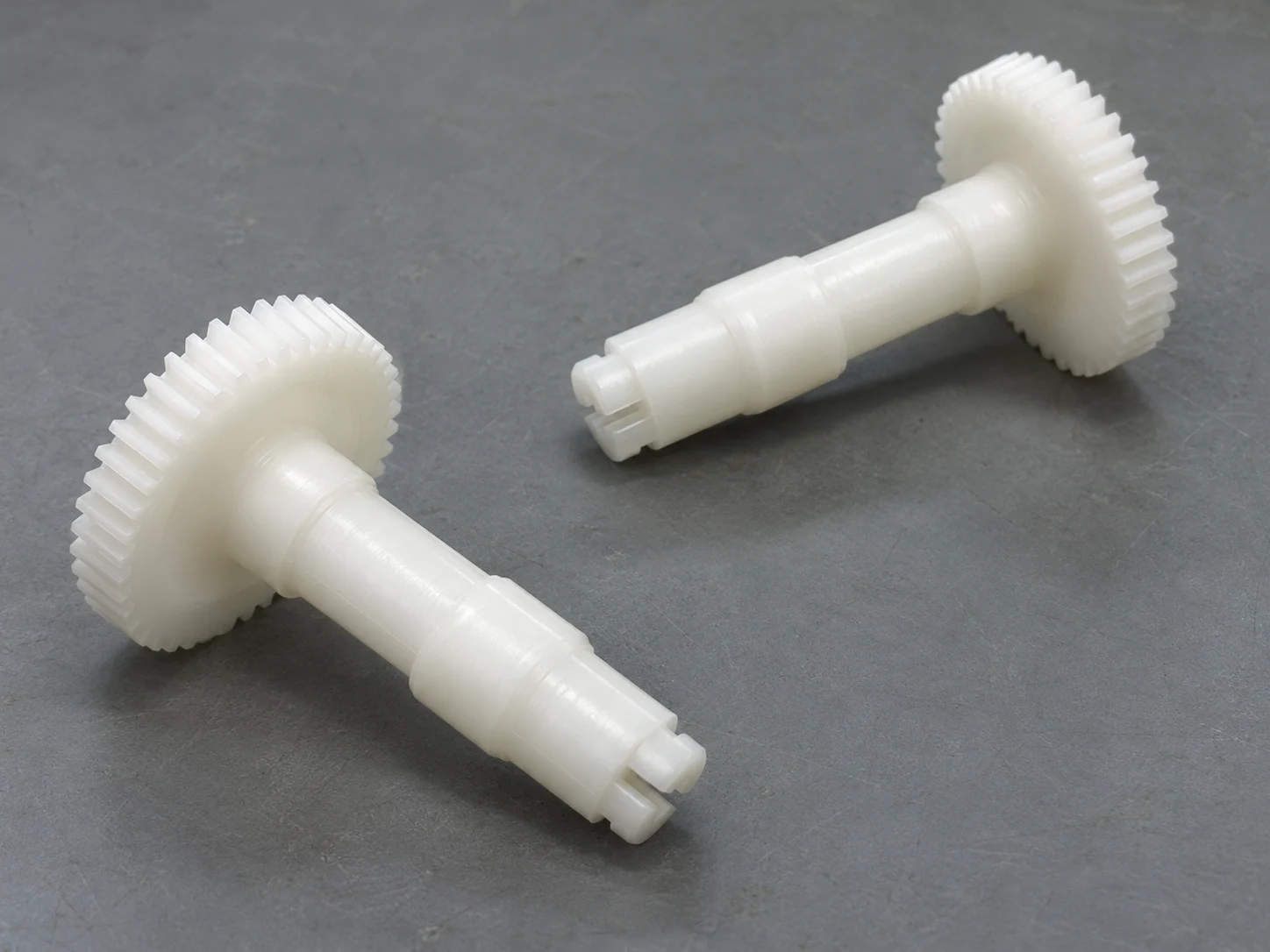
Review material and geometry around end gears, shaft fit, loads and speed. Validate motion, wear and dimensions with the actual mating parts and lubrication conditions.

Review POM valve bodies around ports, sealing fits and mounting interfaces. Confirm material compatibility for the fluid, temperature, pressure and cycling conditions, and validate function with finished-part tests.

Check interface dimensions, assembly and local walls for tees and similar fittings. Confirm media, loads and sealing behavior through the part design and tests.
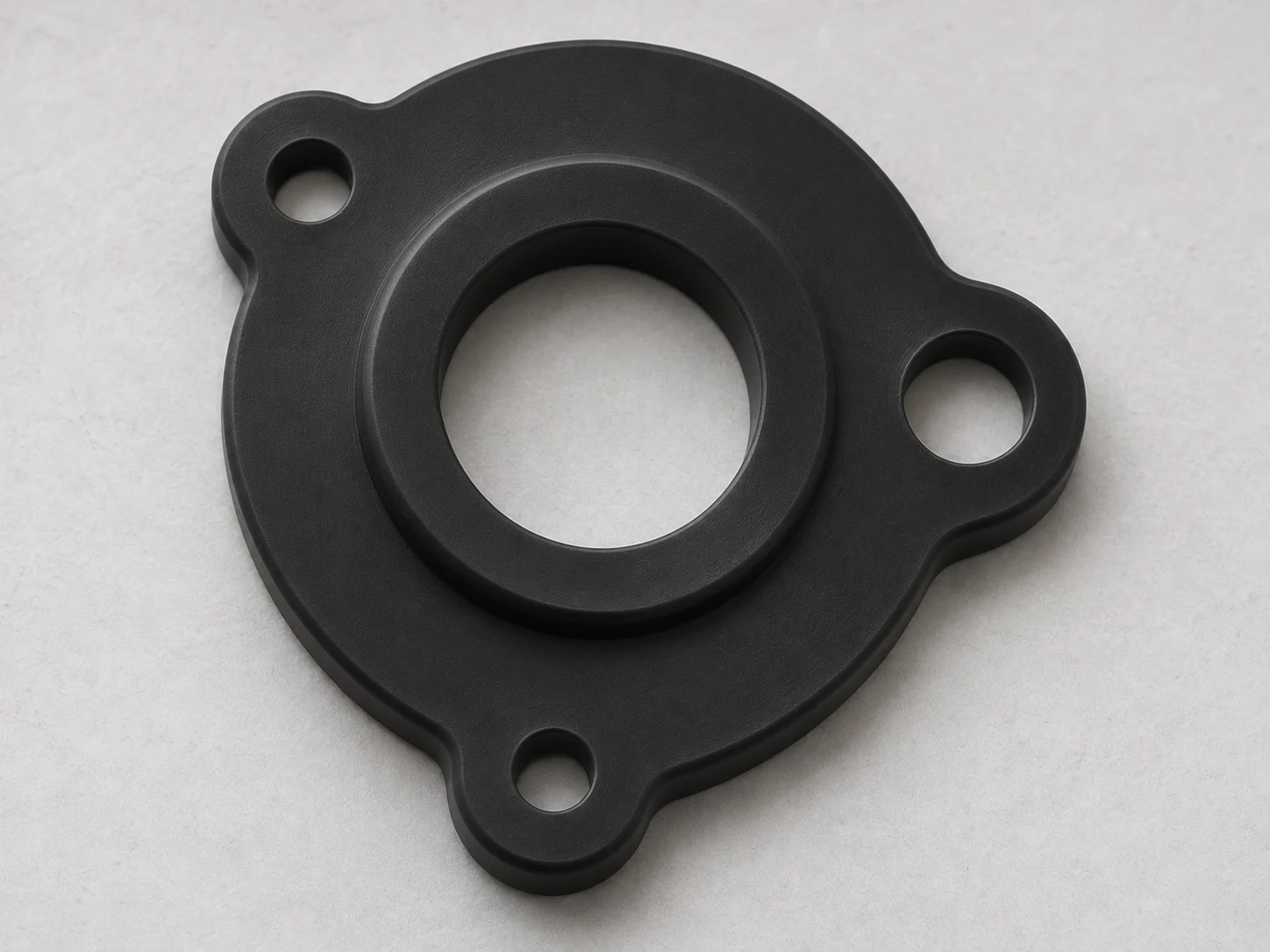
Review holes, fits, fastening and local loads for circular covers or mounting features. Accept appearance, dimensions and function separately.
POM grades can be selected around stiffness, sliding contacts and snaps. Molding integrates teeth, mounting and local connection features; evaluate economics against tooling investment, demand and functional validation.
Check grade compatibility for heat, oxidizing media, outdoor exposure, bonding and printing. For food, drinking-water or medical contact, specify the use conditions and required material documentation.
POM INJECTION MOLDING FAQ
Acetal grades, processing, shrinkage, moving fits and marking questions.
POM and acetal identify the polyoxymethylene material family; Delrin is a brand name. Specify homopolymer or copolymer type and the full grade rather than treating every POM formulation as the same Delrin.
Compare candidate POM homopolymer and copolymer grades for stiffness, toughness, friction, wear, media and processing using matched test conditions and representative samples.
Use grade-specific instructions. For the reference HOSTAFORM C 9021 XAP2, supplier guidance lists a 180–190°C melt and an 80–120°C mold. Its 100–120°C, 3–6-hour predrying guidance specifies a recirculating-air dryer and maximum 40 mm layer for that grade’s low-emission objective; it is not universal POM guidance.
Review walls, gate freeze, packing and cooling together. Establish compensation from the grade and trials, with internal inspection for heavy sections. Neither higher packing nor one shrinkage percentage solves every geometry.
Base lubrication on the selected grade, mating material, contact pressure, speed and environment. Check wear and function over the intended duty cycle.
Suitable surface preparation, ink or bonding systems can be evaluated, but low surface energy makes adhesion critical. Validate rubbing, cleaning and environmental behavior with samples, and consider mechanical assembly without assuming ordinary inks or adhesives apply directly.
Share CAD, drawings, quantity, grade or performance targets, including fits, loads, speed, media and surfaces. Tooling, cavities, resin, cycle and inspection scope affect the quote; approve dimensions, assembly, appearance and agreed function separately.
Share your CAD, material, quantity, and key requirements. Our team will review your project and prepare a quote.
Request a Quote