

01
Functional Development & Tool Review
Define loading, flow, release and acceptance needs before tooling. Machined samples can support geometry and assembly checks, but do not establish molded shrinkage, weld-line behavior or crystallinity.
Built for production.
Take your design from tooling to repeat production of custom plastic parts.
Manufacturing Capabilities
Plastic Injection MoldingCustom plastic parts for production Tooling & Design SupportPrepare your part design for tooling High-Volume ProductionPlan repeat runs around your delivery needsMaterials & Finishes
Made for smaller runs.
Produce resin parts with silicone molds for design validation and small batches.
Small-Batch Capabilities
Vacuum CastingResin parts made with silicone moldsLow-Volume ProductionFrom trial parts to small-batch deliveryAppearance & Fit ChecksPrepare multiple parts for product checksMaterials & Finishes
Other Services
Machining, printing, and supporting services for specific part needs.
Materials & Finishes
Explore material performance and appearance options separately.
Explore Materials & Finishes
Injection Molding Materials
Choose molding materials for strength, heat resistance and appearance.
Manufacturing Knowledge
Find articles, answers, and case studies to help prepare your project.
Start with your part requirements.
Contact PlasticHubs for help with quotes, files, delivery, and orders.
Files, Orders & Delivery
Industries
Explore manufacturing options for your product application.
Start with your manufacturing needs
From tooling to production of plastic parts.
Small batches of resin parts made with silicone molds.
Start with your design, material, and quantity.
Plan PEEK injection molding for precision functional parts that need thermal, chemical and mechanical performance together. Connect grade selection, high-temperature tooling, crystallinity control and dimensional validation with the requirements of the finished part and assembly.
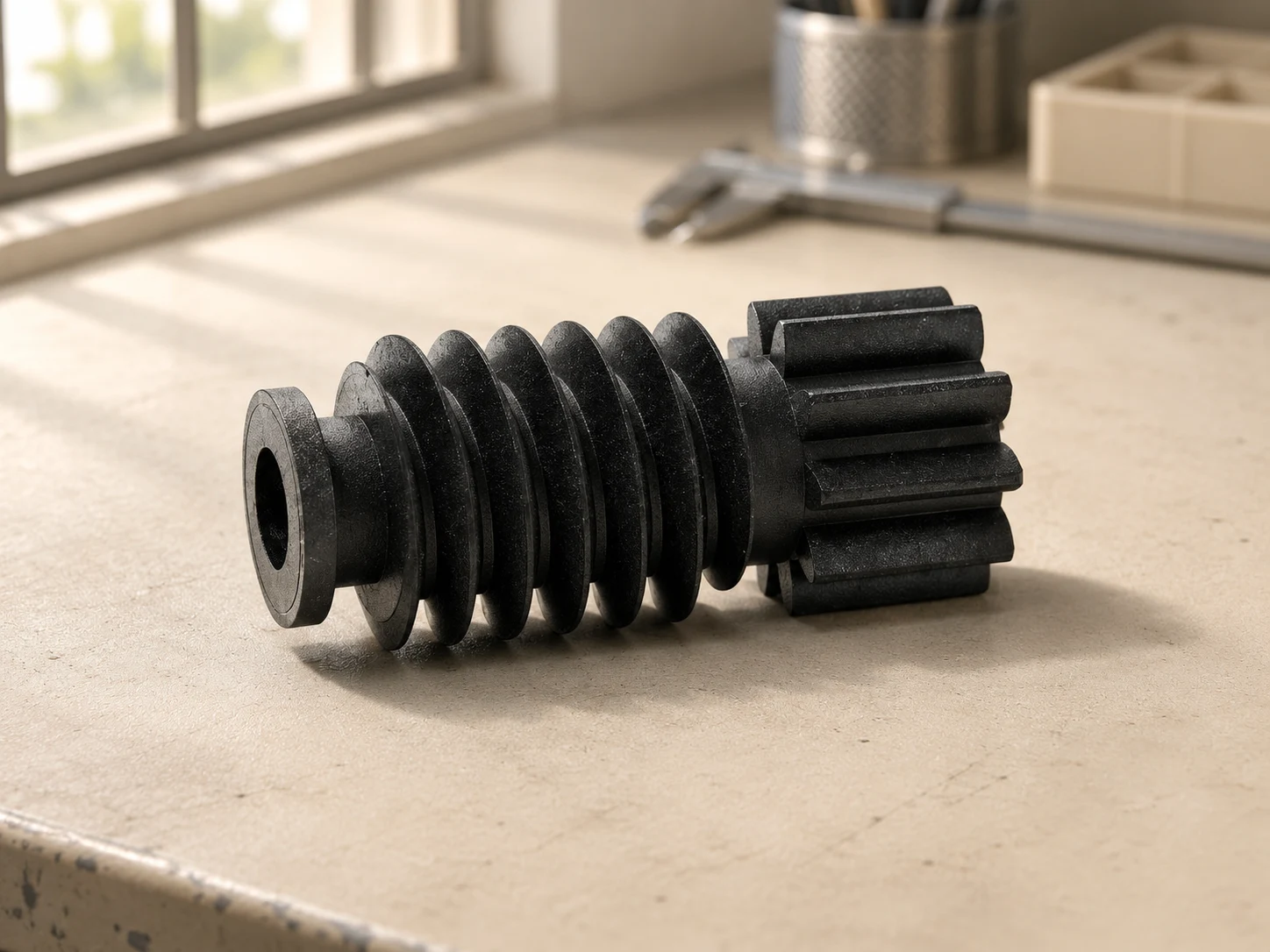
Describe temperature, media, friction or loading, and identify the dimensions that control assembly and function. Evaluate PEEK resin and high-temperature tooling costs against quantity, geometry and validation needs rather than the material name alone.
Discuss your project ↗Define loading, flow, release and acceptance needs before tooling. Machined samples can support geometry and assembly checks, but do not establish molded shrinkage, weld-line behavior or crystallinity.
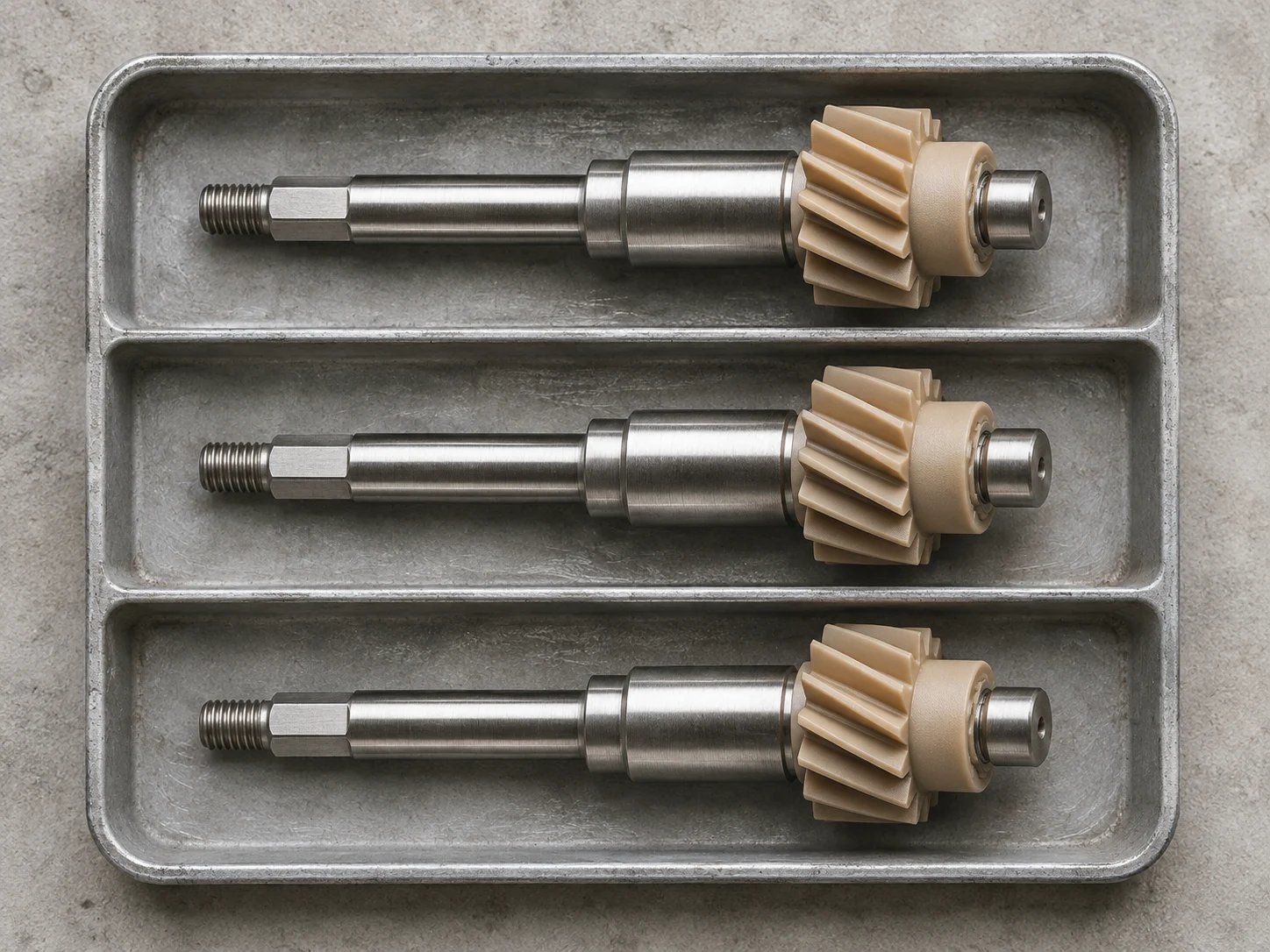
Plan high-temperature molding, resin drying, clean changeovers and mold-temperature management. Establish the process through accepted samples and inspection results before ongoing production.
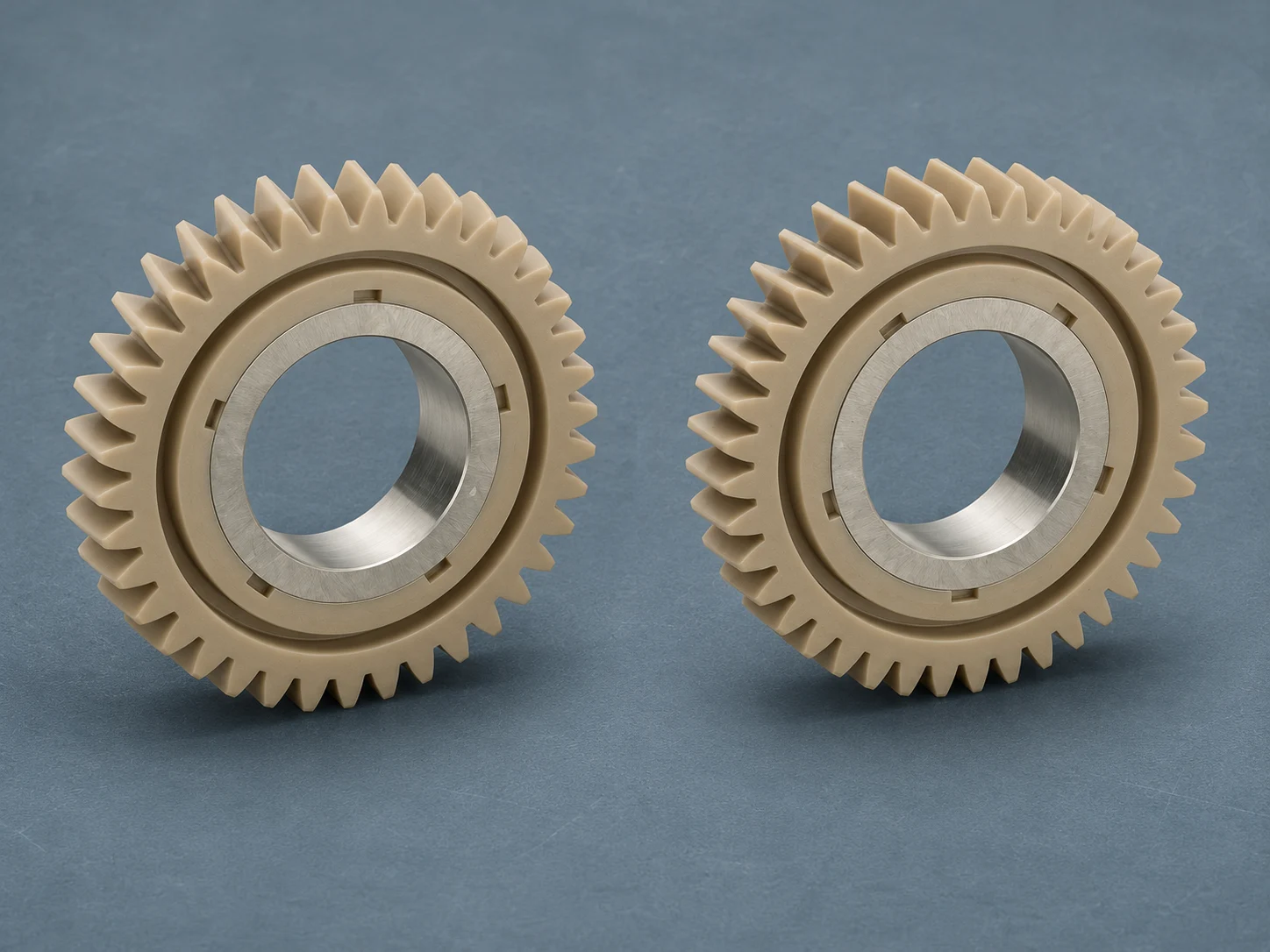
Compare unfilled, fiber-reinforced and tribological formulations for flow, directional behavior, shrinkage and mating surfaces. Benefits of a reinforced or wear grade must not be assigned to unfilled 450G.
Share drawings, quantity and operating conditions to define the material and tooling review.
| Project focus | Review scope |
|---|---|
| Material and exposure | Specified grade, reinforcement/wear formulation, temperature, media and material records; use grade-specific data. |
| High-temperature process preparation | Review equipment and mold temperature control, drying route and clean-changeover requirements. |
| Tooling and filling | Review gates, packing, venting and release against wall sections, flow length and critical regions. |
| Critical dimensions | Plan dimensions around shrinkage, crystallinity, orientation and ejection distortion; confirm tolerances against drawings and mold trials. |
| Samples and acceptance | Agree material records, critical dimensions, surfaces and functional tests, then establish acceptance through approved samples. |
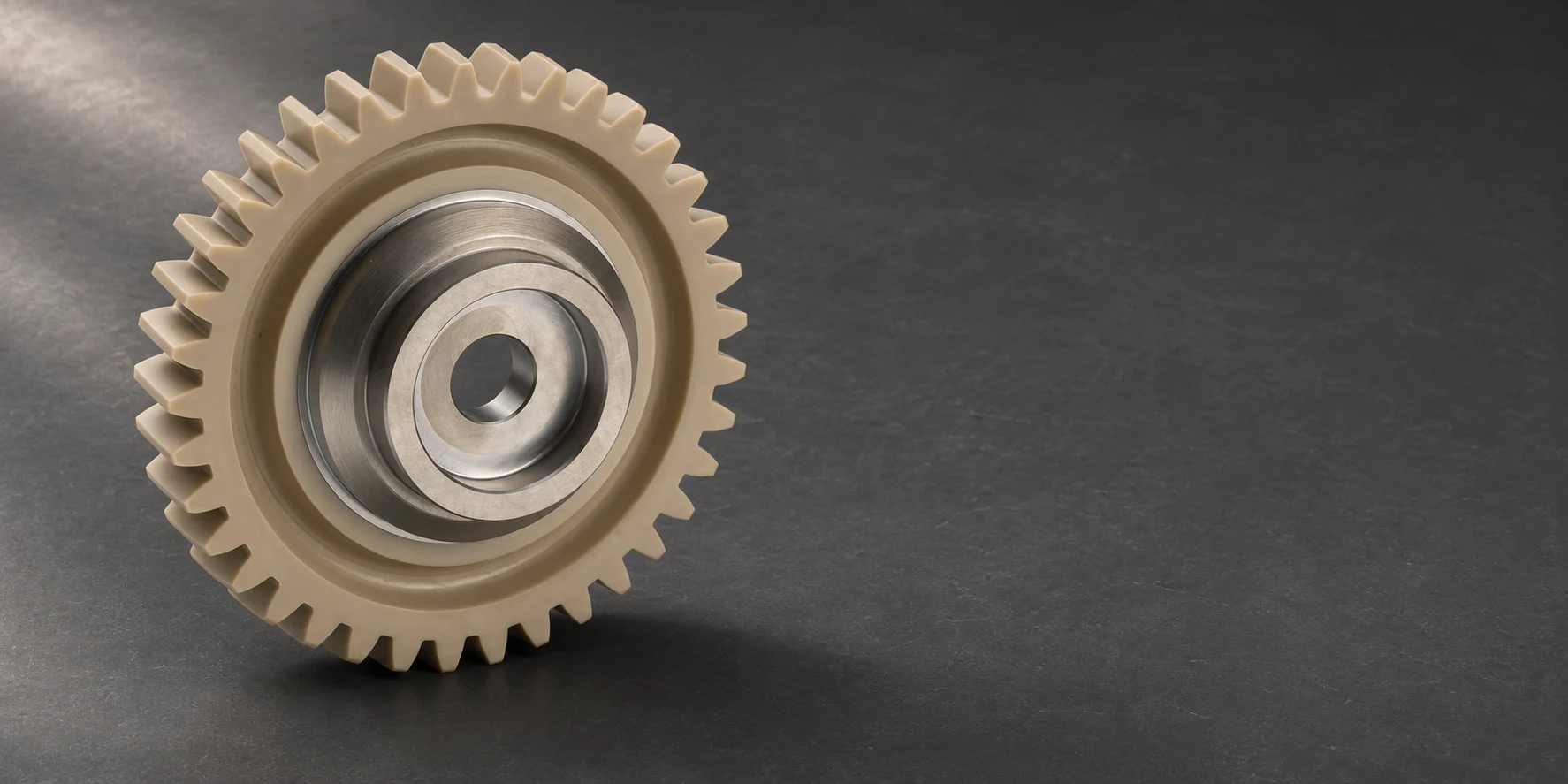
Reduce abrupt section changes and heavy intersections, with radii at corners and transitions. Review risks of stalled flow, sink, internal voids and concentrated stress.
Consider semi-crystalline shrinkage together with gate freeze and packing. Select gates for the grade, volume and flow path, keeping weak weld lines away from critical load-bearing or mating regions.
Review actual mold-surface temperature and heat distribution rather than the setpoint alone. Crystallinity and cooling history affect part behavior, shrinkage and dimensional consistency.
Review venting and support around deep ribs, slender cores and microfeatures. Apply ejection force where the part can withstand it, and distinguish release distortion from material shrinkage.
Define the finish on contact, assembly and visible surfaces. Select tool finish, crystallinity controls and secondary machining for the requirements of each area.

Mark where gate vestiges, parting lines and ejector marks are acceptable. Check appearance and dimensions on molded samples and set separate criteria for crystallinity and functional performance.
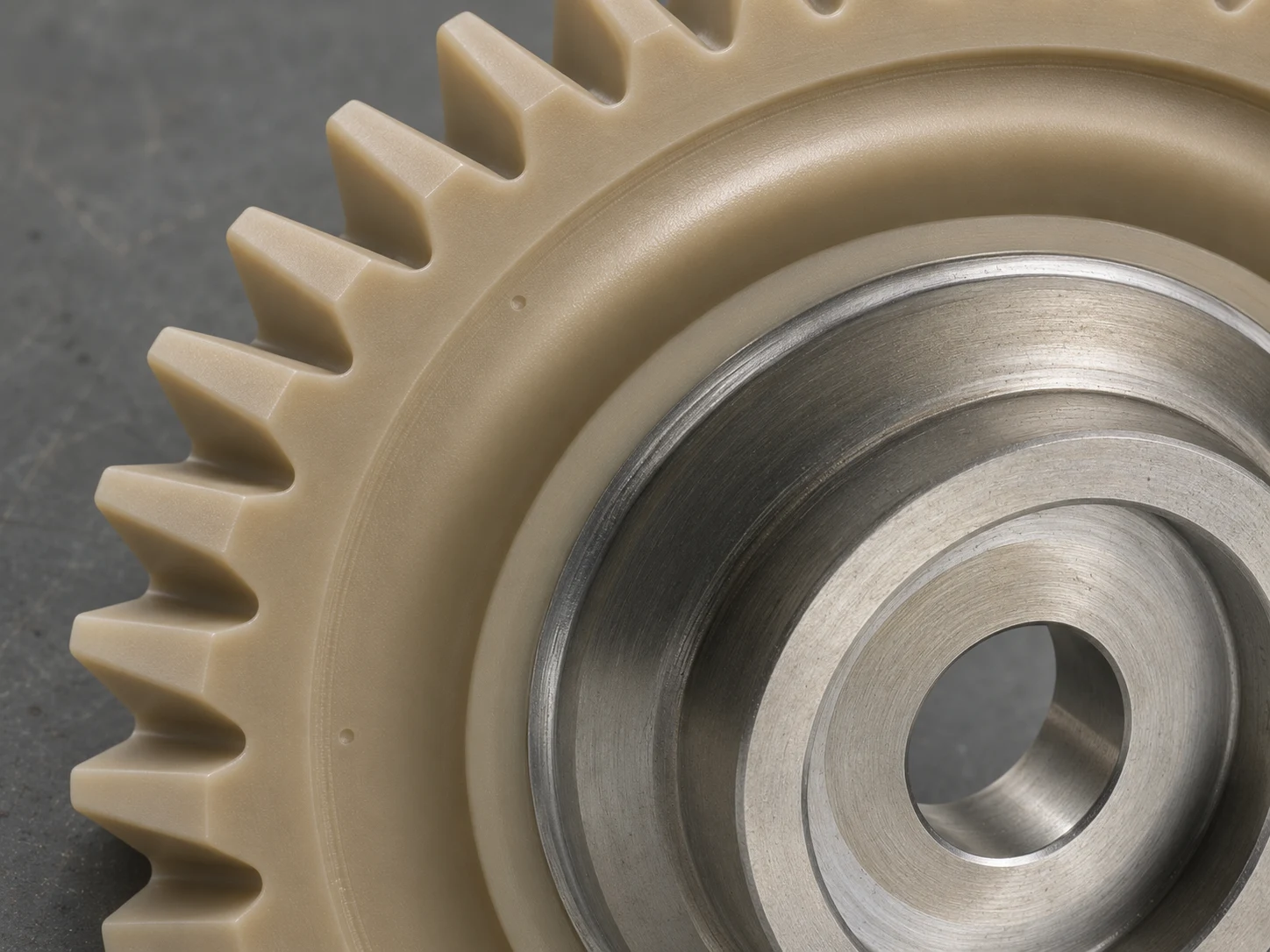
Select tool finish for release, geometry and appearance, especially around deep or miniature features. A polish board can support discussion; confirm results with PEEK samples and tooling conditions.
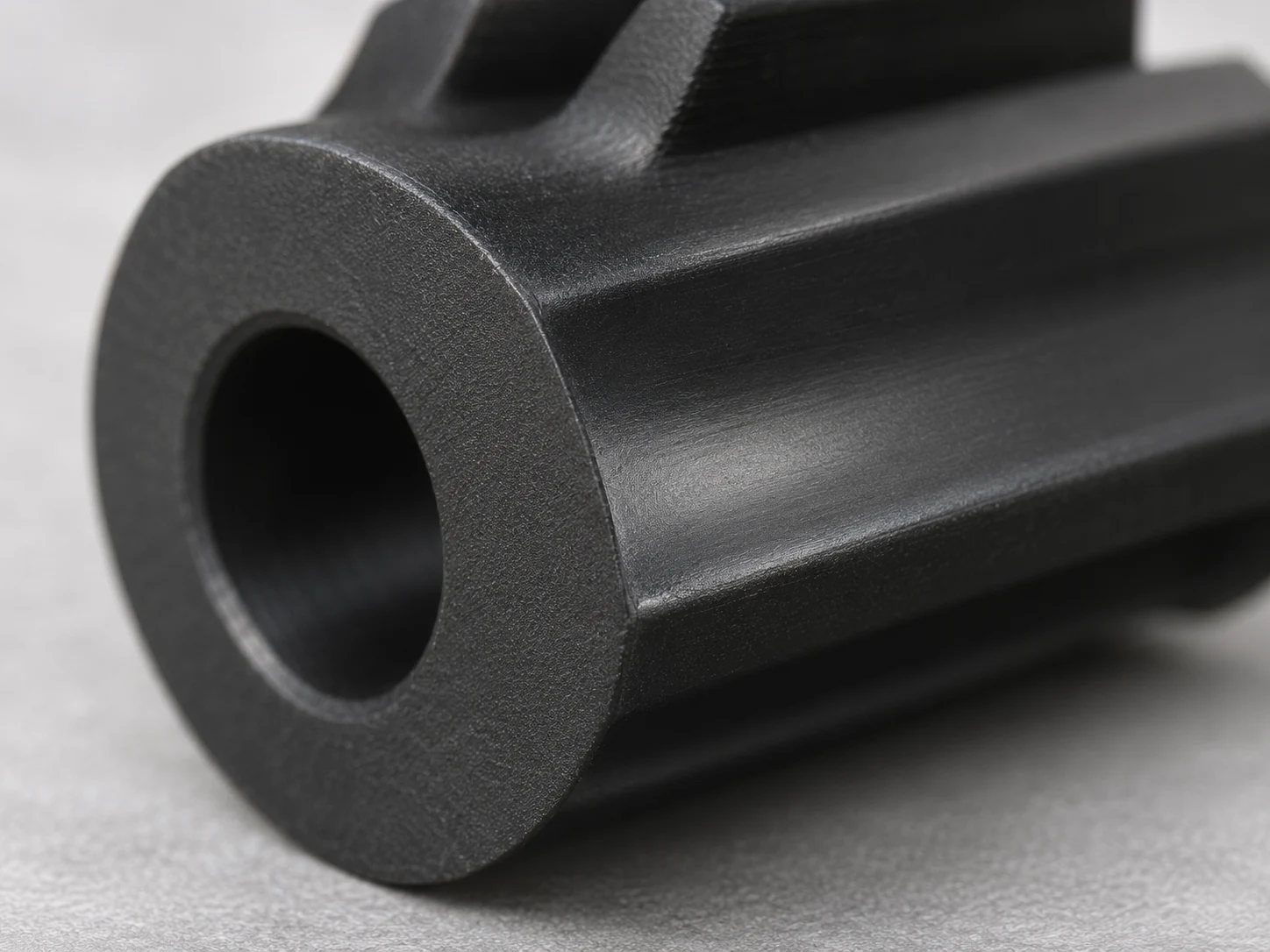
Where texture is required, review its location with draft, contact surfaces and cleaning needs. The selected grade and molded condition affect replication, so confirm appearance on samples.
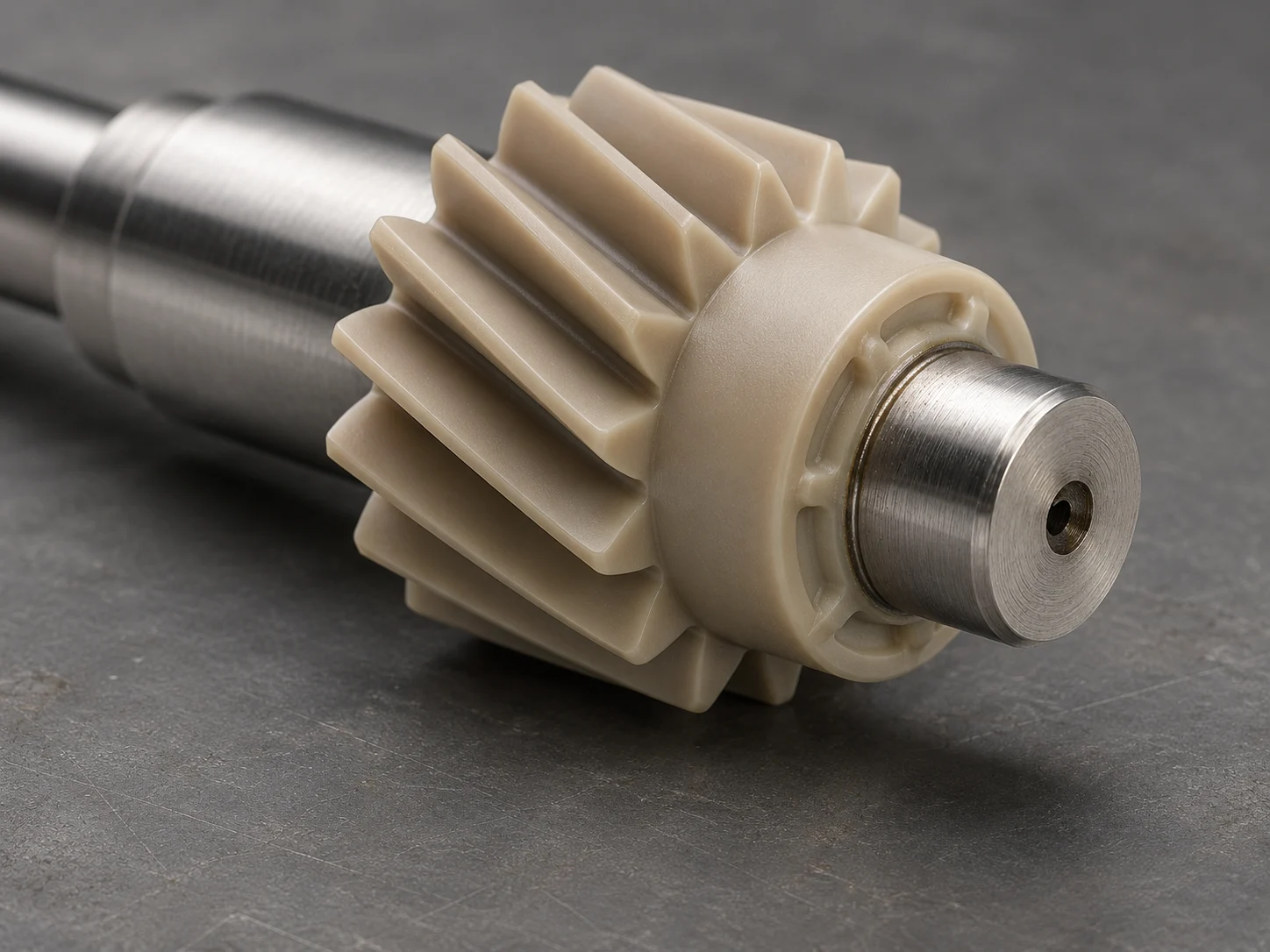
Define functional requirements for hubs, bores and assembly datums. Review fit, loading and inspection against the drawing and assess any secondary machining requirements separately.
Record the grade, batch, critical dimensions and surface criteria with the samples. Set separate functional tests for relevant loads, wear or sterilization cycles, using the actual component geometry.
This table shows typical values for unreinforced, standard-flow VICTREX PEEK 450G. Use the selected grade’s data and the part’s operating conditions when comparing alternatives.
| Property | Typical value | Method / conditions |
|---|---|---|
| Density, crystalline | 1.30 g/cm³ | ISO 1183 |
| Tensile stress at yield | 98.0 MPa | ISO 527-2; 23°C |
| Tensile modulus | 4000 MPa | ISO 527-1; 23°C |
| Flexural modulus | 3800 MPa | ISO 178; 23°C |
| Notched Izod impact strength | 6.0 kJ/m² | ISO 180/A; 23°C |
| Heat deflection temperature, unannealed | 152°C | ISO 75-2/Af; 1.8 MPa |
| Melting temperature | 343°C | ISO 11357-3 |
| Item | Value | Method / conditions |
|---|---|---|
| Drying temperature and time | 150°C / 3 h; 120°C / 5 h | Alternative paired conditions in official injection notes; not freely interchangeable ranges |
| Residual moisture after drying | <0.02% | Official injection drying notes; the general table lists a suggested maximum of 0.020% |
| Nozzle temperature | 375°C | Official typical injection condition; not melting or service temperature |
| Mold temperature | 170–200°C | Official typical injection conditions |
| Molding shrinkage: flow | 0.90% | ISO 294-4; 375°C nozzle, 190°C tool; material-comparison value |
| Molding shrinkage: across flow | 1.3% | ISO 294-4; 375°C nozzle, 190°C tool; material-comparison value |
HDT, melting, processing and long-term service temperatures describe different conditions. Shrinkage values support material comparison; actual dimensions depend on geometry, tooling and processing. Use separate data for reinforced or wear formulations.
Reference: official VICTREX PEEK 450G technical datasheet, updated March 17, 2026; actually read October 21, 2026.
Start with temperature, media, friction and assembly to select a PEEK route and address critical risks early.
Connect high-temperature tooling, drying, gates and dimensional planning to reduce gaps between design and molding.
Use drawings and dimensional inspection support, including CMM, to focus on mating faces, location and assembly dimensions; verify function through project testing.
Support the project with ISO 9001 / ISO 13485 quality systems and clear sample records, connecting development, inspection and ongoing production.
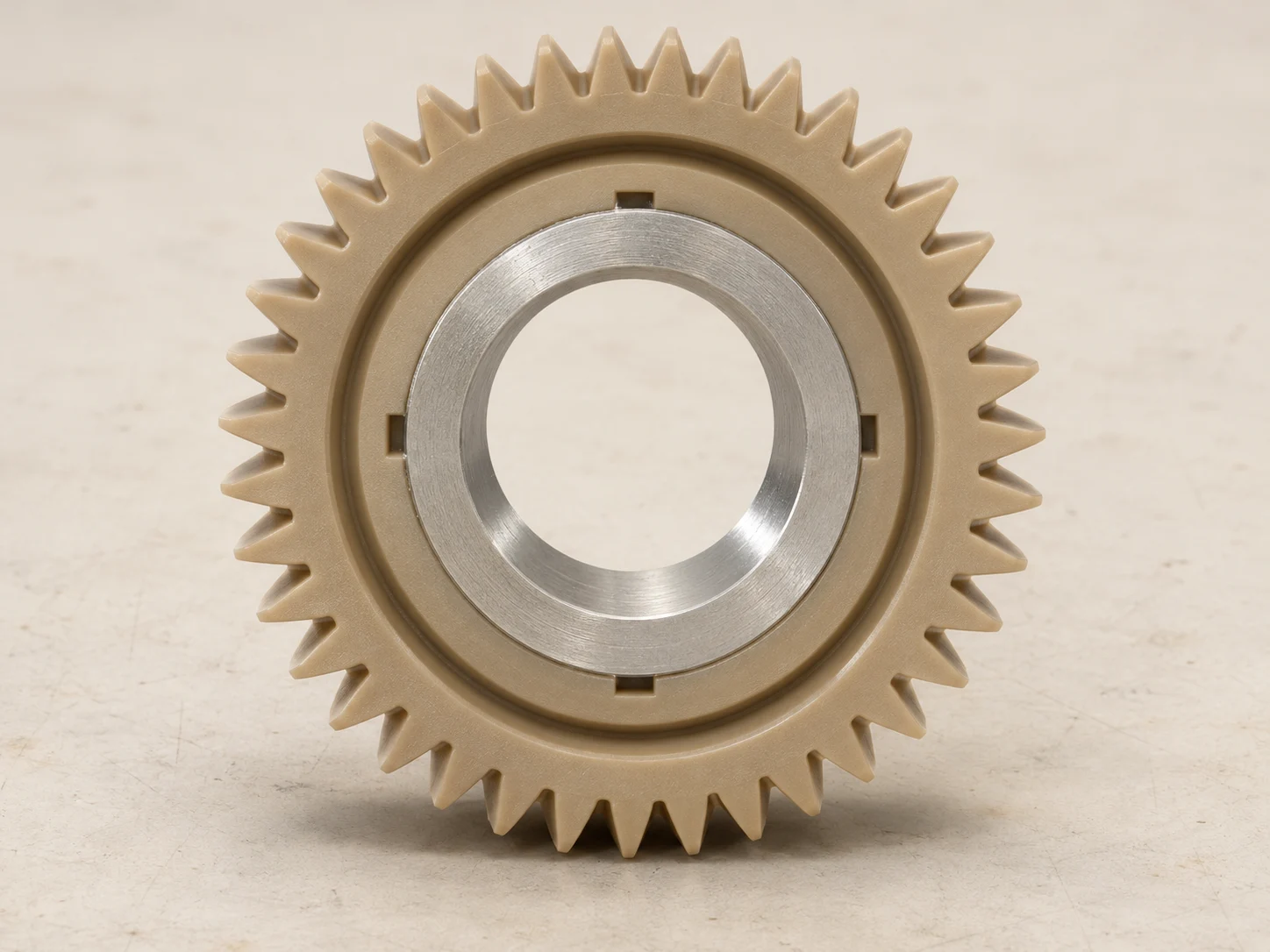
PEEK stands for polyetheretherketone, a semi-crystalline high-performance thermoplastic in the PAEK family. Its combination of mechanical, thermal and chemical performance suits precision parts with several demands at once; suitability still depends on grade, geometry and validation.
Compare unfilled, fiber-reinforced and wear grades for flow, directional behavior and mating surfaces. Set drying, cleanliness, gate and packing conditions and mold temperature for the selected grade, then check dimensions and function on molded samples.
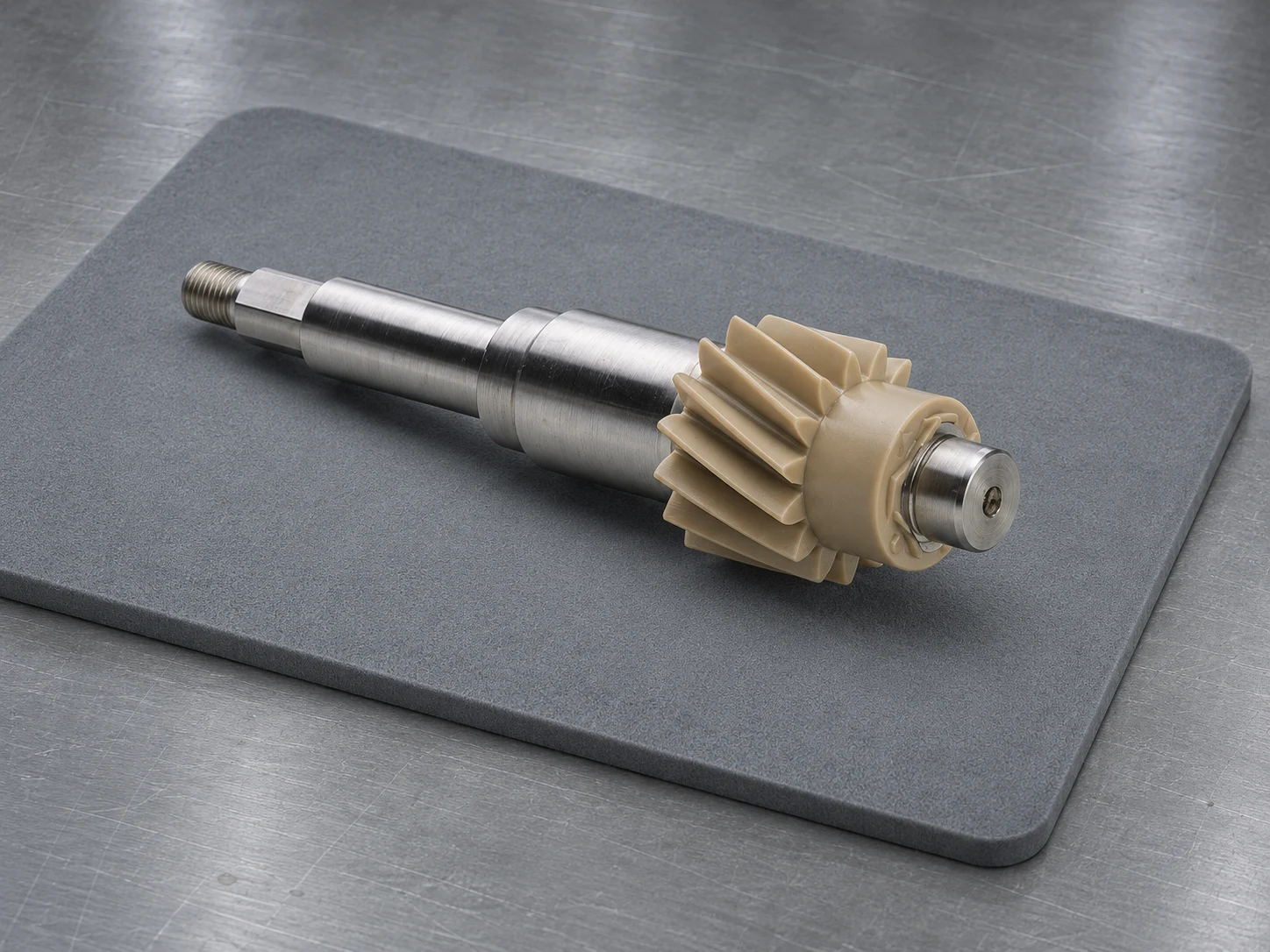
Define PEEK gear projects around transmitted load, tooth geometry and shaft interfaces. Robotics and electric-drive systems also require checks for speed, temperature rise, lubrication and noise targets.
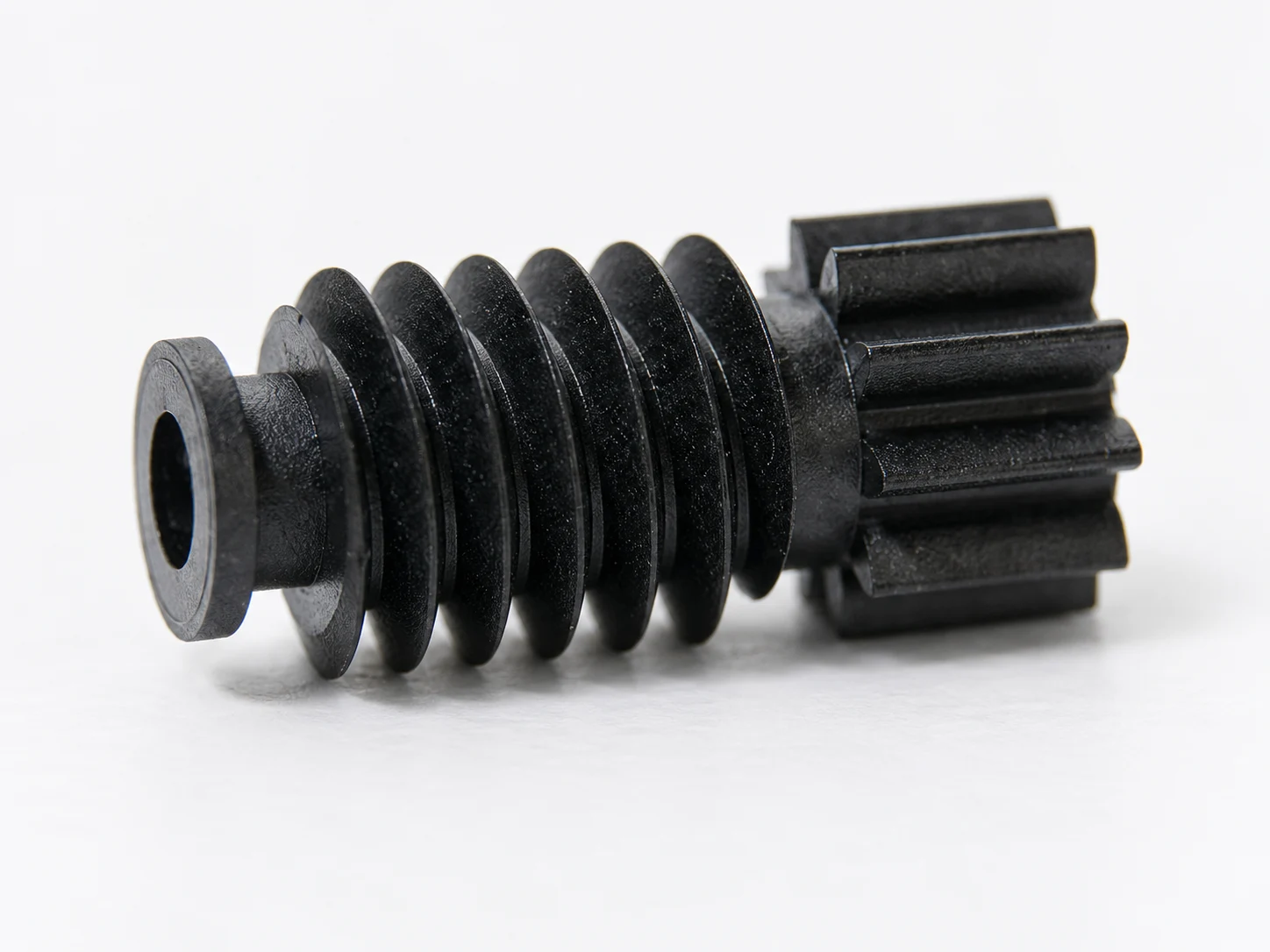
Select gear material for the actuator’s repeated motion, temperature and transmission fit. Validate tooth geometry, meshing, assembly and cycling on samples alongside resin properties.
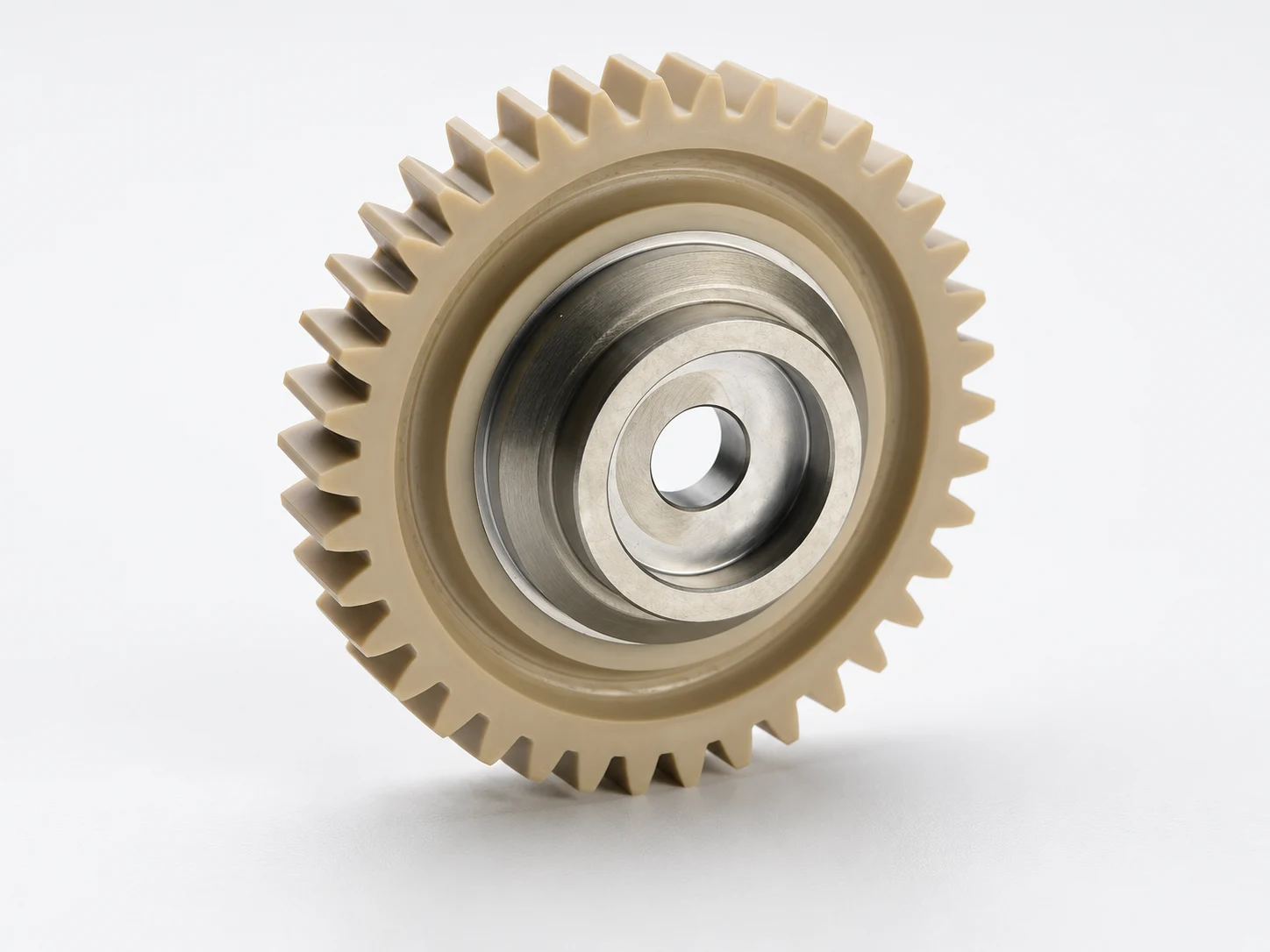
Review pump gears against media, temperature and loading, defining the interface between polymer teeth and a metal hub. Confirm fit, wear and operating performance through actual component tests.
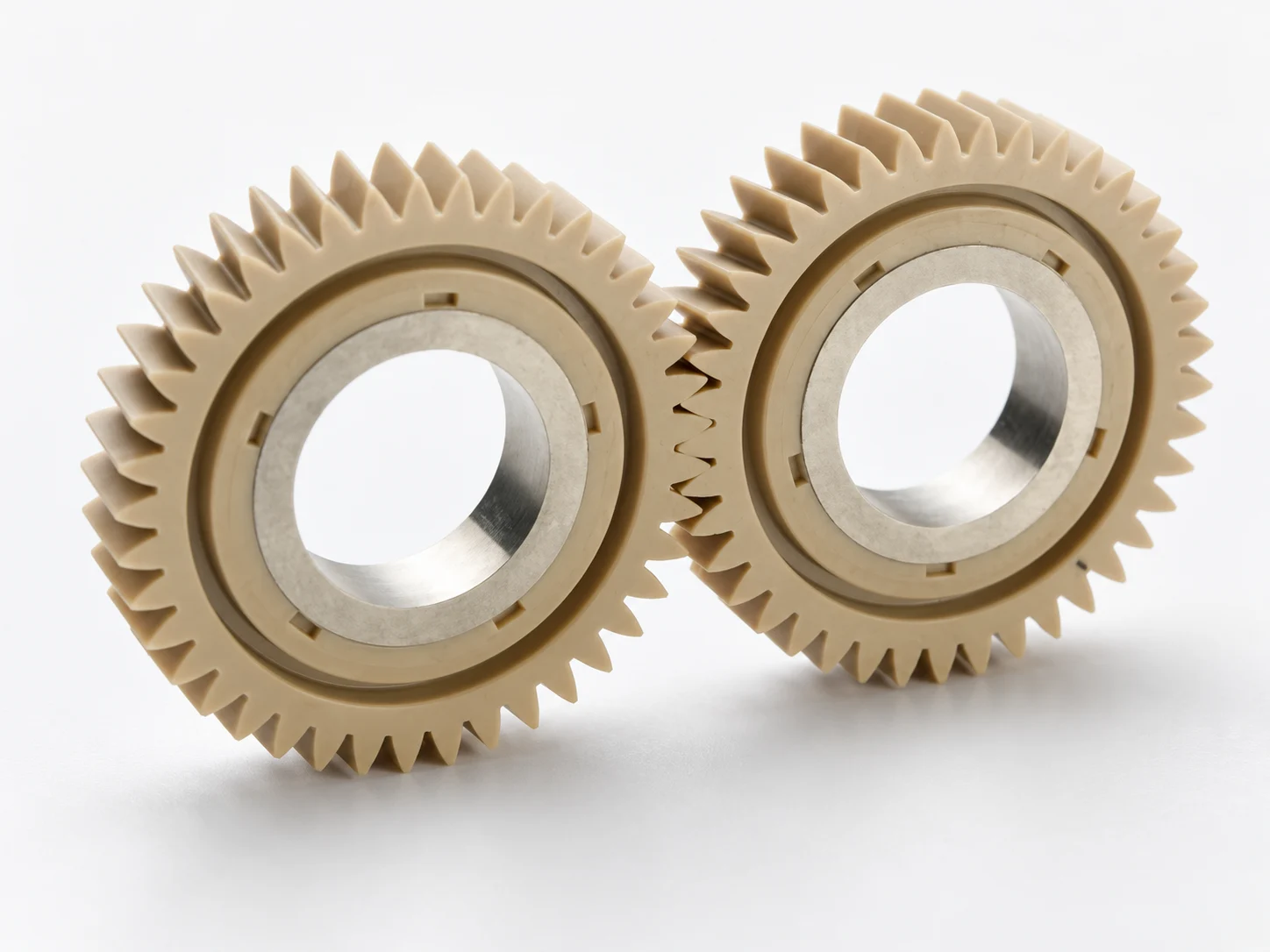
Review tooth geometry, metal-ring interfaces, inertia and balance for precision drives. Define allowable runout and assembly fit, then test the sample under its intended duty cycle.
Consider PEEK when thermal, chemical and mechanical requirements must be met together. Compare function, weight, life targets and manufacturing cost through grade and part validation, rather than selecting the highest datasheet number.
Resin, tooling, temperature control, mold trials and validation all affect project cost. For low quantities, changing geometry or demanding local tolerances, compare machining and near-net molding routes together.
PEEK INJECTION MOLDING FAQ
Common questions about grades, molding, dimensions and project validation.
Yes. PEEK is injection moldable, with suitable equipment and mold-temperature control, effective drying and a clean material path. Base the process on the selected grade’s guidance, geometry and mold-trial results.
No. The current official 450G datasheet lists a melting temperature of 343°C, a typical nozzle temperature of 375°C and a mold temperature of 170–200°C. Each serves a different purpose. Service temperature also depends on load, time, media and part design; melting temperature is not an operating limit.
Define load, stiffness, friction, insulation and media conditions before comparing grades. Fillers affect directional behavior, shrinkage and mating surfaces, so reinforced or wear grades cannot be specified using unfilled 450G data alone.
Moisture and contamination affect molding, while mold-surface temperature and cooling history influence semi-crystalline structure and part behavior. The 450G datasheet gives alternative drying conditions of 150°C for 3 hours or 120°C for 5 hours, with residual moisture below 0.02%. Production also requires a clean material path and actual surface-temperature checks.
Evaluate tolerances against grade, size, sections, orientation, tooling and measurement conditions. Crystallinity, shrinkage and ejection distortion affect results. Provide critical dimensions and function requirements so trials, approved samples and inspection can establish the specification.
For medical use, specify the contact classification, cleaning or sterilization process and material documentation. Select a grade appropriate to the intended use and validate biocompatibility or implant requirements at the finished-device level.
Compare quantity, geometry, material use, tooling investment and validation cost. Molding can produce near-net parts, but requires design for filling and release. For low volumes or critical faces, assess machining or localized post-mold machining without assuming one process is always cheaper.
Share drawings, quantity, temperature, media and loading requirements. Our team will review the material and manufacturing route and prepare a quote.
Get a PEEK Molding Quote