
01
Sampling & Fit Review
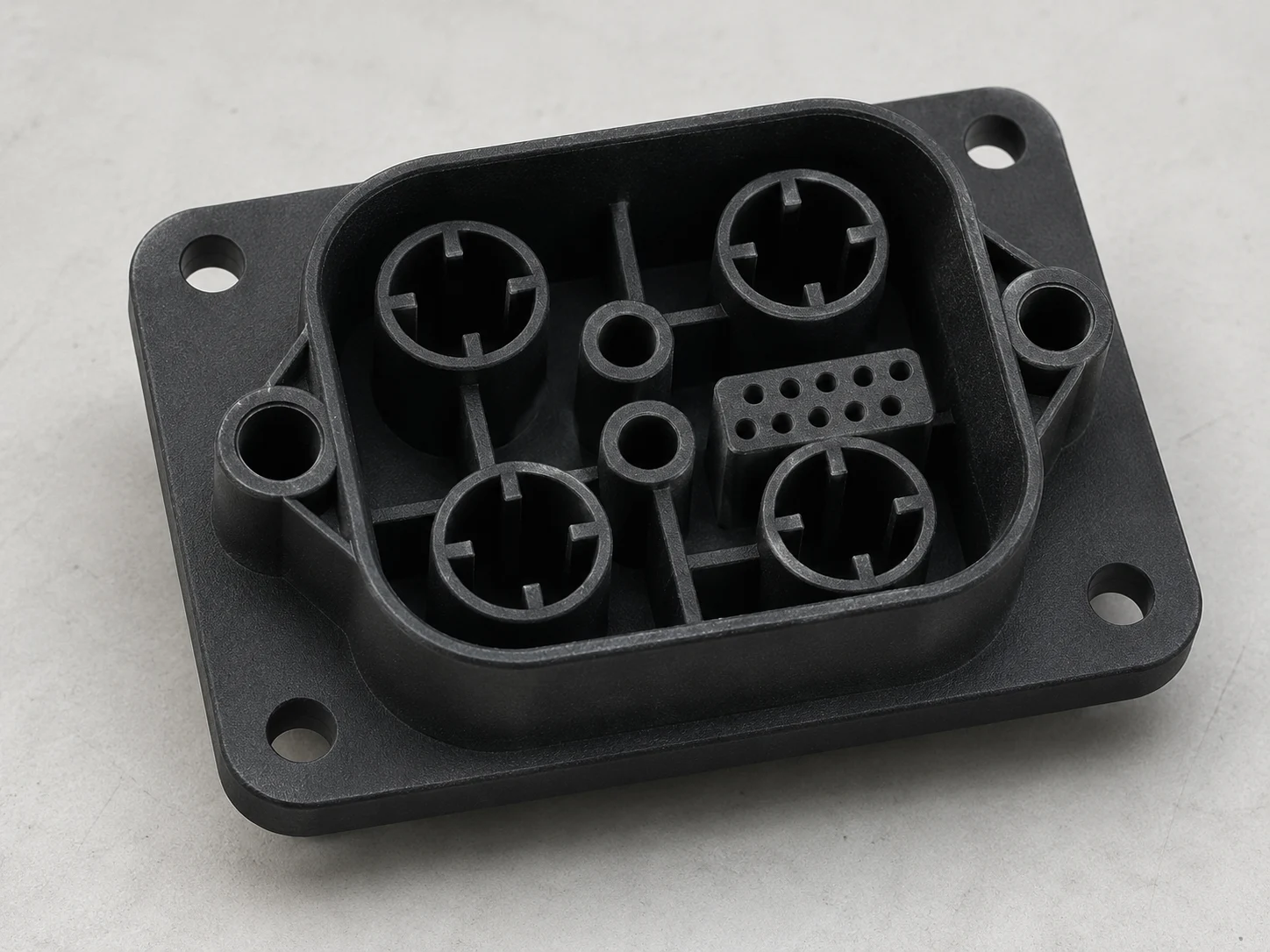
Check holes, mounting faces, clips and thin features with molded samples. Review geometry and assembly function separately, using flow and cooling outcomes to guide tool revisions.
Built for production.
Take your design from tooling to repeat production of custom plastic parts.
Manufacturing Capabilities
Plastic Injection MoldingCustom plastic parts for production Tooling & Design SupportPrepare your part design for tooling High-Volume ProductionPlan repeat runs around your delivery needsMaterials & Finishes
Made for smaller runs.
Produce resin parts with silicone molds for design validation and small batches.
Small-Batch Capabilities
Vacuum CastingResin parts made with silicone moldsLow-Volume ProductionFrom trial parts to small-batch deliveryAppearance & Fit ChecksPrepare multiple parts for product checksMaterials & Finishes
Other Services
Machining, printing, and supporting services for specific part needs.
Materials & Finishes
Explore material performance and appearance options separately.
Explore Materials & Finishes
Injection Molding Materials
Choose molding materials for strength, heat resistance and appearance.
Manufacturing Knowledge
Find articles, answers, and case studies to help prepare your project.
Start with your part requirements.
Contact PlasticHubs for help with quotes, files, delivery, and orders.
Files, Orders & Delivery
Industries
Explore manufacturing options for your product application.
Start with your manufacturing needs
From tooling to production of plastic parts.
Small batches of resin parts made with silicone molds.
Start with your design, material, and quantity.
Plan PBT molded components for electrical connections, coil supports and equipment. Start with the full grade and drying controls, then review reinforcement flow, warpage, notch-sensitive features and assembly needs with tooling and samples.
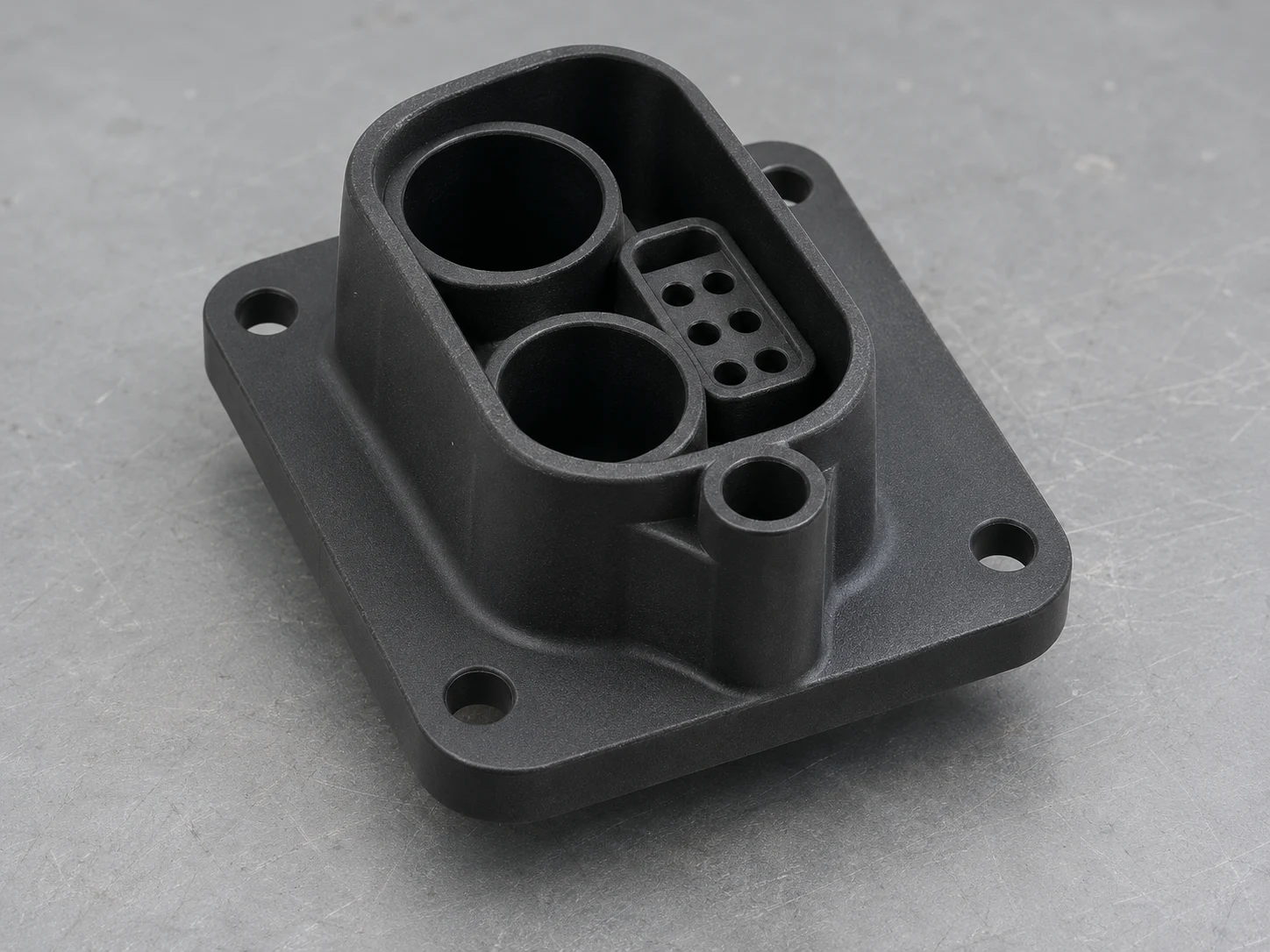
Share operating temperature, humid heat or media exposure, critical fits and electrical needs. Include the full grade, reinforcement, color, thickness and any flame-rating documents in the RFQ.
Discuss your project ↗Check holes, mounting faces, clips and thin features with molded samples. Review geometry and assembly function separately, using flow and cooling outcomes to guide tool revisions.
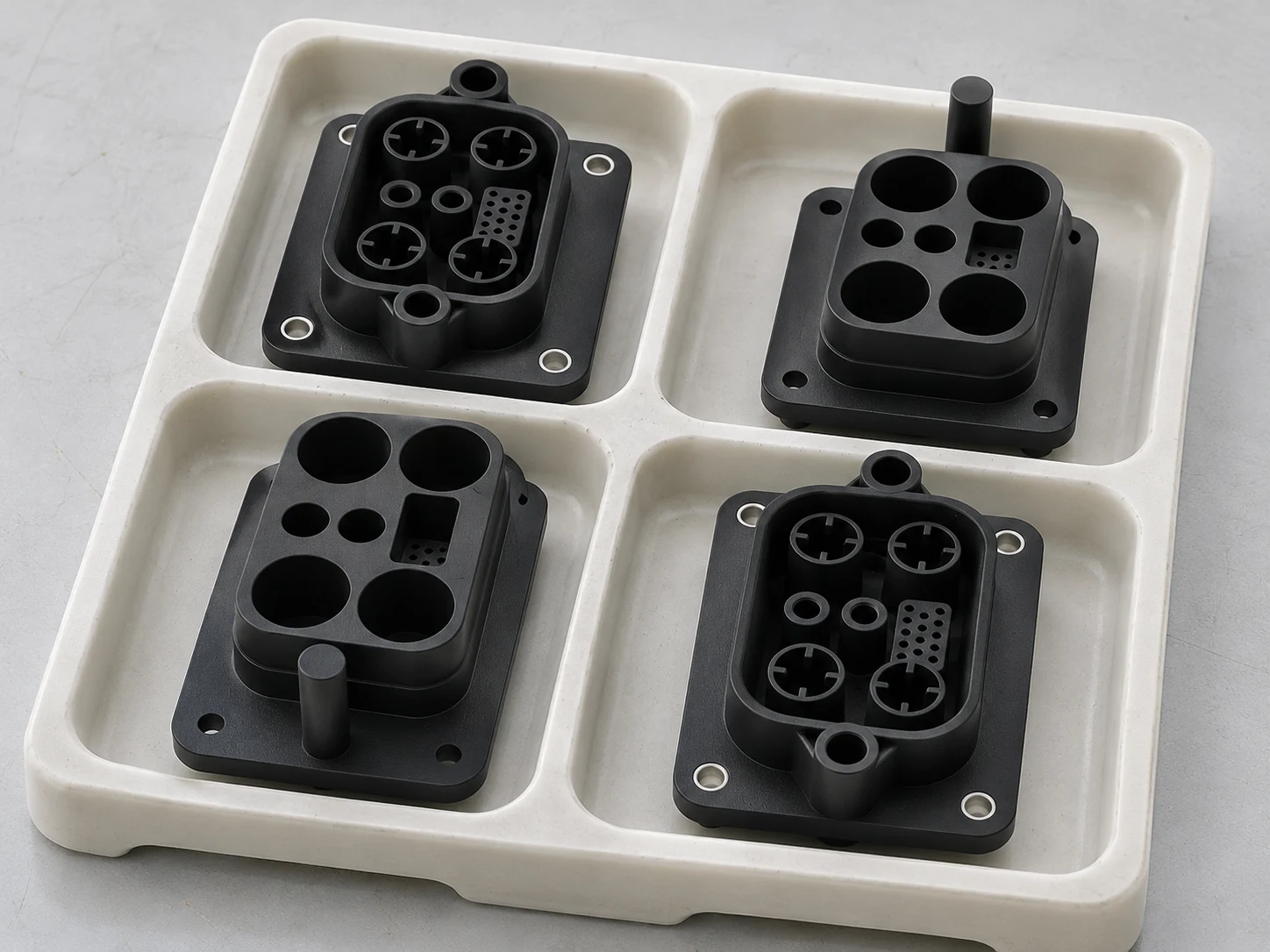
Plan resin moisture, drying/feeding, filling and cooling together. Connect tool trials with production through approved samples and defined measurement methods.
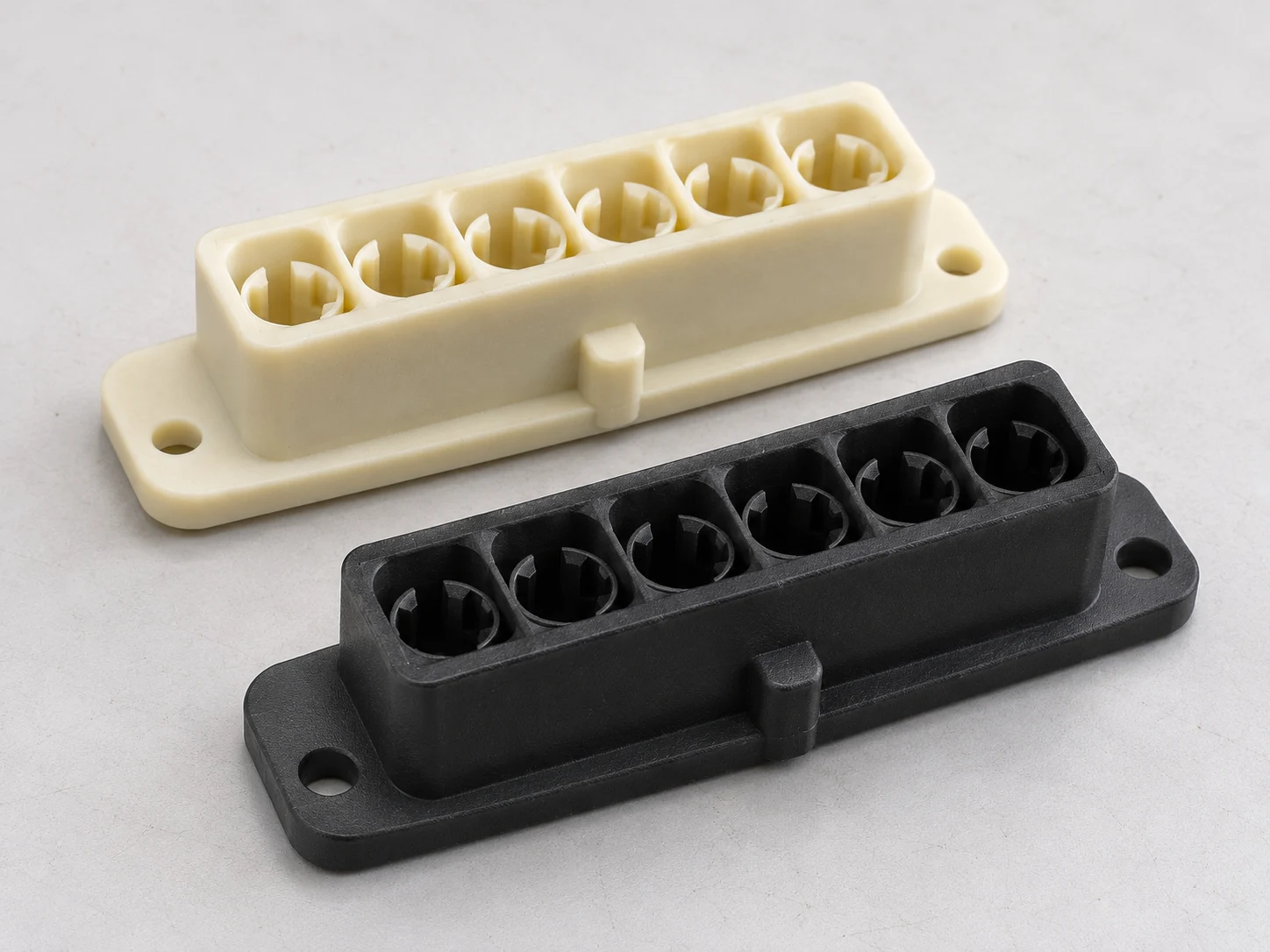
Compare unfilled, glass-filled, flame-retardant, hydrolysis-stabilized and blended PBT options by full grade and intended operating conditions.
Share your drawings, quantity, exposure and assembly or electrical requirements.
| Item | Project review |
|---|---|
| Grade & documentation | Check reinforcement, color, exposure and the scope of relevant ratings |
| Drying & feeding | Control pre-molding moisture and post-drying handling for the grade |
| Tooling & flow | Plan gates, fiber orientation, cooling and warpage together |
| Dimensions & function | Agree on datums, mounting faces, holes and sample-function requirements |
| Surfaces & secondary operations | Review texture, fiber read-through, color and marking compatibility |
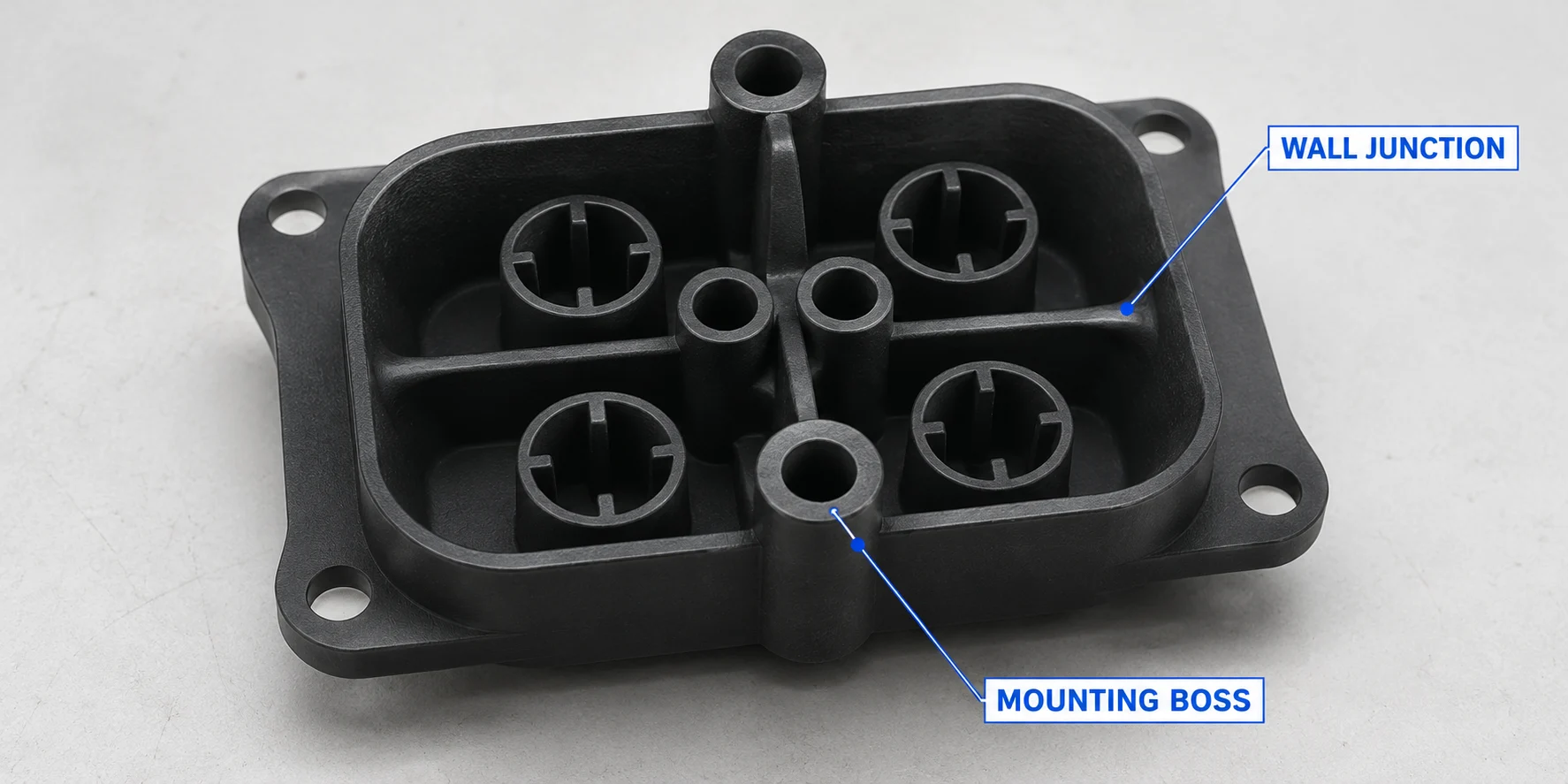
Moisture can degrade PBT during melting even when room-temperature uptake is low. Follow the selected grade’s drying and moisture limits, and control exposure during feeding.
Review fiber flow, weld lines and mounting faces together. Use directional shrinkage to assess warpage and coordinate gate layout, wall sections and cooling.
Review stress concentrations at clip roots, threads, holes and corners, avoiding unvalidated sharp corners or abrupt transitions. Higher stiffness from glass fiber does not remove the need to assess notches and assembly deflection.
Review local material buildup, filling, packing and cooling balance. PBT’s rapid crystallization affects filling and dimensions; check sink, voids and ejection behavior in heavy sections through tool trials.
Separate tool finish, molded color and secondary markings by visible area, assembly and exposure. Confirm the appearance of glass-filled or flame-retardant formulations with samples of the selected grade.
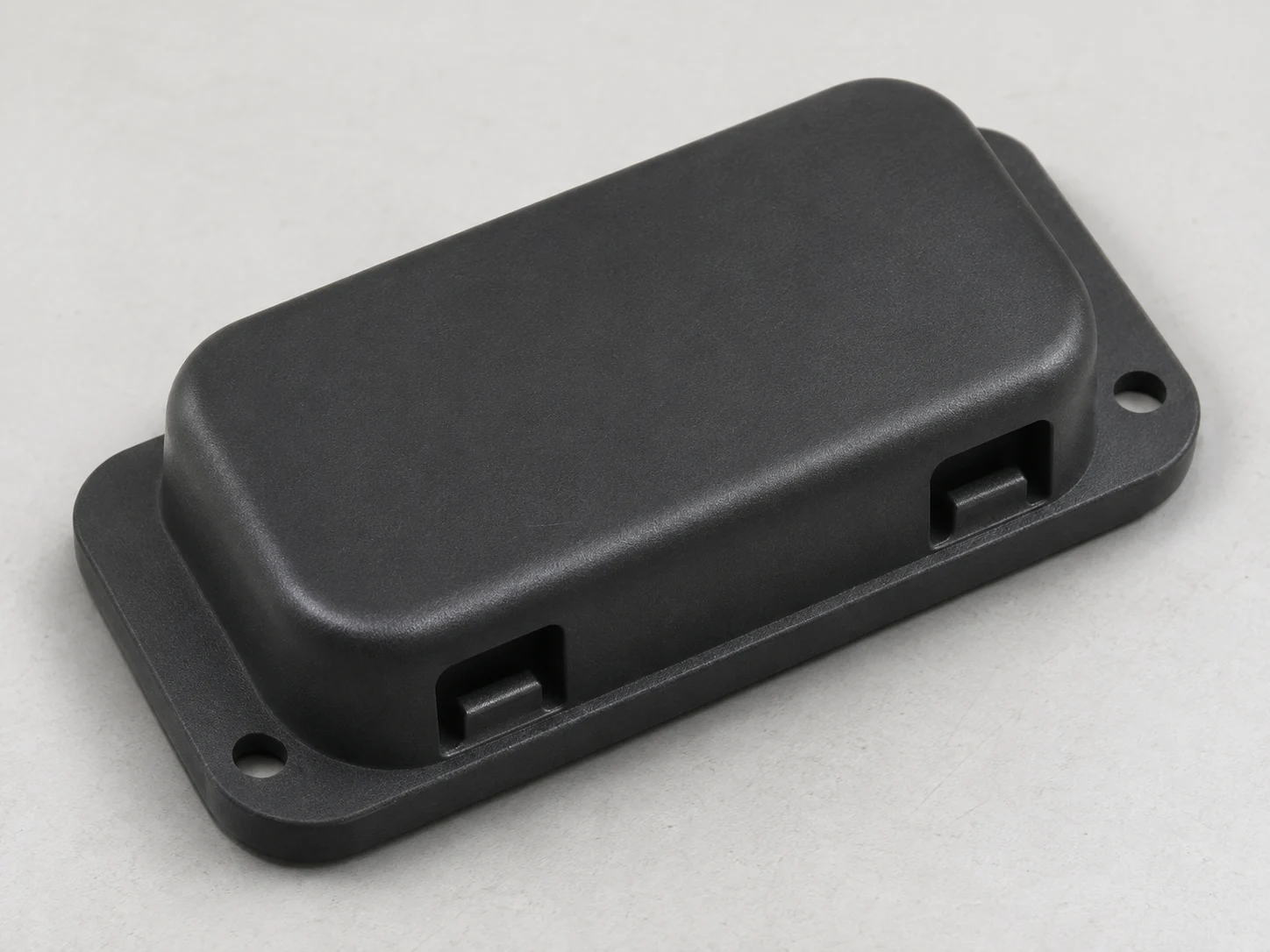
Plan a smooth tool surface alongside filling and ejection. Agree on gloss and acceptable fiber read-through using samples of the selected grade and additives.
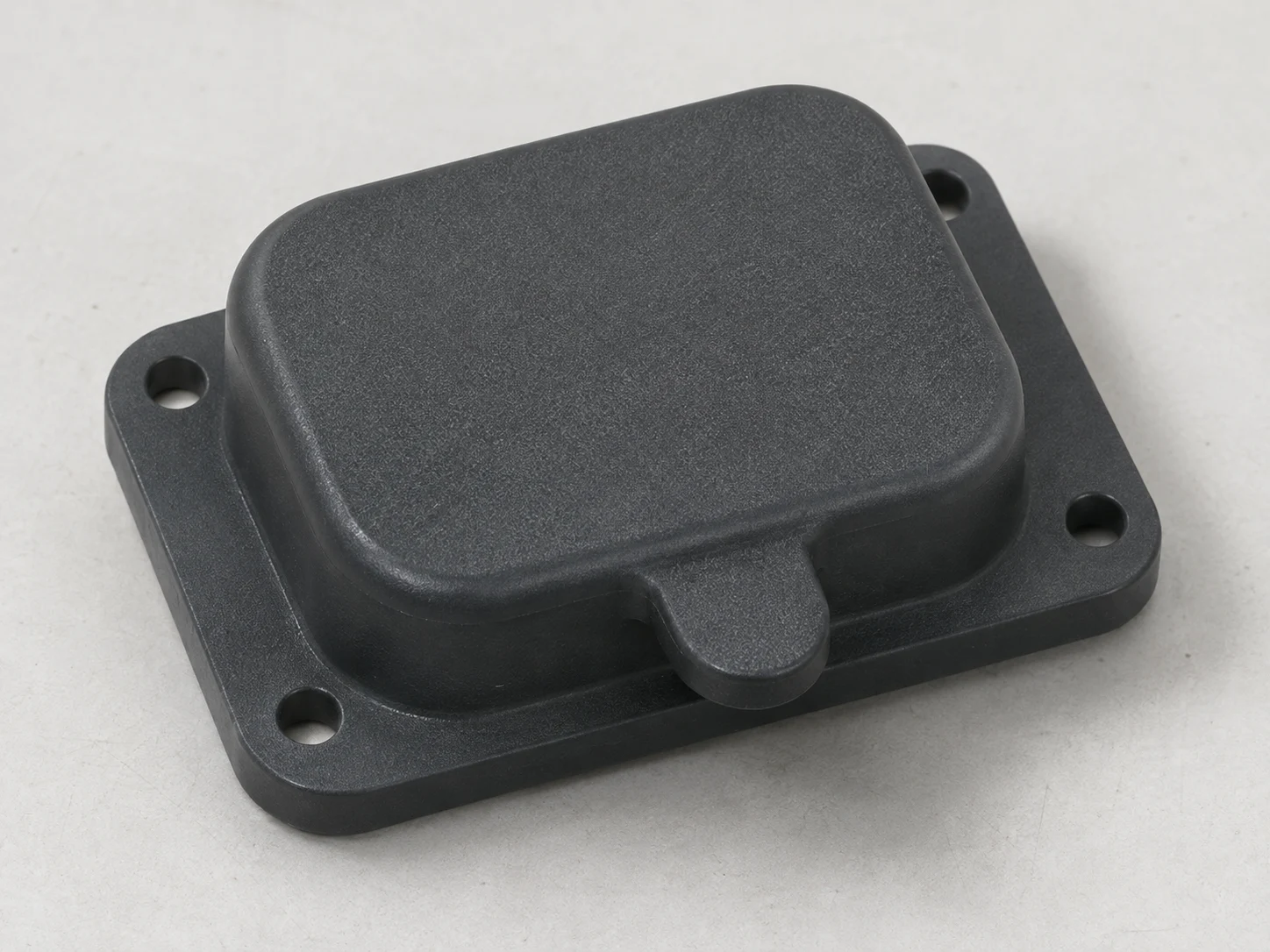
Use specified texture for grip or housing appearance, with draft and contact requirements reviewed. Agree separately on flow marks, weld lines and fiber appearance in visible zones.
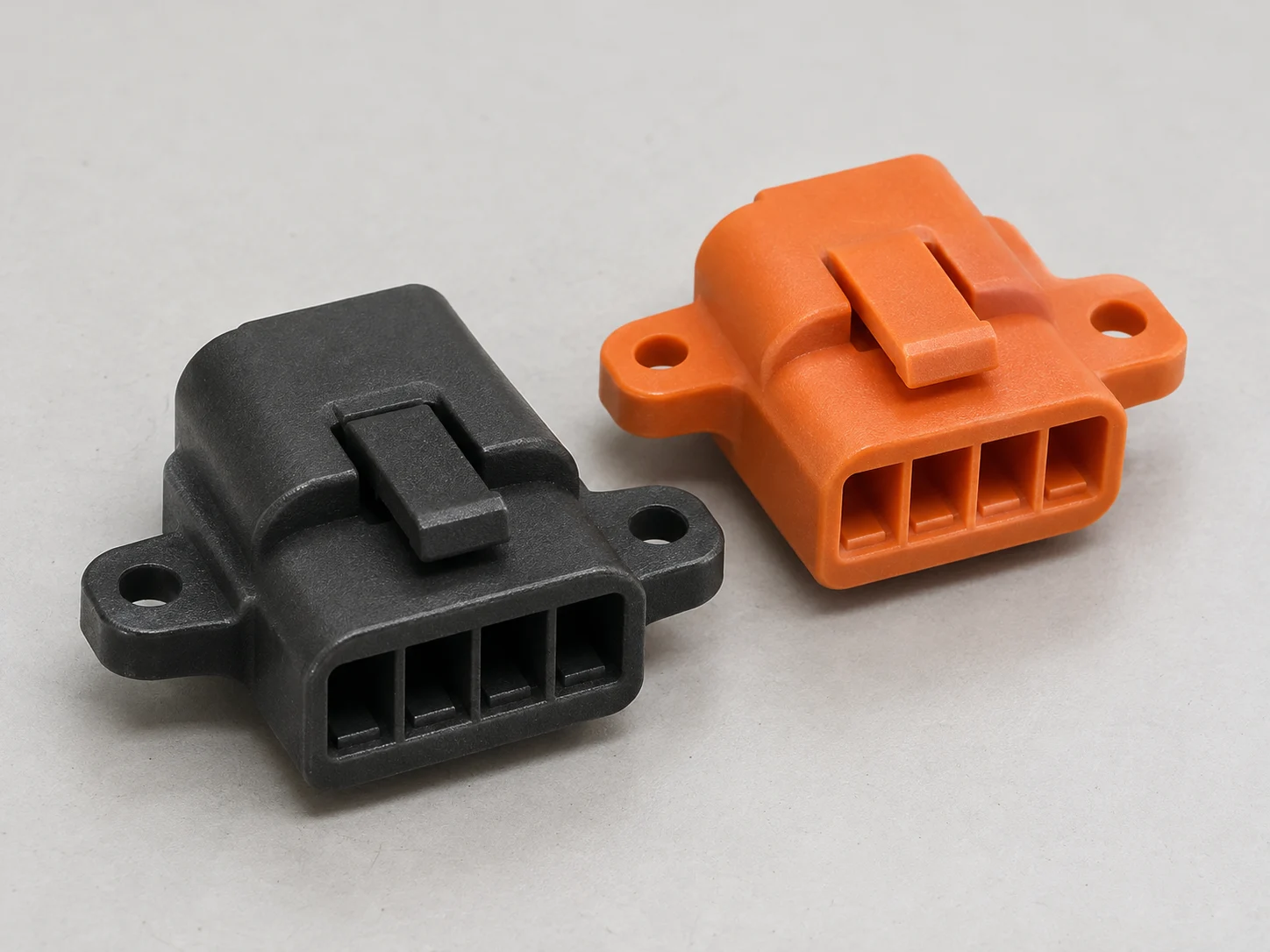
Manage color together with the PBT grade, glass fiber and other additives. Review rating documents and performance when changing color rather than assuming all colors are equivalent formulations.
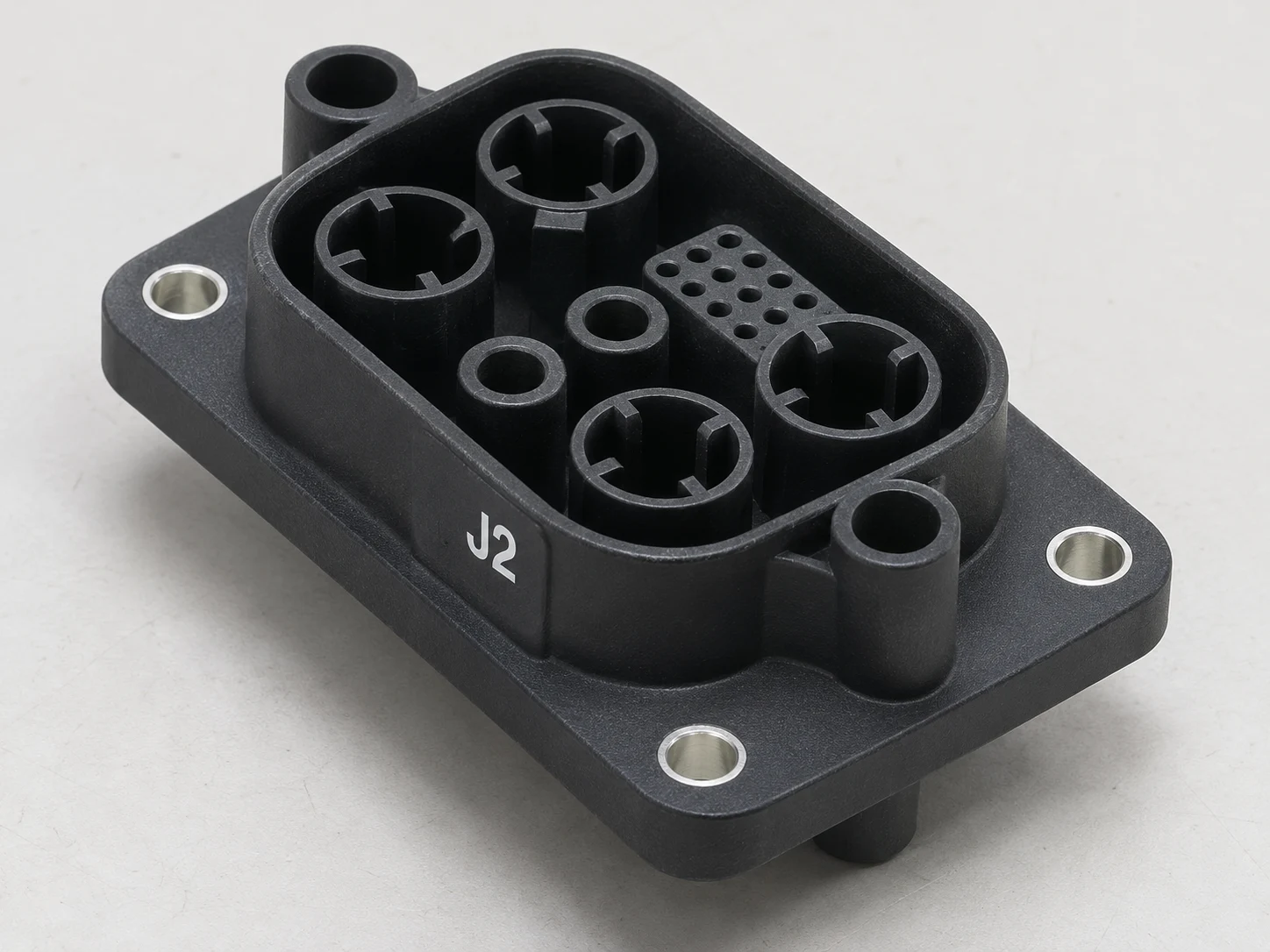
Review ink compatibility with the selected PBT for symbols, identification and local markings. Validate adhesion and durability against surface condition, fillers and cleaning exposure, with surface preparation where needed.
Record the full grade and drying conditions with critical dimensions. Check moisture before molding and define separate sample checks for appearance, warpage, fit and agreed functions. Match electrical and flame requirements to the documented grade and thickness.
The CAMPUS datasheet for BASF Ultradur B 4500 supplies the typical values below. The processing rows use its injection-molding guidance. Compare reinforced, flame-retardant and blended grades using their own data.
| Property | Typical value | Method / conditions |
|---|---|---|
| Density | 1,300 kg/m³ | ISO 1183 |
| Tensile modulus | 2,500 MPa | ISO 527 |
| Yield stress | 55 MPa | ISO 527 |
| Notched Charpy impact | 5 kJ/m² | ISO 179/1eA; +23°C |
| Molding shrinkage, parallel | 1.6% | ISO 294-4, 2577 |
| Molding shrinkage, normal | 1.9% | ISO 294-4, 2577 |
| Property | Typical value | Method / conditions |
|---|---|---|
| Melting temperature | 223°C | ISO 11357-1/-3; 10°C/min |
| Heat deflection temperature | 50°C | ISO 75-1/-2; 1.80 MPa |
| Drying | 80–120°C; 4 h | Supplier injection-molding guidance for this grade |
| Maximum allowed water content | 0.04% | Supplier injection-molding guidance; before molding |
| Melt-processing temperature | 250–275°C | Supplier injection-molding recommendation range |
| Mold temperature | 40–70°C | Supplier injection-molding recommendation range |
| Water absorption, published value | 0.5% | Sim. to ISO 62; exposure duration not shown on the page |
Use HDT and melting point for thermal comparison, and check operating temperature separately under the intended loads and exposure. Dry the selected grade before molding. List any flame rating, electrical test, hydrolysis exposure and critical dimensions in your sample acceptance plan.
Reference grade: BASF Ultradur B 4500, CAMPUS datasheet (source name Ultradur® B 4500). Read on 2026-10-20; no document revision date was displayed.
Review temperature/humidity, electrical and mounting requirements together to define the full grade and documentation scope.
Connect material drying, gates and flow, cooling and tool-trial requirements through our group manufacturing resources.
Turn mounting faces, holes, clips and warpage into sample checks so acceptance includes the assembly requirements.
Connect quotation, tool trials and batch acceptance through approved samples and clear material, measurement and functional requirements.
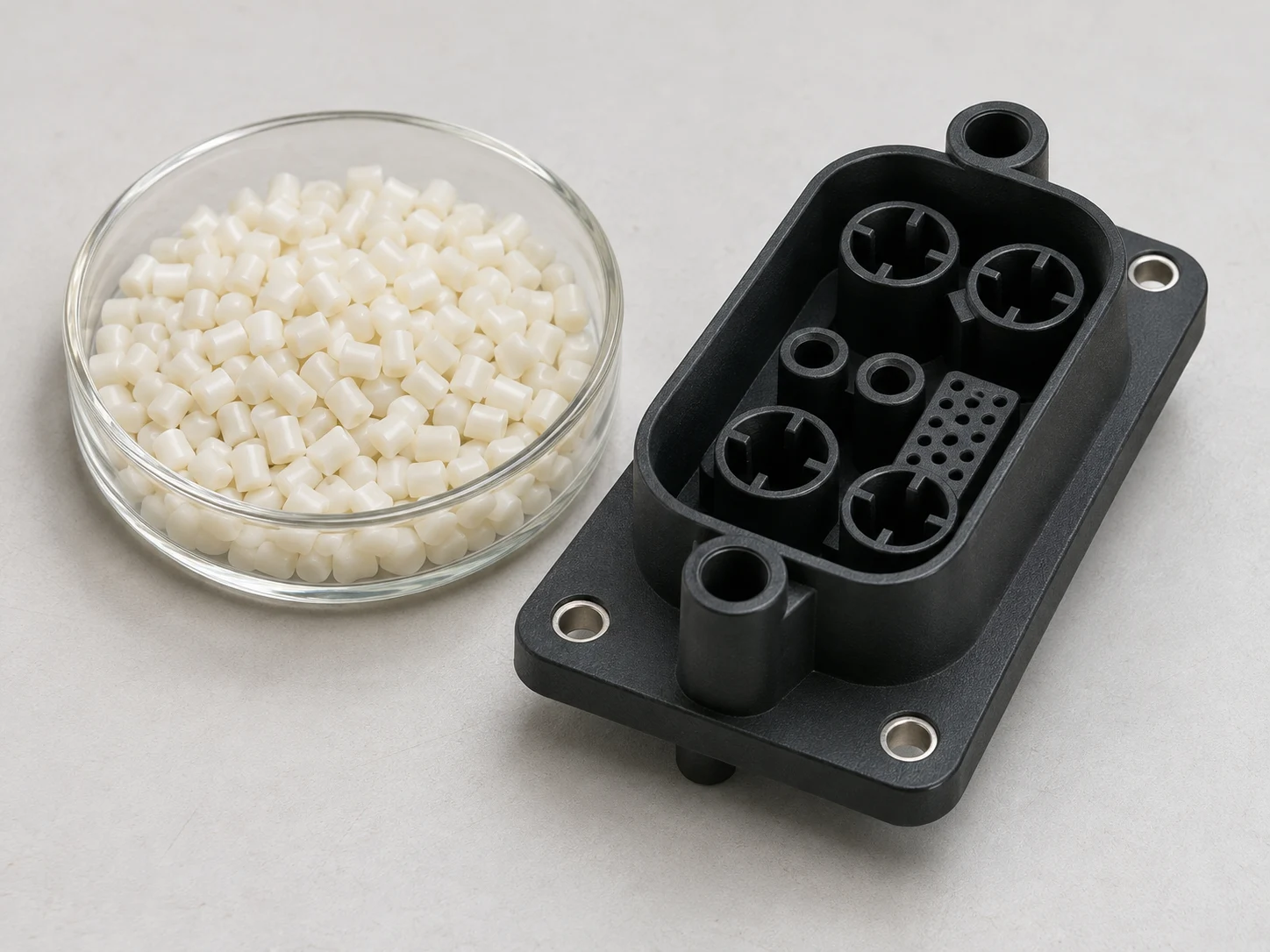
PBT, or polybutylene terephthalate, is a semi-crystalline thermoplastic polyester. It can serve electrical components, coil supports, housings and other technical parts; stiffness, impact and exposure suitability depend on the grade and design.
Unfilled, glass-filled, flame-retardant, hydrolysis-stabilized and PC/PBT blended formulations are separate selection options. Low room-temperature uptake does not remove moisture sensitivity in the melt; distinguish storage, processing and long-term service conditions.

Review PBT contact layouts, latches and mounting flanges. Select the grade for service temperature, electrical duties and retention needs, then confirm critical fits with trial samples.
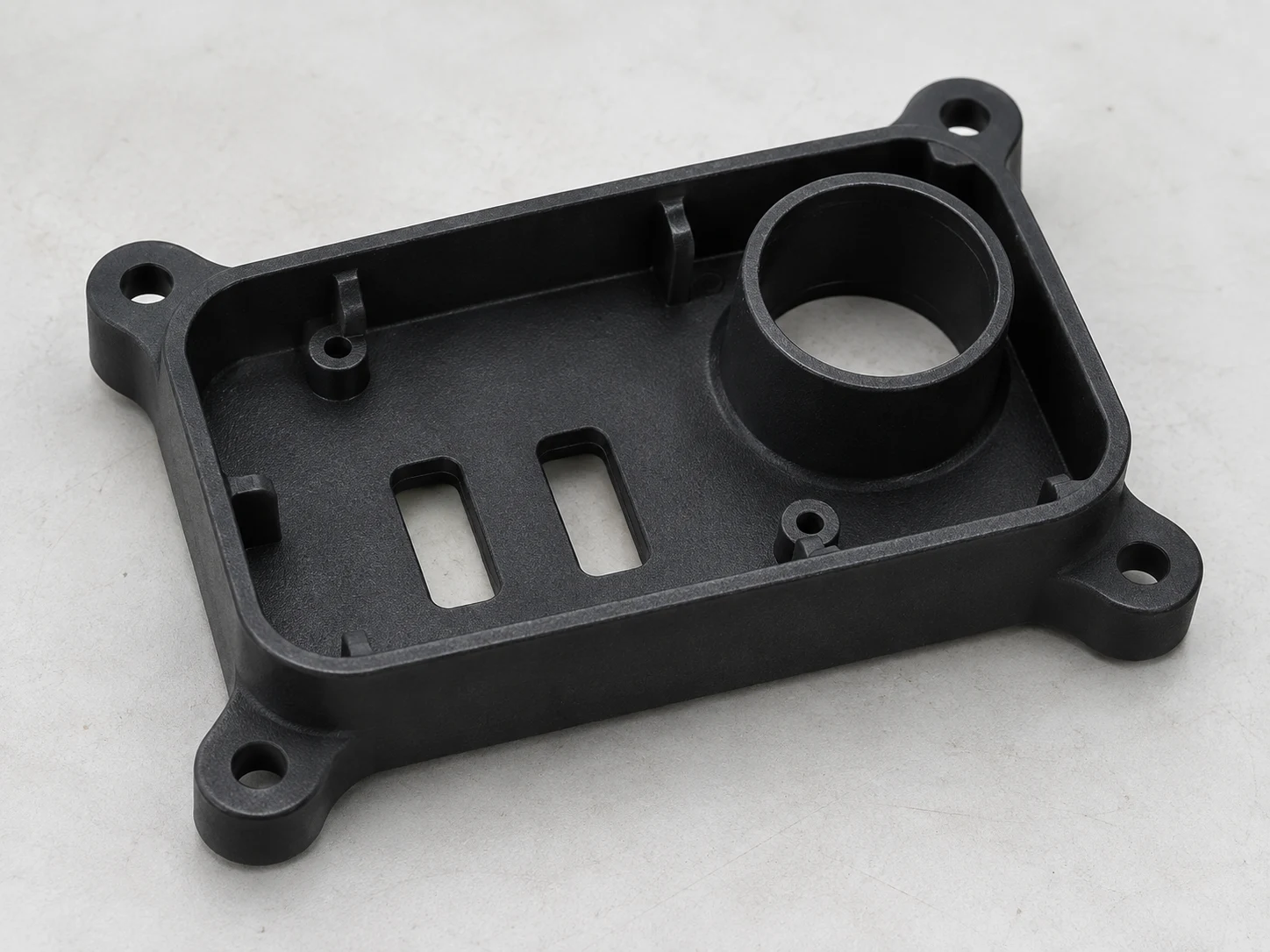
Review housing walls, local openings, fasteners and thermal exposure. Plan dimensional and warpage acceptance around reinforcement, flow and cooling.
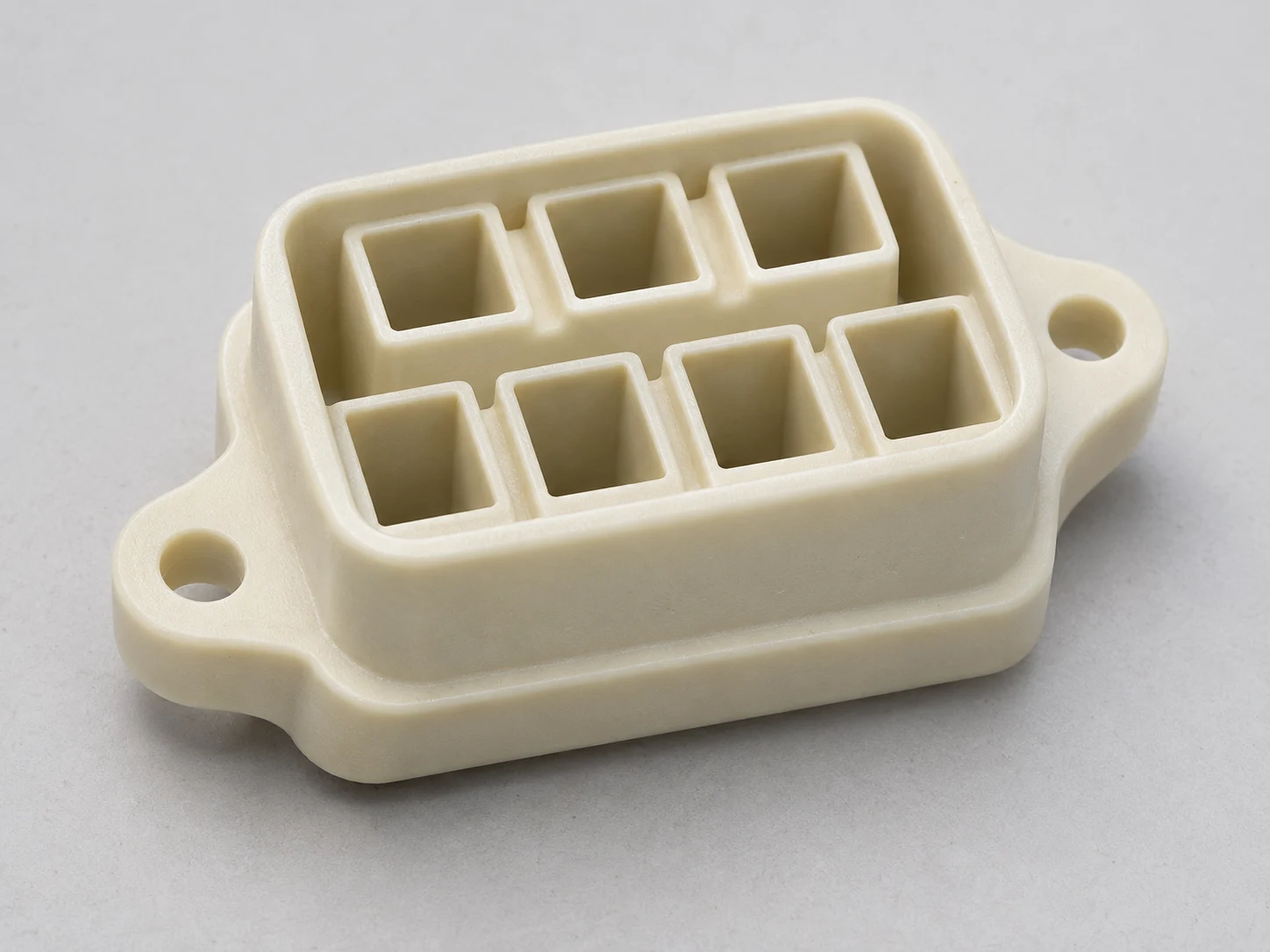
Review terminal pockets, partitions, locating ears and assembly datums. Connect insulation, temperature and mating requirements with the actual formulation, thickness and finished-part validation.
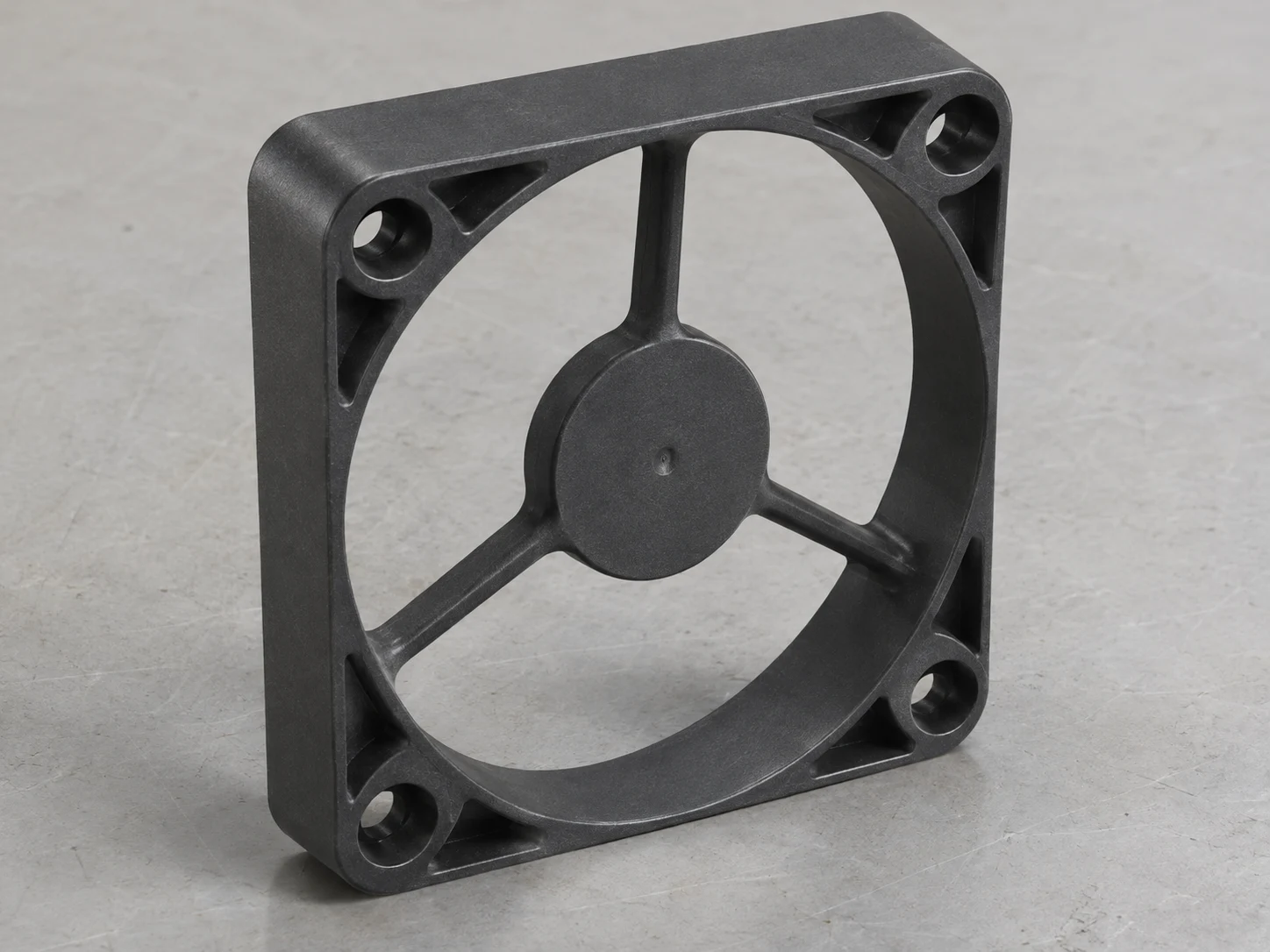
Review PBT frames, support struts and mounting corners. Confirm stiffness, dimensions and service requirements for equipment temperature, vibration and assembly loads.
PBT formulations provide options for electrical and technical components. Molding integrates thin walls, mounting and connection features; evaluate economics against tooling, resin and inspection scope.
Compare grades for humid heat, hot water, chemical exposure and outdoor service. Include any flame, UV, food-contact or medical documentation required for the intended use.
PBT INJECTION MOLDING FAQ
PBT grades, drying, hydrolysis, glass fiber and rating-document questions.
No. PET is a different polyester and PC/PBT is a blend. Reinforcement, stabilizers and flame-retardant packages add further differences; compare specific grades, processing and use requirements.
Room-temperature uptake and melt processing are different conditions. BASF Ultradur B 4500 injection guidance specifies 80–120°C drying for 4 hours and maximum moisture of 0.04%, applied with the grade instructions and material condition. Small amounts of moisture can cause hydrolysis; absence of splay or low uptake does not replace moisture control.
Fiber orientation, directional shrinkage, local walls and cooling can differ. Glass fiber does not make shrinkage equal in all directions. Review gates, flow and mounting faces together, then confirm in tool trials.
List the target flame rating or electrical test in the RFQ. Check resin documentation for the exact grade, color and thickness, then verify the finished design under the relevant use and test conditions.
Review notches and stress concentrations, assembly deflection, wall transitions and ejection. Use suitable radii and load review; reinforcement does not remove risks at roots or hole edges.
Evaluate the grade for the actual temperature, time, media and load. Use hydrolysis-stabilized grades as candidates for humid heat and validate durability with representative parts.
Share CAD, quantity, the full grade or performance targets, color and reinforcement, plus fits, temperature/humidity, electrical and documentation needs. Tooling, cavities, resin, cycle, secondary operations and acceptance scope affect quotation.
Share your CAD, material, quantity, and key requirements. Our team will review your project and prepare a quote.
Request a Quote