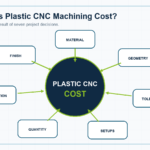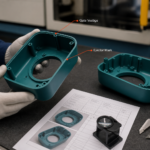
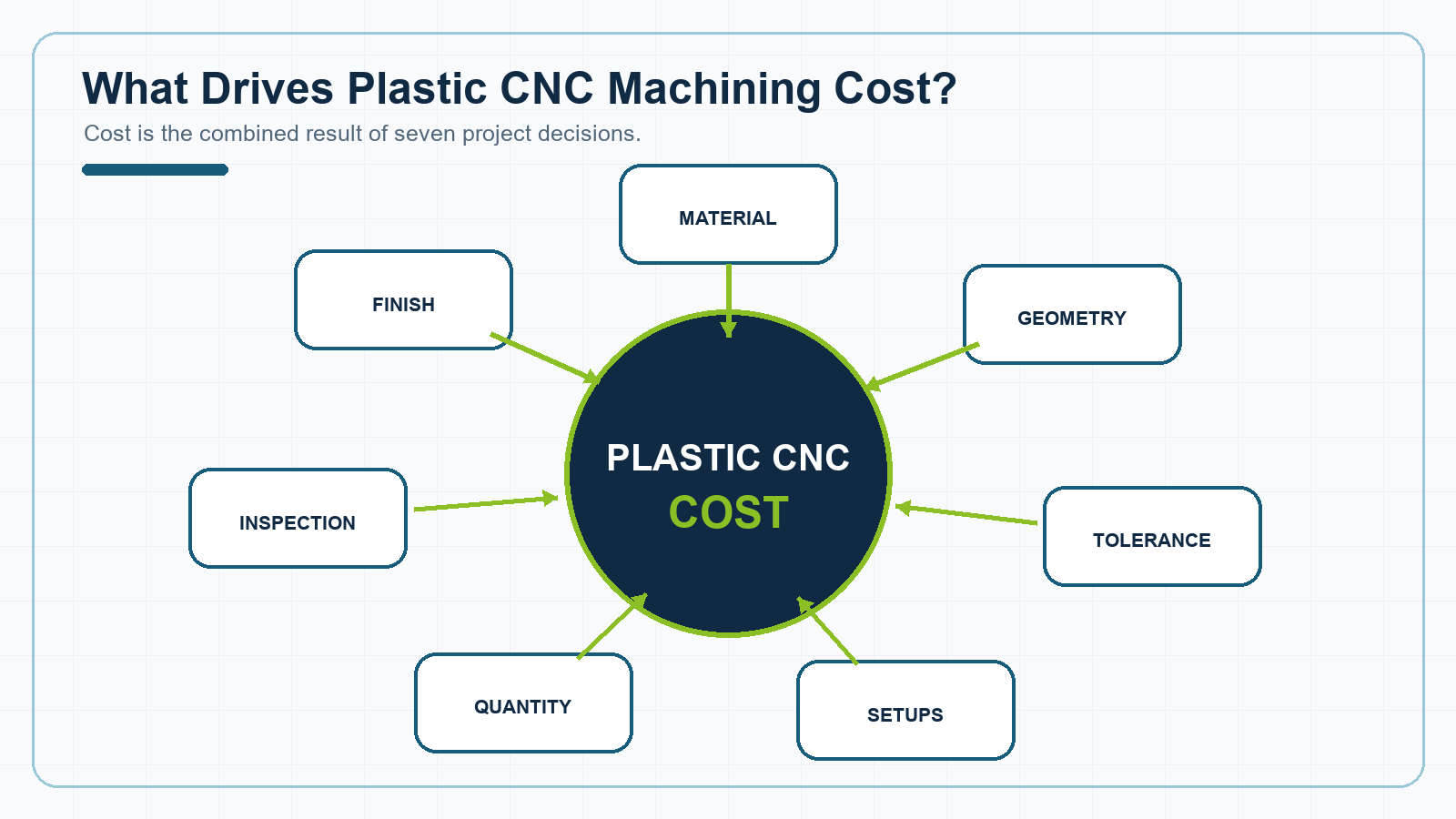
There is no dependable universal price per plastic CNC machined part. A quote normally combines stock material, programming and setup, machine time, tooling, inspection, finishing, scrap risk, and logistics. The most effective cost reduction is rarely a lower hourly rate; it is usually less wasted stock, fewer setups, shorter toolpaths, and tolerances that match the part's function.
Total cost = material + programming/setup + machine time + tools/fixtures + inspection + finishing + risk allowance + logistics
1. Plastic grade and stock size
Resin grade, plate or rod size, order quantity, and stock utilization affect price. High-performance plastics such as PEEK or PEI generally cost more than common engineering plastics. Stock close to the finished envelope can reduce both waste and cutting time. Specify the grade instead of writing only “nylon” or “plastic.”
2. Part size and material removal
Large parts require more stock and may need larger equipment, longer tools, and additional handling. A smaller part can also be expensive when it must be cut from a thick block with a high material-removal ratio.
3. Geometric complexity
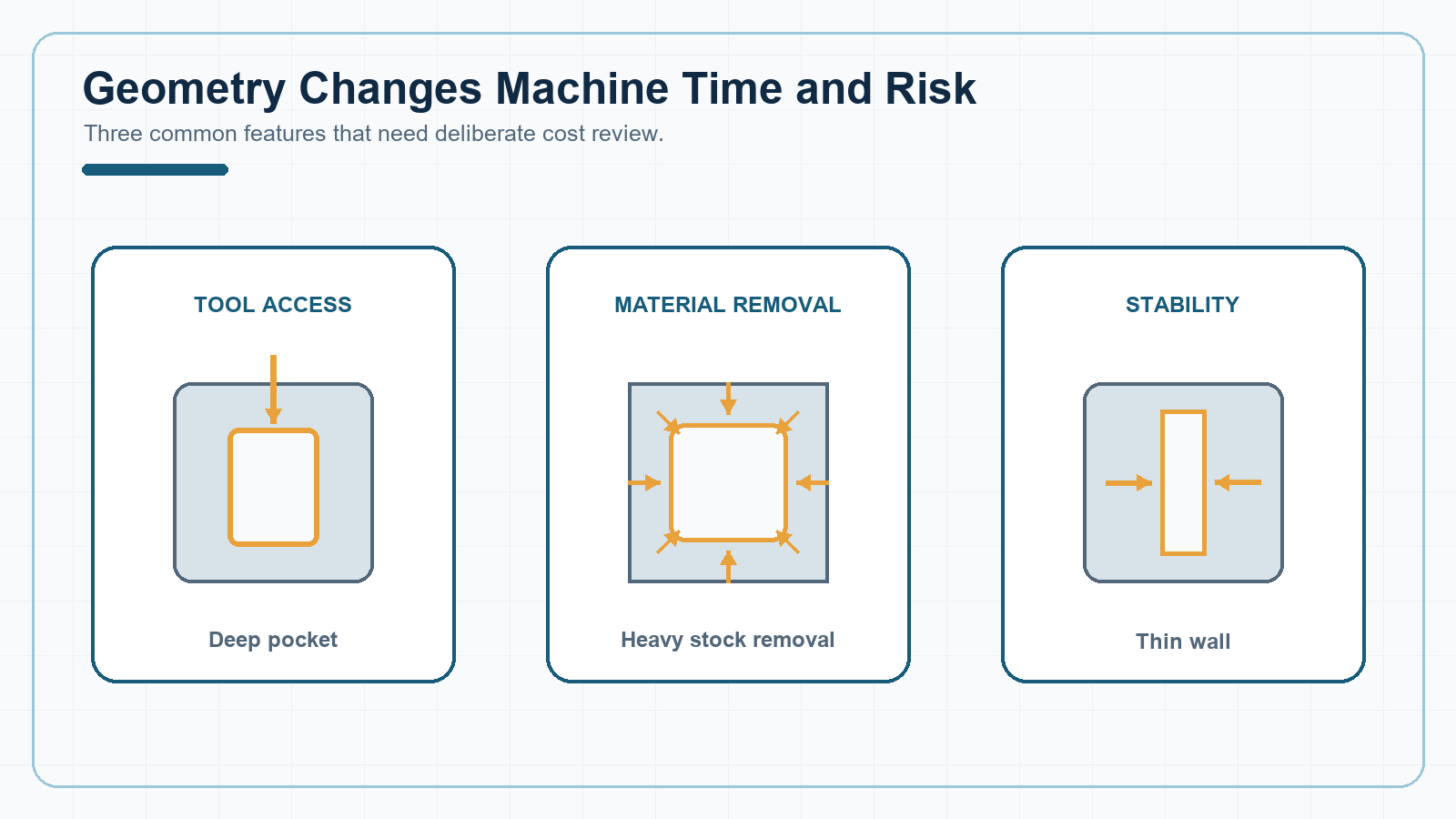
Deep pockets, thin walls, slender features, small internal radii, and hard-to-reach surfaces add toolpaths, tool changes, and machining time. Increasing a nonfunctional internal radius enough to use a stronger cutter is usually less expensive than specifying a sharp corner.
4. Tolerances and distortion control
Plastics respond to temperature, moisture, internal stress, and clamping force. Tolerances tighter than the function requires can add slow finishing passes, stress-relief steps, controlled measurement, and rework risk. Separate critical fits from general dimensions instead of applying one tight tolerance to the whole drawing.
5. Surface finish and appearance
Fine tool marks, transparent-part appearance, polishing, or restrictions on fixture marks require additional finishing and handling. Identify the true cosmetic zones and define an acceptance reference so the entire part does not carry the same cosmetic cost.
6. Quantity and batch strategy
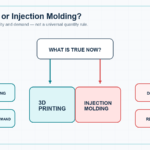
Programming and first setup are upfront costs that can be spread across more parts. Higher quantity does not guarantee that CNC remains the most economical process. When design and demand are stable, compare molding or another production route. CNC can remain attractive for multiple variants, lower batches, and tool-free production.
7. Setups and dedicated fixtures
Every flip or repositioning adds operator time and another opportunity for error. Designs that can be machined from fewer directions usually cost less. Repeat orders may justify a dedicated fixture, but compare its upfront cost with the expected unit saving.
8. Inspection and documentation
Sample inspection, a full dimensional report, material certification, and batch-level traceability have different costs. Define measurement methods and records only for features that affect fit, function, or compliance.
9. Lead time, secondary work, and logistics
Expediting compresses production scheduling, material procurement, and inspection. Blasting, polishing, printing, threaded inserts, cleaning, special packaging, and split shipments also enter the total. A useful quote states which items are included.
Seven practical ways to reduce the quote
- Specify the material grade and any permitted alternatives.
- Apply tight tolerances only to functional dimensions.
- Increase nonfunctional internal radii and avoid deep narrow pockets.
- Reduce unsupported thin or slender features.
- Combine versions or batches to spread programming and setup.
- Mark cosmetic zones, inspection points, and document requirements clearly.
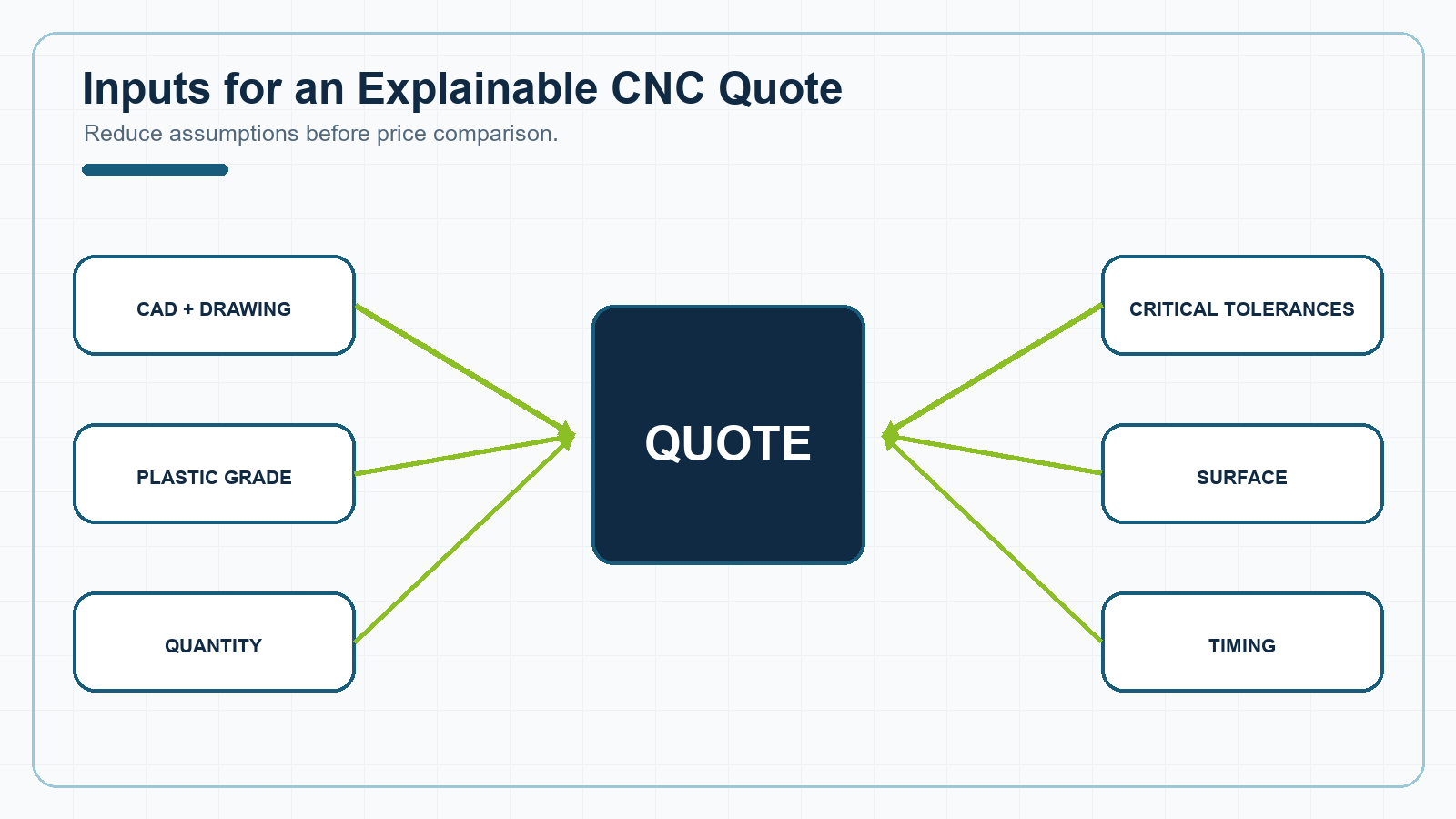
- Send 3D CAD, a 2D drawing, quantity, and timing together.
Frequently asked questions
Is plastic CNC machining priced by the hour or by the part?
A supplier may build its internal cost from machine time, but customer quotes are commonly issued per project or per part. The price still includes stock, programming, setup, inspection, and risk—not only cutting time.
Why can a plastic part be harder to quote than an aluminum part?
Some plastics are more sensitive to heat, moisture, residual stress, and clamping pressure. The stock may be inexpensive while distortion control, conditioning, and measurement add uncertainty.
Does a larger quantity always reduce unit price?
It normally spreads upfront costs, but the reduction depends on stock yield, cycle time, fixtures, and inspection. When demand reaches stable production levels, compare other manufacturing routes as well.
What information is required for an accurate quote?
At minimum, provide 3D CAD, resin grade, quantity, critical dimensions, surface requirements, and timing. Include the 2D drawing, service environment, inspection documents, and packaging requirements when they apply.
Request an explainable plastic CNC machining quote
Review the PlasticHubs plastic CNC machining service or send CAD, resin, quantity, critical tolerances, and timing through the contact page. Complete inputs reduce assumptions and make the real cost drivers easier to see.