Choosing an injection molding supplier is not simply a matter of finding a company that can make plastic parts. The better question is whether a supplier fits your tooling stage, annual volume, resin, cosmetic requirements, inspection needs, and delivery region.
The ten companies below are not ranked from best to worst. They are a sourcing shortlist representing different procurement models and project profiles. Their inclusion is based on public market visibility, not a claim that every company suits every part. Verify current capabilities, manufacturing locations, and quality systems before placing an order.
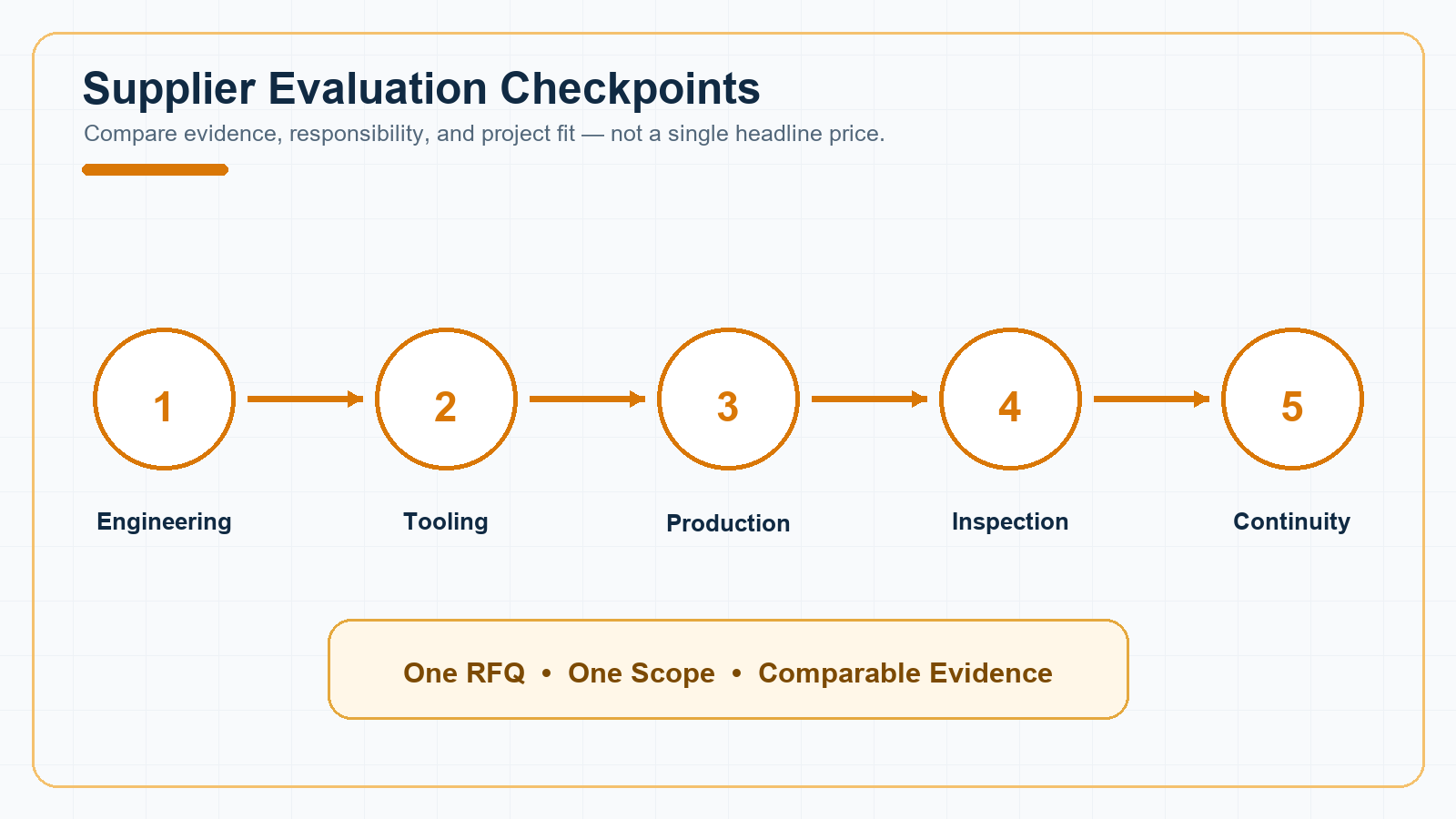
Start with the type of supplier your project needs
| Project condition | Supplier characteristics to prioritize |
|---|---|
| The design is still changing | Practical DFM support, fast feedback, and clear change-cost rules |
| Low-volume launch or market test | Separated tooling and unit costs, with a realistic low-volume route |
| Stable repeat production | Capacity planning, mold maintenance, spare-component, and continuity controls |
| Cosmetic enclosure | Defined expectations for texture, color, gates, weld lines, and visual acceptance |
| Engineering-plastic component | Experience with the specified grade, moisture control, shrinkage, and stability |
| Traceability-sensitive part | Inspection and batch records appropriate to the actual project risk |
10 plastic injection molding companies for your RFQ shortlist
1. Protolabs
Protolabs is a candidate for teams that prioritize speed and a digital quoting workflow. Look beyond the initial lead time: confirm the expected mold life, modification route, supported material, and path from early production to repeat orders.
2. Xometry
Xometry can suit buyers who want to compare capacity and manufacturing routes through a supplier network. Clarify the production location, accountable quality party, required inspection documents, and change-notification process for the actual order.
3. Fictiv
Fictiv may fit programs that value engineering communication, project management, and cross-region manufacturing support. The RFQ should still define critical dimensions, cosmetic zones, approved samples, and production-release conditions.
4. Quickparts
Quickparts is worth comparing for prototype, bridge, and follow-on injection molding programs. Confirm the responsibility boundary between trial runs and production, along with ownership of tooling, engineering changes, and repeat-order data.
5. ACO Mold
ACO Mold can be evaluated when buyers want moldmaking and molding considered together. Separate mold steel, cavity count, assumed tool life, trial rounds, and production unit price instead of comparing only one total.
6. The Rodon Group
The Rodon Group can be a candidate for North American production programs. Verify that the part envelope, resin, automation needs, economic order quantity, and timing fit its current production model.
7. EVCO Plastics
EVCO Plastics may be relevant when a project needs multi-site or complex production support. Confirm the responsible plant, tooling-transfer rules, quality documentation, contingency planning, and change control across locations.
8. Mack Molding
Mack Molding is a candidate when molding needs to be considered with broader manufacturing or assembly requirements. Define the molded component, secondary operations, assembly, testing, and packaging as separate scopes so the commercial comparison remains clear.
9. Tessy Plastics
Tessy Plastics may fit projects requiring development collaboration and scaled production. The RFQ should define the design-freeze point, engineering-change approval, cosmetic standard, and production acceptance method.
10. Uptive
Uptive can be included in an initial comparison for custom molding support. Before purchase, verify the specific facility, material, equipment range, inspection capability, and project-management responsibility rather than relying on broad website descriptions.
Compare scope, not just mold price
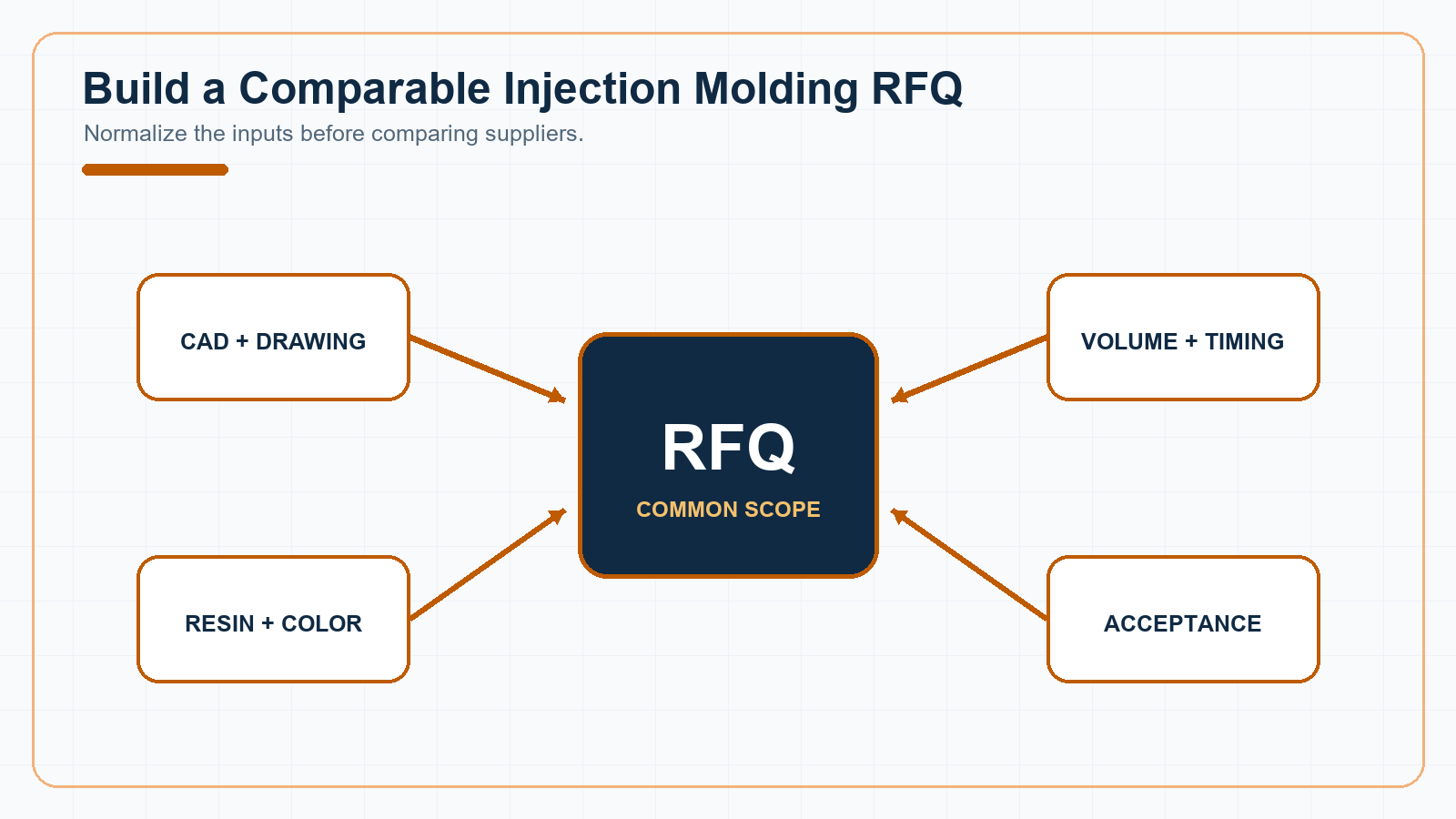
Supplier quotes often cover different things. One may include DFM, mold trials, and first-article reporting; another may cover only mold construction. Send every candidate the same RFQ package:
- 3D CAD and a 2D drawing with critical dimensions;
- resin grade, color, and permitted substitutions;
- initial quantity, annual demand, and expected program life;
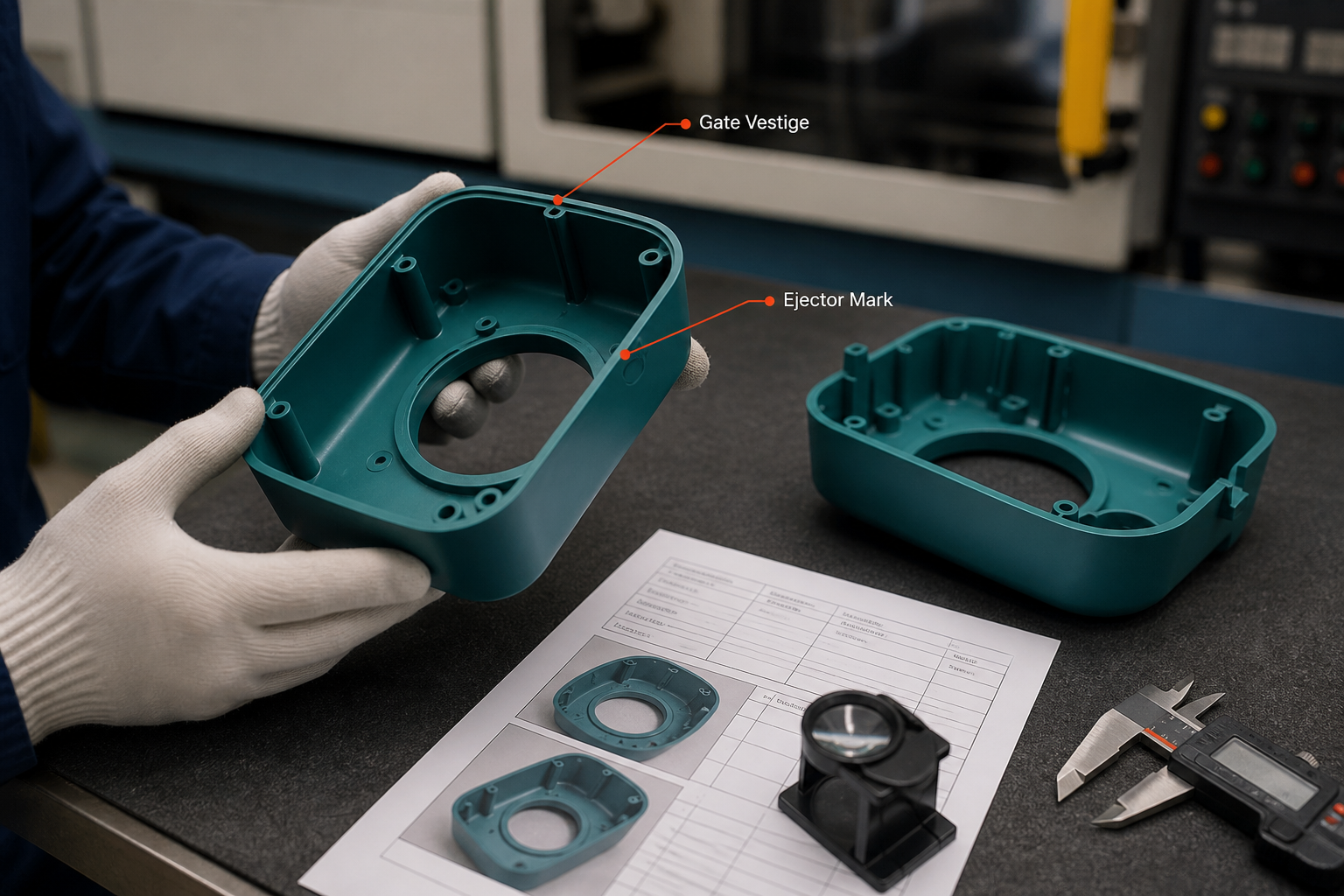
- cosmetic zones, texture, gate, and ejector restrictions;
- dimensional, visual, functional, and documentation acceptance criteria;
- target timing and split-delivery requirements;
- tooling ownership, storage, maintenance, and transfer terms.
Ask suppliers to separate tooling, trials, unit production, inspection, secondary work, packaging, and logistics. You can then compare three explainable manufacturing plans instead of three ambiguous totals.
Eight questions to ask before supplier selection
- Which plant will mold the parts, and where will the tool be built and stored?
- Which resin grade, cavity count, and tool-life assumption support the quote?
- How many DFM, trial, and sample-revision rounds are included?
- Which dimensions or cosmetic requirements create the most cost or process risk?
- What inspection plan applies to first articles and repeat production?
- How are material, process, and manufacturing-location changes notified and approved?
- How are repeat-order lead times, price reviews, and capacity reservations handled?
- What happens if the mold requires repair or production is interrupted?
Frequently asked questions
How can I tell whether an injection molding company fits a low-volume project?
Check whether it separates tooling strategy, minimum order quantity, setup cost, and unit price. Low volume does not automatically mean the lowest total cost. A simpler tool may reduce initial investment but can limit service life, resin choice, or automation.
Why do injection molding quotes vary so much?
The main differences usually come from tool construction, steel, cavity count, material assumptions, documentation, trial rounds, secondary operations, and logistics. Normalize the RFQ and quote breakdown before comparing prices.
Should I choose the injection molder closest to my market?
Proximity can improve communication, shipping, and emergency response, but it is not the only factor. Tool location, resin supply, quality accountability, and backup capacity also affect total delivery risk.
When should I request a trial report or first-article inspection?
Define sample, measurement, and release records before ordering whenever critical dimensions, assembly, appearance, or material batch can affect acceptance. The right documentation depends on part risk, not a universal checklist.
Turn a supplier list into a comparable project plan
If you already have CAD, resin, quantity, and acceptance requirements, send them through the PlasticHubs Injection Molding service page. We can help organize the manufacturing route and quote inputs so supplier comparisons begin with the same scope.