PEEK machining is worth considering when a plastic part must handle heat, chemicals, wear, insulation needs, or long-term mechanical load. The risk is that PEEK stock is expensive, and a vague drawing can turn a small machining issue into a costly scrap problem.
This guide helps you decide when CNC machined PEEK is justified, when a lower-cost plastic or metal may be a better fit, and what information to prepare before requesting a quote.
| Decision point | PEEK machining is a strong fit when… | Recheck the choice when… |
| Working environment | The part faces heat, chemicals, wear, insulation, or high mechanical demand | The part is a basic room-temperature bracket or cover |
| Design stage | The design is close to functional validation or small-batch production | The shape is still changing every build |
| Cost tolerance | Material performance offsets the stock cost | The main goal is a low-cost appearance prototype |
| Tolerance control | Critical dimensions and inspection references are defined | The file is only an unmarked 3D model |
| Machining risk | Fixturing, tooling, heat, burrs, and inspection can be reviewed before production | The project expects production without DFM review |
When PEEK Machining Makes Sense
PEEK is a high-performance thermoplastic used when ordinary plastics may not meet the job. It is often selected for parts that need heat resistance, chemical resistance, wear resistance, strength, dimensional stability, or electrical insulation.
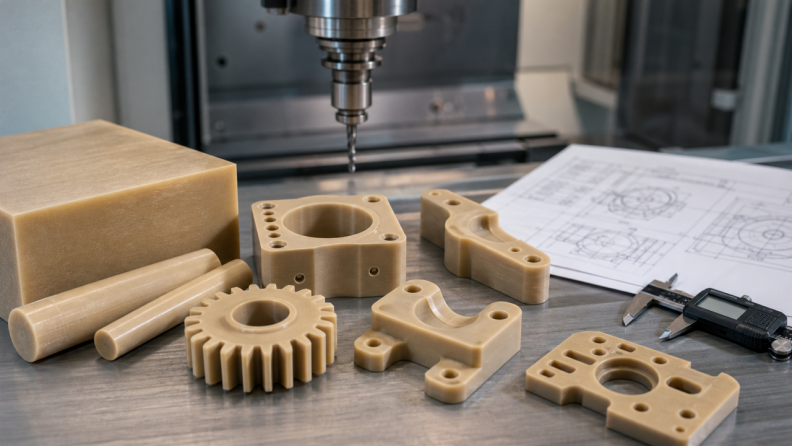
CNC machining is a practical route when you need PEEK prototypes, fixtures, insulators, bushings, spacers, or small-batch functional parts without production tooling. It also helps when the design needs controlled features, drilled holes, milled pockets, threads, or flatness that must be reviewed against a drawing.
The key test is not whether PEEK sounds stronger than other plastics. The test is whether the operating condition, geometry, and acceptance criteria justify the extra material cost and machining care.
PEEK CNC Machining Options
PEEK parts can be produced through several CNC machining routes, and the right choice depends on the part geometry. CNC milling is common for plates, housings, brackets, pockets, slots, counterbores, and multi-face features. CNC turning is better suited for round parts such as bushings, spacers, sleeves, rings, and shafts.
Many PEEK parts need both milling and turning. A turned sleeve may need milled flats, cross holes, slots, or secondary drilling. A milled housing may need reamed holes, tapped holes, counterbores, chamfers, and controlled faces.
Drilling and threading need special attention because PEEK can move, burr, or heat locally around holes. Threads should be reviewed for engagement length, mating hardware, repeated assembly, and whether inserts are a better choice than directly machined plastic threads.
Multi-side machining is common when a PEEK part has datums, holes, or pockets on more than one face. The quote should account for how the part will be located between setups, which features define the datum structure, and whether intermediate inspection is needed before the final setup.
The buyer does not need to choose every machining method before sending an RFQ. The buyer should send a complete model, drawing, material requirement, and functional notes so PlasticHubs can review the process path and identify risks before production.
What Makes PEEK Different From Common CNC Plastics
PEEK sits above common CNC plastics such as ABS, PMMA, PC, POM, and many nylon grades in demanding engineering applications. It may be selected when the part must resist heat, chemicals, wear, creep, or electrical failure better than a commodity plastic.
Those benefits come with process demands. PEEK can be sensitive to heat buildup, internal stress release, tool condition, chip removal, and clamping pressure during machining.
That means a PEEK part should not be quoted like a simple plastic block. The supplier needs to understand which features matter, how the part will be held, which dimensions are critical, and what inspection evidence the buyer needs.
| PEEK selection factor | What to clarify before RFQ | Risk if it is left vague |
| Thermal exposure | Working temperature, thermal cycling, and nearby heat sources | The grade or dimensional-stability risk may be misread |
| Chemical exposure | Media, cleaning agents, and exposure duration | Chemical resistance may be treated too broadly |
| Friction and wear | Mating material, motion type, and lubrication condition | Grade choice and surface requirements may be unclear |
| Electrical requirement | Insulation, dielectric, static, or conductive needs | Standard and filled grade choices may be confused |
| Dimensional stability | Critical dimensions, datums, and inspection temperature | Fixturing and inspection risk may be underestimated |
| Documentation | Material documents, traceability, or customer specifications | The order may be delayed by late document or material changes |
PEEK Grades and Stock Forms to Confirm Before RFQ
Do not send an RFQ that only says PEEK unless the project truly has no grade requirement. Different grades and filled variants can behave differently in strength, friction, wear, conductivity, thermal response, and machining behavior.
Before quoting, confirm whether the project requires a specific grade, allows an equivalent material, or needs a certain stock form such as sheet, rod, tube, or custom blank. Also state whether color, traceability, or material documentation matters.
For medical, food-contact, aerospace, or other regulated work, avoid assuming suitability from the material name alone. The required grade, documentation, and acceptance criteria must be confirmed for the project.
Machining Risks: Heat, Internal Stress, Burrs, and Fixturing
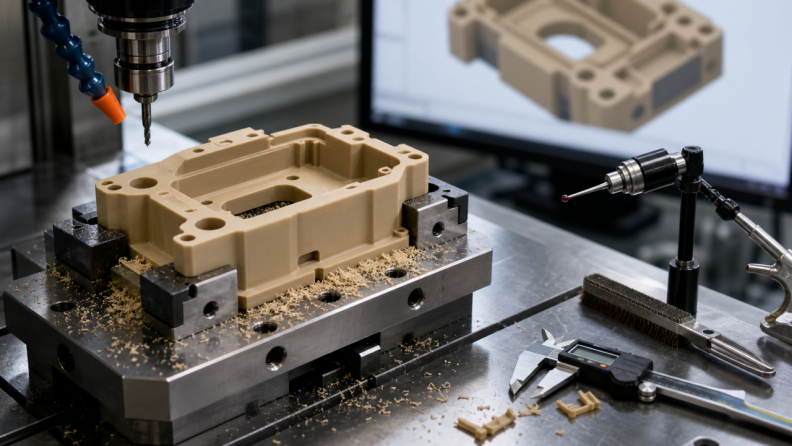
The main question in PEEK machining is not whether the material can be cut. The real question is whether the finished part will stay within size, edge, and functional requirements after cutting, unclamping, deburring, and inspection.
Heat control is one of the main risks. Local heat can affect dimensional stability or edge quality, so cutting strategy, tool condition, chip evacuation, and workholding should be reviewed before production.
Internal stress can also affect results. If a blank releases stress during machining, thin walls, long features, or tightly spaced holes may move after material is removed.
Fixturing needs early attention. Thin-wall PEEK parts, multi-side parts, or parts with dense hole patterns may need staged machining, soft jaws, custom support, or intermediate inspection.
| Risk | Common result | What to confirm during RFQ or DFM |
| Local heat buildup | Dimensional drift or poor edge quality | Tool condition, chip evacuation, and heat-control strategy |
| Internal stress release | Movement in thin walls, long features, or hole patterns | Stock condition, roughing/finishing sequence, and interim checks |
| Excessive clamping pressure | Distortion or springback after unclamping | Soft jaws, support strategy, and clamping datums |
| Burrs and sharp edges | Assembly, sealing, or insulation problems | Chamfers, deburring standard, and critical-edge definitions |
| Over-tight tolerances | Higher quote risk, rework, or scrap | Critical dimensions versus general profile dimensions |
Tolerance and Inspection Notes for CNC Machined PEEK
PEEK can be machined with precision, but tolerance must be reviewed against geometry, wall thickness, stock form, fixturing, and inspection method. A universal tolerance promise is not a reliable way to specify a PEEK part.
A better drawing separates critical and non-critical dimensions. Critical hole positions, sealing faces, bearing surfaces, insulation gaps, and assembly datums should carry clear tolerances and inspection references.
Inspection should also be defined before quote. Tell the supplier whether you need a first article report, dimensional report, material document, surface roughness requirement, deburring standard, or batch consistency record.
Surface Finish, Edge Quality, and Post-Machining Handling
Surface finish on a CNC machined PEEK part should be specified by function, not by appearance alone. A sealing face, bearing surface, sliding feature, or electrical contact area may need a different finish target than a non-critical outside profile. If the drawing does not identify which surfaces matter, the supplier has to guess where to spend machining time.
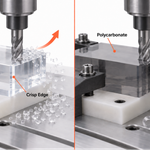
PEEK can show tool marks, edge feathering, or burrs depending on geometry and cutting conditions. This does not mean the material is unsuitable, but it does mean edge requirements should be stated before production. A small burr on a cosmetic edge may not matter, while a burr inside a hole, slot, sealing groove, or insulation gap can create an assembly or function problem.
Chamfers and radii should also be defined intentionally. A sharp edge may chip, catch, or create handling risk, while an oversized chamfer can change fit or reduce sealing area. If a part has safety, sealing, sliding, or electrical requirements, the edge callout should match that function.
Post-machining handling can matter for high-value PEEK parts. Parts should be protected from scratches, contamination, and mix-ups, especially when several similar revisions or grades are being quoted at the same time. If the project needs clean packaging, part marking, lot separation, or special handling, include that in the RFQ rather than adding it after parts are finished.
Surface and edge requirements also affect inspection. If the buyer needs photographs, roughness checks, dimensional reports, or confirmation that critical edges were deburred, those requirements should be listed with the drawing. This keeps quality expectations visible before the machining plan and quote are finalized.
Design Checks Before Sending a PEEK Part for Quote
PEEK DFM review should focus on failure risk. The most important checks are wall thickness, deep pockets, sharp internal corners, long slender posts, thin edges, dense holes, threads, undercuts, and clamping surfaces.
Deep slots, thin ribs, and high aspect-ratio holes deserve special review. These features can increase cycle time, tool deflection, burr risk, inspection difficulty, or part movement after unclamping.
A stronger RFQ includes 3D CAD, a 2D drawing, material grade, quantity, critical dimensions, tolerances, surface requirements, deburring requirements, assembly function, and inspection needs. An unmarked model leaves too much risk for both buyer and supplier.
When Nylon, POM, PC, or Metal May Be a Better Choice
PEEK is not the default answer for every demanding plastic part. If the part mainly needs low friction and dimensional stability, POM may be more economical.
If the part needs toughness and wear resistance in a less severe environment, nylon may be enough. If the part needs impact resistance or transparency, PC may fit better.
Metal should also remain on the table when stiffness, high load capacity, or an existing metal assembly standard is the main requirement. PEEK is strongest as a choice when its weight, insulation, chemical, friction, or thermal advantages matter to the application.
Cost Drivers in PEEK Machining
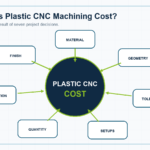
PEEK machining cost is shaped by more than cycle time. Material stock can be a major cost driver, so the quote is affected by part size, stock form, grade, fill type, and how much material must be removed. A small design change that reduces stock size can sometimes matter more than a small reduction in machining time.
Geometry is another major driver. Thin walls, deep pockets, tight internal corners, long holes, fine threads, and multiple setups can add risk and time. A part with simple outside dimensions but many critical internal features may be more difficult than it looks from the 3D model.
Tolerance strategy affects cost as well. If every dimension is marked tight, the supplier must treat the whole part as inspection-critical. A better approach is to identify which dimensions control fit, sealing, motion, insulation, or assembly, then leave non-critical dimensions with practical general tolerances.
Inspection and documentation also influence the quote. A project that needs material certificates, first article reporting, dimensional reports, revision control, or lot traceability needs a different workflow from a one-off engineering sample. These requirements are valid, but they should be visible before pricing.
Quantity can change the process plan. A single prototype may be machined one way, while a repeat batch may justify fixture improvements, staged inspection, or a more controlled setup plan. If the buyer expects future repeat orders, that context helps PlasticHubs quote the first order with the full program in mind.
How to Prepare a PEEK CNC Machining RFQ
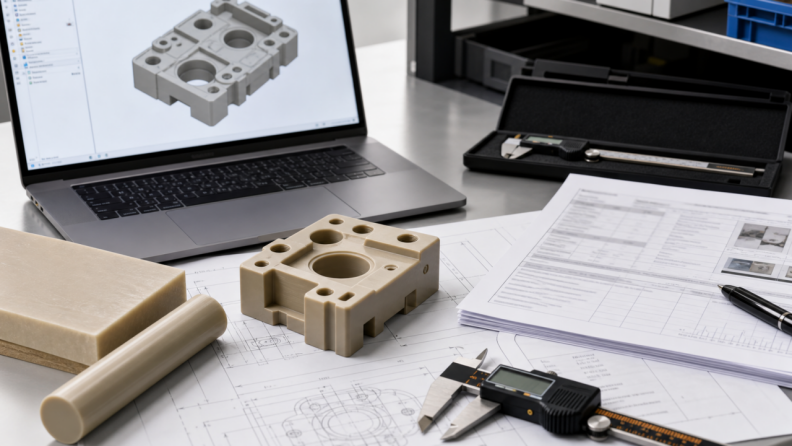
Before sending a PEEK CNC machining RFQ to PlasticHubs, prepare:
- 3D CAD file and 2D drawing
- PEEK grade, color, stock form, or acceptable substitute grade
- Critical dimensions, tolerances, and inspection datums
- Quantity, batch plan, and repeat-order expectations
- Surface finish, chamfer, deburring, or edge requirements
- Material document, dimensional report, or other quality records needed
- Part function, assembly context, and failure risk
These inputs help PlasticHubs review material fit, machining path, fixturing risk, inspection needs, and quotation boundaries. For high-value PEEK parts, clear RFQ inputs reduce rework risk before production starts.
What PlasticHubs Should Review Before Production
A strong PEEK machining review should connect the material, geometry, drawing, and quality requirements. The review should confirm whether the selected grade matches the working environment, whether the stock form suits the part size, and whether any customer material requirements need documentation before machining starts.
The geometry review should focus on features that can move, burr, distort, or become difficult to inspect. Thin walls, long unsupported sections, deep pockets, closely spaced holes, and multi-side datum structures deserve early attention. These are the features most likely to create surprises if the RFQ only includes a 3D model.
The drawing review should separate what must be controlled from what only needs to be manufacturable. Critical dimensions, datums, mating features, and acceptance requirements should be clear. Non-critical dimensions should not force unnecessary inspection burden.
The process review should consider setups, workholding, tool access, chip removal, deburring, and inspection sequence. If a feature must be inspected before the part is removed from a fixture, that should be recognized before production begins.
The final review should confirm what the buyer expects to receive. That may include finished parts only, or it may include inspection reports, material documents, packaging notes, labels, or repeat-order records. Clear expectations reduce late-stage disputes and help keep the quote aligned with the real job.
FAQ
What is PEEK machining?
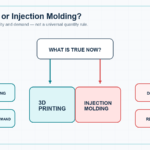
PEEK machining is the CNC milling, turning, drilling, or cutting of PEEK stock into functional plastic parts. It is used when a project needs high-performance plastic parts without injection molding tooling.
Is PEEK difficult to machine?
PEEK is machinable, but it needs more care than many common plastics. Heat, clamping pressure, internal stress, tool wear, burrs, and inspection method can all affect the final part.
What parts are good candidates for CNC machined PEEK?
Good candidates can include insulators, wear parts, chemical-environment components, medical or industrial functional parts, fixtures, bushings, spacers, and high-performance prototypes. Suitability depends on grade, geometry, and acceptance requirements.
Can PEEK machining hold tight tolerances?
PEEK can be machined for precision applications, but tolerance depends on geometry, wall thickness, stock condition, workholding, and inspection method. Do not assume one tolerance applies to every PEEK part.
What should I send for a PEEK machining quote?
Send CAD files, a 2D drawing, material grade, quantity, key tolerances, finish and deburring requirements, inspection needs, and the part’s function. The more complete the RFQ, the more reliable the engineering review and quote.