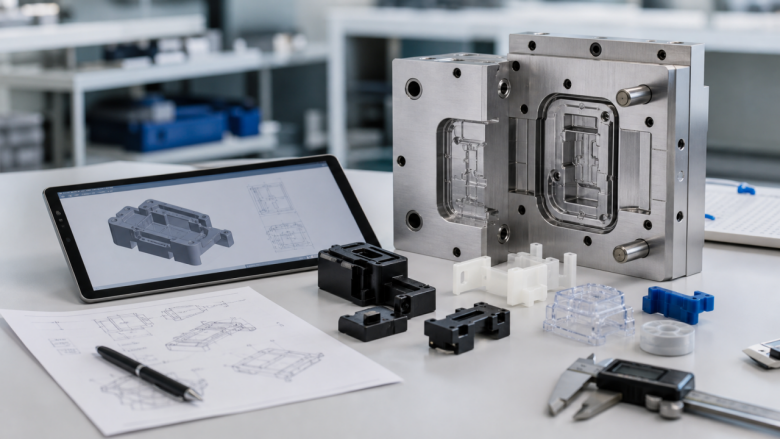
Low volume injection molding is worth considering when your plastic part has moved beyond early prototype changes but is not ready for high-volume production tooling. It can help teams produce repeatable, production-intent plastic parts for pilot builds, market testing, bridge production, or limited product launches.
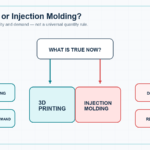
The key question is not whether injection molding is always better than CNC machining, 3D printing, or vacuum casting. The better question is whether your design, material, quantity, and testing goals justify a mold.
| If your project needs… | Best-fit process to consider |
| Fast design iteration or a few functional prototypes | Plastic CNC machining or 3D printing |
| Soft-touch samples, cosmetic models, or limited cast urethane parts | Vacuum casting |
| Repeatable plastic parts in small batches with production-like material behavior | Low volume injection molding |
| Stable design and large production demand | Traditional production injection molding |
What Is Low Volume Injection Molding?
Low volume injection molding uses injection molding tooling to produce smaller production runs of plastic parts. It is often used before full-scale production, when the buyer needs molded plastic parts but wants to limit tooling investment and design risk.
The mold is usually simpler or less production-heavy than long-run tooling. Depending on the part and supplier review, it may use aluminum tooling, bridge tooling, or another short-run mold strategy.
Low volume injection molding is most useful when the part design is mostly stable, the material choice is close to final, and the team needs enough parts to test assembly, fit, function, packaging, or early customer demand.
How Many Parts Justify Low Volume Injection Molding?
There is no universal quantity that makes low volume injection molding the right choice. The break point depends on part geometry, resin, tooling complexity, tolerance requirements, cosmetic expectations, and the cost of continuing with prototype processes.
As a practical rule, the process becomes worth reviewing when a project needs more than a few prototypes, the design is close to frozen, and the team needs molded-part behavior for validation. If each design change is still likely to alter wall thickness, bosses, ribs, undercuts, or assembly interfaces, it is usually too early to commit to tooling.
Instead of asking for a fixed minimum order quantity, ask whether the next build must prove production intent. If the answer is yes, low volume injection molding deserves a process review.
When Low Volume Injection Molding Makes Sense
Low volume injection molding fits projects where repeatability matters more than rapid daily design changes.
- You need hundreds or thousands of plastic parts rather than a handful of prototypes.
- The geometry is close to frozen, but annual demand is still uncertain.
- You need molded material behavior instead of machined or printed behavior.
- You need parts for pilot production, assembly validation, market testing, or production transition.
- Unit cost from CNC machining, 3D printing, or vacuum casting is becoming too high at the required quantity.
It may not be the right move if the CAD model is still changing every week. In that case, plastic CNC machining or 3D printing may keep the project moving with less tooling commitment.
Low Volume Injection Molding vs CNC, 3D Printing, and Vacuum Casting
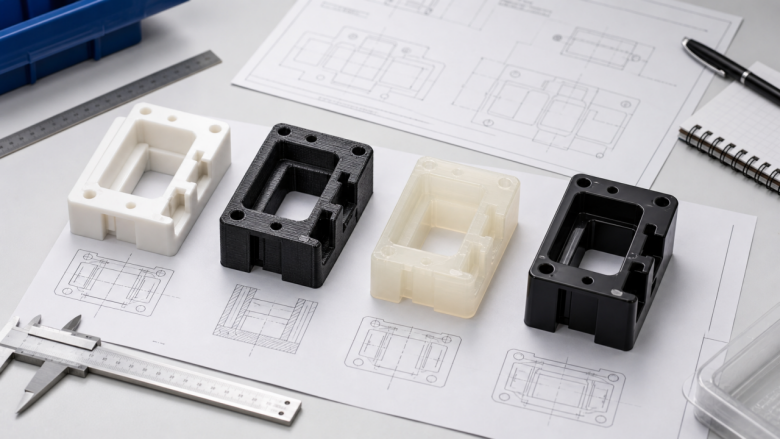
Suggested image alt text: Four plastic part samples representing CNC machining, 3D printing, vacuum casting, and injection molding for process selection.
Each process solves a different production problem. Choosing too early can lock in cost. Choosing too late can delay launch.
| Process | Best use | Main limitation |
| Plastic CNC machining | Functional prototypes, tight-feature testing, low-volume machined plastic parts | Material is cut from stock, so geometry and cost may not match molded production |
| 3D printing | Fast prototypes, design iteration, complex forms | Printed material and surface behavior may differ from molded plastic |
| Vacuum casting | Short runs, cosmetic models, urethane-like samples | Mold life, material behavior, and repeatability can limit production use |
| Low volume injection molding | Small-batch molded parts, pilot runs, bridge production | Requires mold investment and stronger DFM control |
| Production injection molding | Stable, high-volume production | Higher tooling commitment and less tolerance for late design changes |
Low volume injection molding sits between prototype processes and full production tooling. It is not the cheapest path for every small order, but it can reduce risk when molded part behavior is required before mass production.
Tooling Choices: Aluminum Mold, Bridge Tooling, or Production Tooling
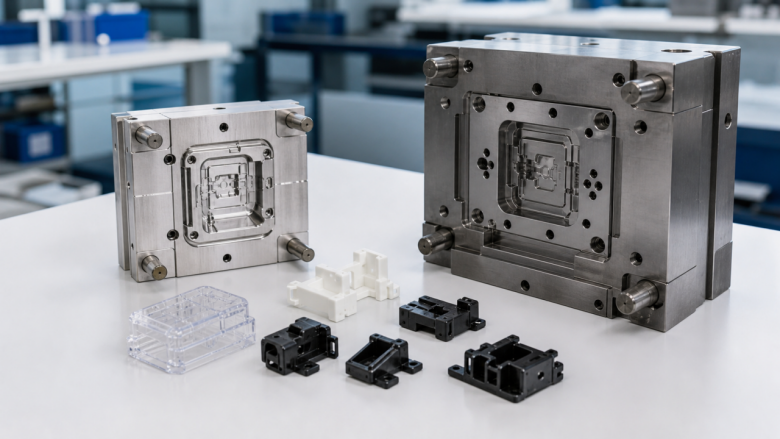
Suggested image alt text: Aluminum and steel injection mold blocks with small molded plastic parts for tooling option comparison.
The mold strategy affects cost, lead time, mold life, part quality, and future changes.
Aluminum tooling is often used for lower-volume molding because it can support small-batch production with less upfront commitment than hardened steel tooling. That does not mean aluminum is always the right choice. Resin, part complexity, surface requirements, expected tool life, and future demand still need review.
Bridge tooling is used when the project needs production-like parts before final production tooling is ready. This can help a team keep assembly, testing, or early sales moving while long-term tooling decisions are still being made.
Production tooling is usually more appropriate when the design is stable and demand is better understood. It can support larger production programs, but it is also a bigger commitment.
DFM Checks Before You Request a Quote
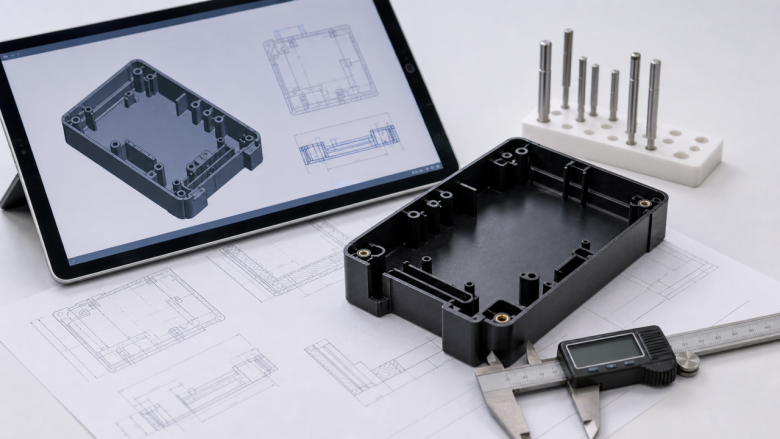
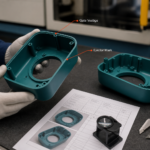
Suggested image alt text: DFM review setup with CAD model, molded plastic enclosure, technical drawings, and inspection tools.
Low volume injection molding still needs disciplined DFM. A small run does not remove molding physics.
- Wall thickness consistency
- Draft angles
- Rib and boss design
- Undercuts
- Gate location
- Ejector marks
- Sink risk
- Warpage risk
- Surface finish expectations
- Critical-to-function dimensions
- Material shrinkage behavior
- Assembly interfaces
If the part was originally designed for CNC machining or 3D printing, do not assume it is ready for injection molding. Machined parts can include sharp internal corners, thick sections, or features that are expensive or difficult to mold.
A good RFQ should include the 3D CAD file, material target, expected quantity, surface expectations, critical dimensions, assembly requirements, and any cosmetic areas that must be protected.
Cost Drivers Buyers Should Clarify Early
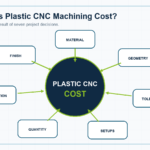
Low volume injection molding cost is driven by more than part size.
- Mold complexity
- Tooling material and expected mold life
- Resin choice
- Wall thickness and cycle time
- Tight tolerance requirements
- Surface finish requirements
- Undercuts or side actions
- Inserts or overmolding needs
- Secondary operations
- Inspection requirements
- Quantity per batch and expected future demand
Avoid judging the process only by mold cost. A mold may look expensive at first, but it can make sense when prototype-process unit costs are too high, or when the project needs molded plastic performance for testing.
The safer decision is to compare total project cost: tooling, part cost, rework risk, schedule risk, and the cost of using a process that does not match the final production intent.
Common Mistakes in Low Volume Injection Molding Projects
The most common mistake is starting tooling before the design is stable. Even low volume tooling can become expensive if the part changes after mold build.
Another mistake is treating low volume injection molding as a shortcut around DFM. Molded plastic parts still need draft, controlled wall thickness, suitable radii, and realistic tolerance planning.
A third mistake is using the wrong prototype data. A CNC-machined plastic prototype may prove fit and function, but it does not always prove molded shrinkage, gate appearance, sink behavior, or warpage risk.
Teams should also avoid choosing a process only by unit price. A low unit price is not useful if the parts fail assembly, miss cosmetic expectations, or require rework.
How PlasticHubs Fits the Decision
PlasticHubs focuses on plastic parts, with plastic CNC machining as a core service and injection molding as a supporting option for production transitions.
That matters because many teams do not need one process in isolation. They need a practical path from prototype to small-batch production.
For example, a project may start with plastic CNC machining to verify fit and function. It may then move to low volume injection molding when the design is stable enough for molded parts, but demand is not yet large enough for full production tooling.
PlasticHubs can help buyers review which process fits the part stage, material target, quantity, and risk profile before production begins.
RFQ Checklist for Low Volume Injection Molding
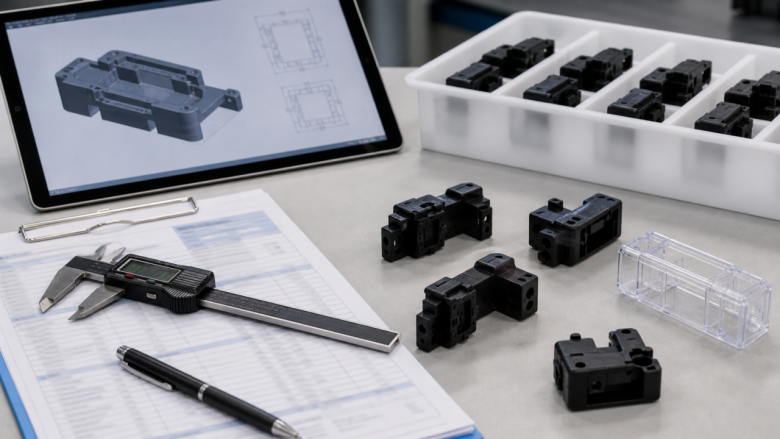
Suggested image alt text: Molded plastic parts, CAD model, digital caliper, and quote review documents for RFQ preparation.
Prepare these inputs before requesting a quote:
- 3D CAD file
- 2D drawing if critical tolerances exist
- Target material or material performance requirement
- Expected quantity for first batch
- Estimated annual demand if available
- Surface finish expectations
- Color requirements
- Insert, overmolding, or assembly requirements
- Critical-to-function dimensions
- Cosmetic surfaces
- Testing or validation purpose
- Known design-change risk
If you are not sure whether the part should be CNC machined, 3D printed, vacuum cast, or molded, include that context in the RFQ. Process selection is part of risk control.
FAQ
What is low volume injection molding?
Low volume injection molding is injection molding for smaller production runs, pilot builds, bridge production, or early market validation. It is used when a team needs molded plastic parts without immediately committing to high-volume production tooling.
When should I choose low volume injection molding over CNC machining?
Choose low volume injection molding when the design is mostly stable, repeatability matters, and the required quantity makes machined-part cost or production time less practical. Use CNC machining when the design is still changing or when only a small number of functional parts is needed.
Is low volume injection molding cheaper than 3D printing?
It depends on part geometry, material, quantity, and tooling cost. 3D printing can be cheaper for very small quantities or fast design changes. Low volume injection molding may make more sense when the quantity grows and molded material behavior is needed.
What information is needed for a low volume injection molding quote?
A useful RFQ should include CAD files, target material, quantity, critical dimensions, surface expectations, color requirements, insert or assembly needs, and the purpose of the parts.
Can a CNC-machined plastic prototype move directly to injection molding?
Not always. A machined design may need changes for draft, wall thickness, radii, gates, ejector marks, and molded shrinkage. DFM review should happen before tooling.
CTA
If your plastic part is moving from prototype validation toward small-batch production, PlasticHubs can help review whether plastic CNC machining, 3D printing, vacuum casting, or low volume injection molding fits the next stage of your project.
Human Verification Notes
- Do not add fixed prices, lead times, tolerances, certifications, machine counts, or promised results without source review.
- If adding PlasticHubs homepage metrics such as 5000, 97.5%, or 5M, re-open the official page and verify visible text and scope before publication.
- External benchmark pages were used only for internal planning and should not be added as public outbound links unless separately approved.