
We provide POM CNC Machining services engineered for tight tolerances, consistent dimensional stability, and rapid turnaround. Our team ensures clean finishes, repeatable accuracy, and dependable quality across prototypes and production runs.
Get instant quotes through our online CNC services with no waiting, and rely on our capability to handle complex geometries with confidence. Simply upload your CAD file to receive an immediate estimate, and we will deliver POM parts with stable quality and consistent performance.
POM’s low friction, high stiffness, and excellent dimensional stability make it especially suitable for CNC machining. We offer a full range of precision machining methods to produce high-quality POM parts tailored to your application.
Upload your 3D models (STL, STEP, etc) or 2D drawing files for instant quotes. We will respond within 24 hours. All data is secure and confidential.
POM (Acetal/Delrin) offers excellent machinability, allowing tight tolerances, smooth finishes, and reliable dimensional stability across complex geometries. At PlasticHubs, we support these capabilities with advanced CNC equipment and consistent quality control, ensuring every specification in your table is met with precision.
| Standards | Detail |
|---|---|
| Tolerances | +/- 0.01 mm |
| Minimum Wall Thickness | 0.5 mm |
| Minimum End Mill Size | 0.5 mm |
| Maximum Part Size | 4000 mm×1500 mm×600 mm |
| Minimum Part Size | 1 mm×1 mm |
| Price | $ $ $ |
| Standard Lead Time | 1-7 business days based on machined parts |
| Process Compatibility | Full CNC capabilities including milling, turning, drilling |
POM is known for its high stiffness, low friction, and excellent dimensional stability, with a tensile strength often around 60–70 MPa and a low moisture absorption rate of less than 0.5%. These characteristics allow CNC-machined POM components to maintain accuracy under load, resist wear in sliding applications, and perform reliably in environments where consistent mechanical behavior is essential.
| Mechanical Properties | Value |
|---|---|
| Density | 0.0509 lb/in³; 1.41 g/cm³ |
| Tensile Strength at Break | 70.0 MPa |
| Tensile Elongation at Break | ≥ 15 % |
| Flexural Strength | 80.0 MPa |
| Compressive Strength | 110 MPa |
| Water Absorption | 0.20 % |
| Coefficient of Friction, Dynamic | 0.25 @Pressure 254 psi |
| Other Properties | Value |
|---|---|
| Thermal Conductivity | 0.310 W/m-K |
| Heat Deflection Temp at 264 psi | 110 °C |
| Melting Point | 170 °C |
| Max Operating Temp. | 90.0 °C |
| CTE, linear | 92.0 µm/m-°C |
| Color | White, Black, and others |
| Flammability, UL94 | HB |
Our experience with pom allows us to optimize CNC processes while preserving strength, and durability that meet your needs.
We support tailored designs, from unique geometries to specialized features, meeting both functional and special requirements.
We ensure smooth, clear, and polished pom surfaces that highlight the material’s quality. We can create any finish you need.
As an ISO 9001:2015 certified company, we provide SGS, RoHS, material certifications, and inspection reports to ensure the highest quality.
POM, also known as acetal, is an engineering thermoplastic valued for its strength, rigidity, and natural lubricity, making it ideal for precision mechanical components. It is available in two main forms: acetal copolymer, which offers better chemical resistance and reduced porosity, and Delrin (acetal homopolymer), known for slightly higher strength and superior surface finish. Both types machine exceptionally well and provide stable, repeatable performance in applications requiring tight tolerances and consistent mechanical behavior.
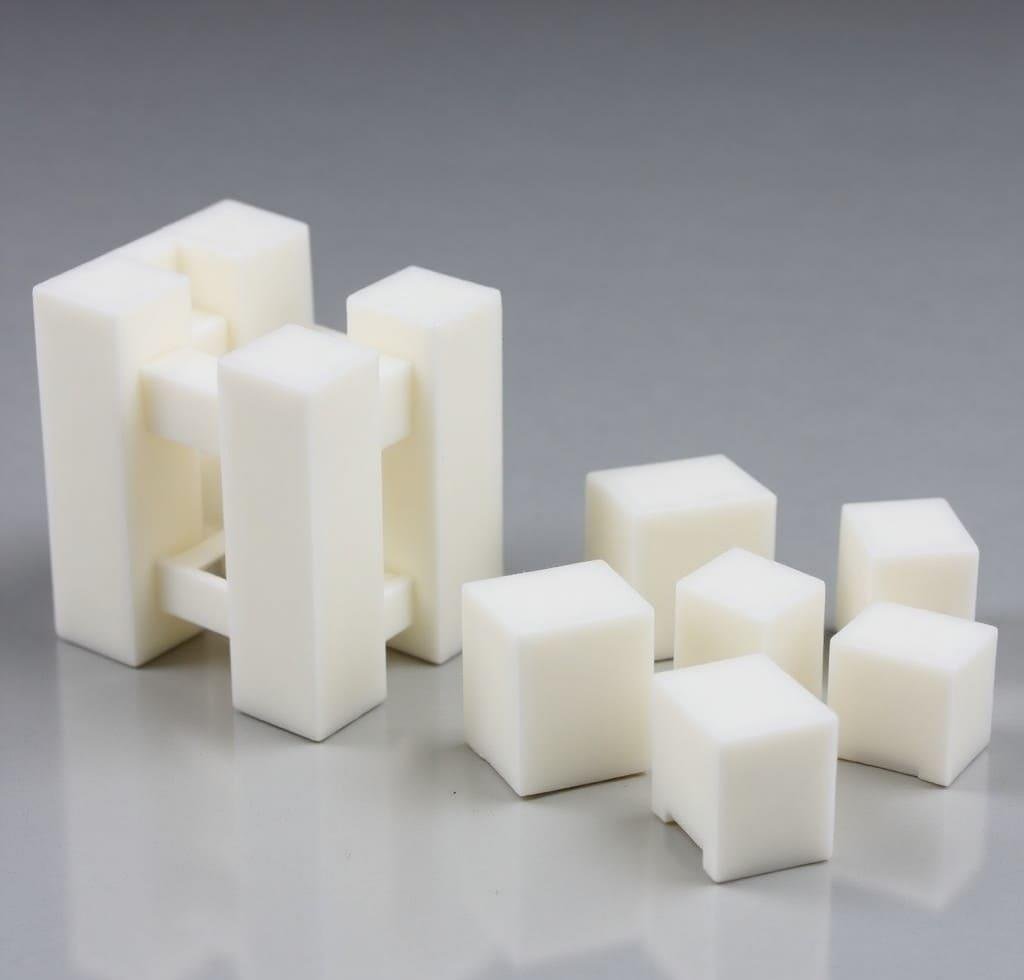
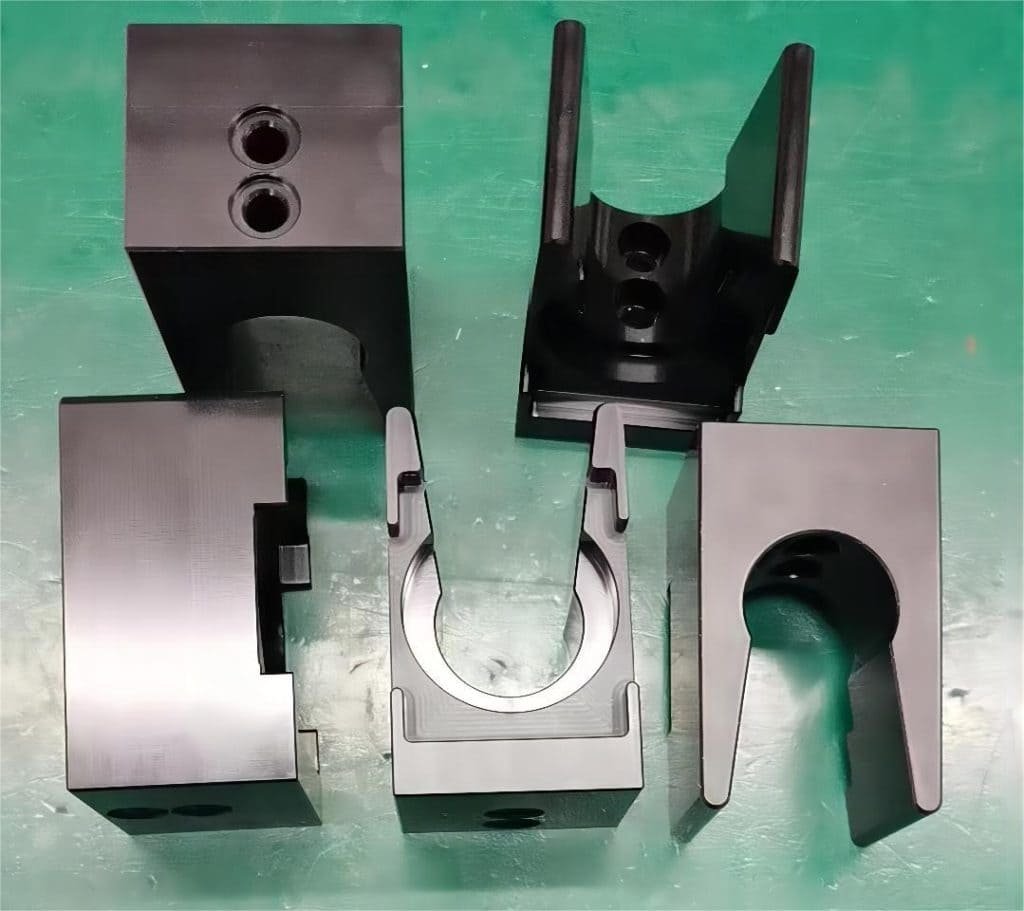
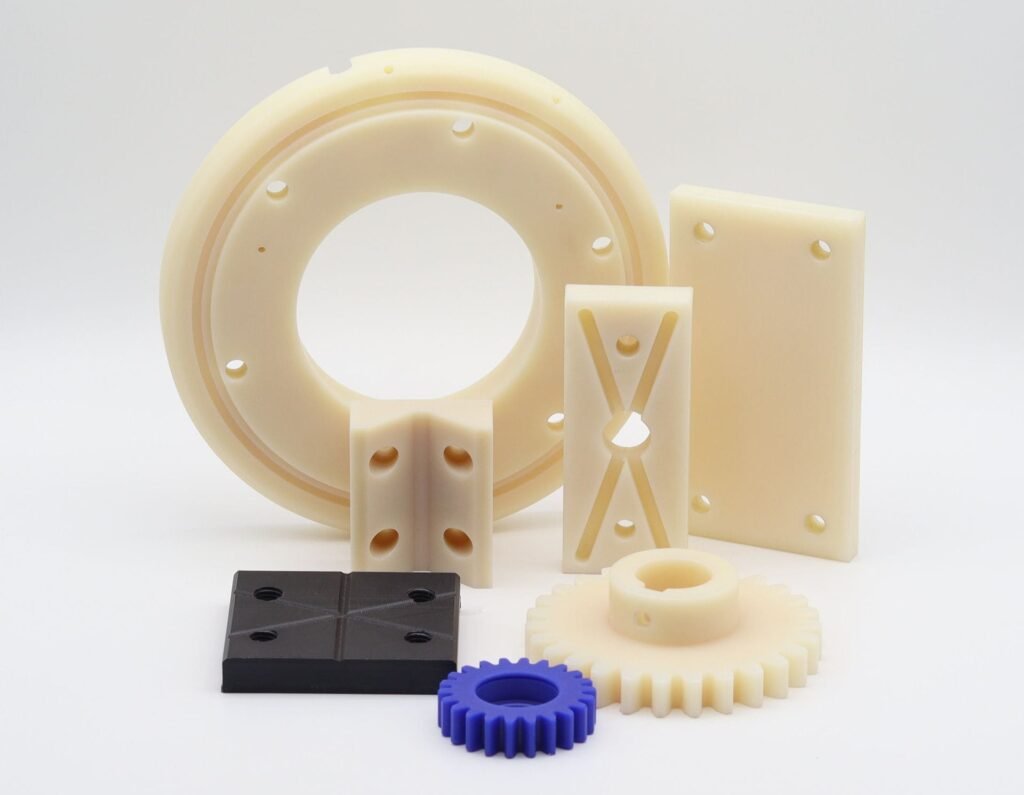
In manufacturing, POM (polyoxymethylene) is an engineering thermoplastic used for producing high-precision components via CNC machining, injection molding, or extrusion. Its excellent machinability and stable properties allow manufacturers to create reliable, tight-tolerance parts for various industrial applications.
POM plastic is widely used in mechanical and industrial applications that require precision and durability, such as gears, bearings, bushings, pulleys, and structural components. Its low friction and high stiffness make it ideal for moving parts and load-bearing applications.
POM and Delrin are closely related, but not identical. Delrin is a branded form of acetal homopolymer, typically offering slightly higher strength and a smoother surface finish, while POM can refer to either homopolymer or copolymer grades with varying chemical resistance and mechanical properties.
POM and PP serve different purposes. POM excels in strength, stiffness, and wear resistance, making it suitable for precision mechanical parts. PP is more flexible and chemical-resistant, but it generally cannot match POM’s dimensional stability and load-bearing capacity.
Yes, POM is generally harder and stiffer than most nylon grades. While nylon offers good toughness and impact resistance, POM provides superior dimensional stability, lower friction, and better wear resistance under consistent load.