
With advanced CNC equipment and extensive experience with acrylic (PMMA), we deliver transparent components with clean edges, precise geometry, and reliable repeatability for both prototypes and production runs.
Acrylic plays a big role in modern products because it’s clear, light, and easy to shape for everything from electronics to displays. Its practicality and clean look make it a go-to material for many designs. With our cnc acrylic service, you can easily turn these advantages into accurately machined parts.
Here we offer a range of machining options for acrylic parts, giving you the flexibility to achieve the shapes, details, and tolerances your project needs.
Upload your 3D models (STL, STEP, etc) or 2D drawing files for instant quotes. We will respond within 24 hours. All data is secure and confidential.
Acrylic (PMMA) is a versatile material that machines cleanly and maintains its clarity, making it ideal for precise CNC components. We provide precise CNC machining for acrylic (PMMA), delivering high-quality parts with excellent clarity and accuracy.
| Standards | Detail |
|---|---|
| Tolerances | +/- 0.01 mm |
| Minimum Wall Thickness | 0.5 mm |
| Minimum End Mill Size | 0.5 mm |
| Maximum Part Size | 4000 mm×1500 mm×600 mm |
| Minimum Part Size | 1 mm×1 mm |
| Price | $ $ $ |
| Standard Lead Time | 1-7 business days based on machined parts |
| Process Compatibility | CNC milling, turning, cutting, drilling |
Acrylic (PMMA) is a lightweight, transparent plastic with up to 92% light transmission. It offers tensile strength of 55-76 MPa, good impact resistance, and a Rockwell hardness of M80 – M100, making it ideal for precise, durable, and visually clear CNC-machined components.
| Mechanical Properties | Value |
|---|---|
| Density | 0.043 lb/in³; 1.18 g/cm³ |
| Tensile Strength | 55 MPa - 76 MPa |
| Tensile Elongation at Break | 2% |
| Flexural Strength | 83 MPa - 117 MPa |
| Compressive Strength | 76 MPa - 131 MPa |
| Hardness, Rockwell | M80 - M100 |
| IZOD Notched Impact | 0.3 ft-lb/in |
| Thermal & Optical Properties | Value |
|---|---|
| Coefficent of Thermal Expansion | 70 µm/m·°C |
| Heat Deflection Temp at 264 psi | 65℃ - 100℃ |
| Melting Point | 130℃ - 140℃ |
| Max Operating Temp. | 65℃ - 93℃ |
| Thermal Conductivity | 0.2 W/(m⋅°C) |
| Light Transmission, minimum | 92% |
| Refractive Index | 1.48 - 1.50 |
Our experience with acrylic allows us to optimize CNC processes while preserving strength, clarity, and durability that meet your needs.
We support tailored designs, from unique geometries to specialized features, meeting both functional and aesthetic requirements.
We ensure smooth, clear, and polished acrylic surfaces that highlight the material’s optical quality. We can create any finish you need.
As an ISO 9001:2015 certified company, we provide SGS, RoHS, material certifications, and inspection reports to ensure the highest quality.
Acrylic, also known as PMMA, is valued for its crystal-clear transparency, smooth finishing capability, and excellent stability when machined, making it ideal for light-guiding components, display elements, and protective covers. Its balanced strength-to-weight ratio and resistance to UV and weathering also make it suitable for both indoor precision assemblies and demanding outdoor applications.
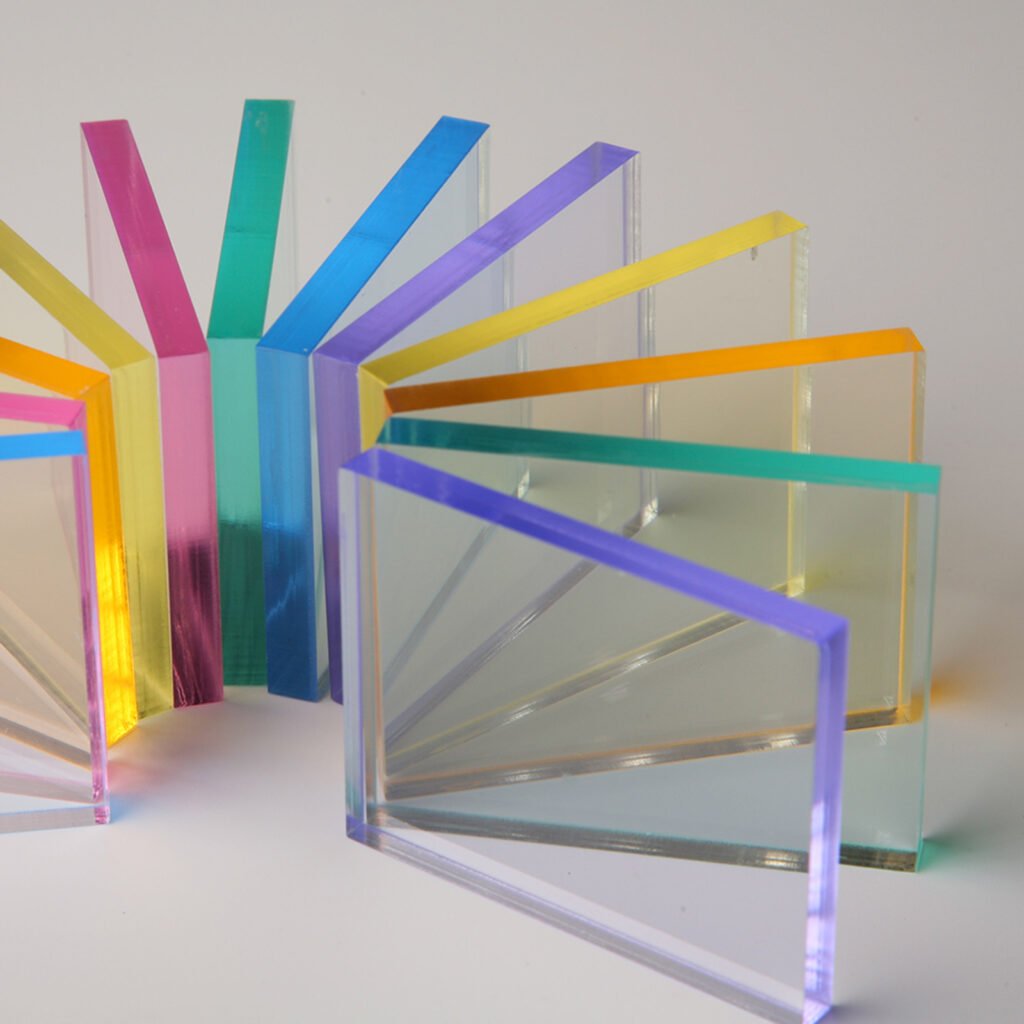

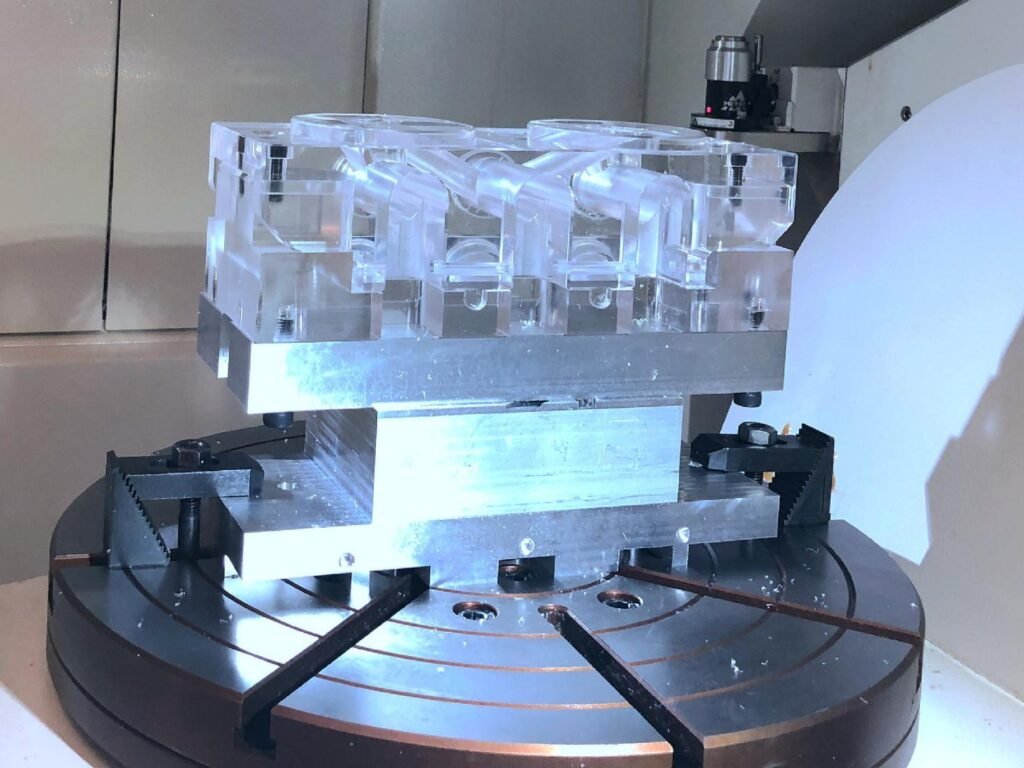
Yes, acrylic (PMMA) can be precisely CNC machined. Its smooth, rigid nature allows for clean cuts, detailed shapes, and polished surfaces, making it ideal for both functional and decorative components.
Acrylic machines well, offering excellent clarity, dimensional stability, and the ability to hold tight tolerances, which makes it suitable for a wide range of applications from displays to protective covers.
Yes, most plastics can be CNC machined. Materials like acrylic, POM, ABS, PC, and PEEK can be shaped accurately while maintaining their mechanical and aesthetic properties, allowing for both prototyping and production parts.
Materials that are extremely brittle, highly abrasive, or very soft may be challenging or unsuitable for CNC machining. Examples include glass, ceramics without special tooling, certain foams, and some composites that can delaminate under cutting forces.
Cast acrylic is generally preferred for CNC machining due to its superior clarity, strength, and ability to produce smooth edges without cracking or chipping, compared to extruded acrylic, which is better for simpler cuts or larger sheets.