We provide CNC PEEK machining services designed for engineers who require exceptional dimensional stability and long-term performance in demanding environments. Our capabilities ensure consistent quality – rapid prototypes or full-scale manufacturing.
Get instant quotes for CNC PEEK parts through our easy-to-use online CNC service. We support a wide range of machining needs with reliable capability. Just upload your CAD files and we’ll take it from there. Your PEEK components are produced with care and consistent accuracy. Quick turnaround and attentive support are always part of the experience.
We offer a full range of CNC machining options to ensure your PEEK parts are produced with accuracy and consistency.
Upload your 3D models (STL, STEP, etc) or 2D drawing files for instant quotes. We will respond within 24 hours. All data is secure and confidential.
PEEK offers excellent strength, heat resistance, and dimensional stability, allowing us to machine tight-tolerance features with confidence. At PlasticHubs, we support complex geometries and consistent production quality through a full set of advanced CNC capabilities.
| Standards | Detail |
|---|---|
| Tolerances | +/- 0.01 mm |
| Minimum Wall Thickness | 0.5 mm |
| Minimum End Mill Size | 0.5 mm |
| Maximum Part Size | 4000 mm×1500 mm×600 mm |
| Minimum Part Size | 1 mm×1 mm |
| Price | $ $ $ $ $ |
| Standard Lead Time | 1-7 business days based on machined parts |
| Process Compatibility | Full CNC capabilities including milling, turning, drilling |
PEEK is known for its exceptional performance, delivering a high melting point of around 343 °C, continuous-use temperatures near 250 °C, and a tensile strength typically in the 90–100 MPa range. Its combination of mechanical strength, chemical resistance, dimensional stability, and low moisture absorption makes it one of the most capable engineering polymers for CNC machining. These properties allow machined PEEK components to maintain accuracy and reliability even in demanding aerospace, medical, and industrial environments.
| Mechanical Properties | Value |
|---|---|
| Density | 0.0483 lb/in³; 1.34 g/cm³ |
| Tensile Strength, Yield | 97 MPa |
| Tensile Elongation at Break | 25.8 % |
| Flexural Strength | 156 MPa |
| Compressive Strength | 94 MPa |
| Water Absorption | 0.249 % |
| Coefficient of Friction | 0.150 - 0.400 |
| Other Properties | Value |
|---|---|
| Thermal Conductivity | 0.300 W/m-K |
| Heat Deflection Temp at 264 psi | 161 °C |
| Melting Point | 343 °C |
| Max Operating Temp. | 269 °C |
| Softening Point | 168 °C |
| Hardness, Rockwell R | 105 - 126 |
| Flammability, UL94 | V-1 - V-0 |
Our experience with peek allows us to optimize CNC processes while preserving strength, and durability that meet your needs.
We support tailored designs, from unique geometries to specialized features, meeting both functional and special requirements.
We ensure smooth, clear, and polished peek surfaces that highlight the material’s quality. We can create any finish you need.
As an ISO 9001:2015 certified company, we provide SGS, RoHS, material certifications, and inspection reports to ensure the highest quality.
PEEK, or polyether ether ketone, is a high-performance engineering thermoplastic known for its strength, thermal stability, and resistance to harsh chemicals. It belongs to the broader PAEK family and is commonly available in grades such as unfilled PEEK, glass-filled PEEK, carbon-filled PEEK, and bearing-grade variants tailored for wear applications. Its balanced mechanical and thermal properties make it a preferred material for precision-machined components in aerospace, medical devices, electronics, and industrial equipment.
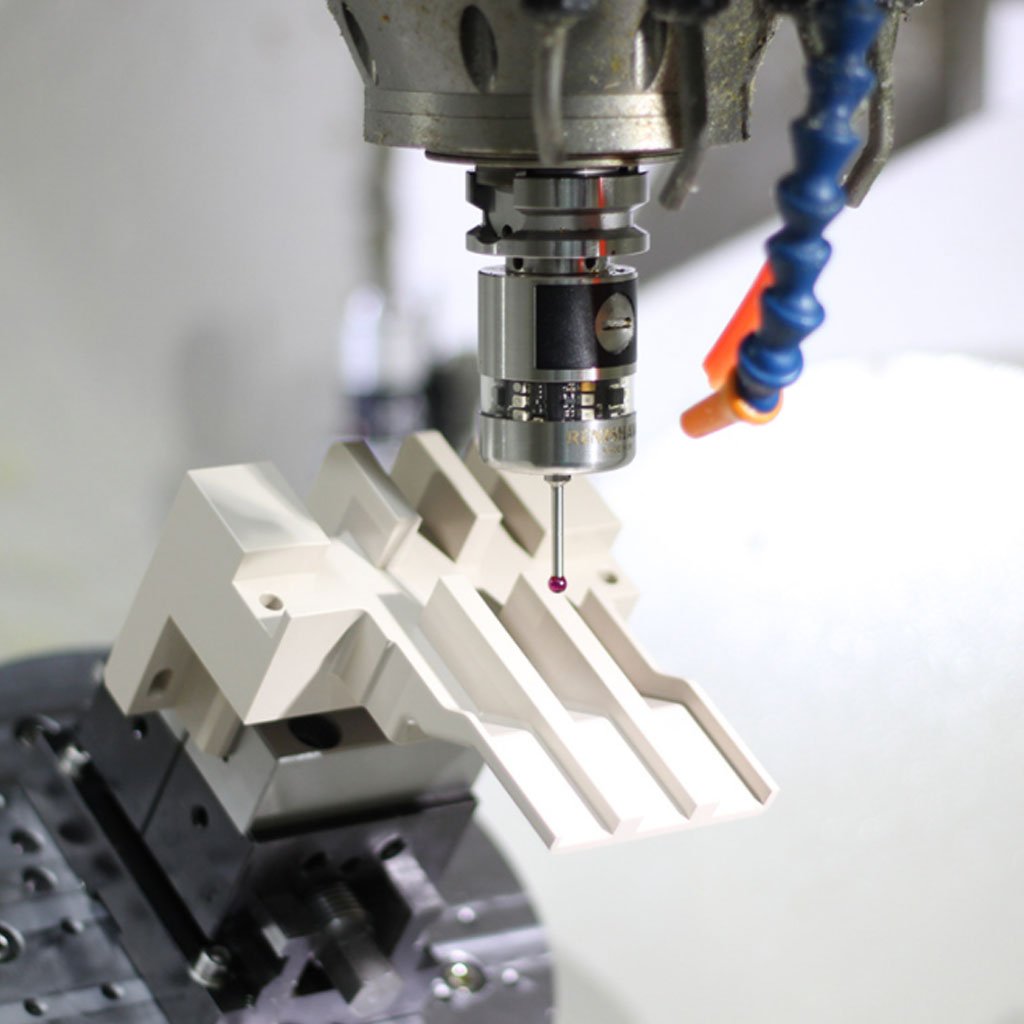
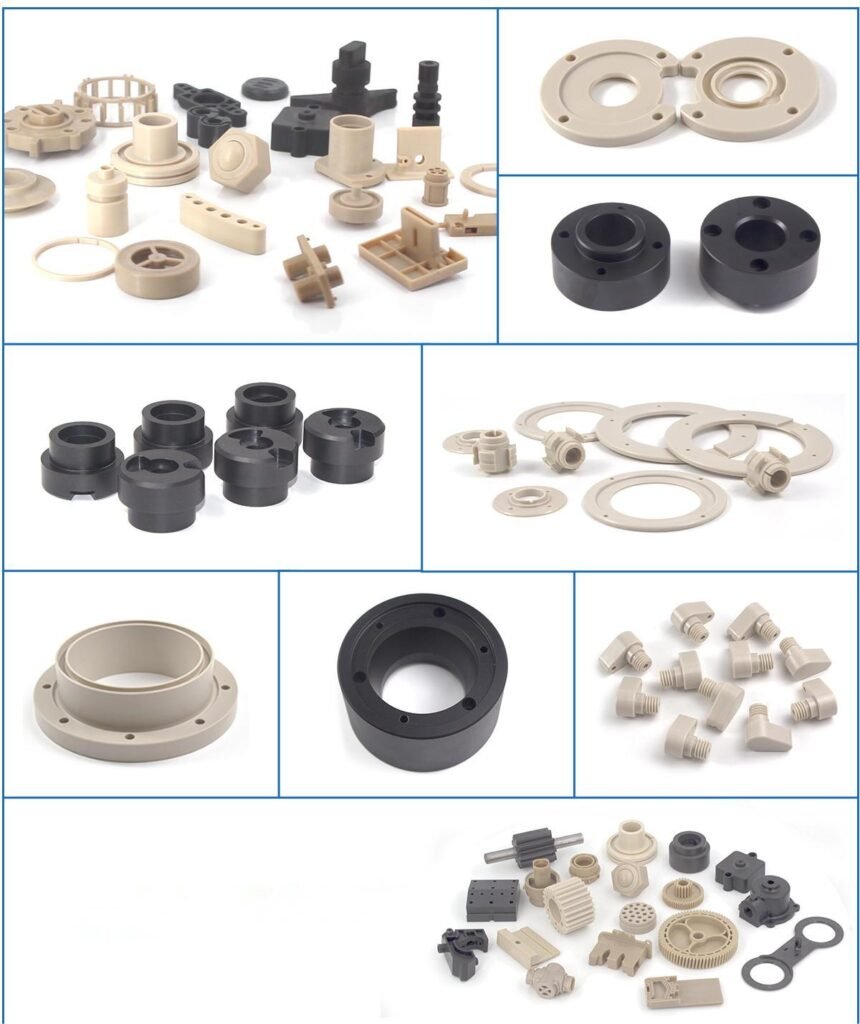
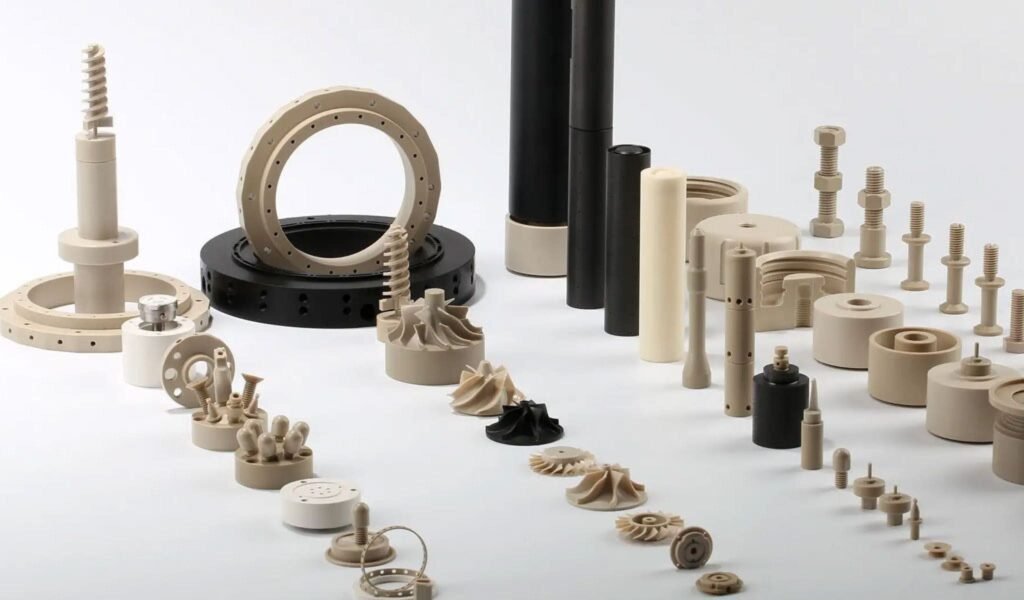
PEEK machining refers to the process of shaping and forming PEEK (polyether ether ketone) using CNC equipment. This allows the creation of precise components for applications that require high heat resistance, chemical stability, and mechanical strength.
PEEK is easier to machine than many high-performance plastics because it maintains dimensional stability and resists deformation. However, it requires sharp tools, controlled feed rates, and proper cooling to achieve the best surface finish and accuracy.
PEEK and PTFE serve different purposes. PEEK is stronger, more heat-resistant, and suitable for load-bearing parts, while PTFE excels in low-friction applications and chemical resistance but is softer and less rigid.
While PEEK is not as strong as steel in terms of absolute tensile strength, it offers an excellent strength-to-weight ratio and can perform in high-stress environments where metal alternatives might be heavier or prone to corrosion.
Yes, PEEK is considered a high-performance engineering polymer, so it is more expensive than standard plastics. Its cost is justified by its exceptional durability, chemical resistance, and ability to operate under extreme conditions.