We deliver nylon CNC machining with a focus on precision, consistency, and dependable performance. Through controlled cutting, turning, and milling processes, we ensure every nylon component meets strict dimensional and mechanical requirements.
Nylon plays a central role in today’s manufacturing as a durable, low-friction engineering plastic widely used in mechanical systems. Get instant quotes on CNC nylon parts and bring this versatile, wear-resistant engineering plastic into your project with speed and clarity.
We offer nylon CNC machining through precise milling, turning, drilling, and tapping processes to support both complex geometries and functional production parts.
Upload your 3D models (STL, STEP, etc) or 2D drawing files for instant quotes. We will respond within 24 hours. All data is secure and confidential.
Nylon is a robust engineering plastic that machines smoothly and maintains strong mechanical performance. We provide accurate CNC machining for nylon, delivering durable parts with reliable dimensional stability and consistent surface quality.
| Standards | Detail |
|---|---|
| Tolerances | +/- 0.01 mm |
| Minimum Wall Thickness | 0.5 mm |
| Minimum End Mill Size | 0.5 mm |
| Maximum Part Size | 4000 mm×1500 mm×600 mm |
| Minimum Part Size | 1 mm×1 mm |
| Price | $ $ $ $ |
| Standard Lead Time | 1-7 business days based on machined parts |
| Process Compatibility | Full CNC capabilities including milling, turning, cutting, drilling |
Nylon is a high-performance engineering plastic valued for its strength, wear resistance, and thermal stability. One common type, Nylon 6/6 (unfilled), offers especially consistent mechanical and thermal properties, as summarized in the table below for CNC machining applications.
| Mechanical Properties | Value |
|---|---|
| Density | 0.042 lb/in³; 1.15 g/cm³ |
| Tensile Strength | 80 MPa |
| Tensile Elongation at Break | 50% |
| Flexural Strength | 104 MPa |
| Compressive Strength | 86 MPa |
| Hardness, Rockwell | M85 |
| IZOD Notched Impact | 0.6 ft-lb/in |
| Thermal Properties | Value |
|---|---|
| Coefficent of Thermal Expansion | 25 µm/m·°C |
| Heat Deflection Temp at 264 psi | 93℃ |
| Melting Point | 260℃ |
| Max Operating Temp. | 99℃ |
| Thermal Conductivity | 0.25 - 0.3 W/(m⋅°C) |
| Light Transmission, minimum | --- |
| Flammability Rating | V-2 |
Our experience with nylon allows us to optimize CNC processes while preserving strength, and durability that meet your needs.
We support tailored designs, from unique geometries to specialized features, meeting both functional and aesthetic requirements.
We ensure smooth, clear, and polished nylon surfaces that highlight the material’s quality. We can create any finish you need.
As an ISO 9001:2015 certified company, we provide SGS, RoHS, material certifications, and inspection reports to ensure the highest quality.
Nylon is a synthetic polymer in the polyamide family, widely recognized for its strength, durability, and versatility in engineering applications. It is available in various types and forms, including Nylon 6 and Nylon 6/6, extruded or cast sheets and rods, and unfilled or reinforced grades, each offering distinct mechanical, thermal, and chemical properties to meet specific manufacturing and performance requirements.
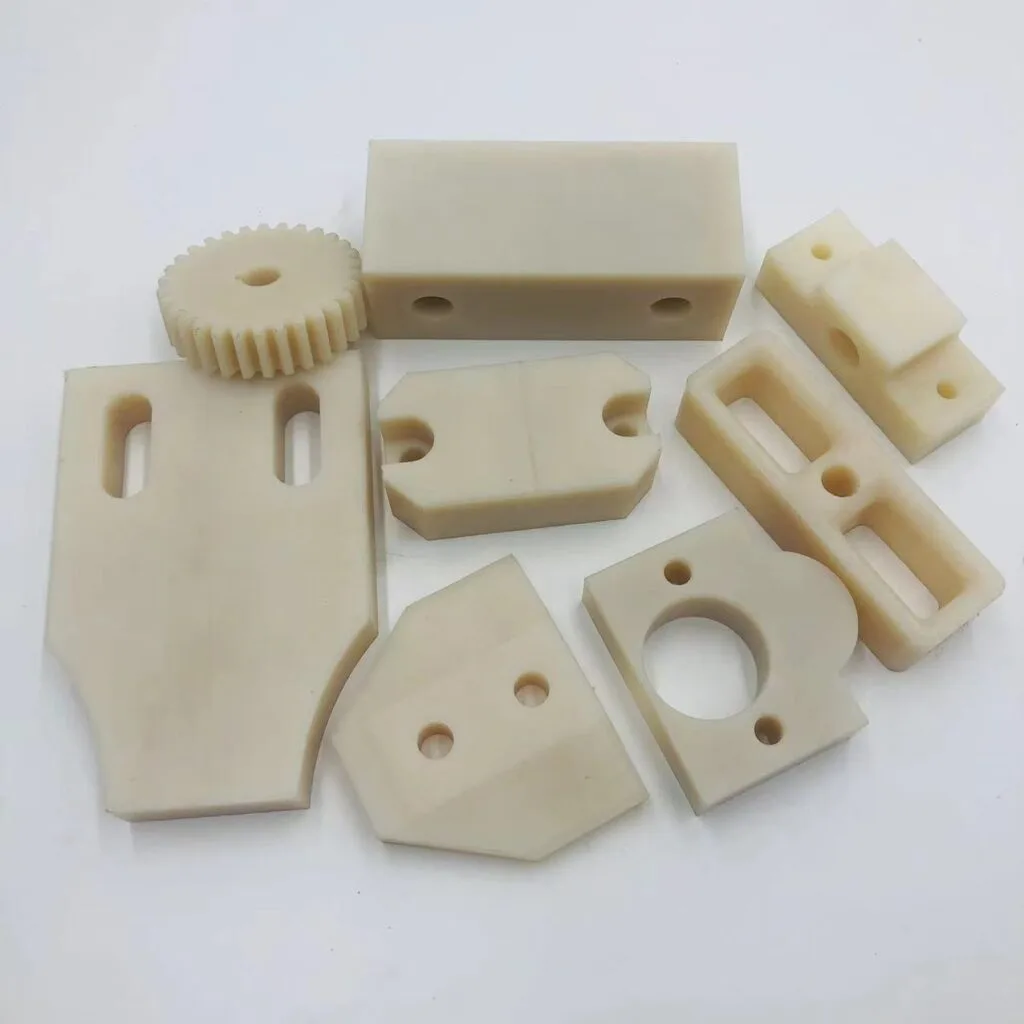
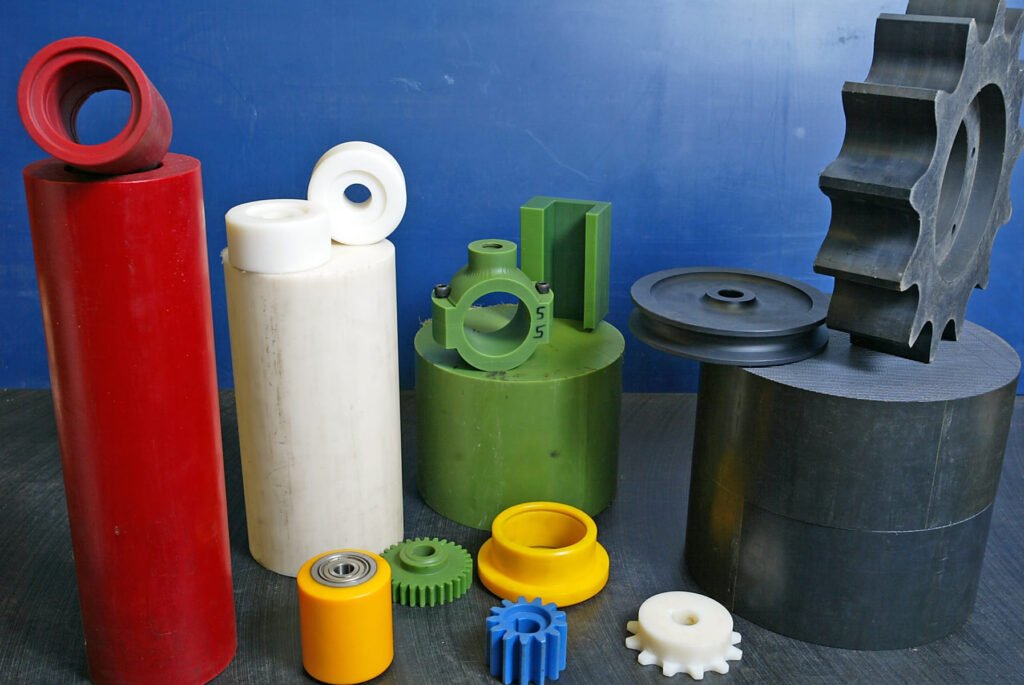
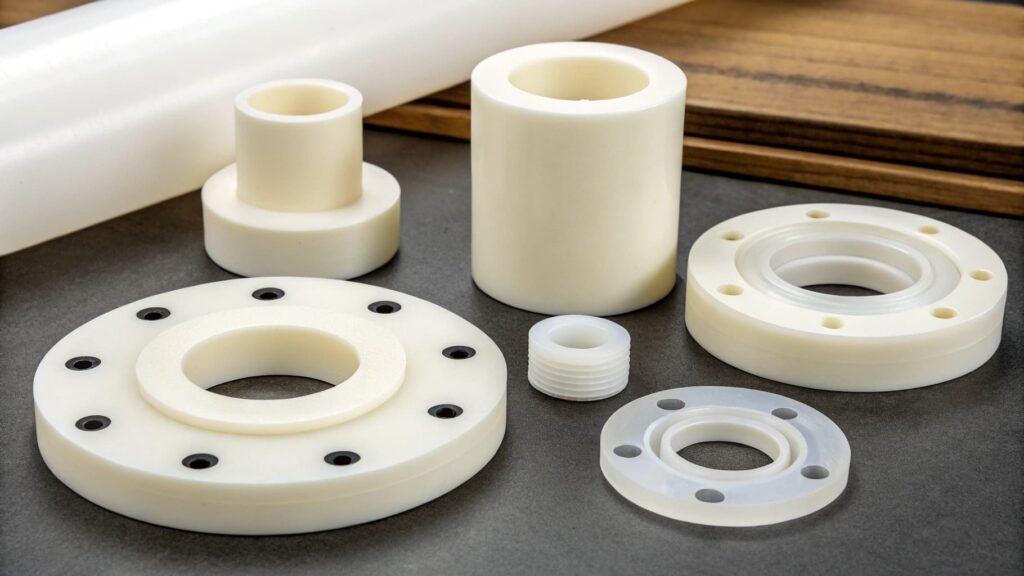
Yes, nylon is highly suitable for CNC machining due to its toughness, low friction, and stable dimensional properties, allowing precise and consistent parts.
Nylon can be machined using milling, turning, drilling, and tapping processes, with attention to cutting speed, feed rate, and heat management to prevent melting or deformation.
Common grades for machining include Nylon 6 and Nylon 6/6, available in unfilled, glass-filled, and other reinforced variants depending on strength, wear resistance, and thermal requirements.
Nylon is a fully synthetic plastic, specifically a polyamide, engineered for mechanical performance and chemical resistance.
Nylon softens and can melt at high temperatures (around 260 °C / 500 °F) and may burn if exposed to open flames, so heat management during machining is essential.
Yes, nylon generally has higher tensile strength, better wear resistance, and superior mechanical performance compared with PVC, making it more suitable for load-bearing and moving components.