Ensuring each part meets defined specifications is the core of our quality control process. Calibrated equipment, documented workflows, and continuous monitoring prevent deviations and ensure consistent production outcomes.
Clear technical communication is established before production begins. This includes confirming surface finishing needs, inspection standards, and any industry-specific compliance requirements. Potential risks are documented, and mitigation plans are defined so the machining workflow proceeds with clarity and alignment between technical teams and the customer.
Engineering drawings, CAD files, and tolerance expectations are reviewed to confirm manufacturability and identify critical dimensions that demand special attention. Material selection is validated based on mechanical performance, environmental resistance, and compatibility with the intended application, reducing the risk of downstream inconsistencies.
Operators perform dimensional verification using calibrated instruments such as calipers, micrometers, and CMMs. Tool conditions, feed rates, and machine stability are monitored continuously to ensure that critical tolerances remain within control limits throughout the production run.
Inspection records, process parameters, and traceability data are logged in accordance with established quality frameworks, including ISO 9001:2015 for process consistency and AS9100 for aerospace-grade control requirements. These standards guide structured documentation practices, reinforce accountability, and ensure that every part is fully compliant before moving to the final inspection stage.
For all orders, we run a final inspection process. This includes confirming dimensional accuracy through sampling or full-batch inspection, evaluating surface quality, and validating functional characteristics that may affect assembly, durability, or performance in real-world applications.
After passing inspection, each component is prepared for shipment using packaging methods tailored to material type and geometry. Protective wrapping, labeling, and handling instructions are applied to minimize transit-related risks. This final measure ensures that parts arrive in stable condition, ready for immediate integration into prototypes, assemblies, or end-use environments.
Our three self-owned plastic CNC machining centers in Shenzhen operate with specialized equipment dedicated to precision manufacturing, covering milling, turning, and complex multi-axis operations. Each facility runs under standardized workflows and calibrated inspection systems to maintain consistent and traceable quality output across every project.
We manage an expanded production network through a self-developed ERP+SCM platform that coordinates more than 50 plastic CNC factories. This integrated system enables centralized scheduling, unified quality requirements, and real-time visibility across multiple production sites. We enhance manufacturing reliability, reduce operational risks, and ensure stable delivery performance for both rapid prototyping and on-demand production.

50+
Manufacturing Partners
100+
Countries Shipped
5,000,000+
Parts Manufactured
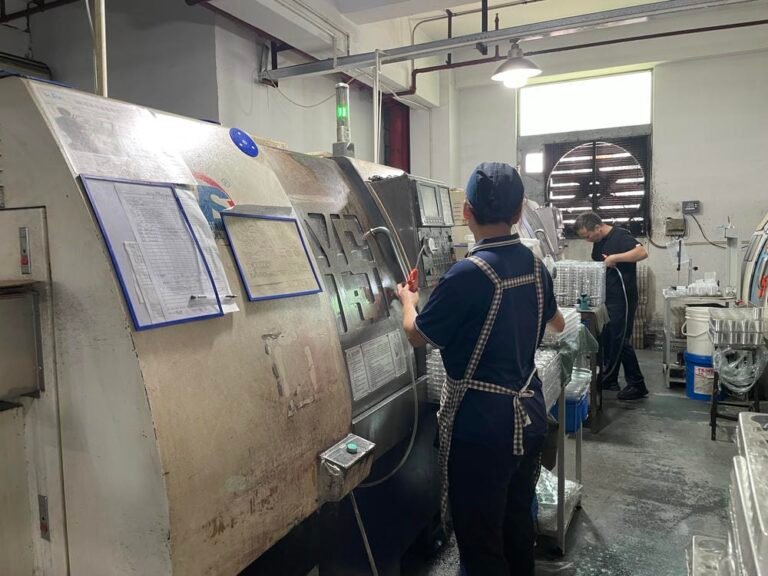
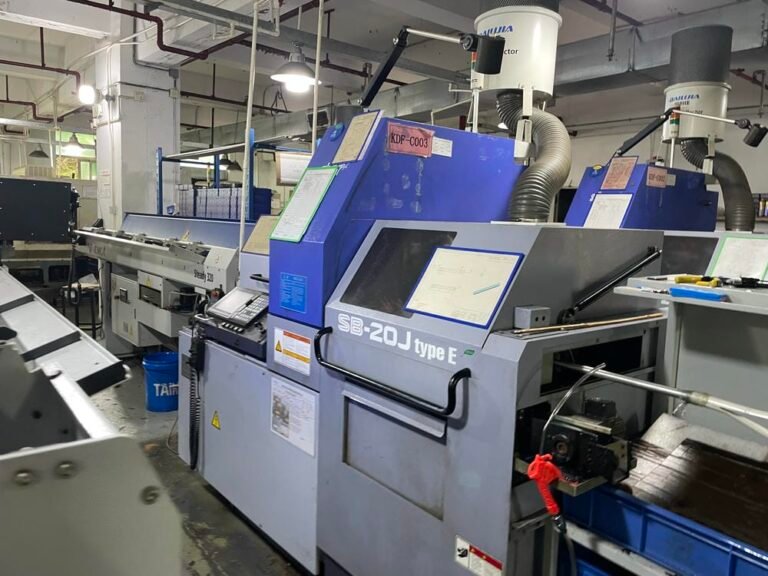
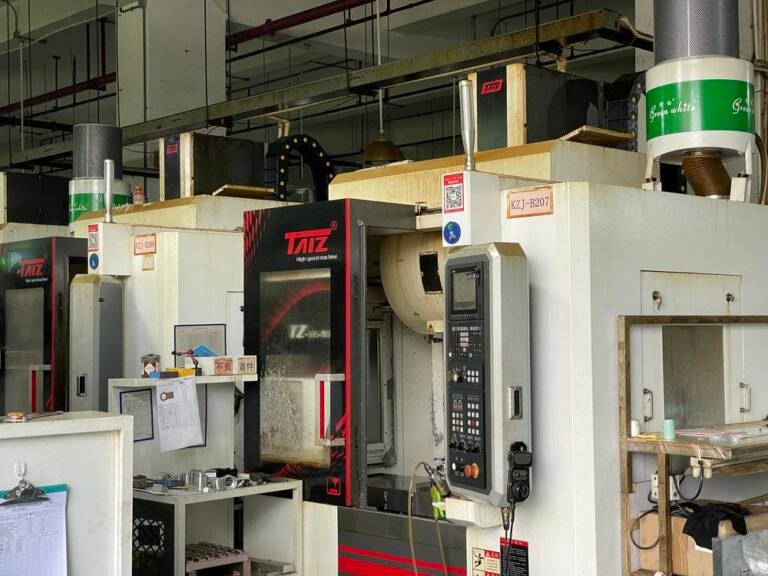
Our operations follow internationally recognized standards that ensure controlled processes, reliable traceability, and consistent product quality across every project.
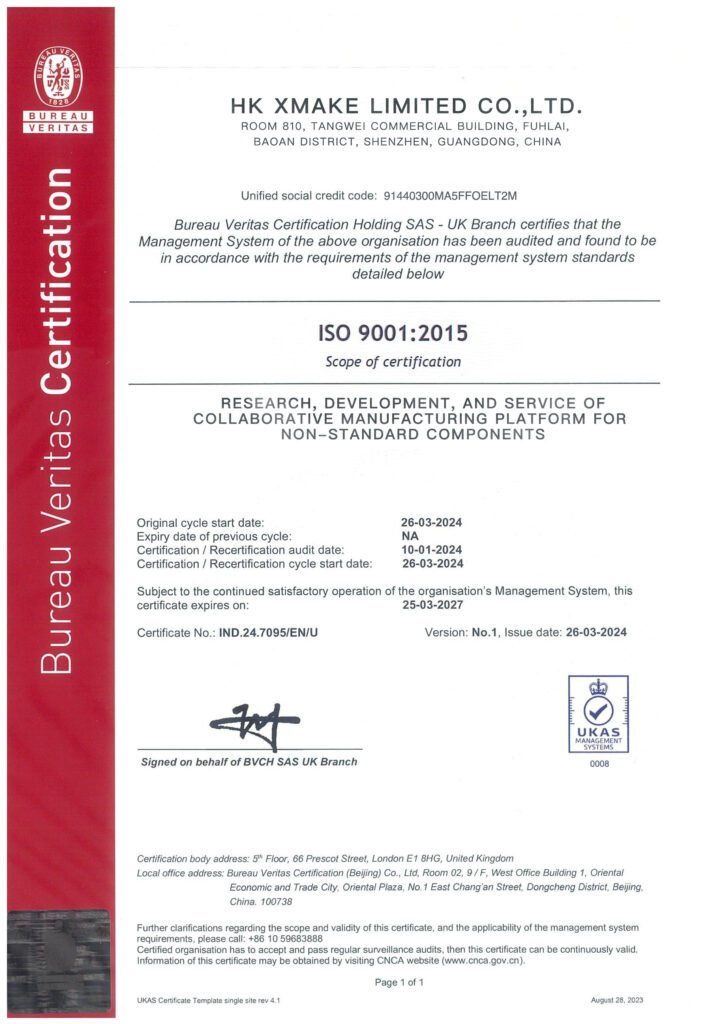
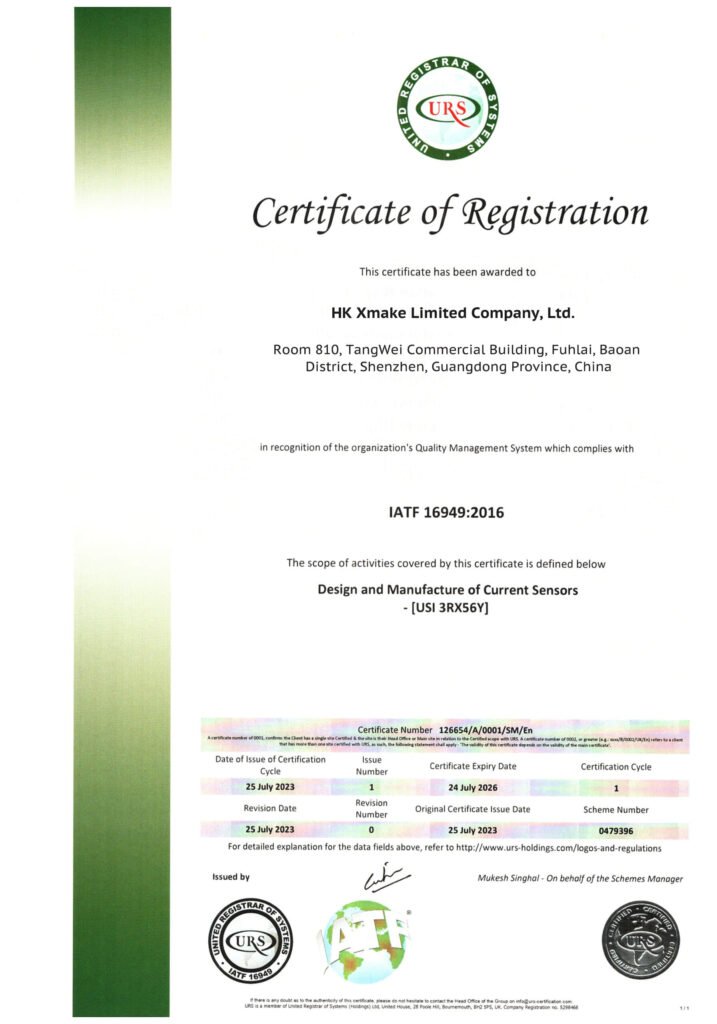
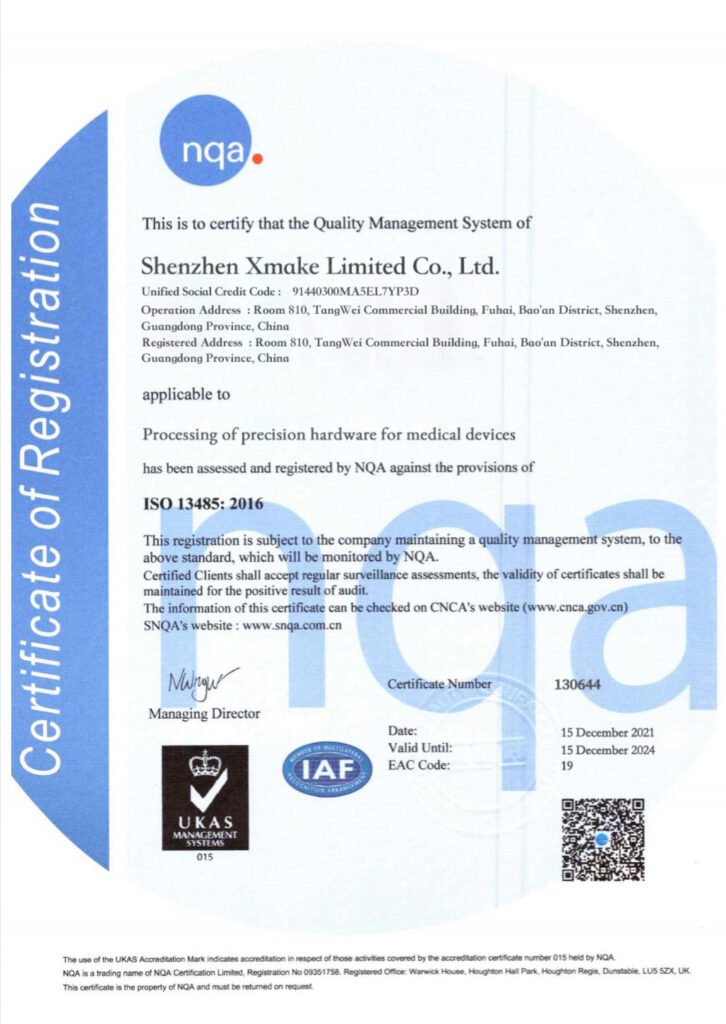
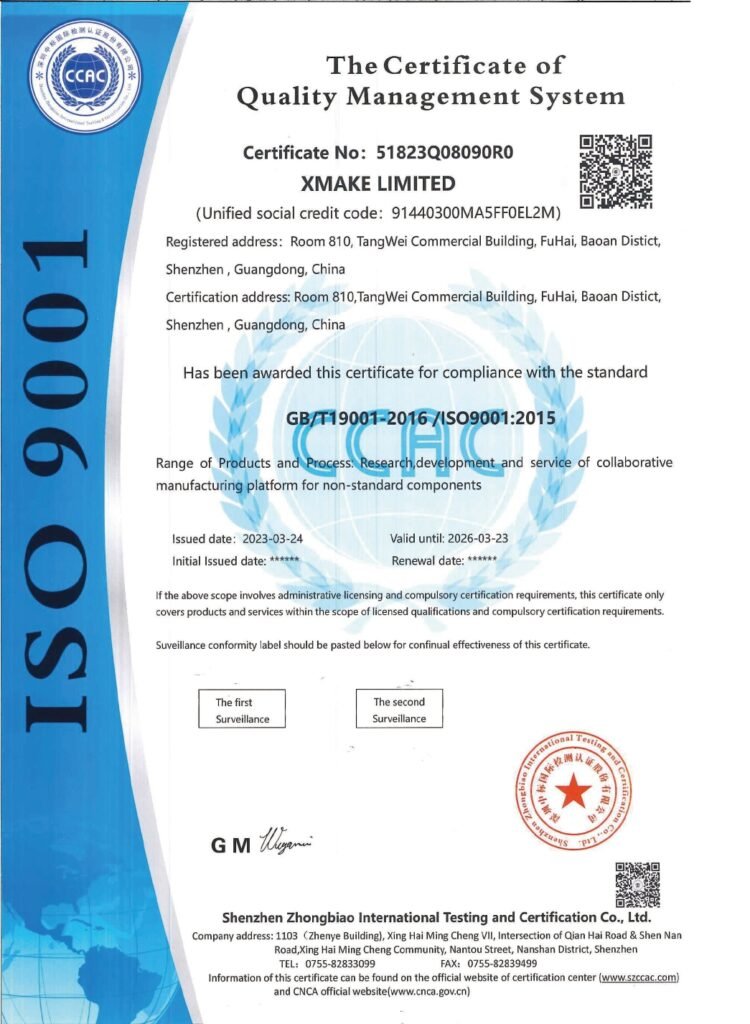
We maintain detailed records of all inspections and tests to ensure traceability, accountability, and consistent quality across every project.
We carefully examine each product to ensure it is free of defects and meets the expected quality and finish standards.
We measure critical dimensions to ensure every part aligns precisely with the design specifications.
We test functionality to confirm that each component performs reliably under expected conditions.
We inspect the initial production parts to ensure full compliance with design and process standards before mass production.
We certify that all parts meet environmental regulations and are free from restricted substances.