
PlasticHubs delivers high-precision 5-axis CNC machining services for complex plastic and engineering-grade parts. This advanced process reduces setups, enhances accuracy, and enables intricate geometries that traditional 3-axis machining cannot achieve.
5-axis CNC machining is an advanced manufacturing process in which a cutting tool moves along five different axes simultaneously to shape a part with exceptional precision and complexity. In addition to the standard X, Y, and Z linear movements found in 3-axis machining, a 5-axis machine adds two rotary axes that allow the workpiece or spindle to tilt and rotate. This flexibility enables the machine to reach multiple sides of a part in a single setup.
In practical production, both true 5-axis machining (all five axes moving at the same time) and 3+2 axis machining (the part is positioned at fixed angles, then cut using three linear axes) are widely used. 3+2 machining is ideal for stable, high-accuracy positioning, while full 5-axis machining is essential for smoothly contoured surfaces and complex geometries. Together, these configurations form the technical foundation of modern multi-axis CNC manufacturing.
5-axis machining works by allowing the cutting tool and the workpiece to move simultaneously along five different directions, enabling continuous access to complex surfaces without repeated repositioning.
Through advanced CNC programming, the machine coordinates linear and rotary movements in real time, maintaining optimal tool orientation and cutting angles throughout the process. This results in higher precision, smoother surface finishes, shorter production cycles, and improved consistency, especially for parts with deep cavities, undercuts, and freeform contours.
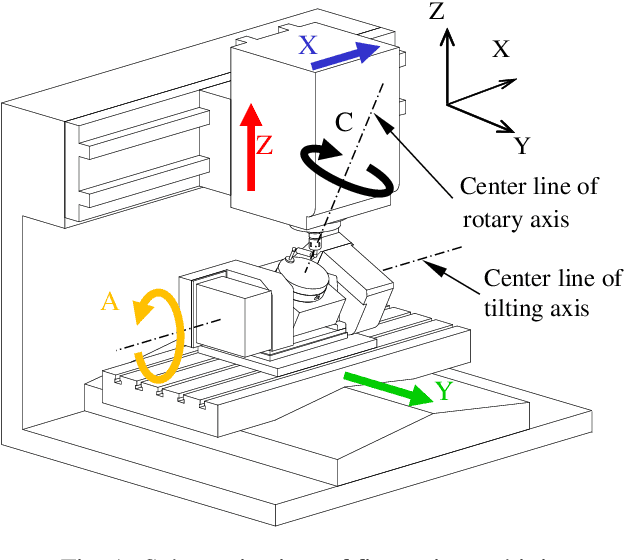
Below are the common types of 5-axis CNC machines used in industrial production, categorized by their motion control and structural design:
5-axis machining allows multiple sides of a part to be cut in a single setup, eliminating repeated repositioning. This greatly improves accuracy while reducing setup time and alignment errors.
With constant tool angle optimization, cutting is more stable and controlled. This leads to tighter tolerances, reduced vibration, and noticeably better surface finishes.
Features such as undercuts, deep pockets, and curved surfaces can be machined directly with full tool access, making 5-axis essential for highly complex parts.
By combining multiple operations into one continuous process, 5-axis machining improves efficiency, reduces manual handling, and shortens overall production cycles.
To help you better understand the value of multi-axis machining, we first compare the key differences between 5-axis and 3-axis CNC machining. This comparison highlights why 5-axis technology is essential for complex parts, followed by a clear overview of our machining capabilities.
| Cutting tool movement | Simultaneous linear and rotary motion (X/Y/Z + two rotary axes) for continuous tool orientation. | Linear motion on X, Y and Z only; angled features require repositioning or special fixtures. |
| Efficiency | Higher for complex parts — fewer setups and faster cycles due to full multi-axis access. | Efficient for simple, prismatic parts but slower on complex geometries because of multiple setups. |
| Features (short) | Enables undercuts, deep cavities and freeform surfaces in a single run. | Best suited to straight-sided and simple contoured parts; limited access to complex features. |
| Accuracy | Improved overall accuracy by eliminating re-fixturing and cumulative alignment errors. | Good for individual faces, but multi-setup workflows can introduce alignment variation. |
| Cost | Higher capital cost (machine + CAM software) and initial setup investment. | Lower machine and software cost; lower upfront investment for shops and prototyping. |
| Operating costs | Generally higher (maintenance, training, advanced tooling), but often offset by reduced labor per part. | Lower maintenance and training demands, but higher labor for multiple setups on complex parts. |
| Cost per part | Lower for complex, low-to-medium volume parts due to fewer setups; higher for trivial parts. | Low for simple, high-volume prismatic parts; cost rises quickly as part complexity increases. |
| Ease of operation | Requires advanced CAM programming and skilled operators/engineers. | Easier programming and operation — accessible to a wider range of machinists. |
| Surface quality | Superior finishes and smoother transitions with fewer secondary finishing steps. | Good on accessible faces but may need additional finishing for complex contoured surfaces. |
| Recommended industries | Aerospace, medical implants, optics, high-end automotive, turbine and precision engineering. | Consumer goods, fixtures, simple mechanical components, basic prototyping and tooling. |
Our 5-axis CNC machining capabilities enable complex geometries and high-precision components with exceptional efficiency. The table below highlights the key specifications and limits we can achieve.
| Tolerances | +/- 0.01 mm |
| Maximum Part Size | 4000 x 1500 x 600mm |
| Minimum Part Size | 5 x 5 x 5mm |
| Quantity | No Minimum Order (≥ 1 piece) |
| Standard Lead Time | General complexity parts in 3 business days; High complexity parts in 15 business days |
This 5-axis CNC machining service provides precision parts with ±0.01 mm tolerances and supports sizes from 5×5×5 mm up to 4000×1500×600 mm, with no minimum order quantity (starting at 1 piece). Standard lead times are as fast as 3 business days for general complexity parts and 15 business days for high-complexity components.
Here are the primary materials we support for 5 axis cnc machining. Each material brings its own machining characteristics, allowing us to match the right solution to your part’s performance needs.
Here is a list of standard 5-axis CNC machining surface finishes available at PlasticHubs. For custom surface finishes, please don’t hesitate to contact us.
Produces a clean, uniform appearance directly from the cutter, with visible but fine tool marks and dependable dimensional accuracy.
Creates a smooth, glossy surface, ideal for clear plastics or parts that require improved transparency and refined visual quality.
Applies a matte, even texture that reduces glare and hides minor machining marks, suitable for both aesthetic and functional surfaces.
Offers customizable colors and finishes while adding a protective coating, often used for housings, prototypes, and display parts.
Used for metal components, providing enhanced corrosion resistance, improved hardness, and a uniform decorative appearance.
Adds a thin metallic layer to metal parts for increased wear resistance and visual appeal, often used in premium or high-contact components.
Delivers precise marking of logos, text, or identification codes without affecting part integrity, suitable for both plastics and metals.
5-axis CNC machining serves a wide range of industries, delivering high-precision, complex parts for sectors from aerospace to electronics. Below are some of the key applications across different fields.
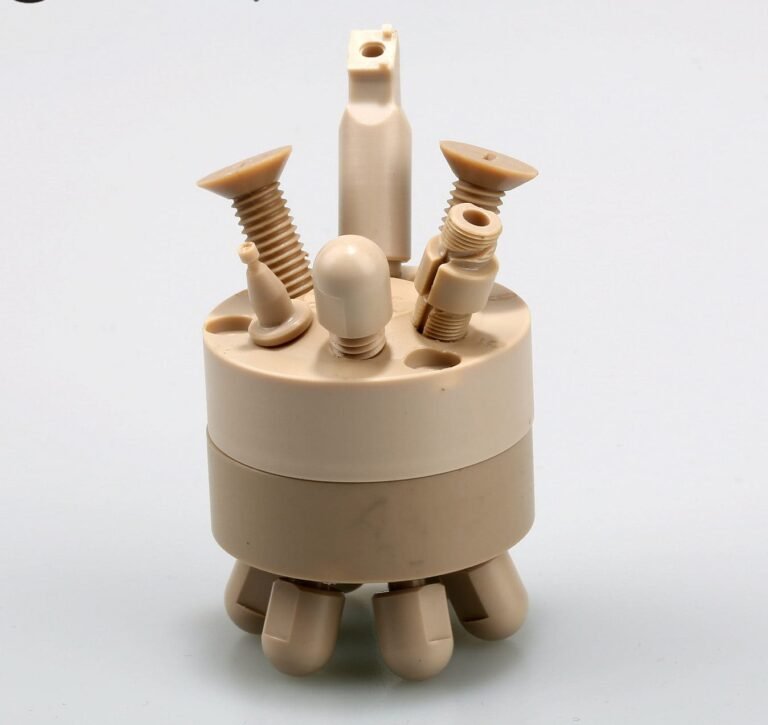
The precision on our aerospace parts was spot on. Delivery was faster than expected, and the team was very responsive.
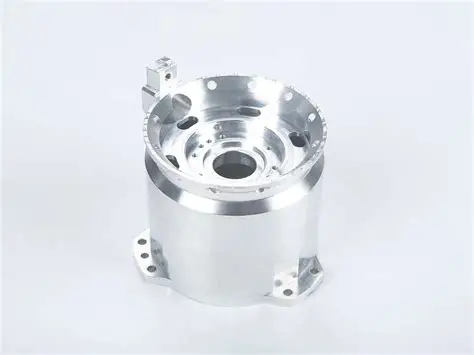
Impressed with the quality and attention to detail. Our prototypes came out exactly as we envisioned.
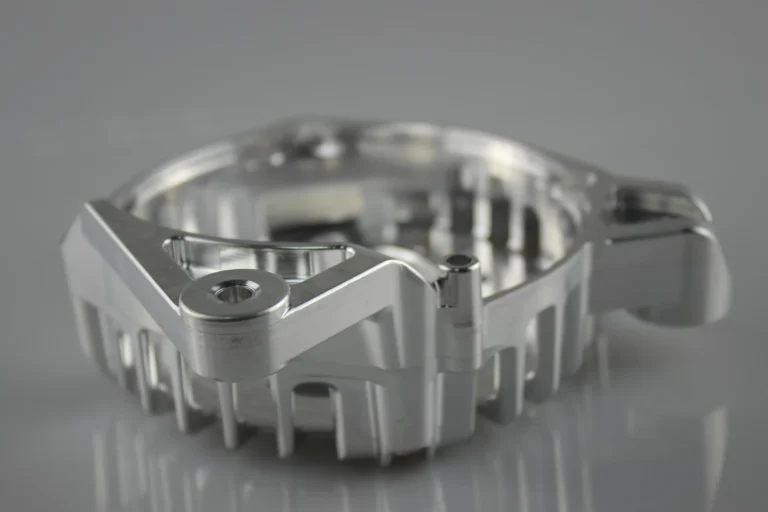
Professional service and excellent communication. The finished components met our tight tolerances perfectly.
Great experience overall. The team guided us through material selection and design adjustments efficiently.
Top-notch machining quality. Complex geometries were handled flawlessly, and the finish was excellent.
Very satisfied with the service. The parts were precise, and the support made the whole process smooth and stress-free.